Adopting a Dog With Osteoarthritis: 2026 Home Prep Guide
Learn how to prepare your home and budget for adopting a dog with osteoarthritis in 2026, including essential mobility aids and modern treatment plans.
The Reward of Adopting a Dog with Osteoarthritis
Bringing a new dog into your life is a profound milestone, but choosing to adopt a senior dog or a large breed predisposed to osteoarthritis (OA) requires specialized preparation. In 2026, veterinary medicine has made monumental strides in canine pain management, meaning an OA diagnosis is no longer a barrier to providing a joyful, active life for your new companion. According to the American Veterinary Medical Association (AVMA), millions of senior dogs enter shelters annually, many suffering from manageable mobility issues that deter unprepared adopters. By understanding the modern landscape of canine OA treatment and proactively adapting your living space before adoption day, you can offer a loving forever home to a dog in desperate need while ensuring their comfort from the very first moment they walk through your door.
Understanding the 2026 Landscape of Canine OA
Osteoarthritis is a degenerative joint disease that causes inflammation, cartilage breakdown, and chronic pain. When you decide to adopt a dog with known OA, or a breed like a German Shepherd, Labrador Retriever, or Golden Retriever that is genetically prone to hip and elbow dysplasia, you must shift your mindset from 'training' to 'accommodating.' The American Animal Hospital Association (AAHA) emphasizes that OA management requires a multimodal approach. This means combining environmental modifications, weight management, pharmaceutical interventions, and physical therapy. As an adopter in 2026, you have access to groundbreaking biologic therapies that were not widely available or affordable just a few years ago, making the decision to adopt an OA dog more viable and rewarding than ever before.
Essential Home Modifications for Limited Mobility
Before bringing your new dog home, you must audit your living space for mobility hazards. Dogs with OA struggle with impact, slipping, and navigating vertical spaces. Preparing your home in advance prevents day-one injuries and reduces anxiety for your newly adopted pet.
Flooring and Traction
Hardwood, tile, and laminate floors are the enemy of arthritic joints. When a dog slips, the sudden splay of their legs causes micro-tears in joint capsules and severe pain spikes. Cover all primary walkways and resting areas with high-traction surfaces. In 2026, interlocking EVA foam puzzle mats are highly recommended for large living areas because they provide shock absorption and grip. For hallways, use non-slip rug runners with a rubberized backing. Avoid loose throw rugs, as they can slide out from under your dog and cause catastrophic falls.
Orthopedic Sleep Solutions
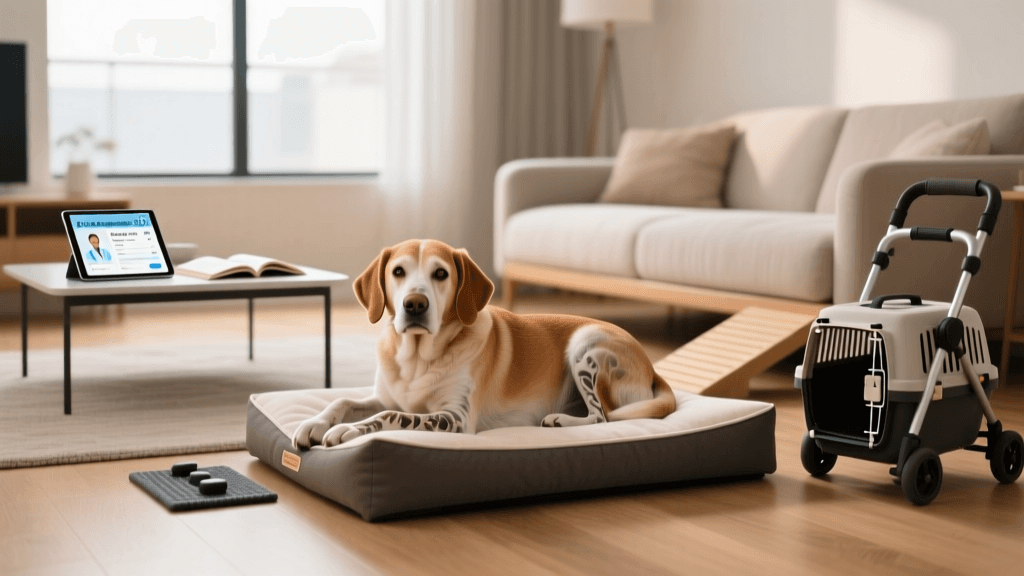
A dog with OA will spend up to 18 hours a day resting. Standard poly-fill dog beds will compress and fail to support aching joints. Invest in a high-density memory foam bed before adoption day. The PetFusion Ultimate Lounge Dog Bed remains a top recommendation in 2026 due to its solid memory foam base and bolstered edges, which provide neck support and make it easier for stiff dogs to get up. Place the bed in a draft-free, easily accessible area on the ground floor, ensuring your dog does not have to navigate stairs to reach their primary safe space.
Ramps, Stairs, and Harnesses
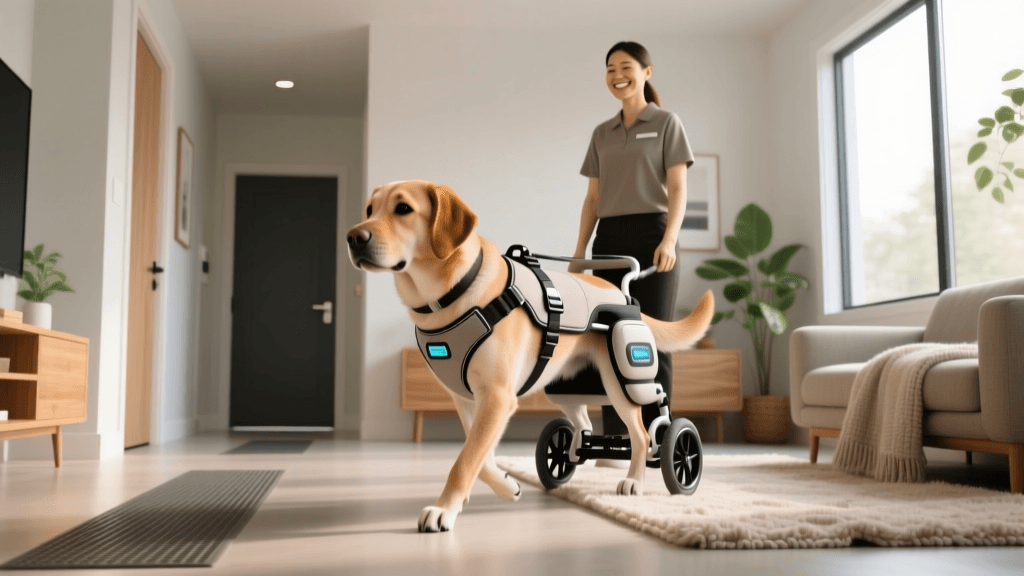
If your dog is allowed on furniture or needs to enter a vehicle, jumping is strictly prohibited. The impact of landing exerts a force up to three times the dog's body weight on their front joints. Purchase a high-traction, adjustable pet ramp with a gentle incline (ideally a 1:4 ratio of height to length). For vehicle loading, the WeatherTech Pet Ramp is a premium, sturdy option that folds easily. Additionally, invest in a supportive lifting harness like the Ruffwear Web Master or the Help 'Em Up Harness. These feature padded handles over the hips and chest, allowing you to safely assist your dog up stairs or into the car without causing pain or risking injury to your own back.
Modern Veterinary Treatments and Pain Management
As you prepare to adopt, establish a relationship with a veterinarian who specializes in pain management or canine rehabilitation. The 2026 treatment paradigm for canine OA has moved away from relying solely on daily NSAIDs (Non-Steroidal Anti-Inflammatory Drugs), which can carry long-term risks for the liver and kidneys.
Monoclonal Antibodies (Anti-NGF)
The most significant advancement in recent years is the widespread adoption of anti-Nerve Growth Factor (NGF) monoclonal antibodies. Medications like Librela (bedinvetmab) and Solensia (frunevetmab) are administered via monthly subcutaneous injections. These biologics specifically target and neutralize NGF, a key protein responsible for transmitting OA pain signals to the brain. Because they are broken down into natural amino acids rather than processed by the liver or kidneys, they are incredibly safe for senior dogs with underlying organ issues. Discuss starting your newly adopted dog on an anti-NGF protocol immediately upon veterinary intake.
Joint Supplements and Prescription Diets
Nutraceuticals play a vital supporting role in joint health. Look for supplements containing high levels of EPA/DHA (Omega-3 fatty acids), glucosamine hydrochloride, chondroitin sulfate, and ASU (Avocado Soybean Unsaponifiables). Dasuquin Advanced and GlycoFlex Max are top-tier veterinary recommendations in 2026. Furthermore, consider transitioning your new dog to a prescription joint diet, such as Hill's Prescription Diet j/d or Purina Pro Plan Veterinary Joint Plus, which are scientifically formulated with targeted Omega-3 profiles to reduce joint inflammation at the cellular level.
Budgeting for an OA Dog in 2026
Adopting a dog with special medical needs requires financial foresight. Below is an estimated monthly budget breakdown for managing canine osteoarthritis in 2026, based on a 70-pound dog.
| Expense Category | Product / Service | Estimated Monthly Cost (2026) |
|---|---|---|
| Biologic Injection | Librela / Solensia (Monthly Vet Admin) | $85 - $140 |
| Joint Supplement | Dasuquin Advanced (Large Dog) | $60 - $80 |
| Prescription Diet | Hill's j/d or Pro Plan Joint Plus | $90 - $120 |
| Rehabilitation | Hydrotherapy / Cold Laser (Bi-weekly) | $100 - $160 |
| Pain Rescue Meds | Gabapentin / Carprofen (As needed) | $15 - $30 |
| Total Estimated | Comprehensive OA Management | $350 - $530 |
While these costs may seem high, many adopters find that pet insurance plans in 2026 offer robust chronic condition coverage, provided the policy is activated before the official adoption veterinary exam. Always review policy exclusions regarding pre-existing conditions before finalizing your adoption paperwork.
Your First 48 Hours Checklist
The transition into a new home is stressful, and stress exacerbates pain perception. Follow this checklist to ensure a smooth, low-impact first two days for your newly adopted OA dog:
- Limit Exploration: Confine your dog to a single, fully puppy-proofed, and traction-matted room for the first 24 hours. Over-exploration can lead to fatigue and joint stiffness.
- Carry Them Out: For the first few days, use your lifting harness to carry or heavily support your dog outside for bathroom breaks. Do not force them to navigate unfamiliar outdoor terrain or stairs while they are anxious.
- Elevate Food and Water: Use an elevated feeder to prevent your dog from having to crane their neck and shift their weight painfully onto their front joints to eat and drink.
- Begin a Routine: OA dogs thrive on predictability. Establish set times for short, 10-minute leash walks on flat, grassy surfaces to maintain muscle mass without overexerting joints.
- Schedule a Rehab Consult: Book an appointment with a certified canine rehabilitation therapist (CCRT) within the first week to learn targeted at-home massage and passive range-of-motion (PROM) exercises.
Adopting a dog with osteoarthritis is an act of profound empathy. By leveraging the advanced veterinary treatments of 2026 and thoughtfully preparing your home environment, you are not just rescuing a dog; you are giving them a second chance at a comfortable, vibrant, and deeply loved life. For more information on the physiological progression of the disease, consult the Cornell University College of Veterinary Medicine resources on canine joint health.
priya-sutaria
All our authors care for dogs every day — read more of their work on the authors page.