Adapting Dog Training for Canine OA Treatment in 2026
Learn how to adapt obedience and trick training for dogs undergoing canine OA treatment in 2026 with low-impact, joint-friendly mental enrichment.
The Intersection of Canine OA Treatment and Dog Training
Osteoarthritis (OA) is a progressive, degenerative joint disease that affects a significant portion of the aging dog population, as well as younger dogs with orthopedic injuries or genetic predispositions. As we navigate veterinary care and behavioral science in 2026, multimodal treatment plans—combining pharmaceuticals, physical therapy, weight management, and environmental modifications—are the undisputed gold standard for managing canine OA. However, one crucial aspect of a dog's daily life that is often overlooked during OA treatment is their training routine.
For many dogs, training sessions are a primary source of bonding, mental stimulation, and physical exercise. When a dog is diagnosed with OA, owners are frequently told to restrict physical activity, which can inadvertently lead to boredom, frustration, and behavioral regression. The key to successful training for a dog undergoing OA treatment in 2026 is not to stop training altogether, but to fundamentally adapt your methodology. By shifting the focus from high-impact physical obedience to low-impact cognitive conditioning, you can maintain your dog's behavioral repertoire while strictly adhering to their veterinary treatment plan.
How Osteoarthritis Affects Learning and Behavior
Pain is a massive barrier to learning. A dog experiencing joint inflammation or cartilage degradation will struggle to focus on cues that require physical discomfort to execute. If you ask a dog with hip dysplasia or severe stifle OA to perform a rapid 'sit-stand' repetition, the resulting pain can create a negative association with the training session itself. Over time, this can manifest as apparent 'stubbornness,' avoidance behaviors, or even reactivity.
According to the U.S. Food and Drug Administration (FDA), managing pain through veterinary-prescribed NSAIDs and other analgesics is a critical first step in OA treatment. However, medication alone does not erase the mechanical strain of certain movements. Therefore, as a trainer or owner, you must modify the physical demands of your obedience cues to align with your dog's current pain-free range of motion.
2026 Guidelines: Modifying Basic Obedience Cues
Veterinary physical therapists and certified professional dog trainers (CPDTs) in 2026 strongly advocate for 'joint-friendly' obedience modifications. The goal is to achieve the behavioral outcome without forcing the dog into compromising joint angles or high-impact transitions.
| Traditional Cue | OA-Friendly Modification | Joint Health Benefit |
|---|---|---|
| Sit/Stand Repetitions | Elevated Platform Targeting | Reduces deep hip flexion and stifle strain |
| Down on Hard Floor | Orthopedic Mat Destination | Prevents joint compression on unyielding surfaces |
| High-Impact Recall | Scent Trail Recall | Engages the brain, eliminates sudden sprinting |
| Jump/Fetch | Find It / Nose Work | Zero impact on degenerating cartilage |
| Heeling on Pavement | Loose-Leash Walking on Grass | Provides natural shock absorption for paw strikes |
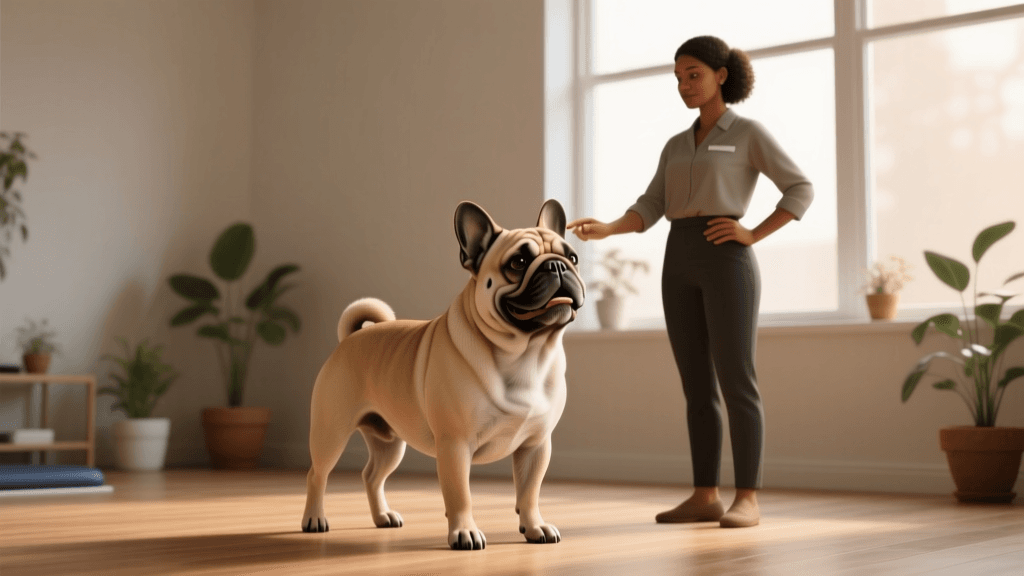
For example, instead of asking your dog to drop into a 'down' on a slippery kitchen floor—which requires significant shoulder and hip splaying—train a 'go to mat' behavior using a thick, memory-foam orthopedic bed. This not only protects the joints but also provides a comfortable, designated resting spot that supports the OA treatment plan.
Shifting to Low-Impact Mental Enrichment
When physical exercise must be restricted due to an OA flare-up or post-operative recovery, mental enrichment becomes your primary tool for tiring out your dog. The American Kennel Club (AKC) notes that 15 minutes of intense mental stimulation can be as exhausting for a dog as an hour of physical walking. In 2026, cognitive fatigue is heavily prioritized in senior and OA-compromised canine fitness programs.
Scent Work and Nose Games
Scent work is arguably the best training discipline for a dog with OA. It requires minimal physical exertion but demands intense cognitive focus. You can start by hiding high-value treats in a snuffle mat or scattered across a non-slip rug. As your dog progresses, you can introduce formal nose work training, teaching them to identify specific essential oils (like birch or anise) and alert you to their location. This builds confidence, strengthens the human-animal bond, and completely bypasses the need for jumping, running, or sharp turns.
Target Training and Paw Targeting
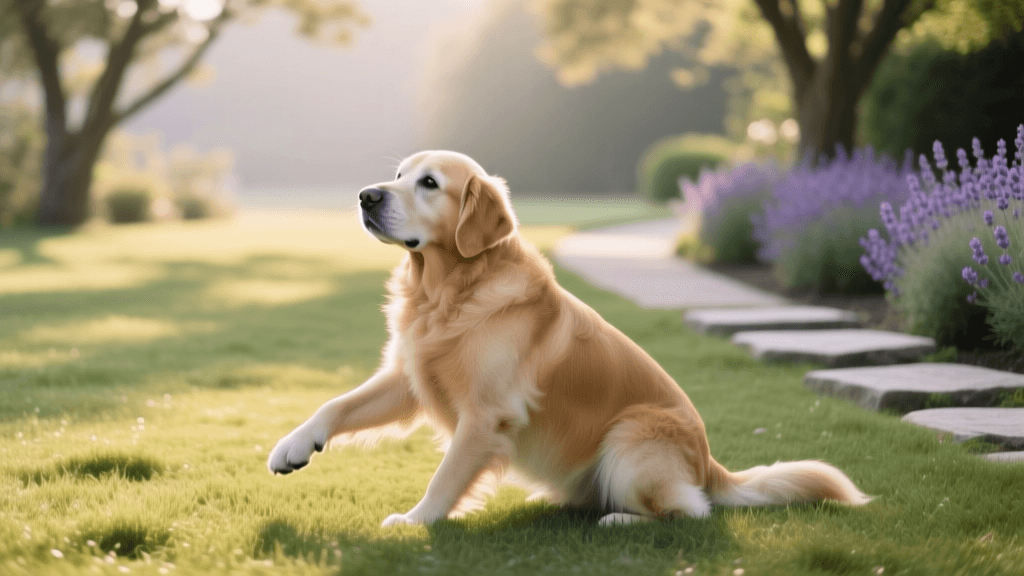
Target training involves teaching your dog to touch a specific object with their nose or paw. While paw targeting might seem physically demanding, it can be adapted for OA dogs by using a low-profile, non-slip target pad. Asking a dog to gently place one paw on a target pad while standing on a supportive orthopedic mat helps build proprioception (body awareness) and core stability without loading the joints with excessive weight or dynamic movement.
Optimizing Your Training Environment for Joint Health
Your training environment plays a massive role in the safety and success of an OA dog. Slippery surfaces like hardwood, tile, and laminate are the enemies of degenerating joints. A single slip during a training session can cause a micro-injury that sets your dog's OA treatment back by weeks.
- Non-Slip Surfaces: Always conduct training sessions on carpet, grass, or interlocking foam puzzle mats. In 2026, many trainers use specialized rubber-backed yoga mats to create 'training islands' in rooms with hard flooring.
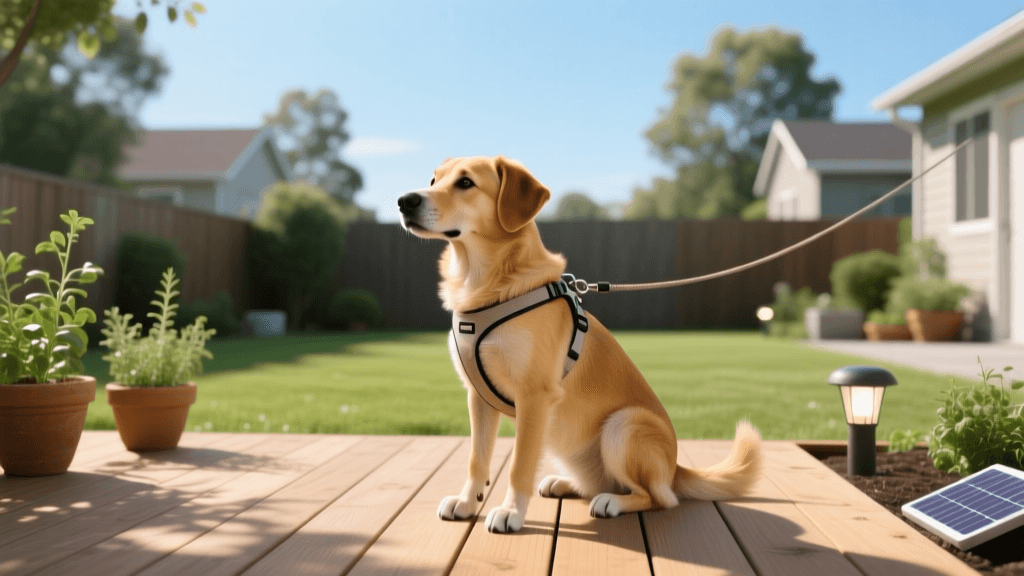
- Supportive Harnesses: For dogs with severe hind-end weakness, incorporating a supportive lift harness (such as the Help 'Em Up Harness) into your training routine allows you to provide gentle assistance during transitions, like moving from a sit to a stand, without causing pain.
- Elevated Food Bowls and Targets: Bringing the training props to the dog's eye level prevents unnecessary spinal and cervical flexion, which is especially important for dogs with concurrent spondylosis or neck OA.
Recognizing Pain Signals During Training Sessions
Even with the best modifications and a robust veterinary pain management protocol, dogs with OA will have good days and bad days. As a handler, you must become an expert at reading canine body language to identify subtle signs of pain before they escalate into a full-blown flare-up.
Watch for 'calming signals' or displacement behaviors during training. If your dog suddenly starts lip-licking, yawning excessively, sniffing the ground aimlessly, or shaking off when they are not wet, these are often indicators of stress or physical discomfort. Additionally, pay attention to their weight distribution. A dog with hip OA may shift their weight forward onto their front legs while sitting, or they may be reluctant to square up their stance when asked to heel.
When to Stop and Consult Your Vet
If your dog begins to lag behind on a leash, refuses a previously known cue, or vocalizes when shifting positions, end the training session immediately on a positive note (such as a gentle scatter feed) and give them a rest. If these behavioral changes persist for more than 48 hours, it is a strong indicator that their current OA treatment protocol needs adjustment, and you should consult your veterinarian or veterinary pain specialist.
Conclusion: Patience and Adaptation
A diagnosis of canine osteoarthritis does not mean the end of your dog's training journey; it simply marks the beginning of a new, more empathetic chapter. By embracing the 2026 standards of low-impact conditioning, prioritizing mental enrichment over physical exhaustion, and meticulously modifying your training environment, you can keep your dog's mind sharp and their spirits high. Remember that the ultimate goal of any training program is to enhance your dog's quality of life, and adapting your methods to accommodate their physical needs is the highest form of canine advocacy.
robin-maitland
All our authors care for dogs every day — read more of their work on the authors page.