Adapting Your Home for a Senior Dog with Arthritis
Discover practical home modifications, daily routine tips, and supportive gear to help your senior dog with arthritis live comfortably and happily.

Watching your once-boundless companion slow down is one of the most emotionally taxing experiences of dog ownership. According to the American Kennel Club, osteoarthritis is the most common joint disorder in dogs, affecting roughly 20% of adult dogs and a significantly higher percentage of senior canines. As cartilage wears away and joints become inflamed, everyday tasks like climbing onto the couch or walking across slick hardwood floors can become painful hurdles.
However, aging does not mean your dog's golden years must be defined by discomfort. By making targeted, strategic modifications to your home environment and daily routine, you can drastically reduce joint strain, prevent secondary injuries from slips and falls, and preserve your senior dog's independence. This comprehensive guide details actionable, specific adjustments you can implement today to support a senior dog with arthritis and age-related mobility decline.
1. Overhauling Your Flooring for Maximum Traction
Hardwood, tile, and laminate floors are the enemies of arthritic dogs. When a dog loses their footing, they often splay their legs to catch themselves, which places immense, agonizing torque on compromised hip and shoulder joints. Replacing your flooring is rarely practical, but you can create 'traction highways' throughout your home.
Strategic Rug Placement and Materials
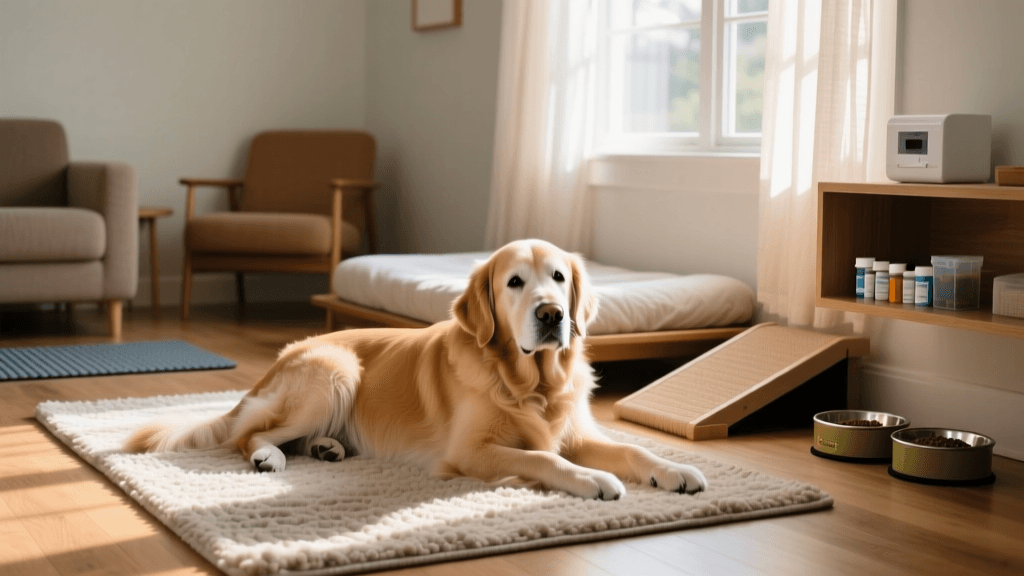
Invest in low-pile, rubber-backed area rugs or interlocking foam mats (often used in home gyms or playrooms). Avoid thick, plush rugs that can create a tripping hazard for dogs with weakened hind legs or canine cognitive dysfunction. Place these runners along your dog's most frequent routes: from their bed to the back door, and from the living room to their water bowl.
- Cost Estimate: A 50-foot roll of non-slip carpet runner typically costs between $60 and $90.
- Maintenance: Wash rugs weekly in pet-safe, unscented detergent to prevent the buildup of dander and environmental allergens that can irritate aging skin.
Paw Pad Care and Traction Aids
Dry, cracked paw pads offer zero grip on smooth surfaces. Apply a high-quality paw wax, such as Musher's Secret, twice a week to moisturize pads and add a layer of natural grip. For severe slipping, consider canine traction socks with silicone grips or adhesive paw pads like Pawz, though some senior dogs may require a gradual desensitization period to tolerate wearing them.
2. Upgrading Resting and Sleeping Zones
An arthritic dog spends significantly more time lying down than a younger dog. A bed that is too thin allows their heavy pressure points (hips, elbows, and shoulders) to press directly against the hard floor, exacerbating joint pain and causing calluses.
Choosing the Right Orthopedic Bed
When shopping for an orthopedic bed, ignore marketing buzzwords and look at the foam specifications. The ASPCA emphasizes the importance of supportive bedding for senior pets to maintain joint health and overall comfort.
- Foam Thickness: For large breed seniors (over 50 lbs), the memory foam must be at least 4 to 6 inches thick to prevent bottoming out.
- Foam Density: Look for high-density therapeutic foam rather than egg-crate foam, which compresses too easily under a dog's weight.
- Design: Bolster beds provide a place to rest the head and neck, but ensure the entry point is low enough (under 4 inches) so the dog doesn't have to lift their legs high to step inside.
Thermal Therapy for Stiff Joints
Cold temperatures increase synovial fluid viscosity, making joints stiffer and more painful in the mornings. Consider a heated pet bed or a microwavable heating pad placed under their blanket for 15 minutes before they wake up. Always ensure the heat source has an automatic shut-off and chew-resistant cords to prevent burns or electrical hazards.
3. Navigating Elevation: Ramps, Stairs, and Slings
Jumping on and off furniture or into vehicles causes micro-traumas to arthritic joints. Providing alternative ways to navigate elevation is non-negotiable for senior dog care. Below is a comparison of the most effective mobility aids to help you choose the right tool for your home.
| Mobility Aid | Best Used For | Key Specifications to Look For | Average Cost |
|---|---|---|---|
| Dog Ramps | Vehicles, high beds, and couches. | Incline angle of 18-25 degrees; high-traction ribbed surface; weight capacity exceeding dog's weight by 20%. | $40 - $150 |
| Pet Stairs | Lower couches, window seats, and small SUVs. | Deep, wide steps (at least 10 inches deep); high-density foam construction; non-slip step covers. | $30 - $80 |
| Support Slings / Harnesses | Stairs, slippery floors, and bathroom breaks. | Padded belly band; sturdy, adjustable handles; breathable mesh material to prevent chafing. | $25 - $60 |
Training Your Senior Dog to Use Ramps
Many older dogs are hesitant to use ramps due to declining vision or cognitive changes. Start with the ramp flat on the ground. Use high-value treats (like boiled chicken or low-sodium hot dogs) to lure them across. Gradually increase the incline over several days. Never push or force a fearful dog onto a ramp, as this can cause a panic-induced slip and severe injury.
4. Adjusting Feeding and Hydration Stations
Bending down to floor level places significant strain on the cervical spine (neck) and front shoulders. Elevating your dog's food and water bowls can make mealtimes much more comfortable.
Proper Bowl Elevation
The ideal height for an elevated feeder is determined by your dog's withers (the highest point of the shoulder blades). The top of the bowl should sit roughly 6 inches below the withers height. This allows the dog to eat with a neutral spine posture.
- Small Dogs (Under 20 lbs): 4 to 6 inches elevation.
- Medium Dogs (20-50 lbs): 7 to 10 inches elevation.
- Large/Giant Dogs (Over 50 lbs): 12 to 16 inches elevation.
Encouraging Hydration
Senior dogs are prone to kidney issues and dehydration, but walking to the kitchen for water can be a chore for a dog with hip dysplasia or arthritis. Place multiple water stations throughout the house on non-slip mats. Consider a pet water fountain; the sound of running water can entice dogs with declining senses to drink more frequently.
5. Modifying the Potty Routine
Arthritis and age-related muscle atrophy often lead to a weakened bladder and reduced bowel control. Holding it for 8 hours is no longer physically possible or comfortable for an aging dog.
Frequency and Accessibility
Increase potty breaks to every 3 to 4 hours. If you have a multi-story home, restrict your dog's access to the floor where they sleep and eat to minimize stair climbing. Install a doggy door with a low-clearance threshold, or use indoor grass patches or pee pads placed in a consistent, easily accessible indoor location for late-night emergencies.
Assisted Bathroom Breaks
When walking outside, use a rear-lift support sling to help your dog navigate the porch steps or maintain balance while they posture to eliminate. Male dogs with arthritis often struggle to lift their leg; do not punish them for squatting, as this is a natural adaptation to joint pain.
6. Nutritional Support and Veterinary Management
Home modifications must be paired with proactive medical management. The American College of Veterinary Surgeons notes that a multimodal approach is the gold standard for managing canine osteoarthritis.
- Weight Management: This is the single most impactful intervention. Keeping your senior dog lean reduces the mechanical load on their joints. Work with your vet to calculate a strict caloric intake tailored to their reduced activity level.
- Joint Supplements: Look for supplements containing Glucosamine Hydrochloride, Chondroitin Sulfate, and MSM. Products with the NASC (National Animal Supplement Council) seal ensure quality and accurate ingredient labeling.
- Omega-3 Fatty Acids: High doses of EPA and DHA (found in wild-caught salmon oil or green-lipped mussel extract) provide potent, natural anti-inflammatory effects that complement prescription pain medications.
Conclusion: Embracing the Golden Years
Caring for a senior dog with arthritis requires patience, observation, and a willingness to adapt your living space. By implementing these home modifications—from strategic traction pathways and orthopedic bedding to proper feeding elevations and mobility aids—you are actively removing the physical barriers that cause your dog pain. Your home should be a sanctuary where your aging companion can navigate their golden years with dignity, comfort, and the enduring joy of being by your side.
anouk-beaumont
All our authors care for dogs every day — read more of their work on the authors page.