Adapting Your Home and Routine for a Senior Dog with Arthritis
Learn how to adapt your home environment and daily routine to improve mobility, comfort, and quality of life for your senior dog with arthritis.

Understanding Canine Osteoarthritis in the Golden Years
Watching your once-boundless companion slow down is one of the most challenging emotional hurdles of pet ownership. As dogs enter their senior years, typically between the ages of seven and ten depending on the breed, their bodies undergo significant changes. The most prevalent of these is canine osteoarthritis (OA), a degenerative joint disease that causes inflammation, cartilage breakdown, and chronic pain. According to veterinary epidemiologists, osteoarthritis affects roughly 20% of all dogs, and that number jumps to over 65% in senior dogs weighing more than 50 pounds. Recognizing the subtle signs of joint pain—such as reluctance to jump into the car, stiffness after resting, or a shortened stride on walks—is the first step toward improving your dog's quality of life.
Managing a senior dog with arthritis requires a multifaceted approach that blends veterinary medicine with environmental and lifestyle modifications. The ASPCA emphasizes that senior dogs thrive when their living spaces and daily routines are adjusted to accommodate their changing physical capabilities. By making strategic upgrades to your home and altering how you exercise and feed your aging pet, you can drastically reduce their daily pain and help them enjoy their golden years to the fullest.
Essential Home Modifications for Senior Dogs
Your home should be a sanctuary, but for a dog with compromised joints, standard household features can become daily obstacles. Slippery floors, steep stairs, and low-profile beds can exacerbate joint inflammation and increase the risk of catastrophic falls.
Flooring and Traction Solutions
Hardwood, tile, and laminate floors are incredibly slippery for aging paws. When a dog loses traction, they must engage their core and stabilizing muscles to prevent falling, which puts immense strain on arthritic hips and knees. To combat this, lay down non-slip area rugs or interlocking foam puzzle mats in your dog's primary pathways and resting areas. For a more targeted and cost-effective solution, consider purchasing dog-specific toe grips or applying paw wax to improve grip. If your dog struggles to stand up from a lying position on hard surfaces, place a textured yoga mat or a specialized orthopedic traction mat directly under their bed to give them the leverage they need to rise without slipping.
Ramps, Stairs, and Furniture Access
Jumping onto a bed or into an SUV can generate a force equivalent to several times your dog's body weight upon landing. Eliminate jumping entirely by introducing pet ramps or foam stairs. When selecting a ramp, the incline is critical. A general rule of thumb for senior dogs with severe arthritis is a 1:4 slope ratio. This means for every 1 inch of height, you need 4 inches of ramp length. If your bed is 24 inches high, you will need a ramp that is at least 96 inches (8 feet) long. While this may seem cumbersome, folding telescopic ramps are widely available and easy to store. For accessing couches, high-density foam pet stairs with a gentle rise of no more than 4 to 5 inches per step are ideal. Ensure any stairs or ramps are covered in a high-traction material like ribbed carpet or rubberized grip tape.
Bedding and Sleeping Arrangements
Standard stuffed dog beds offer little support for aging joints. Upgrade to a high-density therapeutic memory foam bed. The foam should be at least 4 inches thick for small to medium breeds, and 6 to 8 inches thick for large or giant breeds to prevent their heavy joints from bottoming out and hitting the hard floor. Look for beds with a waterproof inner liner to protect the foam from accidents, and a machine-washable outer cover. Additionally, beds with low entry points or a 'bolster' design on three sides allow your dog to rest their head and spine in a neutral alignment, relieving pressure on the cervical vertebrae.
Adjusting Your Daily Routine
While physical modifications to the home are crucial, how you interact with and care for your dog on a daily basis is equally important. The American Kennel Club notes that maintaining a consistent, modified routine helps senior dogs feel secure and prevents the mental decline often associated with aging.
Exercise and Mental Stimulation
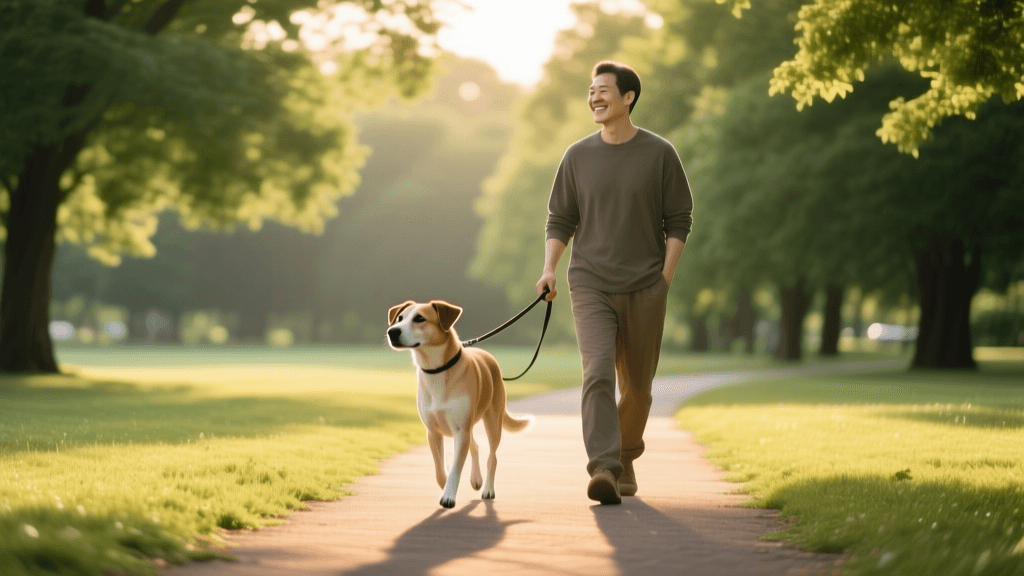
Exercise remains vital for senior dogs to maintain muscle mass, which acts as a shock absorber for arthritic joints. However, the 'weekend warrior' approach of long, exhausting hikes is detrimental. Transition to shorter, more frequent walks—such as three 15-minute strolls per day rather than one 45-minute march. Keep the pace leisurely and allow your dog to dictate the speed. Incorporate 'Sniffaris,' which are slow walks where the dog is allowed to stop and sniff every bush and tree. Sniffing provides intense mental enrichment that tires out a dog's brain without putting mechanical stress on their joints. Avoid activities that require sudden stops, sharp turns, or jumping, such as fetch or frisbee.
Diet, Weight Management, and Supplements
Weight management is arguably the single most effective non-pharmaceutical treatment for canine arthritis. Every extra pound of body fat places disproportionate stress on compromised joints. Work with your veterinarian to calculate your dog's ideal resting energy requirement (RER) and measure their food using a digital kitchen scale rather than a measuring cup for precision. Transitioning to a senior-specific kibble or a prescription joint-support diet can help manage caloric intake while providing targeted nutrients. Supplementing with Omega-3 fatty acids, specifically EPA and DHA derived from wild-caught fish oil, has been clinically proven to reduce joint inflammation. Additionally, supplements containing Green-Lipped Mussel, Glucosamine Hydrochloride, and Chondroitin Sulfate can help support cartilage health over time.
Grooming and Hygiene Adjustments
Senior dogs often lose the flexibility required to groom themselves, and their reduced activity levels mean their nails no longer wear down naturally. Overgrown nails alter the angle of the paw, pushing the toes apart and putting severe strain on the wrist and shoulder joints. Commit to trimming or grinding your dog's nails every two to three weeks. If bending down to groom your dog causes them pain, invest in a raised grooming table or use a non-slip mat on a raised kitchen counter to keep their spine in a neutral position during brushing. For bathing, use a waterless foam shampoo or grooming wipes between full baths to reduce the frequency of slippery, stressful tub sessions. If a full bath is necessary, use a handheld showerhead and place a rubber suction mat at the bottom of the tub.
Comparison Chart: Standard vs. Senior-Friendly Dog Gear
Upgrading your dog's gear can seem like a significant investment, but the return on investment regarding their pain reduction and mobility is immeasurable. Below is a comparison of standard gear versus senior-specific upgrades.
| Gear Category | Standard Option | Senior-Friendly Upgrade | Estimated Cost | Primary Benefit |
|---|---|---|---|---|
| Bedding | Polyester fiberfill bed | High-density orthopedic memory foam | $80 - $200 | Prevents joints from pressing against hard floors; aligns spine. |
| Food & Water Bowls | Floor-level stainless steel | Elevated bamboo or adjustable stands | $25 - $60 | Reduces neck and shoulder strain while eating or drinking. |
| Walking Gear | Standard neck collar | Front-clip or dual-clip no-pull harness | $30 - $75 | Distributes pressure across the chest; prevents tracheal and cervical strain. |
| Vehicle Access | Manual lifting by owner | Telescopic aluminum or folding ramp | $90 - $180 | Eliminates impact shock on hips/knees from jumping; protects owner's back. |
| Home Flooring | Exposed hardwood or tile | Interlocking foam mats or runner rugs | $40 - $150 | Provides essential traction to prevent splaying and muscle strain. |
When to Consult Your Veterinarian
While environmental modifications and lifestyle adjustments are foundational, they are most effective when paired with professional veterinary care. Osteoarthritis is a progressive disease, and pain management protocols will need to evolve as your dog ages. Your veterinarian may prescribe Non-Steroidal Anti-Inflammatory Drugs (NSAIDs) specifically formulated for canines, which are highly effective at managing daily pain. Never administer human pain medications like ibuprofen or acetaminophen, as these are highly toxic to dogs.
Beyond pharmaceuticals, ask your vet about referral to a veterinary rehabilitation therapist. Modalities such as Class IV cold laser therapy, underwater treadmill sessions, and canine acupuncture have shown remarkable success in reducing inflammation and improving joint mobility without the side effects of long-term medication. Regular bi-annual wellness exams, including comprehensive blood panels, will ensure that your dog's liver and kidneys are healthy enough to process any prescribed medications. By combining proactive home modifications, a tailored daily routine, and expert veterinary guidance, you can ensure your senior dog's final years are defined by comfort, dignity, and joy.
aaron-whyte
All our authors care for dogs every day — read more of their work on the authors page.