2026 Leash Reactivity Protocol: Adaptil Express and Desensitization
Discover the 2026 veterinary-approved protocol for managing canine leash reactivity using Adaptil Express spray and systematic desensitization techniques.
Understanding Leash Reactivity in the Modern Era
As we navigate dog ownership in 2026, urbanization and denser living spaces have led to a documented rise in canine leash reactivity. Leash reactivity is frequently misunderstood by the general public as outright aggression, but veterinary behaviorists emphasize that it is predominantly rooted in fear, frustration, or anxiety. When a dog feels trapped by a leash and confronted by a trigger—such as an unfamiliar dog, a loud vehicle, or a fast-moving cyclist—their natural 'fight or flight' response is activated. Because the leash removes the 'flight' option, the dog often defaults to a 'fight' display, manifesting as lunging, barking, and snarling.
Managing this behavior requires a multifaceted approach that prioritizes the dog's emotional welfare. According to the ASPCA's guidelines on common dog behavior issues, punitive measures like prong collars or shock collars only suppress the outward symptoms of fear while exacerbating the underlying anxiety. Instead, modern 2026 protocols rely on a combination of chemical communication (pheromones), environmental management, and systematic desensitization to rewire the dog's emotional response to triggers.
The Science Behind Adaptil Express Spray
At the core of the modern reactivity protocol is the use of synthetic pheromones, specifically Adaptil Express. This product is a synthetic analogue of the Dog Appeasing Pheromone (DAP), which is naturally secreted by lactating mother dogs to reassure and calm their puppies. The olfactory system in dogs is directly linked to the limbic system, the brain's emotional center. When a dog inhales DAP, it triggers a physiological relaxation response, lowering cortisol levels and reducing heart rate.
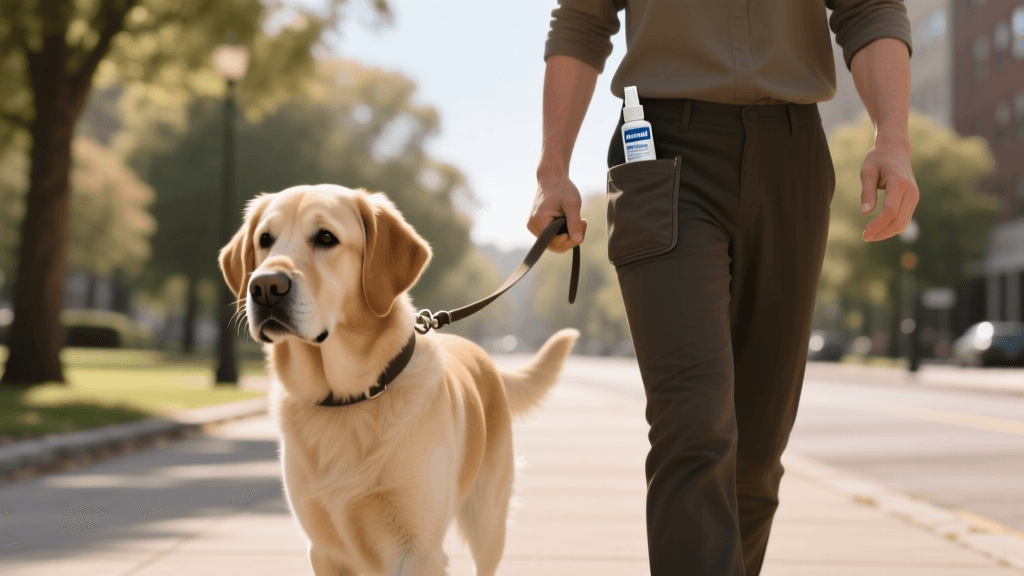
Unlike daily oral medications that require weeks to build up in the bloodstream, Adaptil Express is designed for situational, on-the-go use. The 2026 formulation features a rapid-acting nebulizer spray that takes effect within 15 to 20 minutes and lasts for approximately two hours. For leash reactivity, the protocol involves spraying the product onto a specialized bandana or the dog's harness (never directly into the face or eyes) 20 minutes before stepping outside. This creates a 'calming bubble' that raises the dog's threshold for stress, making them more receptive to the training and desensitization work that follows.
The 2026 Sub-Threshold Desensitization Protocol
Desensitization and counter-conditioning (DSCC) is the gold standard for treating reactivity. The goal is to expose the dog to their trigger at a distance where they notice it but do not react (sub-threshold), and pair that exposure with high-value rewards. The American Kennel Club's expert advice on reactive dog training stresses that pushing a dog over their threshold ruins the training session and reinforces the neural pathways associated with panic.
Phase 1: Preparation and Baseline (Days 1-7)
- Identify the Threshold Distance: For most reactive dogs in 2026 urban environments, the initial safe distance is between 50 and 100 feet from the trigger. If your dog barks or stiffens, you are too close.
- Prepare High-Value Rewards: Standard kibble will not suffice when the brain is flooded with adrenaline. Use boiled chicken breast, freeze-dried beef liver, or low-sodium string cheese, cut into 1/4-inch cubes.
- Apply Adaptil Express: Spray the dog's walking harness 20 minutes before the session. Allow the dog to decompress in the house before attaching the leash.
Phase 2: The 'Look at That' (LAT) Game (Days 8-30)
- Walk your dog to your pre-determined safe distance (e.g., a quiet park bench 60 feet from a walking path).
- When a trigger (e.g., another dog) appears in the distance, the moment your dog looks at it, use a marker word like 'Yes!' or click a clicker.
- Immediately feed a high-value treat. The dog will turn away from the trigger to eat.
- If the dog continues to stare, whine, or lunge, the trigger is too close. Calmly perform an 'emergency U-turn' and increase the distance by 20 feet.
- Keep sessions strictly to 15 minutes. Mental fatigue from processing fear and learning new coping mechanisms is exhausting. Short, positive sessions yield the best neurological rewiring.
Phase 3: Closing the Gap (Months 2-6)
As your dog's emotional resilience improves, you will notice their 'recovery time' decreases. A dog that previously took five minutes to calm down after seeing a trigger from 50 feet away may now look at the trigger and immediately look back at you for a treat from 40 feet away. Only decrease the distance by 5 to 10 feet when the dog is consistently successful at the current distance for at least two weeks.
Comparing 2026 Calming Interventions
While Adaptil Express and desensitization form the core of our protocol, many owners wonder how this compares to other popular anxiety interventions available on the market today. Below is a comparative analysis of common reactivity management tools in 2026.
| Intervention | 2026 Est. Cost | Onset Time | Best Use Case | Efficacy for Leash Reactivity |
|---|---|---|---|---|
| Adaptil Express Spray | $25 - $35 | 15-20 Minutes | Pre-walk application to lower baseline stress and raise the reactivity threshold. | High (as an adjunct to training) |
| Compression Wraps (e.g., ThunderShirt) | $50 - $65 | Immediate | Generalized anxiety, thunderstorms, and travel. Less effective for active leash reactivity due to harness interference. | Moderate |
| L-Theanine / Zylkene Chews | $30 - $45 | 60-90 Minutes | Daily baseline support for mildly anxious dogs. Must be administered well before the walk. | Moderate to High |
| Prescription Trazodone | $15 - $30 (per month) | 90-120 Minutes | Severe, unmanageable panic where the dog cannot eat or learn. Requires veterinary oversight. | High (but may cause sedation) |
| Biometric GPS Collars (e.g., Fi Series 4) | $149 + Sub | N/A | Tracking escape attempts and mapping 'safe zones' to avoid known trigger hotspots during decompression walks. | Indirect (Management tool) |
Leveraging Biometric and GPS Technology
Technology in 2026 has revolutionized how we manage reactive dogs outside of active training sessions. Smart collars equipped with GPS and basic biometric feedback allow owners to map their neighborhoods and identify 'trigger hotspots.' By reviewing your walk data, you might realize that your dog's reactivity spikes consistently near a specific intersection at 8:00 AM due to school buses. This data allows you to practice 'environmental management'—routing your decompression walks through quieter, low-traffic areas during off-peak hours.
Furthermore, certified Fear Free professionals emphasize that a reactive dog needs 'decompression walks' where they are allowed to sniff and explore without the pressure of obedience training. Using a long-line leash (15 to 30 feet) attached to a secure, escape-proof harness in an empty field allows the dog to process environmental stress and lower their overall cortisol load, making them more receptive to your desensitization work later in the week.
When to Consult a Veterinary Behaviorist
While the combination of Adaptil Express and systematic desensitization is highly effective for the majority of leash-reactive dogs, some cases require pharmaceutical intervention. If your dog is biting the leash, redirecting aggression onto the handler, or refusing high-value treats even at a distance of 100 feet, their nervous system is likely in a state of chronic hyperarousal. In these cases, a board-certified veterinary behaviorist may prescribe daily SSRIs (like fluoxetine) alongside your training protocol to provide the neurological stability required for learning to occur.
Conclusion
Managing a leash-reactive dog is a marathon, not a sprint. By utilizing the 2026 protocol of pre-walk Adaptil Express application, strict sub-threshold distance management, and high-value counter-conditioning, you can fundamentally change how your dog perceives the world. Patience, consistency, and a commitment to force-free, science-based methods will ultimately transform your stressful walks into peaceful, bonding experiences.
aaron-whyte
All our authors care for dogs every day — read more of their work on the authors page.