2026 Guide: Adaptil Diffuser & Crate Training for Separation Anxiety
Discover how to combine the Adaptil Calm Home Diffuser with graduated crate training in 2026 to effectively manage and reduce your dog's separation anxiety.
Navigating Separation Anxiety in the 2026 Hybrid-Work Era
As we settle into the flexible, hybrid work models that define the professional landscape in 2026, our canine companions are facing a unique behavioral challenge: unpredictable alone time. Unlike the rigid schedules of the past, modern dogs often experience erratic periods of isolation, which can trigger or exacerbate canine separation anxiety. This condition is not merely a case of a dog missing its owner; it is a profound panic response that can lead to destructive behavior, excessive vocalization, and even self-injury.
According to the ASPCA, separation anxiety is triggered when a dog becomes upset because of separation from the people they are attached to. To combat this, veterinary behaviorists in 2026 are increasingly recommending a multimodal approach. One of the most effective, non-pharmaceutical combinations available today is the use of the Adaptil Calm Home Diffuser paired with a rigorous, graduated crate-training protocol. This comprehensive guide will walk you through the science, setup, and step-by-step execution of this strategy to help your dog find peace when left alone.
The Science Behind the Adaptil Calm Home Diffuser
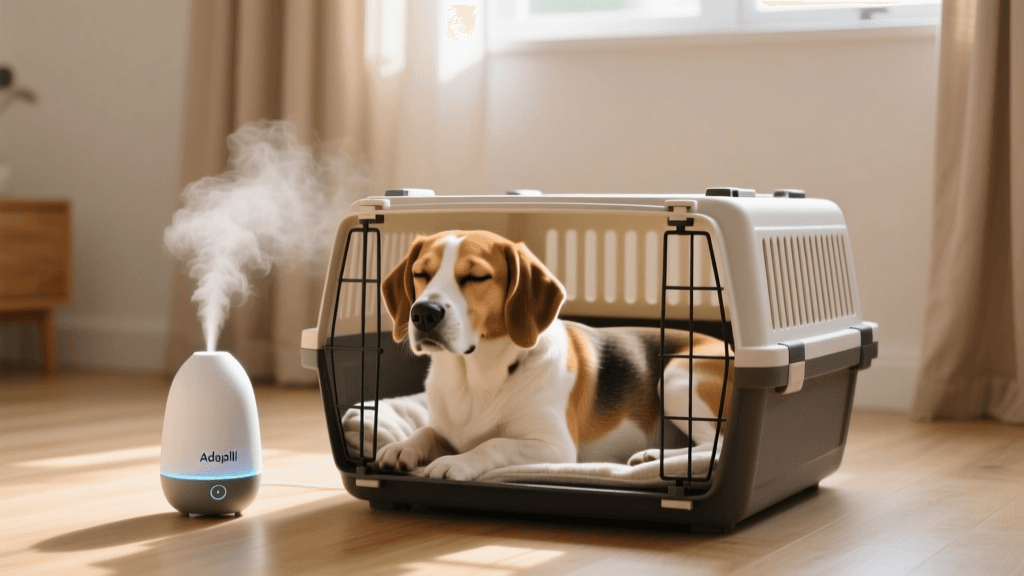
Before diving into training, it is crucial to understand the biological mechanism of the Adaptil Calm Home Diffuser. This device releases a synthetic copy of the Dog Appeasing Pheromone (DAP). In nature, nursing mother dogs produce this pheromone to reassure their puppies and create a sense of safety and attachment. When diffused into your home's environment, DAP binds to the vomeronasal organ in your dog's nasal cavity, sending a neurological signal to the brain that the environment is secure.
It is important to note that Adaptil is not a sedative. It will not knock your dog out or mask the symptoms of severe panic. Instead, it lowers the baseline anxiety threshold, making your dog more receptive to behavioral modification and training. For optimal results in 2026, veterinary professionals recommend plugging the diffuser into the specific room where your dog's 'safe space' crate is located, ensuring it is not blocked by furniture or placed directly under an air conditioning vent, which can disperse the pheromones too quickly.
Designing the Ultimate 'Safe Space' Crate
Crate training is often misunderstood as a punitive measure, but when executed correctly, it provides a den-like sanctuary for an anxious dog. To leverage the crate for separation anxiety protocol, you must optimize its setup.
- Dimensions: The crate should be large enough for your dog to stand up, turn around, and lie down fully stretched out, but no larger. Excess space can allow an anxious dog to pace or use one corner as a bathroom area.
- Bedding: Use a durable, chew-resistant bed. For dogs with a history of destroying plush bedding when panicked, opt for a Kuranda elevated cot or a heavy-duty canvas mat.
- Covering: Many anxious dogs feel more secure when the crate is partially covered. Use a breathable crate cover on three sides to simulate a den environment, leaving the front open for airflow and visibility.
- Location: Place the crate in a quiet, low-traffic area of the home, ideally in the room where the Adaptil diffuser is plugged in. Avoid placing it near exterior windows where outdoor stimuli (like passing cars or neighborhood dogs) might trigger reactive barking.
The 2026 Graduated Departure Protocol
The core of treating separation anxiety is Systematic Desensitization and Counterconditioning (SDCC). The goal is to expose your dog to the triggers of your departure at an intensity so low that it does not provoke a panic response, gradually increasing the difficulty over weeks or months. Here is the modern protocol:
Phase 1: Desensitizing Pre-Departure Cues
Dogs with separation anxiety often begin panicking before you even leave. They recognize the 'chain of events': putting on shoes, picking up keys, grabbing a coat. You must break the predictive power of these cues.
- Put on your coat, then sit down and read a book for 10 minutes. Take the coat off.
- Pick up your keys, jingle them, and place them back on the counter. Do not leave.
- Put on your shoes, tie them, and then take them off.
Repeat these actions randomly throughout the day until your dog exhibits zero signs of anticipation or anxiety when you perform them.
Phase 2: Micro-Departures (The Threshold Step)
Once pre-departure cues are neutralized, begin working on the actual departure. Place your dog in the crate with a high-value, long-lasting enrichment item (such as a frozen Kong stuffed with plain pumpkin and low-sodium chicken broth). Walk to the front door, open it, step outside, and immediately close it. Return inside before your dog finishes the treat or shows any distress.
Phase 3: Building Duration
Use a smart pet camera to monitor your dog's body language while you are outside. You are looking for relaxed posture, slow blinking, and engagement with the treat. If your dog paces, pants heavily, or whines, you have pushed the duration too far and must drop back to a shorter time interval.
| Training Week | Target Absence Duration | Number of Daily Sessions | Success Criteria |
|---|---|---|---|
| Week 1 | 1 to 10 seconds | 5 - 8 sessions | Dog remains quiet and engaged with chew toy. |
| Week 2 | 10 to 45 seconds | 4 - 6 sessions | No pacing or whining upon return. |
| Week 3 | 1 to 5 minutes | 3 - 4 sessions | Dog is resting or sleeping upon camera check. |
| Week 4 | 5 to 15 minutes | 2 - 3 sessions | Calm demeanor, normal heart rate (observed via breathing). |
| Week 5+ | 15 to 60+ minutes | 1 - 2 sessions | Dog tolerates longer absences without destructive behavior. |
Comparing Alone-Time Anxiety Interventions
While the Adaptil and crate protocol is highly effective, many pet parents wonder how it stacks up against other popular 2026 market interventions. Below is a comparison of common holistic and physical anxiety aids.
| Intervention | Mechanism of Action | Best Used For | Limitations |
|---|---|---|---|
| Adaptil Calm Diffuser | Synthetic pheromones (DAP) signal safety to the brain. | Creating a baseline of calm in the home environment; aiding crate training. | Does not stop active panic attacks; requires consistent environmental setup. |
| Compression Wraps (e.g., ThunderShirt) | Constant, gentle pressure stimulates the parasympathetic nervous system. | Storm anxiety, fireworks, and mild travel stress. | Can cause overheating in summer; some dogs freeze rather than relax. |
| L-Theanine & Tryptophan Chews | Amino acids promote serotonin and dopamine production. | Mild general anxiety; situational stressors like vet visits. | Takes 30-45 minutes to metabolize; efficacy varies wildly by individual dog. |
Enrichment Strategies for Alone Time
A bored dog is an anxious dog. In 2026, mental enrichment is considered just as critical as physical exercise for behavioral health. When utilizing the graduated departure protocol, always provide an enrichment item that requires licking or chewing, as these repetitive motions release endorphins in the canine brain.
- West Paw Toppl: A modular, puzzle-like toy that can be stuffed with wet food and frozen. Its unique shape prevents dogs from easily extracting the contents, extending engagement time.
- LickiMat Soother: Spread plain Greek yogurt or pureed sardines over the textured surface and freeze it. Licking is a naturally self-soothing behavior for dogs.
- Snuffle Mats: For dogs that are not food-motivated but love scent work, hiding a few high-value treats in a dense snuffle mat can provide 15 minutes of intense mental focus before you leave.
Common Pitfalls to Avoid
Even with the best intentions, pet parents often make mistakes that inadvertently reinforce separation anxiety. Avoid these common errors:
- Punishing Destructive Behavior: If you come home to a shredded dog bed or scratched door, never scold your dog. They cannot connect your anger to an action they performed hours ago. Punishment only increases their overall anxiety and damages your bond.
- Making a Fuss When Leaving or Returning: Keep departures and arrivals incredibly boring. Ignore your dog for the first 5 to 10 minutes when you walk through the door. This teaches them that your coming and going is a non-event.
- Rushing the Protocol: The most frequent reason SDCC fails is moving to longer absences before the dog is truly comfortable with shorter ones. If your dog struggles at 3 minutes, do not jump to 10 minutes the next day. Drop back to 1 minute and build up more slowly.
When to Consult a Veterinary Behaviorist
While the Adaptil and graduated departure protocol is highly effective for mild to moderate cases, severe separation anxiety often requires pharmaceutical intervention. If your dog is injuring themselves trying to escape the crate, breaking teeth on window sills, or exhibiting extreme panic (hypersalivation, intense panting, loss of bowel control) the moment you leave, behavioral modification alone may not be enough.
In these cases, the brain is in a state of such high arousal that learning cannot occur. A board-certified veterinary behaviorist can prescribe anti-anxiety medications, such as Fluoxetine or Clomipramine, to lower the dog's panic threshold enough for training to take hold. To find a qualified specialist in your area, consult the directory provided by the American College of Veterinary Behaviorists (DACVB). Additionally, the American Kennel Club (AKC) offers excellent resources on recognizing the subtle early signs of distress in dogs.
Conclusion
Managing canine separation anxiety in 2026 requires patience, consistency, and a deep understanding of your dog's emotional needs. By combining the biological reassurance of the Adaptil Calm Home Diffuser with a meticulously structured, graduated crate-training protocol, you can help your dog rewrite their emotional response to being alone. Remember that progress is rarely linear; there will be good days and setbacks. Celebrate the small victories, keep your departures boring, and always prioritize your dog's mental wellbeing over a rigid schedule. With time and compassionate training, your dog can learn that being alone simply means it is time to rest.
jonas-cole
All our authors care for dogs every day — read more of their work on the authors page.