2026 Soundproof Safe Room Setup for Noise-Phobic Dogs
Learn how to build a soundproof safe room for noise-phobic dogs in 2026 using acoustic panels, brown noise masking, and fear-free conditioning.
The Science Behind Noise Phobias and Reactivity in 2026
Living with a reactive or noise-phobic dog requires immense patience, empathy, and strategic environmental management. Whether your dog is triggered by urban sirens, neighborhood fireworks, or the deep rumble of thunderstorms, their fight-or-flight response can severely impact their quality of life—and yours. As we navigate advanced dog care in 2026, veterinary behaviorists are moving away from simply trying to 'toughen dogs out' and instead focusing heavily on proactive environmental modification. One of the most effective, science-backed strategies for managing severe noise phobias and generalized anxiety is the creation of a dedicated, sound-dampened safe room.
This is not merely a wire crate placed in the corner of your living room; it is a meticulously engineered sensory sanctuary designed to lower cortisol levels and block out triggering acoustic frequencies. According to the American Kennel Club, noise phobias often stem from a dog's heightened auditory sensitivity. Canines can detect frequencies up to 65,000 Hertz, meaning the sharp, high-frequency cracks of thunder or the piercing whistle of fireworks can cause actual physical discomfort. When a reactive dog is exposed to these triggers without an escape route, their sympathetic nervous system floods their body with adrenaline. Over time, this chronic stress leads to generalized anxiety, making the dog reactive to even minor daily stimuli. By creating a space that physically absorbs sound waves and masks sudden acoustic spikes, you provide your dog with a biological off-switch.
Step 1: Selecting and Prepping the Ideal Safe Room
The first step in your 2026 safe room setup is choosing the right physical space within your home. You need an interior room with zero exterior walls and, ideally, no windows. Walk-in closets, interior bathrooms, or windowless pantries are excellent candidates. Hard surfaces like bathroom tiles will cause sound to reverberate and amplify, so a carpeted walk-in closet or a spare interior bedroom is often the superior choice.
Measure the square footage carefully. A space of at least 30 square feet is recommended to allow your dog to pace, stretch, or dig at bedding without feeling confined, which can trigger claustrophobia-induced panic. Remove any hazardous items, sharp corners, or fragile objects that a panicked dog could knock over or injure themselves on. If the room has HVAC vents, consider installing magnetic acoustic vent covers to prevent noise from traveling through the ductwork directly into the sanctuary.
Step 2: Installing Acoustic Dampening Materials
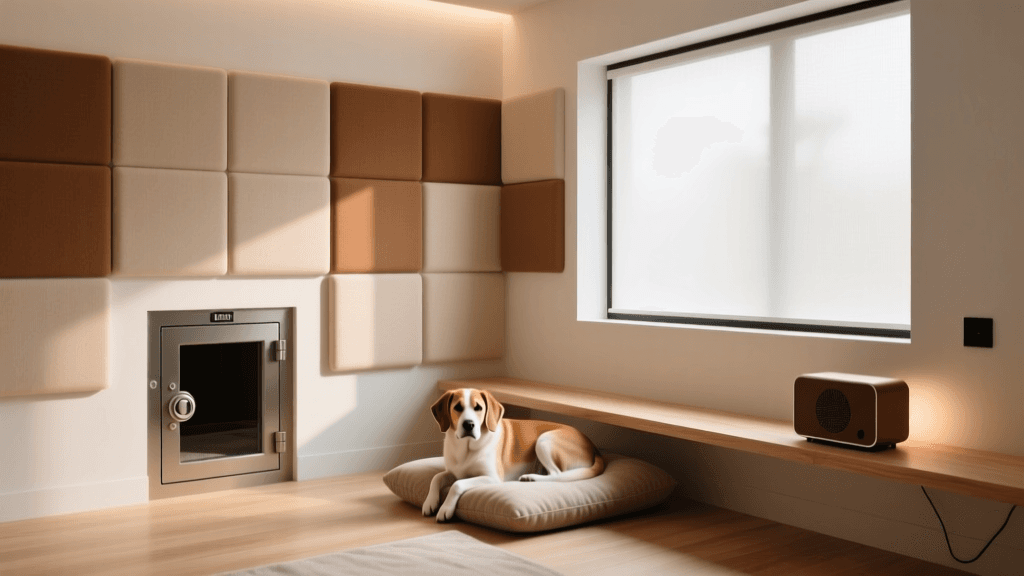
To truly soundproof the space, you must address both airborne noise and structural vibration. It is vital to understand the difference between sound absorption and sound blocking. Soft materials absorb echoes, while dense, heavy materials block sound from entering. In 2026, high-density fiberglass acoustic panels remain the gold standard for residential sound absorption. Brands like ATS Acoustics and Bubos offer fabric-wrapped panels with a Noise Reduction Coefficient (NRC) of 0.85 or higher, meaning they absorb 85% of the sound waves that hit them.
For a standard 6x5 foot closet, you will need approximately six 24x48-inch panels. Mount these panels on the walls at your dog's head height and above, using Z-clips or heavy-duty adhesive strips. Do not use cheap foam egg-crate panels; they only absorb high-frequency echoes and do virtually nothing to block the low-frequency rumbles of thunder or heavy traffic that often trigger canine anxiety. For the door, install a heavy-duty acoustic door sweep to seal the gap at the floor. Additionally, hang a mass-loaded vinyl (MLV) curtain over the interior side of the door. MLV is incredibly dense and adds the necessary mass to block sound transmission through the hollow core of most interior doors.
Step 3: Sound Masking with Brown Noise Technology
Blocking sound is only half the battle; you must also mask sudden acoustic spikes that penetrate the room. However, a major mistake many owners make is using cheap, basic white noise machines. Standard white noise contains equal energy across all frequencies, meaning it produces a harsh, high-frequency hiss that can actually aggravate a dog's sensitive hearing. In 2026, veterinary acousticians strongly recommend using pink noise or brown noise for canine safe rooms. Brown noise emphasizes lower frequencies, creating a deep, soothing rumble similar to a distant waterfall or heavy rain, which is much more comforting to canine ears and effectively masks the low-end rumble of thunder.
2026 Sound Masking Device Comparison Table
| Device Model | Noise Profile | Max Decibel Output | 2026 Retail Price | Best Application |
|---|---|---|---|---|
| LectroFan Evo | White, Pink, Brown | 85 dB | $55.00 | Small to medium closets |
| Hatch Restore 3 | Custom Soundscapes | 80 dB | $129.00 | Bedrooms, smart home integration |
| Rohm Sound+ Sleep | Adaptive Brown Noise | 90 dB | $199.00 | Large rooms, severe thunderstorms |
| YogaSleep Dohm Classic | Acoustic Fan (Natural) | 75 dB | $49.00 | Dogs fearful of digital static |
For the best results, place your chosen sound machine near the door of the safe room to create an acoustic shield, rather than directly next to your dog's bed, which could overwhelm their ears.
Step 4: Olfactory and Tactile Comforts
A true safe room engages the calming senses beyond just hearing. The Fear Free Pets organization emphasizes the critical importance of pheromone therapy in reducing environmental stress. Plug in an Adaptil Calm Diffuser in the safe room at least 48 hours before a predicted storm or fireworks event. Adaptil releases a synthetic version of the dog-appeasing pheromone (DAP), which signals safety and security to the canine brain.
For tactile comfort, provide a deep-pressure therapy bed. Elevated, chew-proof cots draped in a heavy, unwashed blanket that smells like you are ideal. The familiar scent of your skin oils, combined with the enclosed, den-like nature of the room, encourages the parasympathetic nervous system to take over, slowing the dog's heart rate and reducing panting.
Step 5: The 14-Day Fear-Free Conditioning Protocol
You cannot wait until a thunderstorm hits to introduce your dog to this space; doing so will permanently associate the room with panic. Conditioning must happen during calm, sunny weather when your dog is completely relaxed.
- Days 1-3 (Exploration): Leave the door wide open. Toss high-value treats (like freeze-dried liver or boiled chicken) into the room. Feed your dog their regular meals inside the room. Do not close the door or turn on the noise machine yet.
- Days 4-7 (Positive Association): Introduce long-lasting enrichment toys, like a frozen Kong stuffed with peanut oil and bone broth. Sit just outside the room while they chew, speaking in a calm, low register. Close the door for 10-second intervals, then open it and reward.
- Days 8-11 (Acoustic Introduction): Turn on your brown noise machine at the lowest possible volume while your dog is eating or playing in the room. Gradually increase the volume over these four days until it reaches the level you would use during a storm.
- Days 12-14 (Duration Building): Close the door with the brown noise running at full volume. Stay in the room with your dog, practicing gentle massage or TTouch techniques. Gradually step outside the room for 1-minute intervals, returning before your dog shows any signs of distress.
Conclusion
Managing a reactive, noise-phobic dog is a marathon, not a sprint. By investing in a properly engineered safe room utilizing high-NRC acoustic panels, mass-loaded vinyl, and brown noise masking, you are giving your anxious dog the ultimate gift: a place where they can finally feel secure in a loud, overwhelming world. Consistency, patience, and a fear-free approach to conditioning will transform this physical space into a psychological sanctuary for your beloved companion.
jonas-cole
All our authors care for dogs every day — read more of their work on the authors page.