Soundproof Dog Safe Room 2026: Noise Phobia Guide
Learn how to build a soundproof dog safe room in 2026. Discover acoustic materials, brown noise techniques, and behavioral tips for noise phobia.
The Rise of Noise Phobia in Modern Urban Environments
For dogs suffering from noise phobia, the world can be a terrifying place. Whether it is the sudden crack of a summer thunderstorm, the booming echoes of holiday fireworks, or the relentless rumble of urban construction, noise aversion is one of the most common and distressing behavioral issues reported by pet owners. In 2026, with urban density continuing to increase and extreme weather events becoming more frequent, managing a reactive and anxious dog requires more than just a comforting pat on the head. It requires a strategic, environmental approach.
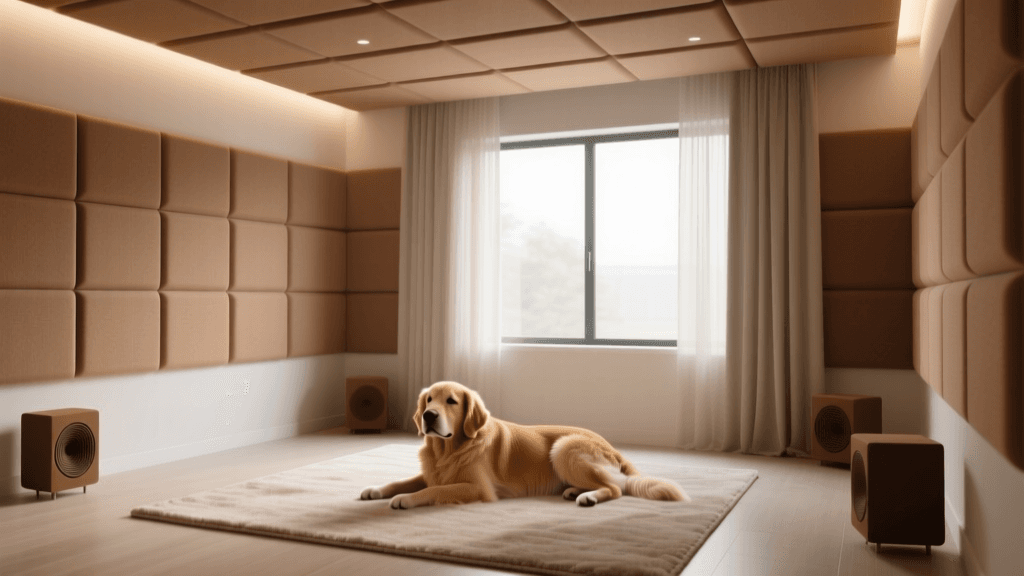
Canines possess an extraordinary sense of hearing, capable of detecting frequencies up to 65,000 Hz—roughly three times higher than the human limit. More importantly, dogs are highly sensitive to low-frequency rumbles and sudden changes in barometric pressure. When a dog experiences a noise phobia trigger, their amygdala hijacks their nervous system, initiating a profound fight-or-flight response. During these moments, rational training goes out the window. The most effective management strategy is creating a dedicated, soundproofed 'safe room' or acoustic bunker that dampens the auditory assault and provides a psychological sanctuary.
Sound Blocking vs. Sound Absorption: The 2026 Science
Before purchasing materials, it is crucial to understand the difference between sound absorption and sound blocking. Many well-meaning dog owners line their walls with egg cartons or cheap acoustic foam wedges. While these materials absorb high-frequency echoes inside the room (improving acoustics for a home theater), they do virtually nothing to stop low-frequency noise from entering the room.
To block the deep, resonant boom of thunder or fireworks, you need mass and airtight seals. Sound behaves like water; if air can leak through a crack under a door or around a window frame, sound waves will pour through that same gap. In 2026, the most effective DIY soundproofing methodology for dog owners combines Mass Loaded Vinyl (MLV), dense fiberglass acoustic panels, and heavy-duty weatherstripping to create a decoupled, high-mass barrier.
Step-by-Step Guide to Building Your Dog's Acoustic Bunker
Step 1: Choose the Right Location and Seal the Gaps
Select an interior room with no exterior walls, such as a large walk-in closet, a basement laundry room, or an interior bathroom. Basements are naturally excellent sound bunkers because the surrounding earth absorbs a massive amount of acoustic energy. Once the room is chosen, your first task is to seal all air gaps.
- Door Sweeps: Install a heavy-duty automatic door bottom or a thick EPDM rubber door sweep. The M-D Building Products 36-Inch EPDM Weatherstrip remains a top choice in 2026 for its durability and dense seal, costing around $25.
- Window Treatments: If the room has a window, seal it completely. Use acoustic window inserts or hang a heavy, multi-layered soundproof curtain (look for curtains with a built-in MLV layer, which typically retail for $120-$150 per panel).
- Outlet Gaskets: Remove the faceplates of electrical outlets on exterior-facing walls and install foam outlet gaskets. This takes ten minutes and costs less than $5, but it stops sound from traveling through the wall cavities.
Step 2: Add Mass to the Walls and Door
Hollow-core bedroom doors are essentially acoustic sieves. You can dramatically improve the Sound Transmission Class (STC) rating of a standard door by applying Mass Loaded Vinyl (MLV). MLV is a dense, flexible material made from barium sulfate and vinyl. A 1 lb per square foot roll of MLV can be stapled or adhered directly to the interior side of the door and the walls. For renters who cannot modify the walls permanently, the Audimute Soundproofing Door Blanket (priced around $180 in 2026) offers a removable, heavy-duty alternative that hangs over the door and absorbs a significant amount of impact and airborne noise.
Step 3: Mask the Low Frequencies with Brown Noise
Once the room is physically dampened, you must mask the residual low-frequency rumbles that penetrate the walls. White noise is too high-pitched and harsh for canine ears. Instead, utilize Brown Noise, which emphasizes lower frequencies, mimicking the sound of a deep, rushing waterfall or heavy wind. Brown noise effectively blankets the low-end frequencies of thunder and fireworks.
Place a dedicated sound machine, such as the LectroFan Evo or a smart speaker programmed to a continuous brown noise track, near the door or window (the weakest acoustic points) to intercept the incoming sound before it reaches your dog's ears. Keep the volume at a safe but masking level—around 65 to 70 decibels.
2026 Soundproofing Material Cost & Comparison Table
Below is a breakdown of the most effective materials for constructing a canine safe room, complete with estimated 2026 pricing and primary applications.
| Material / Product | Primary Acoustic Function | Estimated 2026 Cost | Best Application |
|---|---|---|---|
| Mass Loaded Vinyl (1lb/sqft) | Sound Blocking (Adds Mass) | $2.50 - $3.00 / sq ft | Stapling to hollow doors and drywall |
| EPDM Rubber Door Sweep | Air Gap Sealing | $20 - $30 | Bottom of the safe room door |
| Audimute Door Blanket | Sound Absorption & Blocking | $170 - $190 | Renter-friendly door coverage |
| Fiberglass Acoustic Panels (2-inch) | Echo Reduction & High-Freq Absorption | $45 - $60 / pack of 12 | Interior walls to reduce room reverberation |
| LectroFan Evo Sound Machine | Frequency Masking (Brown Noise) | $45 - $55 | Placed near weak points (doors/windows) |
Behavioral Conditioning: Making the Safe Room a Happy Place
A soundproof room is only effective if your dog actually wants to be inside it. If you only usher your dog into the bunker when they are already panting, pacing, and terrified, the room itself will become a predictor of trauma. You must build a positive conditioned emotional response (+CER) to the space long before the next storm hits.
According to guidelines published by the Humane Society, creating a positive association with a safe space is paramount for anxious dogs. Begin by feeding your dog their highest-value meals exclusively inside the safe room. Introduce long-lasting enrichment items, such as frozen KONG toys stuffed with plain pumpkin and low-sodium chicken broth, or lick mats smeared with plain Greek yogurt. Licking and chewing are naturally self-soothing behaviors that release endorphins in the canine brain.
The American Kennel Club (AKC) also emphasizes the importance of classical conditioning during noise events. When the dog is in the safe room and a distant rumble of thunder occurs, immediately offer a high-value treat like boiled chicken or freeze-dried liver. The goal is to rewire the dog's brain to associate the distant sound with a positive outcome, gradually raising their threshold for reactivity.
Pro Tip for 2026: Integrate your smart home ecosystem to automate the safe room. Set your smart home hub to automatically turn on the brown noise machine and dim the lights to a warm, calming amber hue the moment your local weather API detects a severe thunderstorm warning or a drop in barometric pressure. This ensures the room is prepped before the dog even registers the first crack of lightning.
What to Do During a Noise Event
When the fireworks start or the storm rolls in, guide your dog to the safe room using a cheerful, relaxed tone. Do not drag them or force them, as this will spike their cortisol levels. Once inside, turn on the brown noise machine, close the sealed door, and sit with them if they seek comfort. Contrary to outdated behavioral myths, comforting a frightened dog does not 'reinforce' the fear; fear is an involuntary emotional state, not a learned trick. Your calm presence, combined with the heavily dampened acoustic environment of your newly built bunker, will serve as an anchor in the storm.
Managing a reactive and noise-phobic dog is a marathon, not a sprint. By investing the time and resources into building a properly soundproofed safe room using modern 2026 acoustic materials, you are providing your dog with a vital coping mechanism. You cannot control the noise of the outside world, but you can control the sanctuary you provide within your home.
robin-maitland
All our authors care for dogs every day — read more of their work on the authors page.