Zoomies Dog Behavior: Why They Happen & How to Manage FRAPs Safely
Why does your dog get the zoomies? Learn the science behind FRAPs, when they signal a problem, and step-by-step strategies to manage them safely.

What Are Dog Zoomies? Defining the Behavior
What qualifies as zoomies: Sudden, explosive bursts of high-speed running — typically in repetitive patterns (circles, figure-eights, or back-and-forth sprints) — lasting 30 seconds to 5 minutes, during which the dog appears unable to redirect or respond to cues.
Normal frequency threshold: 1-3 episodes per day in young dogs; 0-1 per day in mature adults. Episodes exceeding 10 minutes, occurring more than 5 times daily, or involving self-injury cross into concerning territory.
Key distinguishing feature: Unlike compulsive disorders, dogs experiencing FRAPs display relaxed body language before and after episodes — loose, wagging tail, play bows, and "smiling" expression. The behavior is self-limiting and ends spontaneously.
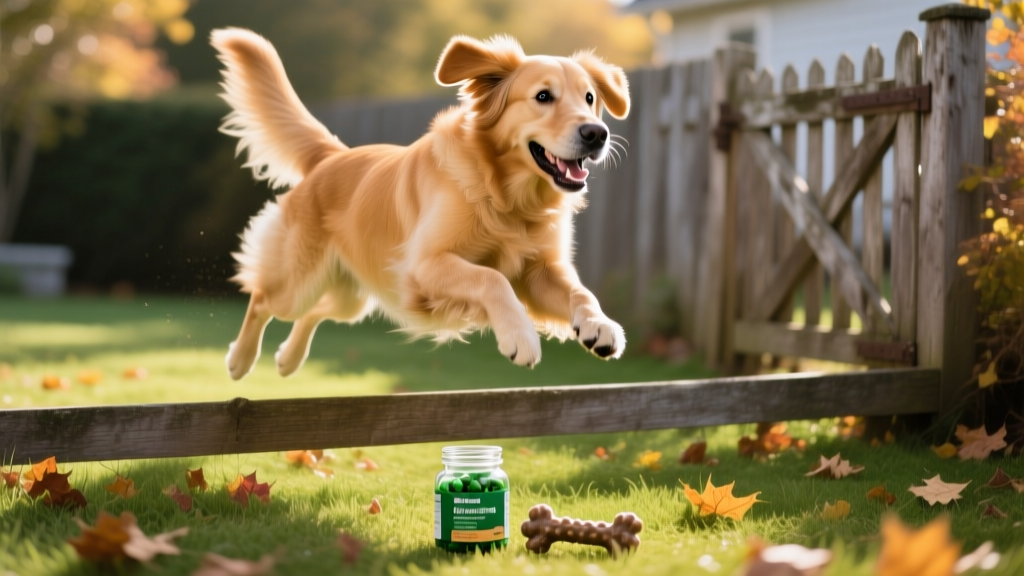
If you've ever watched your dog suddenly tuck their butt and tear across the living room at full speed — bouncing off furniture, spinning in tight circles, or sprinting laps around the yard with wild eyes — you've witnessed what veterinarians and behaviorists call Frenetic Random Activity Periods, or FRAPs. The colloquial term "zoomies" has become so mainstream that the American Kennel Club now references it in their behavioral guidance materials.
Zoomies are a normal canine energy-release mechanism. Think of them as your dog's built-in pressure valve for accumulated physical and mental stimulation. But when zoomies become excessive, destructive, or dangerous — like sprinting on slippery hardwood floors or bolting through an open gate — they shift from charming quirk to behavior problem that needs management.
Why Does My Dog Get the Zoomies? Root Cause Analysis
- Energy accumulation (most common, ~60% of cases): Insufficient physical exercise relative to breed drive. Herding breeds, sighthounds, and terriers are disproportionately affected. A Border Collie needing 90+ minutes of vigorous activity will almost certainly develop FRAPs if limited to two 15-minute leash walks.
- Post-stress decompression (~20%): Zoomies triggered after vet visits, grooming sessions, baths, or tense encounters with other dogs. The dog is metabolizing cortisol and adrenaline through movement. This is functionally similar to a human shaking out tension after a stressful meeting.
- Excitement/anticipation overflow (~10%): Triggered by specific high-arousal events — owner arriving home, meal preparation, leash appearing. Common in adolescent dogs (6-18 months) whose impulse control is still neurologically immature.
- Environmental confinement rebound (~7%): Extended crate time, rainy days indoors, or recovery from surgery (crate rest protocols). The longer the confinement, the more intense the rebound zoomies.
- Medical/neurological trigger (~3%): Flea/tick medication reactions, skin allergies causing sudden itch-sprint cycles, cognitive dysfunction in senior dogs, or focal seizure activity that mimics FRAPs.
Understanding which root cause drives your dog's zoomies is essential because the management strategy differs dramatically. A dog zooming from energy accumulation needs more structured exercise. A dog zooming from post-stress decompression needs calming protocols, not more physical exertion. Misidentifying the cause is the single most common reason owners struggle to manage this behavior.
Is It Normal for Dogs to Get Zoomies?
Yes — zoomies are entirely normal in healthy dogs, particularly those under 3 years old. Puppies as young as 8 weeks display proto-zoomie behavior. The Merck Veterinary Manual categorizes FRAPs as species-typical play behavior that serves developmental and physiological functions. However, "normal" doesn't always mean "manageable." A 75-pound Labrador executing zoomies in a small apartment creates real safety risks — knocked-over children, damaged furniture, and paw-pad abrasions on hard flooring.
Medical Rule-Out: When to See a Vet Before Training
Before implementing any behavior modification plan, rule out medical causes. Approximately 3% of FRAP-like episodes have underlying medical triggers that no amount of training will resolve.
Consult your veterinarian if your dog's zoomies match ANY of these patterns:
- Sudden onset in a dog over 7 years old — Senior dogs developing new FRAPs warrant cognitive dysfunction screening and thyroid panel (hypothyroidism can cause behavioral changes in 15-20% of affected dogs)
- Episodes lasting longer than 10 minutes — Extended FRAPs may indicate focal seizure activity, particularly if the dog appears unaware of surroundings
- Zoomies immediately after topical medication application — Isoxazoline-class flea/tick preventives (Bravecto, NexGard, Simparica) carry FDA-documented neurological side effects in susceptible dogs
- Accompanied by skin biting, tail chasing with snapping, or flank sucking — These suggest compulsive disorder or allergic dermatitis, not FRAPs
- Self-injury during episodes — Torn nails, abrasions, or limping post-zoomies indicates the behavior has crossed into dysregulated territory
- No post-episode relaxation — Normal FRAPs end with the dog panting, lying down, and appearing content. Continued agitation suggests anxiety-driven hyperactivity
Typical veterinary workup costs: $150-$400 for physical exam, CBC/chemistry panel, and thyroid testing. Neurological referral: $500-$1,500 for advanced imaging if indicated.
How Do I Stop My Dog From Getting Zoomies? Immediate Management Strategies
Here's the counterintuitive truth about zoomies: you cannot — and should not — try to stop a FRAP episode mid-sprint. Attempting to physically restrain a dog in full zoomies risks redirected biting (the dog isn't aggressive; they're simply too aroused to process who grabbed them) and increases the likelihood of injury to both of you.
Instead, focus on preventing rehearsal in dangerous contexts while you build a long-term management plan:
Environmental Management (Start Today)
- Identify trigger times: Most dogs have predictable zoomie windows — typically early morning, early evening, and after meals. Log your dog's episodes for 5 days to identify patterns.
- Pre-zoomie redirection: 15-20 minutes before the typical zoomie window, initiate structured activity. A flirt pole session (5-10 minutes), a sniffing walk on a 15-foot long line, or a frozen Kong session can discharge energy in a controlled way.
- Surface management: If zoomies happen on hardwood or tile, block access to long hallways during trigger windows using baby gates ($25-$45 for pressure-mounted gates). Redirect to carpeted rooms or take the dog outside before the episode begins.
- Gate and door protocol: During zoomie windows, ensure all exterior doors are closed and gates latched. A dog mid-FRAP has zero recall reliability and will bolt through any opening.
- Remove breakables: Coffee tables with sharp corners, floor lamps, and fragile items should be secured or relocated from zoomie pathways.
Step-by-Step Training Protocol for Managing Zoomies
Phase 1: Build an "Off-Switch" Cue (Weeks 1-3)
Goal: Teach your dog to transition from high arousal to calm on cue.
- Start during low-energy moments (not during zoomies). With your dog on a mat or bed, mark and reward calm settling behavior using a clicker or verbal marker ("yes!").
- Use high-value treats: freeze-dried liver, boiled chicken, or cheese — something worth interrupting arousal for. Budget: $8-$15 for training treats that last 2-3 weeks.
- Gradually introduce mild arousal (toss a toy 3 feet away), then cue "settle" or "place" before your dog escalates. Reward heavily for compliance.
- Sessions: 5 minutes, 2-3 times daily. Do not train when your dog is already overstimulated.
Phase 2: Structured Energy Outlets (Weeks 2-6)
Goal: Provide breed-appropriate physical and mental exercise so FRAPs become less intense and frequent.
- Physical exercise minimums by breed type:
- Herding breeds (Border Collie, Australian Shepherd): 60-90 minutes vigorous activity daily
- Sporting breeds (Labrador, Golden Retriever, Pointer): 45-75 minutes daily
- Terriers (Jack Russell, Rat Terrier): 45-60 minutes daily
- Sighthounds (Greyhound, Whippet): 20-30 minutes sprinting + 30 minutes walking
- Toy breeds (Chihuahua, Pomeranian): 20-30 minutes daily
- Mental exercise (equally important): 15-20 minutes of scent work, puzzle feeders, or training drills per day. Mental stimulation burns energy as effectively as physical exercise for many dogs — a finding supported by canine cognition research referenced in the Association of Professional Dog Trainers materials.
- Sniffari walks: Use a 15-foot biothane long line ($25-$40 from brands like High Tail Hikes) and let your dog lead the route. Sniffing for 20 minutes can tire a dog as much as a 45-minute structured walk.
Phase 3: Arousal Regulation Training (Weeks 4-8)
Goal: Teach your dog to self-regulate when excitement builds.
- Capturing Calm protocol: Throughout the day, randomly reward your dog for choosing calm behavior unprompted. Keep a treat pouch nearby and drop a treat when your dog lies down voluntarily. This reinforces that calmness pays off.
- Impulse control games: Practice "wait" at doors, "leave it" with food on the floor, and "sit" before throwing toys. These exercises build the neurological pathways for self-control.
- Arousal ladder awareness: Learn to read your dog's early escalation signs — ear position changes, increased panting, play-bowing, tail carriage shifting. Intervene with a redirect cue at the first sign, not after full zoomies have started.
Phase 4: Maintenance and Generalization (Weeks 8-12+)
Goal: Solidify new patterns so zoomies become rare and manageable.
- Continue structured exercise routines even after zoomies decrease — consistency prevents regression.
- Practice the "settle" cue in progressively more stimulating environments: backyard, front yard, park with other dogs at a distance.
- Expect occasional zoomie episodes — they may never disappear entirely, and that's okay. The goal is management, not elimination.
Tools That Help vs. Tools to Avoid
| Tool / Product | Category | How It Helps | Price Range |
|---|---|---|---|
| Snuffle mat (Paw5 Wooly or similar) | ✅ Recommended | Forces foraging behavior; 15 min of sniffing = significant mental fatigue | $25-$45 |
| Flirt pole (Outward Hound Tail Teaser) | ✅ Recommended | Channels prey-drive sprinting into controlled play with an off-switch cue built in | $15-$30 |
| Kong Classic (frozen with peanut butter + kibble) | ✅ Recommended | Licking and chewing are self-soothing; pre-zoomie window use reduces episode intensity | $12-$18 |
| Long line (15-30 ft biothane) | ✅ Recommended | Safe outdoor zoomie outlet with bolt prevention; allows full-speed running in controlled area | $25-$55 |
| Calming supplements (Zesty Paws Calming Bites, Solliquin) | ⚠️ Adjunct only | L-theanine and ashwagandha may reduce baseline anxiety; not a standalone solution | $20-$35/month |
| Shock/remote collar | ❌ Never use | Punishing a stress-relief behavior creates fear association; increases anxiety and can trigger aggression | — |
| Alpha roll / physical restraint | ❌ Never use | Physically pinning a dog in high arousal triggers fight-or-flight; documented bite risk | — |
| Yelling / spray bottle | ❌ Ineffective | Dog in FRAP state cannot process verbal corrections; adds stress without behavior change | — |
Should I Use Punishment to Correct Zoomies?
No. Punishing zoomies is both ineffective and potentially harmful. During a FRAP episode, your dog's sympathetic nervous system is fully engaged — heart rate elevated, adrenaline surging, and the prefrontal cortex (responsible for processing commands and consequences) is functionally offline. Your dog literally cannot hear you or learn from consequences in that moment.
Using aversive methods — shock collars, prong collars, physical restraint, or yelling — during zoomies teaches your dog that expressing natural energy results in pain or fear. This can suppress the outward behavior while escalating internal anxiety, potentially leading to redirected aggression or the development of compulsive substitute behaviors (excessive licking, tail chasing, flank sucking). Force-free, positive reinforcement-based training is the only approach supported by current veterinary behavioral science.
Realistic Timeline: How Long Will It Take to Manage Zoomies?
| Week 1-2 | You'll notice zoomie trigger patterns. Environmental management reduces dangerous episodes by ~40%. No change in frequency yet — you're still building the foundation. |
| Week 3-4 | "Settle" cue becomes reliable in low-distraction settings. Structured exercise routine shows first results: zoomies may shorten from 5 minutes to 2-3 minutes. Frequency may temporarily increase as you add stimulation. |
| Week 5-8 | Measurable reduction in zoomie frequency (typically 40-60% fewer episodes). Dog begins self-regulating — you'll see them start to zoom, then stop and look at you for direction. Arousal recovery time shortens. |
| Week 8-12 | Zoomies become occasional (1-2 per week) rather than daily. Episodes are shorter and more predictable. Dog responds to "settle" cue even during early-stage arousal. |
| Ongoing | Occasional zoomies persist throughout life — this is normal and healthy. Management is about controlling context and frequency, not total elimination. |
Variables that extend timelines: adolescent dogs (6-18 months) may take 16-20 weeks due to ongoing neurological development. Dogs with anxiety comorbidities may require veterinary behavioral medication alongside training. Multi-dog households may see "zoomie contagion" that requires managing each dog separately.
Prevention Strategies for Puppies and Newly Adopted Dogs
If you're bringing home a puppy or newly adopted dog, you have a critical window to prevent zoomies from becoming an unmanageable pattern:
- Establish exercise routines from day one. Don't wait for problem behaviors to emerge. Age-appropriate exercise for puppies follows the "5 minutes per month of age" guideline — a 4-month-old puppy needs roughly 20 minutes of structured activity twice daily, plus free play.
- Teach "settle" before teaching "sit." Impulse control and calmness are more valuable life skills than obedience tricks. Start capturing calm behavior the first week home.
- Provide decompression time after stimulating events. After puppy socialization classes, vet visits, or busy outings, give your dog 20-30 minutes of quiet crate time with a chew item to process the experience before they resort to zoomies.
- Use enrichment feeders from the start. Feed meals from puzzle toys, snuffle mats, or scatter them in the yard. This builds foraging as a default energy outlet rather than explosive running.
- Socialize to calm environments, not just exciting ones. Practice settling in parks, outdoor cafes, and friend's houses. Dogs who only learn to be active outside the home will struggle to regulate indoors.
When to Hire a Professional Behaviorist
Seek a certified professional if any of these apply:
- Zoomies result in injury — to your dog (torn nails, pad abrasions, joint stress) or household members (children knocked over, scratched)
- Episodes occur 5+ times daily despite implementing structured exercise and environmental management for 4+ weeks
- Zoomies are accompanied by other concerning behaviors — compulsive tail chasing, shadow snapping, fly biting, or flank sucking
- Your dog cannot be redirected at any point during an episode — no response to treats, toys, or verbal cues even in early arousal stages
- You've resorted to aversive methods out of frustration and want to transition to force-free protocols with professional guidance
Who to hire:
- Certified Applied Animal Behaviorist (CAAB or ACAAB): Doctoral-level specialists for complex cases with possible medical comorbidities. Cost: $200-$500 for initial consultation. Find through the Animal Behavior Society directory.
- IAABC Certified Dog Behavior Consultant (CDBC): Experienced practitioners for standard zoomie management and arousal regulation. Cost: $100-$250 per session. Search via iaabc.org.
- Certified Professional Dog Trainer (CPDT-KA): Best for exercise programming and basic "settle" training. Cost: $60-$150 per session. Verify through ccpdt.org.
Note: A "behaviorist" without CAAB, ACAAB, or CDBC credentials may lack standardized training. Always verify certifications independently.
Frequently Asked Questions About Dog Zoomies
Why does my dog get zoomies at night?
Nighttime zoomies typically indicate insufficient daytime stimulation. Dogs who sleep or rest while you're at work accumulate energy that demands release when the household is active in the evening. Implement a structured exercise session between 4-6 PM — a 30-minute sniffari walk, flirt pole session, or training practice — to shift the energy discharge to an appropriate window. For dogs who zoom at 10 PM specifically, a frozen Kong given at 9 PM can provide a calming pre-bedtime outlet.
Are zoomies a sign of anxiety in dogs?
Zoomies alone are not typically an anxiety indicator — they're a normal energy-release behavior. However, if zoomies consistently follow stressful events (vet visits, thunderstorms, guest departures) and are paired with other stress signals like excessive panting, lip licking, whale eye, or trembling, the episodes may reflect anxiety-driven hyperactivity rather than playful FRAPs. In these cases, consult your veterinarian about anxiety management, which may include behavioral medication alongside training.
My dog gets zoomies after a bath — is this normal?
Extremely normal. Post-bath zoomies are one of the most commonly reported FRAP triggers. Your dog is releasing the stress of confinement and handling during the bath, combined with the novel sensation of wet fur. This is decompression behavior. Let them run it out in a safe, enclosed area (a fenced yard is ideal). Place towels on slippery floors if the zoomies happen indoors to prevent injury.
Can zoomies cause joint damage in large breed dogs?
In healthy adult dogs with normal joint structure, occasional zoomies do not cause damage. However, large breed dogs with existing hip dysplasia, elbow dysplasia, or cranial cruciate ligament (CCL) issues can exacerbate these conditions during high-speed turns on hard surfaces. For dogs with known orthopedic conditions, manage zoomie contexts carefully — encourage running on grass or dirt rather than concrete or hardwood, and consult your veterinarian about activity modification.
Do zoomies decrease as dogs age?
Yes. Zoomie frequency peaks between 6 months and 3 years of age, then gradually declines. Most dogs over 7 years old exhibit zoomies rarely or not at all. A sudden increase in FRAP-like behavior in a senior dog warrants veterinary evaluation for cognitive dysfunction syndrome (CDS) or other age-related neurological changes. Senior dogs who continue zooming should have annual orthopedic evaluations to ensure the behavior isn't causing cumulative joint stress.
Why does my dog get zoomies after pooping?
Post-elimination zoomies (sometimes called "poop zoomies" or the "victory lap") are thought to stem from a combination of physical relief and instinctual behavior. In wild canids, rapid movement away from a defecation site reduces the chance of predators tracking them by scent. While your domestic dog doesn't face predation, the neural circuit persists. It's harmless and typically very brief — usually lasting 10-30 seconds.
Disclaimer: This article provides behavioral guidance and is not a substitute for professional veterinary or behaviorist consultation. If your dog's zoomies involve self-injury, aggression, or sudden behavioral changes, consult your veterinarian before implementing any training protocol. Individual dogs vary significantly in their response to behavior modification — work with a certified professional for personalized guidance.
Tom Renshaw
All our authors care for dogs every day — read more of their work on the authors page.