Why Are Dogs Scared of Fireworks? The Science Behind Noise Phobia
Learn why dogs are scared of fireworks, the science behind noise phobia, and a step-by-step behavior modification plan to help your dog cope.

What Qualifies as Firework Noise Phobia?
Noise phobia is an intense, persistent, and excessive fear response to specific sounds — in this case, fireworks. Unlike a normal startle response (where a dog briefly reacts then recovers), a phobic response involves:
- Threshold of concern: Panting, pacing, trembling, or hiding that lasts more than 10–15 minutes after the sound stops
- Escalation signs: Destructive escape attempts (chewing door frames, breaking through windows), self-injury, loss of bladder/bowel control
- Anticipatory anxiety: Your dog begins showing stress behaviors hours or even days before an expected fireworks event (common around July 4th or New Year's Eve)
- Generalization: The fear spreads to similar sounds — thunder, car backfires, dropping pots, slamming doors
According to a study published in the Applied Animal Behaviour Science journal, an estimated 45–65% of dogs show some level of fear response to fireworks, with roughly 20% exhibiting severe phobic reactions.
Why Are Dogs Scared of Fireworks? Understanding the Root Causes
The question of why dogs are scared of fireworks doesn't have a single answer. Multiple factors interact to produce the full picture — from evolutionary biology to individual learning history.
Root Cause Diagnostic Tree
- Evolutionary Survival Instinct — Dogs inherited a startle-and-flee response from wolves. Sudden, loud, unpredictable noises signal potential danger. Fireworks hit frequencies between 120–170 decibels — louder than a gunshot at close range — and dogs can hear frequencies up to 65,000 Hz (humans top out around 20,000 Hz). They literally hear more of the explosion than you do.
- Lack of Early Habituation — Puppies have a primary socialization window between 3–14 weeks of age. Dogs who were never exposed to sudden loud sounds during this period are statistically more likely to develop noise phobias. A study in the Applied Animal Behaviour Science journal found that dogs raised in rural areas with regular exposure to varied sounds showed lower noise sensitivity than those raised in quiet urban apartments.
- Traumatic Single-Event Learning — Dogs can develop a full phobia from a single terrifying fireworks experience, especially if they were alone, confined, or unable to escape. This is called "one-trial learning" and is a documented phenomenon in canine behavioral science.
- Genetic Predisposition — Certain breeds show higher rates of noise sensitivity. Herding breeds (Border Collies, German Shepherds, Australian Shepherds) and gun-shy retrievers often carry genetic traits that make them more reactive to environmental stimuli. Research from the Norwegian University of Life Sciences confirmed significant breed-level differences in noise sensitivity.
- Owner Emotional Contagion — Dogs are exquisitely attuned to human emotional states. If you become anxious about fireworks (worrying about your dog, pacing, checking windows), your dog reads your body language and cortisol-related scent changes as confirmation that something IS wrong.
Medical Rule-Out: See Your Vet Before Starting Behavior Modification
Before you invest weeks in desensitization training, you need to rule out medical conditions that can mimic or amplify noise phobia. This step is non-negotiable — treating behavior without addressing underlying pain or illness wastes time and can make things worse.
Medical Rule-Out Checklist
Consult your veterinarian to screen for these conditions before starting behavior modification:
| Condition | Why It Matters | Typical Diagnostic |
|---|---|---|
| Hypothyroidism | Low thyroid function is linked to anxiety and heightened fear responses in dogs | Full thyroid panel (T4, free T4, TSH) — $120–$250 |
| Chronic Pain (arthritis, dental, ear infections) | Pain lowers a dog's stress threshold, making them more reactive to all stimuli | Orthopedic exam, dental exam, otoscopic exam — $80–$200 |
| Cognitive Dysfunction Syndrome (CDS) | Senior dogs with cognitive decline often develop new-onset phobias and confusion | CADIS questionnaire + neurological exam — $150–$350 |
| Neurological Disorders | Seizure disorders or brain lesions can manifest as sudden behavioral changes | Neurological exam, possibly MRI — $1,500–$3,500 |
| Medication Side Effects | Certain medications (corticosteroids, some anti-seizure drugs) can increase anxiety | Medication review with your vet |
Red flags that require immediate vet attention: If your dog's noise phobia appeared suddenly in adulthood (especially after age 7), if they're showing other behavioral changes, or if they're injuring themselves during episodes.
Immediate Management: What to Do During Fireworks Tonight
Behavior modification takes weeks to months. If fireworks are happening this weekend, you need management strategies NOW to prevent your dog from rehearsing the panic response. Every time a dog fully panics, the neural pathway for that fear response gets stronger — so preventing rehearsal is critical.
Environment Setup (Do This Before Sunset)
- Choose the safest room: An interior room with no windows (bathroom, walk-in closet, or basement) reduces sound penetration by 15–25 decibels compared to a room with exterior walls.
- Sound masking: Run a white noise machine (the LectroFan High Fidelity model, around $40, produces consistent broadband noise) or play classical music at 60–70 dB. Research from the University of Glasgow found that classical music and soft rock both reduced stress behaviors in kennelled dogs.
- Close all windows, doors, and curtains: This blocks visual stimuli (flashes of light) and reduces sound. Ensure all screens are secure — panicked dogs have pushed through window screens.
- Create a "bunker": If your dog uses a crate, drape it with a heavy moving blanket (these weigh 5–8 lbs and absorb sound). Leave the door open so they don't feel trapped. Add their favorite bedding and an item that smells like you (a worn t-shirt).
- ID and microchip check: Fireworks nights are the #1 cause of lost dogs in the US. Confirm your microchip registration is current. Put a secure collar with updated tags on your dog. According to the ASPCA, more dogs go missing on July 4th than any other day of the year.
During the Fireworks
- Stay home if possible: Your presence is the single most effective calming factor for most dogs.
- Do NOT comfort with excessive petting or coddling: This can inadvertently reinforce the fearful state. Instead, remain calm, speak in a normal tone, and engage in low-key activities (watch TV, read). If your dog seeks physical contact, offer calm, slow petting — but don't escalate your own energy.
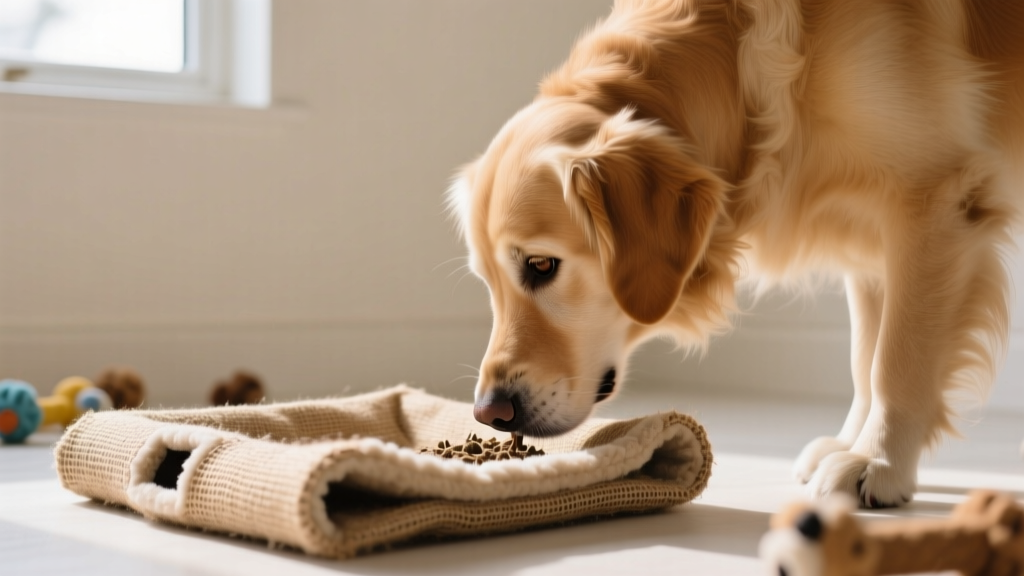
- Offer a long-lasting food enrichment item: A frozen Kong stuffed with peanut butter and banana, a bully stick, or a lick mat with plain yogurt. Licking and chewing are self-soothing behaviors that trigger endorphin release in dogs.
- Never punish fear: Yelling at, scolding, or physically correcting a frightened dog will increase their anxiety and damage your trust bond. Fear is an emotional state, not a disobedience issue.
Step-by-Step Desensitization and Counter-Conditioning Protocol
This is the core behavior modification program. It works by gradually exposing your dog to firework sounds at volumes low enough that they don't trigger a fear response, while pairing the sound with high-value rewards to change their emotional association.
Firework Desensitization Training Protocol
What you'll need: A Bluetooth speaker, a smartphone or computer, high-value treats (real chicken, cheese, or freeze-dried liver — something your dog will work for), and a recording of firework sounds (search "firework sounds for dog desensitization" on YouTube or use dedicated apps like "Dog Desensitization" on iOS/Android).
Phase 1 — Baseline (Weeks 1–2)
- Play the firework recording at the LOWEST possible volume — so low that your dog notices it but shows zero signs of stress (no ear flicking, no looking toward the speaker, no lip licking).
- Immediately begin feeding high-value treats, one every 2–3 seconds, for 30–60 seconds.
- Stop the recording. Stop the treats.
- Repeat 3–5 times per session, 2 sessions per day.
- Key metric: Your dog should start looking at you expectantly when they hear the sound — this means the emotional association is shifting from "danger" to "chicken is coming."
Phase 2 — Gradual Volume Increase (Weeks 3–6)
- Increase the volume by ONE notch (approximately 3–5 dB) only if your dog showed zero stress signs at the previous level for at least 3 consecutive sessions.
- Continue pairing with treats. Start varying the reward — sometimes chicken, sometimes a quick game of tug, sometimes a favorite toy.
- Begin moving the speaker to different locations in the house so the sound doesn't become associated with a single spot.
- If your dog shows ANY stress signs at the new volume: Immediately drop back to the previous volume and stay there for 3 more sessions before trying again.
- Target volume: You're aiming to reach approximately 70–80 dB at the speaker (about the volume of a normal conversation), which is a reasonable proxy for distant fireworks heard through walls.
Phase 3 — Adding Realism (Weeks 7–10)
- Play the recording at moderate volume while you're in a different room, so the sound feels more environmental.
- Introduce mild visual stimuli — briefly flash a light or show a fireworks video on a tablet at low brightness.
- Practice during different times of day and in different emotional states (after a walk, before dinner, during calm evening time).
- Begin reducing treat frequency — move from continuous reinforcement (every sound = treat) to variable reinforcement (every 2nd or 3rd sound = treat, but the treat is bigger/better).
Phase 4 — Maintenance and Real-World Testing (Weeks 11+)
- Continue playing the recording at moderate volume 2–3 times per week as maintenance.
- When real fireworks happen, implement your management setup (safe room, white noise, enrichment items) and observe your dog's response.
- If your dog handles distant fireworks well, gradually reduce management over subsequent events. If they still struggle, return to Phase 2 and work forward more slowly.
Tools That Help vs. Tools to Avoid
The right tools can accelerate progress; the wrong ones can cause lasting damage. Here's an evidence-based breakdown.
| Category | Recommended Tools | Tools to Avoid |
|---|---|---|
| Calming Wearables | Thundershirt ($40–$60) — applies gentle, constant pressure that triggers a calming response in ~60% of dogs (based on owner-reported surveys). Mutt Muffs or Rex Specs ear muffs ($25–$55) — physically reduce sound volume by 15–30 dB. | Any wrap that restricts breathing or movement. Tight ace bandage wraps (can cause circulation issues if applied incorrectly). |
| Pheromones & Supplements | Adaptil DAP diffuser ($25–$35, lasts 30 days) — synthetic dog-appeasing pheromone shown to reduce stress markers in multiple studies. Zylkene ($30–$45 for 30 capsules) — casein-derived supplement. Solliquin ($35–$50) — L-theanine + ashwagandha formula. Start supplements 2–4 weeks BEFORE the fireworks event for best results. | Essential oil diffusers (tea tree, eucalyptus, and many others are toxic to dogs). Unregulated CBD products without third-party lab testing (NASC-certified brands only). |
| Enrichment & Distraction | Kong Classic ($12–$18) stuffed and frozen. LickiMat Soother ($10–$15). Snuffle mats ($20–$35). Puzzle feeders like the Outward Hound Nina Ottosson Dog Brick ($25–$35). | Any enrichment item your dog could destroy and swallow during a panic episode. Supervise all chew items. |
| Training Equipment | Bluetooth speaker for desensitization. Treat pouch for rapid reward delivery. Long-line leash (15–30 ft) for safe outdoor exposure practice. | Shock collars (e-collars): Punishing a fear response with pain INCREASES fear and can create aggression. Prong collars, choke chains, alpha rolls: Aversive methods worsen anxiety and damage the human-dog bond. The American Veterinary Society of Animal Behavior (AVSAB) recommends against all aversive training methods for fear-based behaviors. |
| Medication (Vet-Prescribed) | Trazodone ($10–$30/month) — situational anti-anxiety, given 1–2 hours before the event. Gabapentin ($15–$40/month) — mild sedation and anxiety relief. Sileo (dexmedetomidine gel, $80–$120) — FDA-approved specifically for noise aversion in dogs. Fluoxetine ($15–$35/month) — daily SSRI for severe, chronic cases. Always consult your veterinarian for proper dosing. | Acepromazine as a sole treatment — it sedates the body but does NOT reduce anxiety, meaning your dog is paralyzed but still terrified. Human benzodiazepines without veterinary guidance. |
Realistic Timeline: How Long Does It Take?
There is no universal timeline. Progress depends on your dog's age, severity of phobia, genetic predisposition, consistency of training, and whether medication support is used. Here's what you can realistically expect:
Progress Milestones for Firework Desensitization
| Timeframe | Expected Progress | Caveats |
|---|---|---|
| Weeks 1–4 | Dog tolerates recorded firework sounds at low volume (40–50 dB) without stress signs. Begins showing anticipatory treat-seeking behavior. | Real fireworks will still trigger a full fear response. Management only at this stage. |
| Weeks 5–10 | Dog tolerates moderate volume recordings (60–70 dB). Shows mild stress (ear flicking, brief alertness) but recovers within seconds and re-engages with treats/toys. | Some dogs plateau here. Genetic predisposition and severity of original phobia affect pace. |
| Weeks 11–16 | Dog handles recorded sounds at higher volumes (75–85 dB) with minimal reaction. Management during real events shows reduced panic — dog may pace briefly but settles with enrichment items. | Real fireworks are always louder and more unpredictable than recordings. Expect some regression. |
| Months 5–12 | Dog shows significant improvement during real firework events — may startle but recovers within minutes, seeks owner for comfort, and can eat treats during the event. | Severe cases (dogs who have broken through windows or caused self-injury) may need lifelong management + medication support. |
| 12+ months | Maintenance level. Dog may never be completely "fine" with fireworks, but shows manageable levels of concern rather than debilitating panic. | Annual maintenance sessions required. Skipping maintenance can lead to relapse. |
Note: Dogs with mild noise sensitivity may see significant improvement in 6–8 weeks. Dogs with severe, long-established phobias may require 12–18 months of consistent work plus veterinary behavioral medication. Neither outcome is a failure — managing expectations is part of the process.
When to Hire a Professional Behaviorist
Not every case can be solved with a blog article and dedication. Here's how to determine when you need professional help, and what kind of professional to seek.
Seek Professional Help If:
- Your dog has injured themselves or others during a fireworks episode (broken teeth, torn nails, bitten through a door)
- Your dog has escaped during fireworks and was lost for any period
- The phobia has generalized to other sounds (thunder, vacuum, doorbells, dropped items)
- You've followed a desensitization protocol consistently for 8+ weeks with no improvement
- Your dog refuses all food during fireworks (won't eat even high-value treats) — this indicates they are above the "fear threshold" and cannot learn
- You're considering rehoming or surrendering your dog due to the behavior
- Your dog shows aggression (growling, snapping, biting) when you try to move or handle them during a fear episode
Who to Hire:
| Professional | Qualifications | Cost Range (2026) | When to Choose |
|---|---|---|---|
| Veterinary Behaviorist (DACVB) | DVM + 3-year residency + board certification. Can prescribe medication. | $250–$500 initial consultation | Severe cases, medication needed, aggression present, self-injury |
| Certified Applied Animal Behaviorist (CAAB/ACAAB) | PhD or Master's in animal behavior + certification through Animal Behavior Society | $150–$350 initial consultation | Moderate-severe cases, detailed behavior modification plan needed |
| Certified Professional Dog Trainer (CPDT-KA/SA) | 300+ hours training experience + passing exam through CCPDT | $75–$150 per session | Mild-moderate cases, hands-on coaching through desensitization protocol |
| Fear Free Certified Professional | Completed Fear Free certification program (vets, vet techs, trainers) | Varies | Low-stress handling and anxiety management support |
You can find board-certified veterinary behaviorists through the American College of Veterinary Behaviorists directory, and certified trainers through the CCPDT directory.
Prevention: Raising Puppies and Newly Adopted Dogs to Be Firework-Resilient
The most effective "treatment" for firework phobia is preventing it from developing in the first place. Whether you have a new puppy or a newly adopted adult dog, early sound exposure is one of the highest-value investments you can make.
For Puppies (8–16 weeks)
- Proactive sound exposure: During the socialization window, play a wide variety of sounds daily — fireworks, thunder, construction noise, sirens, crowds — at low volume while the puppy is eating, playing, or resting comfortably.
- Pair with positive experiences: Every new sound = treats, play, or cuddles. You're building a "sounds predict good things" neural pathway before fear can take root.
- Never force exposure: If the puppy shows concern, lower the volume. Pushing past their comfort threshold during this window can CREATE a phobia instead of preventing one.
- Use the "Sound Socialization" checklist: The book "Puppy Start Right" by Dr. Kenneth Martin includes a comprehensive sound exposure checklist covering 30+ environmental sounds.
For Newly Adopted Adult Dogs
- Assess first: Before adopting, ask the rescue/shelter about the dog's known noise history. Many shelters now note noise sensitivity in their behavioral assessments.
- Give a decompression period: Allow 2–4 weeks of quiet settling-in before beginning structured desensitization. A dog in "survival mode" in a new home cannot effectively learn.
- Start with the Phase 1 protocol above: Even if the dog seems fine with sounds, proactively running through 4 weeks of low-volume sound pairing builds resilience before a real fireworks event catches you off guard.
Frequently Asked Questions
Why does my dog panic during fireworks but seems fine with the vacuum?
Dogs differentiate sounds based on predictability, frequency, and intensity. A vacuum is loud but predictable — it starts when you turn it on, moves in patterns, and stops when you switch it off. Fireworks are unpredictable in timing, direction, and intensity, which is far more alarming to a dog's threat-detection system. Additionally, fireworks produce low-frequency booms (below 100 Hz) that dogs feel as vibrations through the ground and their body, adding a tactile dimension to the fear.
How do I stop my dog from hiding under the bed during fireworks?
You don't — at least not yet. Hiding is a coping strategy, and preventing a fearful dog from accessing their chosen safe space can escalate panic into destruction or self-injury. Instead, make the hiding spot more comfortable (add a blanket, place treats nearby, sit quietly close to them). Over time, as desensitization reduces the fear, your dog will naturally spend less time hiding. Forcing a terrified dog out from under furniture is a common bite-risk scenario.
Is it normal for my dog to be scared of fireworks?
Yes. Fear of sudden, loud noises is a normal survival response. However, a full phobic reaction — destructive escape attempts, self-injury, prolonged trembling, refusal to eat — goes beyond "normal" and warrants intervention. Think of it on a spectrum: mild concern is normal; debilitating panic is a behavioral health issue that deserves treatment.
How long will it take to fix my dog's firework phobia?
Most dogs show measurable improvement within 8–12 weeks of consistent daily desensitization work. Full management of a severe phobia typically takes 6–18 months. Some dogs with strong genetic predisposition or traumatic learning histories will always need some level of management (safe room, medication, white noise) during fireworks events — and that's a successful outcome, not a failure.
Should I use punishment to correct my dog's fear of fireworks?
No. Punishing fear is counterproductive and harmful. Fear is an involuntary emotional response — your dog isn't choosing to be scared, and punishing the outward signs (barking, pacing, hiding) doesn't address the underlying emotion. It teaches your dog to suppress warning signs, which can lead to "shut down" behavior or sudden aggression without warning. The AVSAB and the AVMA both position against using aversive methods for fear-based behaviors.
When do I need a professional behaviorist?
Consult a certified professional if your dog has caused self-injury, shows aggression during fear episodes, has generalized the fear to everyday sounds, or if 8+ weeks of consistent home desensitization has produced no improvement. A veterinary behaviorist (DACVB) is the gold standard for severe cases, as they can combine behavior modification plans with appropriate medication. See the "When to Hire a Professional" section above for a detailed decision framework.
Can medication alone fix my dog's firework phobia?
Medication alone rarely resolves a phobia completely, but it can lower your dog's anxiety enough that desensitization training becomes possible. Many dogs are too far above their fear threshold during fireworks to learn anything — medication brings them down to a state where counter-conditioning can actually work. Think of medication as a tool that makes training more effective, not a replacement for training. Your veterinarian will determine the appropriate medication and dosage for your dog.
Are certain breeds more prone to firework phobia?
Yes. Research from the Norwegian University of Life Sciences found that Norwegian Buhunds, German Shepherds, and Nova Scotia Duck Tolling Retrievers showed the highest rates of noise sensitivity, while Boxers, Great Danes, and Pekingese showed the lowest. Herding breeds in general tend toward higher environmental sensitivity. However, any breed or mixed breed can develop a firework phobia — individual history and early exposure matter more than breed alone.
Disclaimer: This article provides general behavioral guidance and is not a substitute for professional veterinary or behavioral consultation. If your dog is experiencing severe anxiety, self-injury, or aggression, consult your veterinarian or a certified veterinary behaviorist immediately. Medication decisions, including dosing, should always be made by your veterinarian based on your dog's individual health profile.
Tom Renshaw
All our authors care for dogs every day — read more of their work on the authors page.