Why Do Cats Follow You Into the Bathroom (2026)
Curious why your cat trails you to the bathroom? We break down the real reasons behind this quirky feline behavior.

The Bathroom Mystery: Why Your Cat Won't Let You Go Alone
If you're a cat owner, you've almost certainly experienced this: the moment you close the bathroom door, a tiny paw starts scratching at the bottom. Or worse — your cat squeezes through the gap before you can shut it, settles on the counter, and watches you with unblinking judgment. You're not alone. This is one of the most commonly reported feline behaviors, and there's real science behind it.
1. Territorial Instincts: The Bathroom Is Their Territory Too
Cats are intensely territorial animals. Your home is their domain, and every room — including the bathroom — falls within their patrol zone. When you enter a room and close the door, you're creating a space your cat can't monitor. That closed door represents a gap in their territorial awareness.
According to feline behaviorists, cats mark their territory not just through scent glands on their cheeks and paws, but through routine presence. The bathroom, despite being a human-centric space, carries your scent heavily — making it a high-value territory your cat wants to maintain access to.
2. Social Bonding and Colony Behavior
Despite their reputation for independence, cats are social animals. In the wild, feral cats form colonies where members engage in mutual grooming, sleeping, and even elimination in shared spaces. Your cat sees you as part of their social group — what behaviorists call their "colony."
Following you into the bathroom is, in many ways, a social activity. Cats in colonies often rest near each other during vulnerable activities. By joining you, your cat is essentially saying: "I trust you, and I want to be near you during this quiet time."
3. Curiosity and the Need to Investigate
Cats are naturally curious creatures. The bathroom is full of interesting stimuli: running water, steam, new smells from products, the sound of the flush. Every time you go in there, something potentially interesting happens — and your cat doesn't want to miss out.
Research published in the Journal of Feline Medicine and Surgery found that cats spend approximately 30% of their waking hours exploring and investigating their environment. A closed door directly blocks that exploratory drive, triggering what experts call "barrier frustration."
4. The Water Factor
Many cats are fascinated by running water. Unlike dogs, most cats prefer moving water sources — a trait that may stem from their desert-dwelling ancestors, who learned that running water is safer than stagnant pools. The sink faucet, the shower, even the toilet bowl can become irresistible attractions.
Some behaviorists suggest that cats follow their owners to the bathroom partly because they've learned that turning on a tap or shower produces the flowing water they find so compelling.
5. Routine and Predictability
Cats thrive on routine. Your daily bathroom visits create a predictable pattern that your cat has learned to anticipate. When you deviate from the pattern — for example, by closing the door — it disrupts their sense of order and triggers anxiety or curiosity.
A 2024 study from the University of Lincoln found that cats showed increased stress indicators (measured through ear position, tail movement, and vocalization) when their owners closed doors to rooms the cats could normally access.
6. Protection and Vulnerability
Some animal behaviorists theorize that cats may interpret bathroom activities as a vulnerable state — and feel compelled to keep watch. In multi-cat households, you might notice one cat standing guard outside the bathroom while another is inside. This protective behavior mirrors what cats do in the wild when a colony member is in a vulnerable position.
Should You Be Concerned?
In almost all cases, bathroom-following is completely normal and healthy behavior. It signals that your cat:
- Feels bonded to you and considers you part of their social group
- Has a strong sense of territory (a sign of a confident, well-adjusted cat)
- Is curious and mentally engaged with their environment
However, if the behavior escalates to destructive scratching, excessive vocalization, or aggression when denied access, it may indicate separation anxiety. In those cases, consulting a veterinarian or certified feline behaviorist is recommended.
How to Manage the Behavior (If You Want Privacy)
While there's no need to stop this behavior for your cat's wellbeing, you might occasionally want some privacy. Here are a few gentle strategies:
- Provide distraction: Leave a puzzle feeder or interactive toy outside the bathroom before you go in
- Keep the door slightly ajar: This lets your cat maintain visual contact without entering
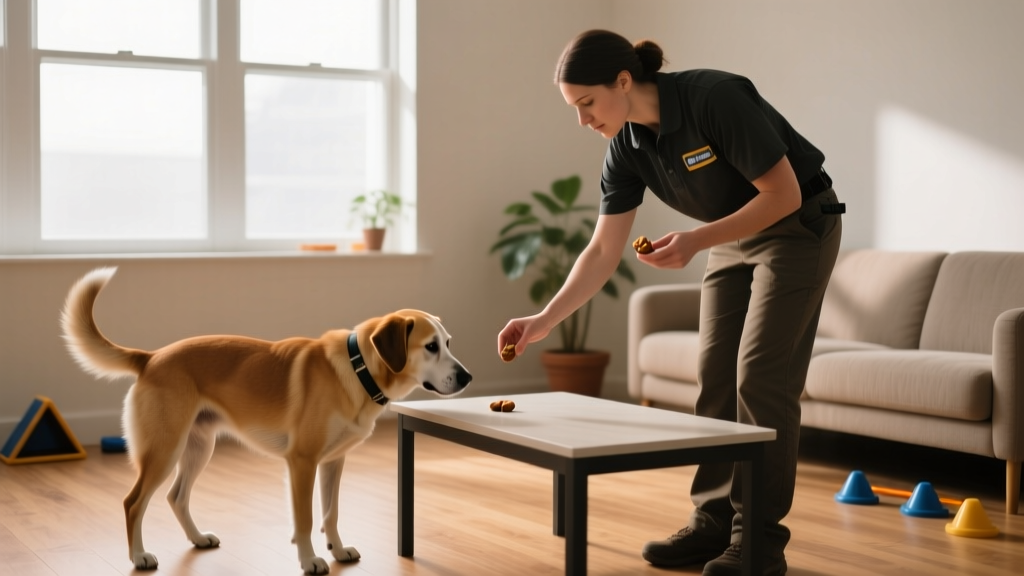
- Establish a "waiting spot": Train your cat to sit on a specific mat outside the door with treats
- Don't reinforce: If your cat meows at the door, avoid opening it — otherwise they learn that vocalization works
The Bottom Line
Your cat follows you into the bathroom because they love you, are curious about you, and want to maintain control over their territory — all at the same time. It's a behavior rooted in millions of years of feline evolution, combined with the unique bond your cat has formed with you. So the next time your furry friend squeezes through that closing door, remember: it's not an invasion of privacy. It's a compliment.
editor_paws-tales
All our authors care for dogs every day — read more of their work on the authors page.