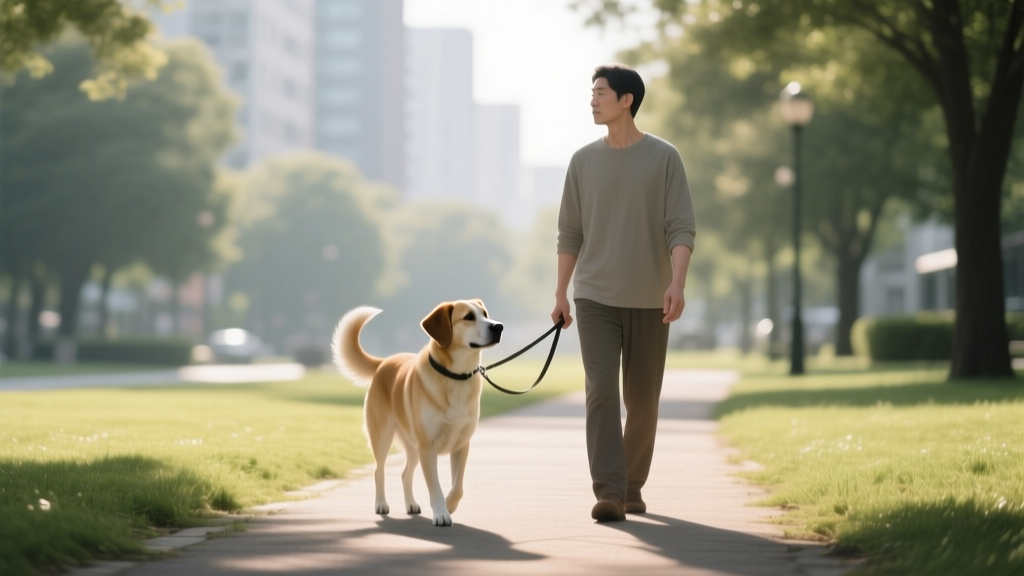
How to Train a Barking Dog: Proven Methods That Actually Work
Learn how to train a barking dog with evidence-based behavior modification.

What Qualifies as Problem Barking?
Not all barking is a problem. Dogs vocalize to communicate — a few barks when the doorbell rings or during play is normal canine behavior. Problem barking crosses the threshold when it becomes excessive, prolonged, or contextually inappropriate and disrupts your household, neighbors, or your dog's own wellbeing.
- Duration: Continuous barking lasting more than 5–10 minutes without an obvious, proportional trigger
- Frequency: More than 15–20 barking episodes per day in a home environment
- Latency: Barking that persists for 30+ seconds after the trigger has been removed
- Context mismatch: Barking at non-threatening stimuli (leaves, shadows, familiar family members)
- Neighbor complaints: Multiple reports or formal noise violation notices
If your dog meets two or more of these criteria consistently over a two-week period, structured behavior modification is warranted.
The American Kennel Club notes that barking is one of the most commonly cited behavior problems leading to shelter surrender, making early intervention critical for both the human-dog bond and the dog's long-term placement stability.
Why Does My Dog Bark So Much? Root Cause Analysis
Before you can train a barking dog effectively, you need to understand why the barking is happening. Treating the symptom without addressing the cause leads to frustration and relapse. Here are the five most common underlying drivers:
Your dog barks at people, animals, or sounds near your home. This is triggered by perceived intrusion into their territory. Common triggers: delivery drivers, passing dogs, footsteps in the hallway, car doors slamming.
2. Fear/Anxiety-Based BarkingHigh-pitched, rapid barking often accompanied by trembling, tucked tail, or attempts to escape. Common in dogs with incomplete socialization, noise phobias (thunder, fireworks), or separation anxiety. This barking is a distress signal, not a behavioral choice.
3. Boredom/Attention-Seeking BarkingMonotonous, repetitive barking that occurs when your dog is under-stimulated. They bark, you look at them or talk to them, and the behavior is reinforced. Common in high-energy breeds left alone for long periods without enrichment.
4. Compulsive BarkingPatterned, rhythmic barking that seems to have no external trigger — sometimes directed at walls, fences, or open space. This can indicate a compulsive disorder, analogous to OCD in humans, and typically requires veterinary behavioral intervention alongside training.
5. Medical/Cognitive CausesSudden-onset barking in a previously quiet dog, especially in seniors, may signal pain, canine cognitive dysfunction (CCD), hypothyroidism, or neurological changes. This category must always be ruled out before behavior modification begins.
According to the Merck Veterinary Manual, accurately identifying the motivation behind barking is the single most important step in designing an effective treatment plan.
Medical Rule-Out: When to See a Vet Before Training
Behavior modification will fail — and may even cause harm — if the barking has a medical origin. Always schedule a veterinary exam before launching a training protocol if any of the following apply:
- ☐ Sudden behavioral change in a dog older than 7 years (rule out cognitive dysfunction, vision/hearing loss)
- ☐ Barking accompanied by pacing, panting, or signs of physical discomfort (rule out pain, arthritis, GI distress)
- ☐ Recent medication changes or new supplements (some drugs cause restlessness or vocalization)
- ☐ Weight gain, lethargy, or coat changes alongside increased vocalization (rule out hypothyroidism — a simple $45–$80 blood panel)
- ☐ Barking at night with apparent disorientation (rule out canine cognitive dysfunction syndrome)
- ☐ Head tilting, circling, or seizure activity alongside vocalization (rule out neurological conditions — MRI costs $1,500–$3,000)
Consult your veterinarian to complete this checklist. A standard wellness exam with basic bloodwork typically costs $80–$200 and can save you months of ineffective training if a medical condition is the true driver.
Immediate Management: Stop the Rehearsal Now
Every time your dog practices problem barking, the neural pathway reinforcing that behavior strengthens. This is called behavioral rehearsal, and it makes the problem progressively harder to fix. While you prepare your training protocol, implement these management strategies immediately to reduce rehearsal:
Visual barriers: For territorial/alert barkers triggered by windows, apply frosted window film (3M Privacy Film, approximately $15–$25 per roll) to the lower 24 inches of windows. Close blinds or use tension-mounted baby gates to restrict access to front-facing rooms during peak trigger hours.
Sound masking: Use a white noise machine (LectroFan Classic, around $35–$45) or play classical music at 50–60 decibels to dampen outdoor triggers. Studies from the University of Glasgow have shown that certain music genres can reduce stress-related behaviors in kennelled dogs.
Enrichment rotation: Replace idle time with structured mental work. Rotate through puzzle feeders (Kong Classic, $12–$18; Outward Hound Nina Ottosson Dog Brick, $20–$30; West Paw Toppl, $15–$25), frozen lick mats, and sniffing sessions. A tired dog is a quieter dog — aim for 30–45 minutes of mental enrichment daily, split across 3–4 sessions.
Interrupt and redirect: When barking starts, use a calm verbal interrupter ("enough" or "thank you") followed by redirecting to an incompatible behavior like "go to your mat" or a nose-touch to your hand. Reward the redirect with a high-value treat (freeze-dried liver, boiled chicken). Do not yell — yelling is perceived by dogs as you joining the barking, which can escalate the behavior.
Step-by-Step Training Protocol to Train a Barking Dog
This protocol uses desensitization, counter-conditioning, and positive reinforcement — all force-free methods supported by the American Veterinary Society of Animal Behavior (AVSAB). The approach varies slightly depending on root cause, but the core framework applies across all types.
Phase 1: Foundation (Weeks 1–2)
- Teach a "quiet" cue: When your dog barks, wait for a natural pause of 1–2 seconds. Mark that silence with a clicker or verbal "yes" and deliver a high-value treat. Repeat 10–15 times per session, 2–3 sessions daily. Gradually increase the required silence duration to 3 seconds, then 5, then 10.
- Teach a "speak" cue (optional but powerful): Trigger a bark deliberately (doorbell, knocking), mark it with "yes," and treat. Add the verbal cue "speak" just before the trigger. This gives you controlled practice opportunities and teaches the dog that barking is a behavior they offer on cue — not an uncontrollable reflex.
- Establish a "go to mat" behavior: Train your dog to go to a designated bed/mat on cue and settle. This becomes your default redirect for barking episodes. Use a raised cot-style bed (Cooler Cot, $40–$60) for clear spatial definition.
Phase 2: Desensitization & Counter-Conditioning (Weeks 3–6)
- Identify the trigger threshold: Determine the distance or intensity at which your dog notices the trigger but does NOT bark. For door-reactive dogs, this might be the sound of a car 50 feet away. For leash-reactive dogs, it might be another dog at 30 yards. This is your starting distance.
- Work below threshold: Present the trigger at sub-threshold intensity. The moment your dog notices the trigger without barking, mark and reward. If they bark, you're too close — increase distance or reduce intensity immediately.
- Change the emotional response: Pair every trigger exposure with something your dog loves. Dog appears at 40 feet → chicken appears in their mouth. Delivery truck sound plays at low volume → frozen Kong is presented. Over time, the trigger predicts good things rather than triggering alarm.
- Increase difficulty in small increments: Reduce distance by 5–10 feet or increase volume by 5–10 decibels only after 5–7 consecutive successful sessions at the current level. Rushing this step is the #1 reason training fails.
Phase 3: Generalization & Maintenance (Weeks 7–12+)
- Practice in multiple environments: Take the quiet cue and mat behavior to different rooms, then to the yard, then on walks. Dogs do not generalize well — a behavior learned in the living room does not automatically transfer to the backyard.
- Variable reinforcement schedule: Once the behavior is reliable, shift from treating every correct response to treating every 2nd, then 3rd, then random responses. This builds resistance to extinction.
- Maintenance sessions: Continue 2–3 brief (5-minute) practice sessions per week indefinitely to prevent relapse.
Tools That Help vs. Tools to Avoid
The right tools accelerate progress; the wrong ones create new problems. Here's an honest comparison based on current behavioral science:
| Category | Recommended Tools | Why They Work | Approx. Cost |
|---|---|---|---|
| Enrichment | Kong Classic, West Paw Toppl, snuffle mats, lick mats | Reduces boredom-driven barking by providing mental stimulation and dopamine through foraging | $12–$35 each |
| Calming Aids | Adaptil DAP diffuser, ThunderShirt, Zesty Paws Calming Bites | Pheromone-based or compression-based anxiety reduction; adjunct support, not standalone solution | $20–$65 |
| Sound Management | White noise machine, Pet Tunes Bluetooth speaker | Masks environmental triggers that provoke alert barking | $25–$60 |
| Training Equipment | Front-clip harness (Freedom No-Pull), treat pouch (Dog Treat Training Pouch), clicker (i-Click) | Facilitates reward-based training; front-clip harness reduces leash tension that can trigger frustration barking | $15–$40 |
| Recording/Monitoring | Furbo Dog Camera, Wyze Cam v4 with bark detection | Lets you observe barking patterns when you're away; identifies triggers you didn't know existed | $35–$170 |
- Shock/bark collars (static, citronella, ultrasonic): The American Veterinary Society of Animal Behavior states that punishment-based devices can suppress behavior temporarily while worsening underlying anxiety, creating fallout such as redirected aggression or generalized fear. Citronella collars punish all vocalization, including appropriate alert barking and distress signals.
- Alpha rolls/dominance-based corrections: Based on debunked wolf-pack hierarchy research. Physically forcing a dog onto its back damages trust and can trigger defensive aggression.
- Debarking surgery (ventriculocordectomy): An invasive procedure that removes tissue from the vocal cords. It does not address the motivation to bark, carries surgical risks, and is opposed by the AVMA and most veterinary behaviorists as ethically indefensible for behavioral purposes.
Realistic Timeline: How Long Will It Take to Fix Barking?
Honest answer: behavior modification is not a weekend project. The timeline depends on the root cause, the dog's history, consistency of implementation, and severity at baseline. Here's what realistic progress looks like:
| Timeframe | Expected Milestones | Notes |
|---|---|---|
| Week 1–2 | Management in place; dog learns quiet cue in low-distraction settings; 20–30% reduction in barking episodes through environmental modification | This is the setup phase — don't expect the root behavior to change yet |
| Week 3–6 | Desensitization shows measurable progress; dog begins offering alternative behaviors (looking at you instead of barking) at sub-threshold trigger levels; 40–60% reduction | Setbacks are normal when encountering novel triggers or high-arousal situations |
| Week 7–12 | Generalization to new environments; dog reliably responds to quiet cue in moderate-distraction settings; 60–80% reduction | This is where most owners see the behavior feel "manageable" for the first time |
| Month 4–6+ | Maintenance-level reliability; occasional barking still occurs but resolves quickly with cue; 80–95% reduction for most cases | Compulsive and severe fear-based cases may require ongoing veterinary behaviorist support |
Dogs with a long reinforcement history of barking (5+ years of practicing the behavior daily) will take longer to modify than a 1-year-old dog that recently developed the habit. Fear-based barking tied to genuine phobias may never fully resolve but can be significantly managed.
When to Hire a Professional: Trainer vs. Behaviorist
Knowing when to bring in help can save you months of frustration and prevent the problem from worsening. Here's how to decide:
- The barking is attention-seeking or boredom-based and you need help with training mechanics
- You want guided practice with desensitization protocols
- Your dog's barking is mild to moderate and not accompanied by aggression
- Typical cost: $75–$150 per private session; group classes $150–$300 for a 6-week series
- Barking is accompanied by aggression (lunging, snapping, biting)
- Suspected compulsive disorder or severe anxiety (self-injury, destruction, escape attempts)
- Medication may be needed as an adjunct to behavior modification
- Previous work with a trainer has not produced results after 8+ weeks of consistent implementation
- Typical cost: $250–$500 for initial consultation; follow-ups $150–$300. Veterinary behaviorists can prescribe medication (fluoxetine, clomipramine, trazodone) which adds $30–$80/month in pharmacy costs.
Find credentialed professionals through the AVSAB consultant directory or the Certification Council for Professional Dog Trainers (CCPDT) registry.
Prevention: Setting Up Puppies and Newly Adopted Dogs for Success
The most effective way to deal with problem barking is to prevent it from becoming established in the first place. Whether you're raising a puppy or bringing home an adult rescue, these proactive steps build a foundation for calm communication:
For puppies (8–16 weeks): Expose your puppy to a wide variety of sounds, environments, people, and other dogs during the critical socialization window. Pair novel stimuli with treats and play so that unfamiliar things predict good outcomes rather than alarm. Reward calm, quiet behavior proactively — don't wait for barking to start and then try to address it. Teach a "settle" behavior on a mat by 12 weeks of age.
For adopted adult dogs (any age): Implement a 2-week decompression period with minimal triggers, structured routine, and low-pressure enrichment. Many shelter dogs bark excessively in the first days home due to stress and overstimulation — this often resolves naturally as they settle. Avoid flooding (exposing them to many triggers at once). Use baby gates to limit access to trigger-heavy areas like front windows. Begin the quiet cue training protocol from day one, even if barking isn't yet a problem.
For all dogs: Ensure physical exercise needs are met (minimum 30–60 minutes of structured activity daily for most breeds), provide daily mental enrichment, and never inadvertently reinforce barking by giving attention, treats, or access to desired resources when your dog is vocalizing.
Frequently Asked Questions
Is barking normal dog behavior?
Yes — barking is a natural form of canine communication. Dogs bark to alert, to greet, to invite play, and to express discomfort. It becomes a problem when it is excessive in duration, frequency, or occurs in contexts that are disproportionate to the trigger. Breed also plays a role: hounds, herding breeds, and terriers tend to be more vocal by genetic design than sighthounds or mastiff-type breeds.
How do I stop my dog from barking at the door?
Teach a "go to mat" behavior that is incompatible with door-rushing. Practice the sequence: doorbell sound → dog goes to mat → dog receives stuffed Kong on the mat. Start with the doorbell played at low volume from your phone and gradually increase to real-world volume. Management (frosted window film, baby gates blocking hallway access) reduces rehearsal while training takes hold. Expect 4–8 weeks of consistent daily practice for reliable results.
Should I use punishment or a bark collar to correct barking?
No. Aversive methods suppress the symptom without addressing the cause. Shock collars and citronella collars can increase anxiety, create negative associations with the environment, and trigger redirected aggression. The AVSAB's position statement on punishment explicitly recommends against their use. Force-free methods — desensitization, counter-conditioning, and positive reinforcement of quiet behavior — are more effective long-term and carry no risk of behavioral fallout.
How long will it take to train a barking dog to be quiet?
Most owners see meaningful reduction (40–60%) within 3–6 weeks of consistent daily training. Significant improvement (60–80%) typically takes 7–12 weeks. Full maintenance-level reliability often requires 4–6 months. Dogs with severe fear-based or compulsive barking may need 6–12 months of work alongside veterinary behaviorist support. There is no honest "quick fix" timeline — anyone promising results in days is selling something that won't last.
My dog barks when I leave the house. Is this separation anxiety?
Possibly. Separation anxiety barking typically begins within 15–30 minutes of departure and is accompanied by other signs: destructive behavior directed at exit points, inappropriate elimination, drooling, pacing, and attempts to escape. A dog camera (Furbo, Wyze Cam) with bark logging can help you determine timing and intensity. True separation anxiety requires a specific protocol involving graduated departure exercises, counter-conditioning, and often medication — consult a veterinary behaviorist rather than attempting to address it with standard barking training.
When do I need a professional behaviorist instead of a trainer?
Seek a veterinary behaviorist (DACVB) or certified applied animal behaviorist (CAAB) if the barking is accompanied by aggression, self-injury, or signs of severe anxiety; if the behavior has not improved after 8+ weeks of consistent force-free training; or if you suspect a compulsive disorder. A general trainer is appropriate for mild-to-moderate alert barking, attention-seeking barking, and boredom-based vocalization where no safety concerns exist.
Dr. Hannah Wickes
All our authors care for dogs every day — read more of their work on the authors page.