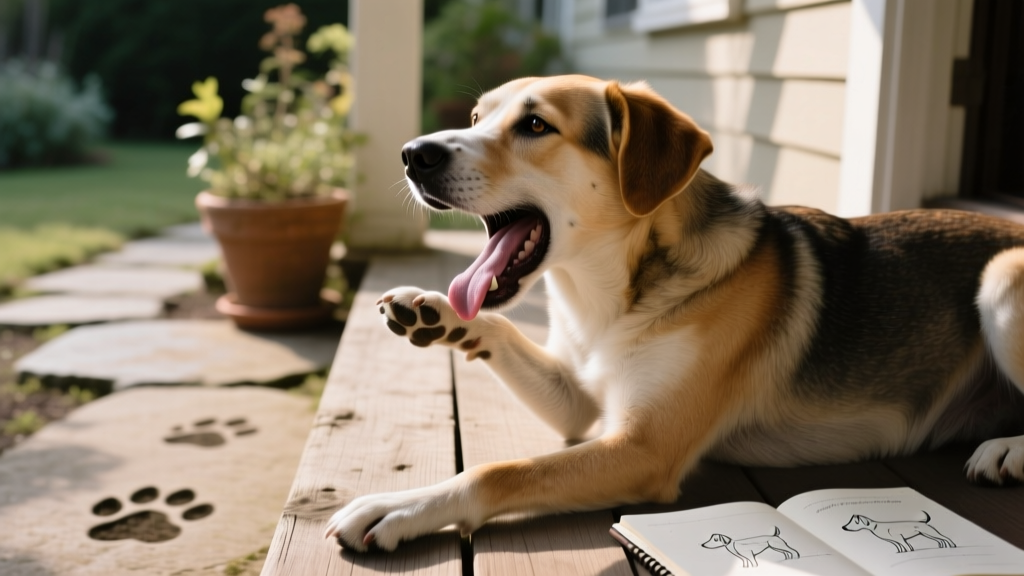
How to Teach Your Dog to Heel: A Complete Loose-Leash Walking Guide
Learn how to teach your dog to heel with force-free, step-by-step protocols.

What Does It Mean When Your Dog Won't Heel?
If your dog drags you down the sidewalk like a sled dog on espresso, you're not alone. Leash pulling is one of the most common behavior complaints among dog owners, and teaching a reliable dog heel is one of the most practical skills you can invest in. But before we get to solutions, let's define exactly what we're dealing with.
A trained heel means your dog walks with their shoulder aligned to your left leg (or right, depending on your preference), maintaining that position with a loose leash — typically no more than 1-2 feet of slack between you. A dog that "won't heel" exhibits one or more of these thresholds:
- Leash tension sustained for more than 50% of a walk
- Pulling force that causes the handler to stumble, lean back, or experience shoulder/wrist pain
- Dog consistently 3+ feet ahead, behind, or weaving across the handler's path
- Inability to maintain position for more than 10-15 consecutive steps without redirecting
Note: A dog that pulls occasionally to sniff a fire hydrant is normal. A dog that pulls for the majority of every walk has a training gap, not a behavioral disorder.
Heel is distinct from loose-leash walking. Loose-leash walking allows your dog to wander within the leash radius as long as there's no tension. Heel is a formal position — think of it as the difference between walking casually through a park and marching in formation. Most pet owners actually need reliable loose-leash walking; heel is a more advanced skill useful for navigating crowded sidewalks, crossing streets, or passing reactive triggers.
Why Does My Dog Pull on the Leash Instead of Heeling?
Understanding the root cause of pulling is essential before you reach for a training treat. Dogs don't pull out of spite or a desire to dominate you — that outdated "pack leader" theory has been thoroughly debunked by modern canine behavioral science. Here are the five most common reasons your dog won't heel:
| Root Cause | Signs to Look For | Prevalence |
|---|---|---|
| Opposition Reflex (Instinct) | Dog leans into pressure rather than yielding; common in sled breeds, herding dogs, and strong-bodied breeds | Very high — nearly universal in untrained dogs |
| Overstimulation / Environmental Arousal | Pulling intensifies near other dogs, people, wildlife, or novel smells; dog seems "deaf" to cues | High, especially in adolescent dogs (6-18 months) |
| Insufficient Exercise & Mental Enrichment | Pulling is worst at the start of walks; dog has pent-up energy with no outlet | Common in high-energy breeds with sedentary routines |
| Inconsistent Training History | Dog heels at home but not outside; pulls with one handler but not another | Very common — #1 reason training "doesn't stick" |
| Fear or Anxiety-Driven Rushing | Dog pulls toward home, pulls past scary objects quickly, or lunges-and-retreats | Common in under-socialized dogs and rescues |
The opposition reflex is worth understanding: when pressure is applied to a dog's chest or neck, their instinctive response is to push against it — not yield. This is why pulling on a leash often makes pulling worse. Your dog isn't being stubborn; they're following a neurological hardwiring. Training a heel means teaching them to override this reflex, which takes time and positive reinforcement.
Medical Rule-Out: When to See a Vet Before Training
Before you assume your dog is simply untrained, rule out physical causes that could make heeling uncomfortable or impossible. According to the Merck Veterinary Manual, musculoskeletal pain is a frequently overlooked cause of gait changes and resistance to structured walking.
- Your dog suddenly starts pulling or refusing to heel after previously walking well
- They resist turning in one direction (could indicate hip dysplasia, IVDD, or unilateral joint pain)
- You notice limping, stiffness after rest, or "bunny-hopping" gait
- Pulling is accompanied by panting, whining, or signs of distress on walks
- Your dog is a brachycephalic breed (French Bulldog, Pug, Boston Terrier) showing labored breathing during heel work
- Your dog is a senior (7+ years) with new-onset pulling or lagging
- They exhibit sudden behavioral changes alongside pulling — could indicate thyroid dysfunction or neurological issues
Cost expectation: A basic orthopedic exam runs $65-$150 depending on your region. Hip and elbow X-rays typically cost $200-$500. Thyroid panels (total T4 and free T4) run $80-$180.
Immediate Management: Stop the Rehearsal Cycle
Every time your dog pulls and gets to go where they want, the behavior is reinforced. They learn: "Pulling = forward movement." While you're building a heel training plan, you need management strategies to prevent this rehearsal loop.
The 180-Degree Turn: When your dog pulls ahead, silently turn and walk in the opposite direction. Don't yank, don't scold — just change direction. When they catch up and the leash is loose, praise and continue. This teaches that pulling leads away from their goal, while a loose leash leads toward it.
The Red Light Method: Stop walking the instant the leash goes tight. Stand still. Wait for your dog to look back at you or create slack in the leash (even accidentally). Mark that moment with a "yes" or a click, then resume walking. This takes patience — your first few walks using this method may cover only a block in 30 minutes — but it breaks the pulling-is-rewarded cycle.
Pre-Walk Decompression: Before attempting heel training, let your dog burn energy through 10-15 minutes of free sniffing on a long line (15-25 ft leash) in a low-distraction area. A dog that's had mental stimulation through sniffing is significantly more focused during structured training. Studies on canine enrichment consistently show that sniffing reduces cortisol levels and improves trainability.
Step-by-Step Dog Heel Training Protocol
This protocol uses positive reinforcement, shaping, and progressive distraction-building. It's based on force-free methods endorsed by the American Veterinary Society of Animal Behavior (AVSAB), which recommends reward-based training as the standard of care for all canine behavior modification.
Phase 1: Foundation (Weeks 1-2) — Indoor, Zero Distraction
Goal: Dog voluntarily positions at your left side and maintains for 5-10 steps.
- Stand still with your dog. Hold high-value treats (real chicken, cheese, hot dog bits — cut into pea-sized pieces) in your left hand at your hip seam.
- Lure your dog to your left side by guiding their nose to your pant seam. Mark (click or "yes") and reward when their shoulder aligns with your leg.
- Take one step forward. If your dog follows and stays at your side, mark and reward at your hip seam (deliver treat at the position you want them to maintain — this is critical).
- Build to 3 steps, then 5, then 10 before rewarding. Vary the number to prevent your dog from anticipating the reward at a fixed count.
- Add the verbal cue "heel" as you begin moving — say it once, clearly, just before your first step.
- Sessions: 3-5 minutes, 2-3 times per day. End on a success.
Phase 2: Duration & Direction Changes (Weeks 3-4) — Indoor/Low-Distraction Yard
Goal: Dog maintains heel for 20-30 steps with turns and pace changes.
- Introduce left turns, right turns, and about-faces (180° pivots) during heel. Reward after each successful turn.
- Vary your pace: walk slowly for 5 steps, then speed up for 5 steps. This builds attention and engagement.
- Begin to fade the food lure — hold treats in your right hand or a treat pouch, and reward from your hip seam only after marking the correct position.
- Introduce brief pauses: stop walking, ask for a sit in heel position, mark and reward.
- Start reducing treat frequency to every 5-8 steps, but increase treat quality for longer sequences.
Phase 3: Real-World Distraction Building (Weeks 5-8) — Outdoor, Progressive Challenge
Goal: Dog maintains heel in increasingly distracting environments.
- Move training to your front yard, then a quiet sidewalk, then a busier street — progressing only when your dog succeeds at the current level.
- Use the "distraction distance" rule: start at a distance where your dog notices the distraction but can still respond to your cue. Gradually decrease the distance over multiple sessions.
- Carry higher-value treats for higher-distraction environments. If kibble works in your living room, you may need freeze-dried liver or boiled chicken on a busy sidewalk.
- If your dog breaks heel to pull toward a distraction, use the 180-degree turn or stop-and-wait method. Do not punish — simply reset and try again at a greater distance from the trigger.
- Practice "check-ins": reward your dog every time they voluntarily look at you during a walk, even if you didn't cue it. This builds a habit of referencing you in stimulating environments.
Phase 4: Maintenance & Proofing (Weeks 9-12+)
Goal: Reliable heel in most environments with intermittent reinforcement.
- Shift to a variable reinforcement schedule: reward unpredictably (every 3-15 steps) to maintain strong behavior.
- Practice heel in novel locations: parking lots, park paths, outdoor café areas, pet-friendly stores.
- Begin to phase out food rewards for life rewards: "heel past that dog and you get to go sniff the tree."
- Continue occasional high-value rewards to prevent extinction of the behavior.
Tools That Help — and Tools to Avoid
The right equipment can accelerate your training. The wrong equipment can cause physical harm and worsen the problem. Here's a breakdown:
| Tool | Type | How It Works | Recommended? | Price Range (2026) |
|---|---|---|---|---|
| Front-Clip Harness (e.g., Ruffwear Front Range, 2 Hounds Design Freedom) | Management | Redirects pulling force by turning the dog's chest toward you | ✅ Yes — excellent for management during training | $30-$55 |
| Head Halter (e.g., Gentle Leader, Halti) | Management | Controls the head, which controls the body — similar to a horse halter | ✅ Yes — with proper conditioning; not for dogs that lunge violently | $15-$30 |
| Flat Buckle Collar | Training | Standard collar — best for dogs that already have loose-leash foundations | ✅ Yes — for Phase 3+ training, not for strong pullers initially | $8-$20 |
| Treat Pouch (e.g., Starmark, Ruffwear Treat Trader) | Training Aid | Keeps rewards accessible at hip level for precise timing | ✅ Yes — essential for effective timing | $10-$30 |
| Clicker (e.g., Karen Pryor i-Click, Clik-R) | Training Aid | Marks the exact moment of desired behavior for clear communication | ✅ Yes — highly effective for shaping heel position | $3-$12 |
| 6-Foot Leather or Biothane Leash | Equipment | Fixed length prevents accidental slack/tension confusion; better grip than nylon | ✅ Yes — avoid retractable leashes entirely for heel training | $25-$65 |
| Prong/Pinch Collar | Aversive | Applies pressure around the neck to suppress pulling via discomfort | ❌ No — suppresses behavior without teaching an alternative; risk of tracheal damage | — |
| Shock/E-Collar | Aversive | Delivers electric stimulus to suppress behavior | ❌ No — associated with increased fear, anxiety, and aggression per peer-reviewed studies | — |
| Choke Chain | Aversive | Tightens around neck without a stop point | ❌ No — risk of tracheal collapse, cervical injury | — |
| Retractable Leash | Equipment | Extends 15-26 feet with spring-loaded retraction | ❌ No for heel training — teaches dog that pulling extends the leash | — |
For dogs that are extremely strong pullers (think 80+ lb breeds with zero leash training), a front-clip harness paired with a head halter can provide dual-point control while you build the heel behavior. The AKC recommends starting leash training early and using positive reinforcement to build lasting habits.
Realistic Timeline: How Long Does It Take to Teach a Dog to Heel?
There's no universal timeline — progress depends on your dog's age, breed drive, prior training history, and your consistency. That said, here's what a typical progression looks like for an adult dog with no prior heel training:
| Timeframe | Expected Milestone | Conditions |
|---|---|---|
| Weeks 1-2 | Dog holds heel position for 10-15 steps indoors with high treat frequency | Daily 5-min sessions, low distraction |
| Weeks 3-4 | Dog heels reliably indoors with turns and pace changes; beginning to generalize to yard | Daily practice, treat fading started |
| Weeks 5-8 | Dog maintains heel on quiet sidewalks with moderate distractions; occasional breaks requiring reset | 3-4 outdoor sessions per week |
| Weeks 9-12 | Reliable heel in most environments with variable reinforcement; brief heel bursts in high-distraction areas | Consistent real-world practice |
| Months 4-6 | Strong default heel with off-cue maintenance; dog offers check-ins and self-corrects minor pulling | Ongoing maintenance walks |
| 6+ Months | Heel becomes a default walking behavior; occasional refresher sessions needed | Lifetime maintenance with intermittent rewards |
Puppies (8-16 weeks) often learn faster because they haven't rehearsed pulling for years — many pick up heel in 3-4 weeks of consistent practice. Adolescent dogs (6-18 months) may take longer due to hormonal surges and heightened environmental interest. Senior dogs or rescue dogs with years of pulling history may need 4-6 months but are absolutely capable of learning.
The biggest predictor of success isn't your dog's breed or age — it's your consistency. Dogs trained daily for 5-10 minutes progress 3-4x faster than dogs trained in one 45-minute session per week.
Should I Use Punishment to Correct Pulling?
No. Punishment-based corrections — leash pops, jerking the collar, verbal scolding, alpha rolls, or electronic stimulation — may suppress pulling temporarily, but they don't teach your dog what to do instead. They also carry documented risks:
- Fallout: Dogs corrected for pulling may develop negative associations with the leash, the outdoors, or the handler. This can manifest as leash reactivity, shutdown, or avoidance behaviors.
- Escalation: If the correction doesn't work at low intensity, handlers often escalate — leading to physical injury (tracheal damage, cervical spine issues) without solving the behavior.
- Suppression vs. Learning: A punished dog may walk with a loose leash out of fear, not understanding. This means the behavior is fragile and likely to resurface when the punisher isn't present.
Force-free training builds a dog who chooses to heel because the position is rewarding and predictable. That's a more reliable, durable, and humane outcome.
Prevention: Setting Puppies and Newly Adopted Dogs Up for Success
If you have a new puppy or just adopted an adult dog, you have a golden window to prevent pulling before it becomes a habit.
For puppies (8-16 weeks):
- Start leash introduction indoors before vaccinations are complete. Let them drag a light leash around the house under supervision.
- Practice heel position with treats in your kitchen, hallway, and backyard before going on real walks.
- Never let a puppy rehearse pulling to get somewhere — use the red light method from day one.
- Keep early walks short (10-15 minutes) and prioritize sniffing and exploration over distance.
For newly adopted adult dogs:
- Use a front-clip harness from the first walk to prevent pulling rehearsal while you build training foundations.
- Implement the "decompression walk" protocol: first 2 weeks use a long line in quiet areas, no heel expectations — let the dog settle into their new life.
- Begin structured heel training after the adjustment period (typically 2-4 weeks post-adoption).
- Be patient: shelter dogs may have years of learned pulling. Progress may be slower but is absolutely achievable.
When to Hire a Professional: Trainer vs. Behaviorist
- Your dog's pulling is combined with leash reactivity (barking, lunging, growling at other dogs or people)
- You've followed a consistent protocol for 4+ weeks with no improvement
- Your dog's pulling is causing you physical injury (shoulder strain, falls)
- Your dog shows fear or anxiety on walks (tucked tail, trembling, refusal to walk, frantic pulling toward home)
- You feel frustrated to the point of considering aversive methods — a professional can help before you reach that point
Certified Professional Dog Trainer (CPDT-KA): Best for straightforward leash pulling with no underlying fear or aggression. Look for certification through the Certification Council for Professional Dog Trainers. Expect to pay $75-$150 per private session or $200-$500 for a 6-week group class series.
Certified Applied Animal Behaviorist (CAAB) or Veterinary Behaviorist (DACVB): Necessary when pulling is part of a broader anxiety, fear, or reactivity pattern. Veterinary behaviorists can prescribe medication (e.g., fluoxetine, trazodone) to support behavior modification. Expect $250-$600 for an initial consultation, with follow-up sessions at $100-$250.
A good professional will never recommend punishment-based tools as a first-line approach. If a trainer suggests a shock collar or alpha roll for leash pulling, find a different trainer.
Frequently Asked Questions About Teaching a Dog to Heel
Is leash pulling normal behavior for dogs?
Yes — pulling is a natural, self-reinforcing behavior. Dogs walk faster than humans, the environment is stimulating, and the opposition reflex makes leaning into pressure instinctive. "Normal" doesn't mean "unmodifiable," though. With consistent training, most dogs learn to heel reliably.
How do I stop my dog from pulling on the leash?
Use a combination of management (front-clip harness, stopping when the leash goes tight) and positive reinforcement training (rewarding heel position at your side). The key is preventing your dog from being reinforced for pulling — every time they pull and get to move forward, the behavior strengthens.
Can I teach an older dog to heel?
Absolutely. Dogs of any age can learn heel. Older dogs with years of pulling history may take longer (4-6 months vs. 4-8 weeks for a puppy), but the protocol is the same. Senior dogs may need shorter sessions and consideration of joint health during training.
My dog heels perfectly indoors but pulls outside. What am I doing wrong?
You're not doing anything wrong — this is one of the most common training challenges. The outdoor environment has far more competing stimuli. You need to systematically build distraction tolerance by gradually increasing environmental challenge (yard → quiet street → busier street → park) and using higher-value rewards in more distracting settings.
Should my dog always walk in heel position on walks?
No. Heel is a formal position useful for specific situations: crossing streets, passing other dogs, navigating crowded areas. For most of a walk, a loose-leash walk where your dog can sniff and explore within the leash radius is more enriching and realistic. Think of heel as a tool you deploy when needed, not a permanent walking mode.
What's the best treat for heel training?
Use a treat hierarchy: low-value (kibble, training biscuits) for easy indoor sessions, medium-value (cheese bits, commercial training treats) for yard work, and high-value (boiled chicken, hot dog pieces, freeze-dried liver) for outdoor distraction-heavy sessions. Cut treats into pea-sized pieces — you'll deliver 20-40 per session, and large treats slow down training and add unnecessary calories.
How long will it take to fix my dog's pulling?
For an adult dog with daily 5-10 minute sessions, expect noticeable improvement within 2-3 weeks and reliable heel in most environments within 8-12 weeks. Full reliability with proofing against high-level distractions typically takes 4-6 months. There are no quick fixes — any program promising to "fix pulling in 7 days" is using suppression, not training.
When do I need a professional behaviorist instead of a trainer?
If your dog's pulling is accompanied by reactivity (barking, lunging at other dogs/people), fear-based rushing (panic on walks), or if you've tried a consistent positive reinforcement protocol for 4+ weeks with zero progress, consult a certified behaviorist or veterinary behaviorist. These professionals can assess whether anxiety, fear, or medical factors are driving the behavior.
Teaching your dog to heel isn't about control — it's about communication. When your dog understands that walking at your side is the most rewarding, predictable option, they'll choose it willingly. Be patient, be consistent, and remember that every walk is a training opportunity. The investment you make in these first weeks and months will pay off in years of enjoyable walks together.
Tom Renshaw
All our authors care for dogs every day — read more of their work on the authors page.