Stress Relief for Dogs: A Science-Based Behavior Modification Guide
Comprehensive stress relief for dogs guide covering root causes, veterinary rule-outs, training protocols, calming tools, and realistic timelines for anxious dogs.
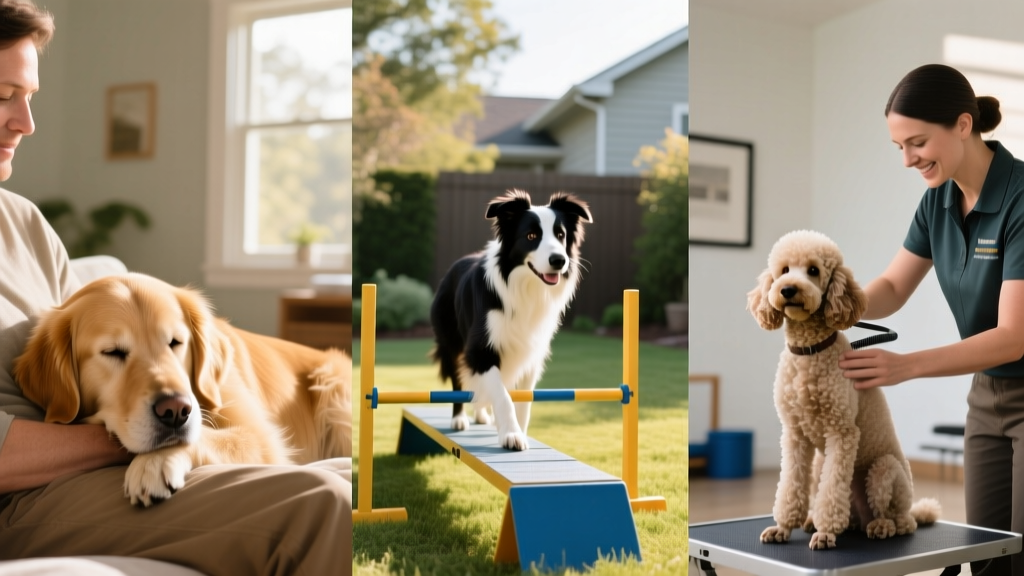
Recognizing Canine Stress: When Normal Worry Becomes a Problem
Every dog experiences stress — a thunderstorm rolls in, a stranger approaches too quickly, or their routine changes unexpectedly. But chronic stress is different. It reshapes behavior, suppresses immune function, and erodes your dog's quality of life. Understanding when your dog has crossed from occasional nervousness into persistent distress is the first step toward effective stress relief for dogs.
What Qualifies as a Stress Problem?
A dog is experiencing clinically significant stress when they display three or more of the following behaviors repeatedly (more than 3-4 times per week) over a period of two weeks or longer:
- Excessive panting when not hot or exercised
- Pacing or inability to settle in familiar environments
- Destructive behavior specifically when left alone or during trigger events
- Compulsive licking (acral lick dermatitis), tail chasing, or shadow staring
- Hypervigilance — constantly scanning, inability to sleep deeply
- Appetite changes (refusing food or stress-eating)
- Excessive vocalization (whining, barking, howling) tied to specific contexts
- Shedding clumps of fur during or after stressful events
- GI upset (loose stools, vomiting) correlated with environmental changes
- Withdrawal — hiding, avoiding interaction, refusing to engage in previously enjoyed activities
Threshold note: A single stress response (panting at the vet, trembling during fireworks) is normal. The problem emerges when your dog's baseline arousal stays elevated and they cannot return to a relaxed state within 20-30 minutes after a trigger passes.
Why Is My Dog Stressed? Root Cause Analysis
Effective stress relief for dogs starts with identifying why your dog is stressed. Treating symptoms without addressing the source is like taking painkillers for a broken bone — you might feel better temporarily, but nothing heals. Here are the five most common root causes, organized as a diagnostic framework you can work through:
Root Cause Diagnostic Tree
1. Fear-Based Anxiety
Triggered by specific stimuli: loud noises (thunder, fireworks, construction), unfamiliar people or dogs, novel environments, or past trauma. Dogs with fear-based anxiety often show clear body language — ears back, tail tucked, whale eye, trembling — and the stress response is tightly linked to the presence of the trigger.
2. Separation Distress
Manifests specifically when the dog is left alone or separated from their primary attachment person. Key indicators: destruction focused on exit points (doors, windows), vocalization that begins within minutes of departure, house soiling in a previously house-trained dog, and excessive greeting behavior upon return. According to the Merck Veterinary Manual, separation anxiety affects an estimated 20-40% of dogs seen by veterinary behaviorists.
3. Understimulation and Boredom
Working breeds and high-drive dogs (Border Collies, Belgian Malinois, German Shepherds, Australian Shepherds) that receive fewer than 60-90 minutes of combined physical and mental exercise daily often develop stress behaviors as an outlet for pent-up energy. Signs include repetitive behaviors, excessive mouthing, digging, and hyperactivity that doesn't resolve with a short walk.
4. Social or Environmental Overload
Common in dogs living in chaotic households, multi-dog homes with unresolved tension, or urban environments with constant noise and foot traffic. These dogs are chronically over-aroused — they never fully relax because their environment never fully quiets.
5. Medical or Pain-Related Stress
Pain, hormonal imbalances, neurological conditions, and sensory decline (vision/hearing loss) can all manifest as behavioral changes that look like anxiety. This is the root cause most frequently missed by owners and even some trainers, which is why a veterinary exam must come first.
Medical Rule-Out: See Your Vet Before Starting Behavior Work
Before investing time and money in behavior modification, rule out medical causes. This isn't optional — it's foundational. A dog in pain cannot learn new coping strategies, and treating a behavioral symptom while ignoring a medical cause wastes weeks or months of your dog's life.
Pre-Behavior-Modification Veterinary Checklist
Ask your veterinarian to evaluate the following:
- Full physical exam with orthopedic assessment — Hip dysplasia, arthritis, spinal pain, and dental disease are silent stress amplifiers. Dogs in chronic pain often show irritability, restlessness, and avoidance behaviors that mimic anxiety.
- Complete blood count (CBC) and chemistry panel — Rules out metabolic disorders, liver/kidney dysfunction, and infection that can affect behavior.
- Thyroid panel (total T4, free T4, TSH) — Hypothyroidism is linked to anxiety, aggression, and cognitive changes in dogs. The cost typically ranges from $80-$150 depending on your region and lab.
- Urinalysis — Urinary tract infections and crystals cause discomfort that can present as restlessness, house soiling, and irritability.
- Neurological screening — If your dog shows sudden behavioral changes, disorientation, or compulsive behaviors, conditions like cognitive dysfunction syndrome (in senior dogs), partial seizures, or brain tumors should be considered.
- Sensory assessment — Partial hearing or vision loss, especially in dogs over 7 years old, can cause startle responses and increased clinginess that owners misinterpret as new-onset anxiety.
Expected cost for a full workup: $200-$500 depending on your location and whether specialists are involved. This investment prevents you from training a medical problem.
Always consult your veterinarian before beginning any behavior modification program, especially if your dog's stress symptoms appeared suddenly or worsened rapidly.
Immediate Management: Stop the Rehearsal Cycle
While you're waiting for your vet appointment and building a long-term training plan, your immediate job is to prevent your dog from rehearsing stressed behaviors. Every time your dog practices a stress response — barking at the window for 45 minutes, destroying a door frame, pacing for hours — those neural pathways get stronger. Management buys you time and prevents the problem from getting worse.
Environmental Modifications You Can Implement Today
For noise-sensitive dogs: Create a sound-buffered safe space. Choose an interior room (bathroom, walk-in closet, or interior bedroom). Add a white noise machine (the LectroFan High Fidelity White Noise Machine, approximately $40-$50, produces consistent masking sound), close windows, and draw heavy curtains. Play classical music or specifically designed canine calming audio — research published in Physiology & Behavior (2017) found that reggae and soft rock showed the most significant stress-reduction effects in shelter dogs, though classical music remains a reliable choice.
For separation-distressed dogs: Start by never leaving your dog alone longer than they can currently handle. If your dog shows distress at the 10-minute mark, arrange your schedule so absences stay under 8 minutes while you work on a desensitization protocol. Use a pet camera (Wyze Cam v4, approximately $35-$40, or Furbo Dog Camera, $170-$200 with treat-tossing capability) to monitor your dog's stress threshold in real time.
For overstimulated dogs: Implement structured decompression. Two 20-minute "sniffari" walks per day on a 15-foot long line (such as the Mendota Products Long Check Cord, $15-$25) in low-traffic areas allow dogs to process environmental information at their own pace. Sniffing activates the seeking system in the brain and has a naturally calming effect — a dog who spends 20 minutes sniffing a field is often more relaxed than one who runs 2 miles on a treadmill.
Step-by-Step Stress Relief Training Protocol
This protocol uses desensitization, counter-conditioning, and positive reinforcement — the three evidence-based pillars of behavior modification. It is not a quick fix. It is a systematic process that rewires your dog's emotional response to stressors over weeks and months.
Phase 1: Build a Relaxation Baseline (Weeks 1-3)
Goal: Teach your dog what "calm" feels like in a zero-stress environment.
- Capturing Calm: Throughout the day, quietly mark and reward any moment your dog voluntarily settles. Use a soft verbal marker ("yes" or "good") and place a treat between their front paws while they're lying down. Aim for 10-15 captures per day. Do not cue the behavior — just notice and reward it.
- Mat Training (Karen Overall's Relaxation Protocol): Using a specific mat or bed (a Ruffwear Highlands Sleeping Bag, $60-$80, works well because it's portable and has a distinct texture), train your dog to lie on the mat and remain there for increasing durations. Start with 3 seconds, build to 20 minutes over 2-3 weeks. Dr. Karen Overall's 15-step Relaxation Protocol, available free through veterinary behavior resources, provides a structured daily progression.
- Heart Rate Awareness: Learn to observe your dog's breathing rate at rest. A relaxed sleeping dog breathes 10-15 times per minute. When you see breathing rate climb above 30 breaths per minute while resting, your dog is internally aroused even if they appear still.
Phase 2: Gradual Exposure with Counter-Conditioning (Weeks 3-8)
Goal: Change your dog's emotional response to their specific trigger from "this is scary" to "this predicts good things."
- Identify the trigger gradient. If your dog fears thunder, start with a recording played at volume level 1 (barely audible) from a phone in another room. If they fear strangers, start with a familiar person standing 50 feet away. The key is to present the trigger at an intensity low enough that your dog notices it but does NOT show stress signals.
- Pair trigger with high-value reward. The moment the trigger appears, begin feeding exceptional treats (freeze-dried liver, boiled chicken, cheese — whatever your dog values most) continuously. When the trigger disappears, treats stop. This creates a classical conditioning association: trigger = chicken rain.
- Increase intensity in micro-steps. Increase volume by 1 level, decrease distance by 5 feet, or add one additional person — but only when your dog shows zero stress signals at the current level for at least 3 consecutive sessions. If your dog shows stress, you moved too fast. Drop back two steps.
- Session structure: Keep sessions to 5-10 minutes maximum, 1-2 times per day. End on a success. Overtraining in a single session floods the dog with cortisol and undoes progress.
Phase 3: Generalization and Real-World Application (Weeks 8-16+)
Goal: Transfer calm responses from controlled settings to real-life scenarios.
- Practice the relaxation protocol in different rooms, then different locations (yard, car, friend's house).
- Introduce mild, manageable stressors into daily life and reward coping behavior. For example, if your dog is mildly stressed by the doorbell, ring it once, then immediately scatter treats on their mat.
- Build a "stress first-aid kit" of behaviors your dog can default to: a solid "go to mat," a nose-touch/hand-target, and a "find it" (scatter feeding) cue. These redirect the dog's brain from the amygdala (fear center) to the prefrontal cortex (thinking/decision-making).
Tools That Help vs. Tools That Harm
The pet industry is flooded with products marketed for canine anxiety. Some are genuinely helpful adjuncts to a behavior modification plan. Others are aversive tools disguised as solutions that suppress behavior without addressing the underlying emotional state — making the problem worse long-term.
| Tool | Type | Evidence & Notes | Price Range | Verdict |
|---|---|---|---|---|
| Adaptil Calm Diffuser (DAP) | Pheromone | Synthetic dog-appeasing pheromone. Studies show modest calming effects, particularly in puppies and noise-sensitive dogs. Covers ~700 sq ft. | $25-$35 (30-day refill) | ✓ Recommended as adjunct |
| Thundershirt / Anxiety Wrap | Compression garment | Gentle constant pressure. A 2014 study in the Journal of Veterinary Behavior found reduced heart rate in some dogs during thunderstorm recordings. Works for roughly 40-60% of dogs. | $40-$60 | ✓ Worth trying |
| Lickimat / Kong Wobbler | Enrichment / puzzle feeder | Licking and foraging release endorphins and engage the parasympathetic nervous system. Freeze Lickimat spreads for longer engagement (20-40 min). | $8-$20 | ✓ Highly recommended |
| Zylkene (casein-based supplement) | Nutraceutical | Derived from milk protein. Several veterinary studies support mild anxiolytic effects. Dosed by weight. Consult your vet before use. | $25-$40 (30-day supply) | ✓ Vet-recommended option |
| Sniffapad / Scent Work Kit | Mental enrichment | 10-15 minutes of scent work provides mental fatigue equivalent to 30-60 minutes of physical exercise. Activates the seeking circuit. | $15-$35 | ✓ Excellent for understimulated dogs |
| Shock collar / E-collar | Aversive | Delivers electric shock. Suppresses outward behavior without reducing internal stress. A 2020 study in Frontiers in Veterinary Science confirmed elevated cortisol levels in dogs trained with e-collars. Increases fear and can trigger redirected aggression. | $50-$200 | ✗ Never use for stress |
| Prong collar / choke chain | Aversive | Causes pain to suppress pulling/reactivity. Creates negative associations with the environment and handler. The AVMA and AVSAB oppose their use for behavior modification. | $10-$30 | ✗ Avoid |
| Alpha roll / dominance pinning | Aversive handling | Based on debunked dominance theory. Physically pinning a stressed dog increases fear, damages trust, and significantly raises bite risk. Zero scientific support. | N/A | ✗ Never use |
Important note on calming aids: Products like Adaptil, Thundershirts, and supplements are adjuncts — they support a training plan but do not replace one. Think of them as putting on noise-canceling headphones while learning to meditate. The headphones help, but you still need to practice.
Realistic Progress Timeline: What to Expect
One of the most damaging myths in dog training is the idea that stress and anxiety can be "fixed" in a week or two. Behavior modification is a biological process — you are literally reshaping neural pathways and hormonal response patterns. Here is what a realistic timeline looks like for most dogs:
Stress Relief Progress Milestones
| Timeframe | Expected Progress | What You'll See |
|---|---|---|
| Week 1-2 | Management phase | Reduced rehearsal of stress behaviors due to environmental changes. Your dog may seem slightly confused by new routines. No true behavioral change yet — you're preventing damage. |
| Week 3-4 | Foundation building | Your dog begins offering calm behaviors voluntarily (lying on mat, settling without being cued). You may notice faster recovery after mild stressors — panting stops in 15 minutes instead of 45. |
| Week 5-8 | Active counter-conditioning | Measurable change in trigger response. Your dog may look at a previously scary stimulus and then look at you expectantly (a conditioned emotional response forming). Some setbacks are normal — progress is not linear. |
| Week 9-16 | Generalization | Calm responses transfer to new environments and contexts. Your dog's baseline arousal level drops noticeably. Sleep becomes deeper and more restful. Stress responses, when they occur, are shorter and less intense. |
| Month 4-6+ | Maintenance and refinement | New behavioral patterns become the default. Occasional "bad days" still happen — this is normal. Ongoing management may be needed for life for severe cases, but quality of life is significantly improved. |
Note: Dogs with severe anxiety, multi-year histories of stress behavior, or comorbid medical conditions may require 6-12 months of consistent work. Dogs with mild-to-moderate stress may show significant improvement in 6-8 weeks. Individual timelines vary based on breed, age, history, and consistency of implementation.
Is Stress Normal? Understanding the Spectrum
Yes — stress is a normal, adaptive response. In appropriate doses, stress keeps dogs alert and responsive to danger. A dog who startles at a sudden noise, assesses the situation, and then relaxes is displaying healthy stress processing.
The problem is chronic, unresolved stress — when the stress response activates frequently and the dog's nervous system never fully returns to baseline. Chronically elevated cortisol suppresses immune function, accelerates aging, and can lead to stress-related illnesses including GI disease, skin conditions, and cognitive decline. According to the American Veterinary Medical Association, chronic stress is increasingly recognized as a contributing factor in many canine health conditions.
If your dog shows stress responses that resolve within 20-30 minutes, occur fewer than 2-3 times per week, and don't interfere with eating, sleeping, or social interaction — your dog is likely within a normal range. Support them with enrichment, routine, and adequate exercise. If stress responses are frequent, prolonged, or escalating, intervention is warranted.
When to Hire a Professional: Trainer vs. Behaviorist
Not all stress problems require professional help, and not all professionals are equally qualified. Here is how to determine when to bring in support and who to hire:
Hire a Certified Professional When:
- Your dog has bitten or snapped at a person or another animal in a stress response
- Stress behaviors are escalating despite 4+ weeks of consistent management and training
- Your dog shows compulsive behaviors (spinning, tail chasing, flank sucking, fly snapping) that last more than a few minutes
- You feel overwhelmed, frustrated, or unsure about implementing the protocol correctly
- Your dog's stress is affecting your household — sleep disruption, property damage, or conflict with neighbors/landlords
- Your dog has severe separation distress that prevents you from leaving the house
Who to Hire — Credential Guide:
| Credential | What They Do | When to Choose | Cost Range |
|---|---|---|---|
| DACVB (Diplomate, American College of Veterinary Behaviorists) | Veterinarian with 3+ years of residency in behavior. Can prescribe medication and diagnose medical causes. The gold standard for severe cases. | Severe anxiety, aggression, compulsive disorders, cases requiring medication | $250-$500 initial consult; follow-ups $100-$200 |
| CAAB / ACAAB (Certified/Applied Animal Behaviorist) | PhD or MS in animal behavior with supervised clinical experience. Certified through the Animal Behavior Society. Cannot prescribe medication but provides detailed behavior modification plans. | Moderate-to-severe anxiety, fear, separation distress | $150-$350 initial consult |
| CPDT-KA / CPDT-KSA (Certified Professional Dog Trainer) | 300+ hours of training experience, passed knowledge assessment. Certified through CCPDT. Excellent for mild-to-moderate stress, basic behavior modification, and ongoing coaching. | Mild stress, general anxiety, building foundation skills, ongoing support | $75-$150 per session; packages $400-$800 |
| IAABC Certified (International Association of Animal Behavior Consultants) | Specialized certification in behavior consulting. Multiple levels. Focuses on behavior modification for specific issues like separation anxiety, fear, and reactivity. | Specific behavioral issues, separation anxiety protocols | $100-$250 per session |
Red flags — avoid any professional who: guarantees results in a specific timeframe, recommends shock/prong/choke collars, uses terms like "dominance" or "pack leader," physically restrains or pins your dog, or dismisses your veterinarian's input.
Prevention: Building Stress-Resilient Puppies and Newly Adopted Dogs
The most effective stress relief strategy is prevention. Whether you're raising a puppy or bringing home an adult rescue, the first 30-90 days set the foundation for lifelong emotional resilience.
For Puppies (8 weeks – 6 months)
The primary socialization window closes around 12-14 weeks, but the secondary window extends to roughly 6 months. During this period:
- Expose, don't flood. Introduce novel stimuli at low intensity and let the puppy approach voluntarily. Pair every new experience with treats and praise. A puppy who is forced into a scary situation (held while a stranger pets them while they struggle) learns that the world is unsafe.
- Practice alone-time from day one. Start with 2-3 minutes in a pen or crate while you're in the next room. Gradually build to 30 minutes, then 1 hour, over the first two weeks. Dogs who learn early that alone-time is safe and temporary rarely develop separation distress.
- Teach a relaxation protocol early. Karen Overall's Relaxation Protocol can begin at 8 weeks. Puppies who learn to settle on a mat develop a lifelong coping skill.
- Follow the AKC's socialization guidelines for age-appropriate exposure targets. The goal is 100 positive novel experiences before 16 weeks — surfaces, sounds, people of different ages and appearances, other vaccinated dogs, car rides, grooming tools.
For Newly Adopted Adult Dogs
The "3-3-3 rule" provides a useful framework: expect 3 days of decompression (your dog may seem shut down, refuse food, or hide), 3 weeks of settling in (learning routines, beginning to show personality), and 3 months of building trust (feeling truly at home). During this period:
- Limit stimulation for the first week. No dog parks, no parties, no neighborhood tours. Keep the world small and predictable.
- Establish routines immediately. Feed, walk, and sleep at consistent times. Predictability reduces cortisol in dogs who have experienced instability.
- Don't test triggers. Resist the urge to "see how they react" to cats, children, or other dogs in the first week. Let your dog decompress before gradually introducing variables.
- Record baseline behavior. Keep a simple daily log: appetite, sleep quality, stress signals observed, triggers encountered. This data becomes invaluable if you need professional help later.
Frequently Asked Questions About Stress Relief for Dogs
Why does my dog seem stressed all the time?
Chronic stress in dogs typically stems from one or more unresolved root causes: an undiagnosed medical condition causing discomfort, a fear-based anxiety that has generalized to many contexts, chronic understimulation (especially in working breeds), or an environment that is perpetually overstimulating. A veterinary workup followed by a structured behavioral assessment is the most efficient path to identifying the specific cause in your dog.
How do I stop my dog from stress-related behaviors like pacing or whining?
Stop focusing on the behavior and start addressing the emotion driving it. Pacing and whining are symptoms — the canine equivalent of nail-biting or fidgeting in stressed humans. Suppressing the symptom with punishment doesn't reduce the internal stress; it just removes the dog's only outlet. Instead, implement the management strategies and counter-conditioning protocol described above to reduce the underlying anxiety. As stress decreases, the behaviors naturally diminish.
Should I use punishment to correct stress behaviors?
No. Punishing a stress response is counterproductive and harmful. When you punish a dog for growling, whining, or pacing — behaviors that are expressions of an internal emotional state — you teach the dog that showing stress leads to bad outcomes. This can result in learned helplessness (the dog stops expressing stress but remains internally distressed) or behavioral escalation (the dog skips warning signals and goes straight to biting). The American Veterinary Society of Animal Behavior explicitly recommends against aversive methods for behavior modification, citing evidence that they increase stress and risk of aggression.
How long will it take to help my stressed dog?
For mild stress with a clear, removable trigger (e.g., a dog stressed by construction noise that will end in two weeks), improvement may be visible within days of implementing management. For moderate anxiety with an ongoing trigger, expect 6-12 weeks of consistent work before seeing reliable change. For severe, long-standing anxiety, particularly separation distress or generalized anxiety disorder, plan for 4-6 months of dedicated behavior modification, potentially combined with veterinary-prescribed medication. Some dogs with deep-rooted anxiety benefit from lifelong management strategies — and that's okay. The goal is quality of life, not perfection.
Can medication help with my dog's stress?
Yes — for moderate-to-severe cases, veterinary-prescribed anti-anxiety medication can be a powerful tool. Medications like fluoxetine (Reconcile), clomipramine (Clomicalm), trazodone, and gabapentin are commonly used in canine behavioral medicine. Medication is not a standalone solution; it works best when combined with behavior modification. Think of it this way: a dog whose anxiety is at a 9/10 cannot learn new coping strategies because their brain is in survival mode. Medication can bring them to a 5/10, where learning becomes possible. Discuss medication options with your veterinarian or a veterinary behaviorist (DACVB). Never administer human anti-anxiety medication without veterinary guidance.
When do I need a professional behaviorist?
Seek professional help if your dog has bitten anyone, if stress behaviors are worsening despite 4+ weeks of consistent effort, if your dog displays compulsive behaviors, if the stress is severely impacting your household, or if you simply feel out of your depth. There is no shame in calling in a professional early — it often saves time, money, and heartache compared to months of trial-and-error. Start with your veterinarian for a medical workup, then ask for a referral to a DACVB, CAAB, or IAABC-certified professional in your area.
Is stress in dogs the same as in humans?
The physiological stress response is remarkably similar across mammals — the same hypothalamic-pituitary-adrenal (HPA) axis activation, the same cortisol release, the same fight-flight-freeze options. However, dogs cannot cognitively reframe their stress the way humans can ("it's just a thunderstorm, I'm safe inside"). They rely entirely on environmental management, conditioning, and our support to regulate their nervous systems. This is why our role as their advocates and co-regulators is so critical.
This article is for educational purposes and does not replace professional veterinary or behavioral consultation. If your dog is experiencing severe stress, aggression, or any acute medical symptoms, contact your veterinarian immediately. For toxic ingestion concerns, call ASPCA Animal Poison Control at (888) 426-4435 (24/7, consultation fee applies).
Beth Carrasco
All our authors care for dogs every day — read more of their work on the authors page.