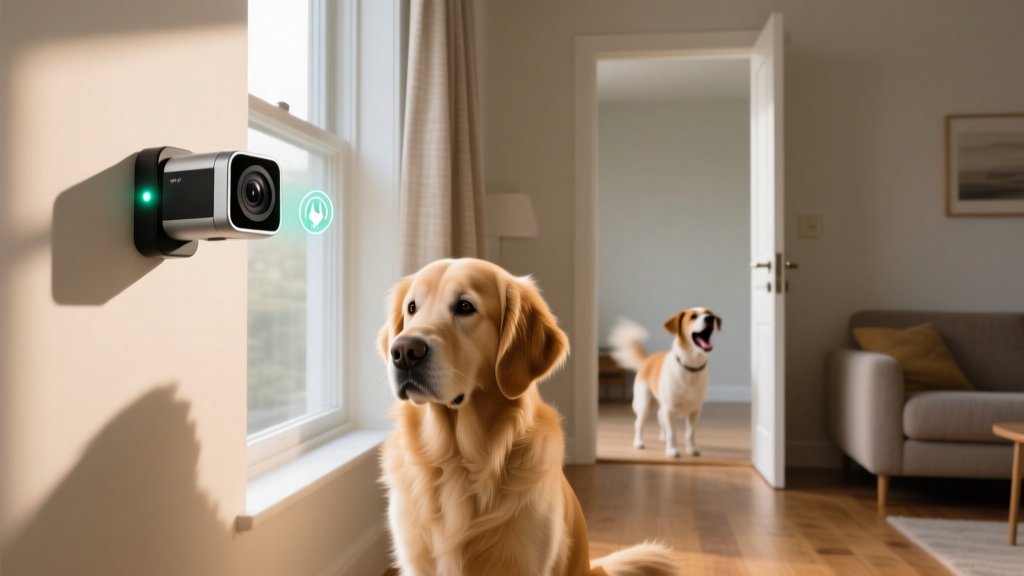
How to Stop a Neighbor's Dog From Barking: A Practical Guide
Learn how to stop a neighbor's dog from barking with legal, humane strategies covering diplomacy, sound management, noise ordinances, and when to escalate.

What Qualifies as a Barking Nuisance?
Not every bark is a problem — dogs vocalize naturally. A barking issue crosses into nuisance territory when it meets legal and welfare thresholds:
- Duration: Continuous barking for 10–20+ minutes without pause (varies by jurisdiction; many US cities cite 10 minutes during daytime, 5 minutes at night)
- Frequency: Recurring episodes multiple times per day, especially during quiet hours (typically 10 PM – 7 AM)
- Impact: Interfering with your sleep, work-from-home productivity, or general quiet enjoyment of your property
- Duration of pattern: Ongoing for days to weeks, not a one-off event (e.g., a single party or delivery)
Most US municipalities define nuisance barking in their animal control ordinances. For example, many cities follow a standard of 10+ minutes of continuous barking or 30+ minutes of intermittent barking within a given period. Check your local code for exact thresholds.
Why Is the Neighbor's Dog Barking So Much?
Before you can solve the problem, it helps to understand what's driving the behavior. Dogs don't bark out of spite — they bark because something in their environment triggers a response. Here are the most common root causes you might be observing from your side of the fence:
Root Cause Diagnostic Tree
| Cause | What You'll Observe | Common Triggers |
|---|---|---|
| Territorial/Alert | Barking at passersby, delivery trucks, other animals near the fence line; dog patrols the perimeter | Mail carriers, joggers, squirrels, your dog in the yard |
| Separation Anxiety / Distress | Barking starts when owners leave, continues for extended periods, often paired with howling or whining | Being left alone for 8+ hours, single-dog household |
| Boredom / Understimulation | Repetitive, monotone barking with no clear trigger; dog paces or runs fence lines | Left in yard all day with no enrichment, no walks |
| Fear / Reactivity | Barking with stiff body posture, lunging at fence; triggered by specific stimuli | Loud noises, unfamiliar dogs, thunderstorms |
| Medical / Cognitive | Barking at nothing apparent, especially at night; common in senior dogs | Canine cognitive dysfunction, hearing loss, pain |
Understanding the likely cause will shape your approach. A dog barking from boredom needs a different conversation with the neighbor than a dog experiencing separation anxiety. If you can identify the pattern, you'll be far more effective when you approach the neighbor with specific, helpful observations.
Step 1: The Neighbor Conversation (Diplomacy First)
The most effective and fastest solution is almost always a respectful, direct conversation with the dog's owner. Many people genuinely don't realize their dog barks excessively — especially if the barking happens while they're at work.
How to Approach Without Creating Conflict
- Lead with empathy, not accusation. Try: "Hey, I wanted to mention something — your dog seems to bark quite a bit during the day when you're not home. I'm not sure if you're aware, and I thought you'd want to know."
- Provide specific data. Vague complaints get dismissed. Instead, say: "I logged it — yesterday the barking ran from about 9:15 AM to 11:40 AM, and again from 2 PM to 3:30 PM."
- Offer a concrete observation. "It seems to start when the mail carrier comes and then doesn't stop." This helps the owner identify the trigger.
- Suggest resources, not blame. Mention a local trainer, a puzzle feeder brand like the Kong Classic ($12–$18) or Outward Hound Nina Ottosson puzzle ($15–$30), or a calming supplement like Zesty Paws Calming Bites ($25–$30 for 120 chews).
- Leave a friendly note if face-to-face feels awkward. A handwritten note with your phone number and a non-confrontational tone works well. Avoid anonymous notes — they tend to escalate suspicion and defensiveness.
Pro tip: If you have a decent relationship with the neighbor, offer to send them a short video or audio clip of the barking recorded from your phone. Hearing it from outside often surprises owners who assume their dog is quiet while they're gone.
Step 2: Document Everything (Your Legal Safety Net)
If the friendly conversation doesn't produce results within 2–3 weeks, you need documentation. This isn't about being litigious — it's about building a factual record in case you need to involve a landlord, HOA, or animal control.
What to Log
| Data Point | Why It Matters | How to Capture |
|---|---|---|
| Date and time | Establishes pattern and frequency | Spreadsheet or notes app |
| Duration of each episode | Meets legal threshold requirements | Stopwatch or timestamped recording |
| Audio/video recording | Evidence for animal control or small claims | Phone recording, security camera (e.g., Wyze Cam v3, ~$35) |
| Trigger (if identifiable) | Helps animal control officer assess the situation | Note what was happening in the environment |
| Communication attempts | Shows good faith effort to resolve | Save texts, emails, copy of notes left |
| Decibel readings (optional) | Some ordinances cite dB thresholds (often 65–75 dB at property line) | Free dB meter apps or dedicated meter (~$30–$50) |
Aim for at least 2 weeks of consistent logging before escalating. A pattern of 5+ nuisance episodes per week is generally compelling to animal control officers and HOA boards.
Step 3: Manage the Noise on Your Side (Immediate Relief)
While you work on the root problem, you deserve peace in your own home. Here are practical noise-management strategies ranked by effectiveness and cost:
Sound Management Tools Compared
| Solution | Cost Range | Effectiveness | Best For |
|---|---|---|---|
| White noise machine (e.g., LectroFan Classic, ~$35–$50) | $35–$80 | ★★★★☆ — Masks mid-frequency barking well | Bedrooms, home offices |
| Noise-canceling headphones (e.g., Sony WH-1000XM5, ~$350; budget: Anker Soundcore Q30, ~$60) | $60–$400 | ★★★★★ — Best for focused work | Work-from-home, calls |
| Privacy fence extensions / sound barriers | $200–$1,500+ | ★★★☆☆ — Reduces visual triggers AND dampens sound | Territorial barkers who react to seeing you |
| Outdoor sound-dampening panels (acoustic fence blankets, e.g., Audimute, ~$80–$150 per panel) | $80–$600 | ★★★☆☆ — Moderate reduction, best combined with other methods | Shared fence lines |
| Earplugs for sleep (e.g., Loop Quiet, ~$20; Flare Calmer, ~$30) | $10–$40 | ★★★★☆ — Good for nighttime disruptions | Light sleepers |
| Indoor plants / dense landscaping | $50–$300 | ★★☆☆☆ — Minimal sound reduction, but blocks visual triggers | Long-term yard improvement |
Quick win: If the dog is a territorial barker reacting to seeing you or your dog through the fence, adding privacy slats to a chain-link fence ($30–$60 per 50-foot roll) or planting dense shrubs like arborvitae along the property line can dramatically reduce barking by removing the visual trigger. This is often the single most effective physical intervention you can make from your side.
Step 4: Know Your Legal Options (Noise Ordinances and Escalation)
If diplomacy fails and the barking continues to meet nuisance thresholds, you have several escalation paths. Understanding them in advance helps you choose the right one.
Escalation Pathway
- Review your local noise ordinance. Most US cities and counties have animal-specific noise provisions. Search "[your city] nuisance barking ordinance" or check your municipal code on Municode or American Legal Publishing. Note the specific thresholds (minutes of barking, quiet hours, dB limits).
- Contact animal control (non-emergency line). File a formal complaint with your documentation. Most jurisdictions require a written complaint with dates, times, and duration. Some cities send a warning letter first; others dispatch an officer. Cost: Free.
- Involve your HOA or landlord. If applicable, HOAs typically have nuisance clauses with fine structures ($50–$500 per violation). Landlords can issue lease violation notices. Provide your log and recordings.
- Mediation services. Many counties offer free or low-cost community mediation ($0–$75) through their court system. A neutral mediator facilitates a conversation between you and the neighbor. This is often more effective than a citation because it creates a written agreement.
- Small claims court. As a last resort, you can sue for nuisance in small claims court (filing fees: $30–$100 depending on state). You'd be seeking damages for loss of quiet enjoyment. Bring your full documentation. Some jurisdictions allow you to request a court order requiring the owner to address the barking.
⚠️ Important Legal Notes
- Never take matters into your own hands. It is illegal in all 50 states to harm, poison, or trap a neighbor's dog. This includes using ultrasonic devices on the neighbor's property without consent in some jurisdictions. You could face criminal charges and civil liability.
- Retaliation protections: If the neighbor becomes hostile after a complaint, document it. In many states, harassing a complainant after a filed report can result in additional penalties.
- Recording laws vary by state. Some states require two-party consent for audio recording. Check your state's laws before recording conversations with the neighbor. Recording the dog barking from your own property is generally legal everywhere.
What About Ultrasonic Anti-Bark Devices?
You'll find many ultrasonic bark deterrent devices marketed online (e.g., Dogtra, PetSafe, various Amazon brands priced $25–$60). These emit a high-frequency sound intended to interrupt barking. Here's what the evidence says:
- Effectiveness is inconsistent. Some dogs respond; many do not. A dog's hearing range varies, and some dogs simply habituate to the sound within days.
- Range limitations. Most devices have an effective range of 50 feet or less. If the dog is farther away, or behind a solid fence, the signal may not reach them.
- Ethical and legal concerns. Pointing an ultrasonic device at a dog that isn't yours raises animal welfare questions and may violate local ordinances regarding electronic harassment of animals. The ASPCA and major veterinary behavior organizations generally recommend against aversive devices.
- They don't address the cause. Even when they suppress barking temporarily, the underlying anxiety, boredom, or territorial drive remains unaddressed.
Our recommendation: Skip the ultrasonic devices. They're unreliable, potentially inhumane, and don't solve the problem. Invest that $40–$60 in better sound management for your home instead.
How to Help the Neighbor Help Their Dog
If the neighbor is receptive but doesn't know what to do, you can be a resource. Here are specific, evidence-based recommendations you can share — all grounded in positive reinforcement and force-free methods endorsed by the American Veterinary Society of Animal Behavior (AVSAB):
For Territorial/Alert Barkers
- Visual barriers: Privacy fencing, window film (e.g., Artscape Window Film, ~$10–$25 per roll) to block the dog's view of triggers from inside the house
- "Quiet" cue training: Reward the dog for barking 2–3 times then stopping on cue. Mark and reward silence with high-value treats (freeze-dried chicken, ~$8–$12 per bag)
- Desensitization: Record trigger sounds (doorbell, mail truck) and play at low volume, gradually increasing while rewarding calm behavior
For Boredom/Understimulation Barkers
- Enrichment before leaving: A 20–30 minute walk or play session before the owner departs reduces pent-up energy
- Food puzzles: Kong Classic stuffed with peanut butter and frozen ($12–$18), Outward Hound Hide-a-Squirrel ($12–$20), or snuffle mats ($15–$25) keep dogs occupied for 30–60 minutes
- Dog walker or daycare: A midday walk ($15–$25 per visit) or daycare day ($25–$45 per day) breaks up long alone periods. Services like Wag! or Rover can connect owners with local walkers.
For Separation Anxiety Barkers
- This is a clinical condition that typically requires a veterinarian or veterinary behaviorist. The Merck Veterinary Manual classifies separation anxiety as a behavioral disorder that may benefit from medication (e.g., fluoxetine, clomipramine) alongside behavior modification.
- Suggest the owner consult their vet. Over-the-counter calming supplements (e.g., Solliquin ($25–$35), Anxitane ($20–$30)) may help mild cases but won't resolve clinical separation anxiety alone.
- Counter-conditioning protocol: Graduated departure training — the owner practices leaving for 1 minute, 5 minutes, 15 minutes, building duration while the dog remains calm, paired with a high-value food toy given only during departures.
Realistic Timeline: What to Expect
Barking problems don't resolve overnight — and when you're dealing with someone else's dog, you have even less control over the timeline. Here's a realistic framework:
| Phase | Timeframe | What's Happening | Your Action |
|---|---|---|---|
| Week 1–2 | Documentation | Logging barking episodes, identifying patterns | Keep detailed log, set up sound management at home |
| Week 2–3 | Neighbor conversation | Approaching neighbor with data and empathy | Have the talk or leave a friendly note |
| Week 3–6 | Cooperative resolution | Neighbor begins training, enrichment, or management changes | Continue logging; offer encouragement if progress is visible |
| Week 6–8 | Escalation (if needed) | No improvement or neighbor is unresponsive | File animal control complaint, contact HOA/landlord |
| Week 8–12+ | Formal resolution | Animal control investigation, mediation, or legal action | Provide documentation to authorities, attend mediation if offered |
Best case: The neighbor is unaware and receptive. They make changes (more walks, puzzle feeders, a trainer) and you see meaningful reduction within 3–6 weeks.
Typical case: Some improvement but ongoing episodes. Full resolution may take 2–4 months of consistent effort on the neighbor's part.
Worst case: Uncooperative neighbor requiring formal complaints and potentially legal action. This path can take 3–6+ months and may not fully resolve the issue.
When (and How) to Involve a Professional
Sometimes the most constructive thing you can do is recommend — or even offer to help pay for — professional intervention. Here's when it makes sense:
- The dog shows signs of separation anxiety (non-stop barking for hours when alone, self-injury, destruction). This requires a Certified Applied Animal Behaviorist (CAAB) or a veterinary behaviorist (DACVB). Consultation costs: $250–$500 for initial assessment; ongoing sessions $100–$200 each.
- The neighbor is willing but lacks skill. A Certified Professional Dog Trainer (CPDT-KA) can teach the owner management and training techniques. Cost: $75–$150 per private session; group classes $150–$300 for a 6-week course.
- The dog has fear-based reactivity. Look for a trainer who specializes in counter-conditioning and desensitization — not "balanced" trainers who use aversive tools. Check the Certification Council for Professional Dog Trainers (CCPDT) directory for credentialed professionals in your area.
🎓 Credential Guide: Who to Recommend
- CPDT-KA / CPDT-KSA: Certified Professional Dog Trainer — solid for general obedience and behavior modification
- CAAB / ACAAB: Certified Applied Animal Behaviorist — advanced behavior science, appropriate for anxiety and complex cases
- DACVB: Diplomate of the American College of Veterinary Behaviorists — a veterinarian with specialist behavior training; can prescribe medication
- IAABC Certified: International Association of Animal Behavior Consultants — credentialed behavior consultants
- Avoid: Self-described "dog psychologists," trainers who guarantee results in specific timeframes, or anyone recommending shock collars, prong collars, or dominance-based methods
What If You're Dealing With a Rental or HOA?
If you live in an apartment, condo, or HOA-managed community, you have additional leverage — and additional obligations:
Apartment / Rental Situations
- Lease agreements typically include quiet enjoyment clauses and pet addendums with behavior requirements. Notify the property manager in writing with your documentation.
- The landlord can issue a cure-or-quit notice if the tenant doesn't address the nuisance. This is often faster than municipal animal control.
- If the landlord is unresponsive, check your state's tenant rights regarding constructive eviction or rent escrow. Some states allow tenants to break a lease or withhold rent if the landlord fails to address a documented nuisance. Consult a tenant rights attorney or legal aid clinic.
HOA Situations
- HOAs typically have CC&Rs (Covenants, Conditions, and Restrictions) that include nuisance provisions. File a written complaint with the HOA board or management company.
- Fine structures vary: Common ranges are $25–$100 for a first violation, $50–$250 for subsequent violations, escalating to $500+ for chronic non-compliance.
- The HOA can place a lien on the owner's property for unpaid fines in many states, making this a powerful enforcement tool.
Frequently Asked Questions
Is it normal for a dog to bark this much?
Some barking is normal canine communication. However, continuous barking for 10+ minutes, repeated multiple times daily, is not typical and usually signals an unmet need — whether that's exercise, mental stimulation, companionship, or medical attention. Excessive barking is a welfare concern for the dog, not just a nuisance for you.
How do I stop my neighbor's dog from barking without talking to them?
Your options without direct conversation include: white noise machines and sound barriers on your property, filing an anonymous complaint with animal control (though many jurisdictions require your contact info), and involving a landlord or HOA. However, direct communication is almost always faster and more effective. If you're uncomfortable, a polite written note is a reasonable middle ground.
Can I call the police about a barking dog?
You can call the non-emergency police line for persistent nuisance barking, especially during quiet hours. Most departments prefer you start with animal control. Do not call 911 for a barking dog — this ties up emergency resources and may result in a dismissive response. Use the non-emergency dispatch number for your jurisdiction.
Should I use an ultrasonic device to stop the neighbor's dog from barking?
We don't recommend it. Ultrasonic deterrents have inconsistent effectiveness, don't address the underlying cause, and raise ethical and potentially legal concerns when directed at an animal you don't own. Invest in sound management for your home and focus on addressing the situation through communication or official channels.
How long will it take to resolve the barking problem?
If the neighbor is cooperative, you may see improvement within 3–6 weeks. If formal complaints are needed, the process typically takes 2–6 months. Chronic cases involving legal action can extend beyond 6 months. Start documenting immediately so your timeline begins now, not weeks from now.
Can I sue my neighbor for their dog barking?
Yes, you can file a nuisance claim in small claims court. Filing fees range from $30–$100 depending on your state. You'll need thorough documentation (barking logs, recordings, communication attempts) to make your case. Some courts can order the owner to take corrective action. Consult a local attorney for guidance specific to your jurisdiction, as nuisance laws vary significantly by state and municipality.
What if the dog is barking because it's being neglected?
If you suspect the dog is being neglected (left outside in extreme weather without shelter, no visible food or water, visibly underweight, or showing signs of abuse), contact your local animal welfare agency or humane society in addition to animal control. You can also call the ASPCA's cruelty reporting line or find your state's reporting resources through the ASPCA's Report Cruelty page. Animal welfare concerns take priority over noise complaints.
Sources: American Veterinary Society of Animal Behavior (AVSAB) position statements on punishment; AKC Expert Advice on Barking; ASPCA Common Dog Behavior Issues: Barking; Merck Veterinary Manual — Behavioral Disorders in Dogs.
Beth Carrasco
All our authors care for dogs every day — read more of their work on the authors page.