How to Stop a Dog from Jumping Up at You: A Force-Free Training Guide
Learn how to stop a dog from jumping up at you with proven force-free techniques, root cause analysis, and step-by-step protocols that actually work.

There's nothing quite like coming home to a dog who launches themselves at your chest with muddy paws and unbridled enthusiasm. While jumping up is one of the most common behavioral complaints among dog owners, it's also one of the most fixable — when you understand why it's happening and apply a consistent, science-based protocol.
This guide walks you through the complete process of how to stop a dog from jumping up at you, from identifying root causes to implementing a step-by-step training plan rooted in positive reinforcement and behavioral science.
What Qualifies as Problematic Jumping Behavior?
Jumping up is defined as a dog lifting both front paws off the ground to make contact with a human's body — including legs, torso, arms, or face. It becomes a behavior problem when it meets any of these thresholds:
- Frequency: Occurs more than 2-3 times per greeting encounter despite verbal cues to stop
- Intensity: Causes scratches, bruises, clothing damage, or knocks over children/elderly individuals
- Generalization: Happens with every visitor, not just familiar household members
- Persistence: Continues or escalates after the dog reaches adulthood (18+ months) without intervention
- Context spread: Extends beyond greetings to jumping during meal prep, when guests sit down, or when people are seated on furniture
It's important to distinguish jumping up from normal canine greeting behavior. Dogs naturally greet each other at face level — sniffing, licking, and making eye contact. Jumping on humans is essentially your dog's attempt to reach your face, which is a natural impulse. The goal isn't to suppress greeting enthusiasm entirely, but to redirect it into a behavior that's safe and appropriate for human interaction.
Why Does My Dog Jump Up at Me and Visitors?
Understanding the root cause is critical because the treatment protocol varies depending on what's driving the behavior. Here's a diagnostic framework to help you identify the primary motivation:
| Root Cause | Identifying Signs | Prevalence |
|---|---|---|
| Attention-seeking / Learned reinforcement | Dog jumps, owner pushes them away or says "no" — dog interprets any attention (even negative) as reward. Jumping increases over time. | ~60% of cases |
| Over-arousal / Excitement | Whole-body wiggling, zoomies, inability to settle, mouthy behavior alongside jumping. Common in adolescent dogs (6-18 months). | ~25% of cases |
| Anxiety-based greeting | Jumping accompanied by submissive urination, lip licking, whale eye, or frantic behavior. Dog seems unable to calm down even after initial greeting. | ~8% of cases |
| Lack of impulse control training | Dog also bolts through doors, pulls on leash, lunges at squirrels. Jumping is part of a broader pattern of poor self-regulation. | ~5% of cases |
| Medical discomfort or neurological issue | Sudden onset of frantic jumping in a previously calm dog, or jumping combined with restlessness, pacing, or inability to get comfortable. | ~2% of cases |
Prevalence estimates based on behavioral case intake patterns reported in veterinary behavior literature. Individual assessment by a certified professional is recommended.
The most common driver by far is learned reinforcement. Here's the behavioral mechanism: when a puppy jumps up, most people instinctively push the dog away, say "down," or grab their paws. To a dog, all of these responses are forms of engagement. Even being pushed away involves physical contact. The puppy learns: "Jumping = human touches me and talks to me." This accidental reinforcement loop is why jumping often gets worse before it gets better when you start ignoring it — the dog escalates to try harder to get the response that used to work.
When to See a Vet Before Starting Training
Before you invest weeks in a training protocol, rule out medical causes. This is especially important if the jumping behavior appeared suddenly or changed significantly in character.
Consult your veterinarian before beginning behavior modification if your dog shows any of these signs:
- ☐ Sudden behavioral change — jumping started abruptly in a dog over 2 years old with no environmental changes
- ☐ Restlessness at night — unable to settle, pacing, frequent position changes (possible pain or cognitive dysfunction in senior dogs)
- ☐ Excessive thirst/urination alongside hyperactivity (possible thyroid dysfunction or Cushing's disease)
- ☐ Submissive urination with jumping — may indicate urinary tract infection rather than purely behavioral issue
- ☐ Compulsive patterns — jumping in repetitive, ritualized sequences that seem involuntary (possible neurological condition)
- ☐ Medication side effects — if dog is on corticosteroids, phenobarbital, or thyroid supplementation that may cause hyperactivity
A full veterinary exam including bloodwork (CBC, chemistry panel, thyroid panel) typically costs $150-$350 and can rule out physiological causes before you invest in behavioral intervention.
Hyperthyroidism, while rare in dogs compared to cats, can cause hyperactivity and restlessness. More commonly, pain conditions like hip dysplasia or spinal discomfort can make a dog restless and unable to settle, which manifests as constant jumping and pacing. Always consult your veterinarian if you're unsure whether a behavior has a medical component.
Is Jumping Up Normal Dog Behavior?
Yes — and no. Jumping up is a normal canine greeting behavior in the sense that dogs naturally seek face-to-face contact. Puppies jump to reach their mother's face for food regurgitation (an evolutionary holdover from wild canids). Adolescent dogs jump because their impulse control systems in the prefrontal cortex are still developing — much like human teenagers.
However, "normal" doesn't mean "acceptable." Jumping becomes problematic when:
- Your dog weighs 50+ lb (23+ kg) and can knock over children or elderly visitors
- The behavior generalizes to all social encounters, making your dog difficult to take in public
- It escalates into mouthing, nipping, or clothing-grabbing during greetings
- It persists past 2 years of age without any sign of maturation
According to the American Kennel Club, jumping up is among the top three reasons owners seek professional training help. The good news: it's also one of the most responsive behaviors to positive reinforcement training when applied consistently.
Immediate Management: Stop the Rehearsal Loop
Every time your dog successfully jumps on someone and gets attention (even negative attention), the neural pathway for that behavior gets stronger. This is called rehearsal, and it's the number one reason training takes longer than it should. Before you begin your formal training protocol, you need to manage the environment to prevent rehearsal.
Management Strategies to Implement Today
| Strategy | How to Implement | Cost | Best For |
|---|---|---|---|
| Leash tether at entry | Clip a 4-6 ft leash to your dog's harness before opening the door. Step on the leash so the dog can stand or sit but cannot jump. | $0 (use existing leash) | All dogs; especially large breeds 50+ lb |
| Scatter feed on greeting | As a visitor enters, toss 10-15 small treats on the floor away from the door. Dog's nose stays down, preventing jumping. | $0.50-$1 per session (treat cost) | Food-motivated dogs; high-arousal greeters |
| Behind baby gate | Place dog behind a 30-inch gate during initial guest arrival. Release only when calm (all four paws on floor for 10+ seconds). | $30-$60 for gate | Dogs who jump on visitors specifically |
| Pre-greeting exercise | 15-20 minutes of structured exercise (fetch, flirt pole, sniff walk) 30 minutes before expected visitors to reduce arousal baseline. | $0 | High-energy adolescents; working breeds |
| Calming mat protocol | Train dog to go to a designated mat/bed when doorbell rings. Use high-value treats (freeze-dried liver, chicken) for staying on mat. | $15-$40 for training mat | Dogs who respond to doorbell/knocking |
Step-by-Step Training Protocol: How to Stop a Dog from Jumping Up
This protocol uses differential reinforcement of an incompatible behavior (DRI) — teaching your dog to do something that physically cannot happen at the same time as jumping. In this case, we're training "four on the floor" and a solid sit-for-greeting.
Each session should be 3-5 minutes. Train 2-3 sessions per day. Progress to the next phase only when your dog succeeds 8 out of 10 trials at the current level.
Phase 1: The Ignore-and-Reward (Days 1-7)
- Set up: Have treats in a pouch on your hip. Stand in a neutral area of your home.
- Trigger: Approach your dog or have a family member approach.
- If dog jumps: Immediately turn your body 90 degrees away. Cross your arms. Do NOT make eye contact, speak, or touch the dog. Become a statue.
- Wait: The moment all four paws touch the floor — even for one second — mark with a calm "yes" and deliver a treat at ground level (hand below your knee).
- Repeat: Approach again. If dog keeps four paws down for 2 seconds, mark and treat.
- Key detail: Treat delivery location matters enormously. Always deliver treats LOW — at or below knee height. If you hold treats at chest height, you're encouraging the dog to reach up.
Phase 2: Adding the Sit (Days 7-14)
- Once your dog reliably keeps four paws on the floor during your approach, add a sit cue.
- Approach. If dog sits without prompting — jackpot! Deliver 3-4 treats in sequence at ground level.
- If dog doesn't sit, give a single verbal cue "sit" and wait up to 5 seconds.
- If dog sits — mark and treat. If dog jumps instead — reset (turn away) and try again.
- Critical timing: The treat must arrive within 1 second of the dog's bottom hitting the floor. Delayed rewards reinforce whatever the dog is doing at the moment of delivery.
Phase 3: Proofing with Distractions (Days 14-28)
- Practice with family members approaching one at a time.
- Add mild excitement: clap hands, say "hi!" in an upbeat voice, jog in place.
- Practice at the front door with no one actually entering.
- Practice with the doorbell sound (use a phone recording at low volume first, gradually increase).
- Each distraction level should be introduced at low intensity. If the dog breaks the sit, reduce the distraction intensity and rebuild.
Phase 4: Real-World Application (Days 28-60+)
- Enlist one trusted friend as a practice visitor. Brief them on the protocol: "Ignore the dog completely until they sit. Then calmly offer your hand below their chin level."
- Have your dog on leash during the first 5-10 real visitor sessions.
- Gradually increase the number of visitors and excitement level.
- If the dog jumps on a real visitor: calmly lead them away on leash, reset, and try again. No scolding needed.
- Maintenance: Continue to reward sitting greetings intermittently (variable ratio schedule — reward every 2nd or 3rd successful greeting) to keep the behavior strong long-term.
Counter-Conditioning for Anxiety-Based Jumpers
If your dog's jumping is driven by anxiety (submissive urination, frantic energy, inability to settle even after the initial greeting), the protocol needs modification. Instead of ignoring the jumping, pair the arrival of people with something calming:
- Give a long-lasting chew (bully stick, frozen Kong stuffed with peanut butter) 5 minutes before guests arrive
- Play classical music or use a white noise machine near the entry area
- Practice desensitization: have visitors arrive and leave without interacting with the dog for the first 3-5 sessions, then gradually increase interaction
- Consider an Adaptil pheromone diffuser ($25-$45) near the entry point — studies show dog-appeasing pheromones can reduce anxiety-related behaviors
Training Tools: What Helps and What to Avoid
The tools you use can accelerate your progress or completely undermine it. Here's an evidence-based comparison:
| Tool | Type | How It Helps | Cost Range | Recommendation |
|---|---|---|---|---|
| Front-clip harness (e.g., Freedom No-Pull, Ruffwear Front Range) | Management | Gives you steering control without neck pressure; prevents jumping by redirecting forward momentum | $25-$55 | ✅ Recommended |
| Treat pouch (e.g., Ruffwear Treat Trader, Outward Hound Bag) | Training aid | Enables instant treat delivery at correct height; keeps hands free for leash management | $12-$35 | ✅ Recommended |
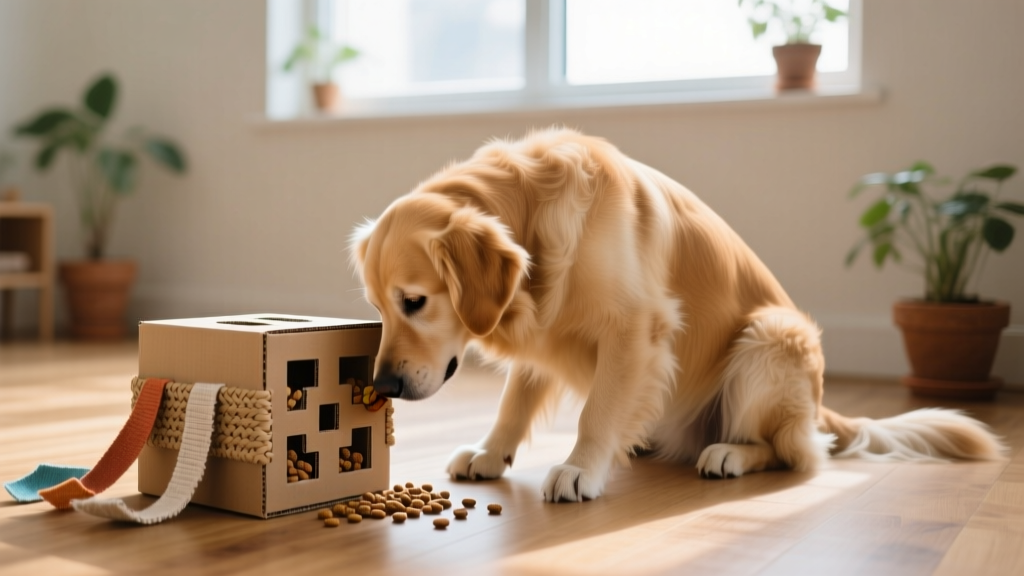
| Snuffle mat or lick mat | Arousal reduction | Licking and sniffing are naturally calming behaviors; use during guest arrivals to lower arousal | $12-$30 | ✅ Recommended for anxious jumpers |
| Calming supplements (e.g., Zesty Paws Calming Bites, Solliquin) | Adjunct support | L-theanine, chamomile, or casein-based supplements may reduce baseline arousal; effects are mild | $20-$40/month | ⚠️ May help; consult vet first |
| Shock collar / e-collar | Aversive | Delivers electric shock to suppress behavior | $40-$200 | ❌ Not recommended — increases anxiety, damages trust, may cause redirected aggression |
| Knee-to-chest technique | Aversive/physical | Raising knee to block jumping dog | $0 | ❌ Not recommended — risk of injury to dog's sternum; can cause fear of human bodies |
| Alpha roll / physical pinning | Aversive | Forcing dog onto back to assert dominance | $0 | ❌ Strongly not recommended — debunked dominance theory; causes fear and potential aggression |
| Spray bottle / compressed air | Positive punishment | Spraying dog in face when jumping | $5-$15 | ❌ Not recommended — creates negative association with visitors; may increase anxiety-based jumping |
According to a 2020 study published in the Journal of Veterinary Behavior, dogs trained with aversive methods showed significantly higher stress indicators (cortisol levels, lip-licking, yawning) and were more likely to develop fear-based aggression compared to dogs trained with positive reinforcement alone. The American Veterinary Society of Animal Behavior (AVSAB) explicitly recommends against dominance-based training techniques.
Should I Use Punishment to Correct Jumping?
Force-free, positive reinforcement methods are the recommended standard for addressing jumping up, and here's the behavioral science explaining why punishment backfires:
- Positive punishment (adding something unpleasant) — like kneeing, shocking, or spraying — suppresses the behavior temporarily but doesn't teach the dog what TO do instead. The dog often finds another unwanted outlet for that greeting energy.
- Timing problem: Punishment must occur within 0.5 seconds of the behavior to be associated with it. Most owners deliver punishment 1-3 seconds late, meaning the dog associates the punishment with whatever they're doing at that moment — which might be sitting back down.
- Fallout effects: Dogs subjected to physical corrections for jumping may develop hand-shyness, fear of the entryway, or redirected aggression toward other pets or children in the household.
The alternative — differential reinforcement — is more effective because it gives the dog a clear, rewarded path. "If I sit, I get attention and treats. If I jump, nothing happens." Dogs are excellent at figuring out which behaviors pay off.
Timeline Expectations: How Long Will It Take to Fix Jumping?
Be realistic. Jumping is a self-rewarding behavior that your dog has practiced hundreds or thousands of times. Replacing it takes consistent repetition. Here's what to expect:
| Timeframe | Expected Progress | What You'll See |
|---|---|---|
| Week 1 | Initial response | Jumping may briefly increase (extinction burst) before decreasing. Dog begins to notice that four-on-floor earns treats. |
| Weeks 2-3 | Building consistency | Dog sits for family members 60-80% of the time. Still jumps on visitors due to higher arousal. |
| Weeks 4-6 | Generalization beginning | Dog sits for familiar visitors 50-70% of the time. May still need leash management with new people. |
| Weeks 8-12 | Reliable behavior | Dog offers sit for most greetings without prompting. Occasional slip-ups in high-excitement situations. |
| 3-6 months | Maintenance phase | Jumping is rare. Sit-for-greeting is the default behavior. Intermittent reinforcement keeps it strong. |
Factors that extend the timeline: Large breed (50+ lb), adolescent age (6-18 months), history of accidentally reinforced jumping (years of practice), multi-person household with inconsistent rules, high-arousal working/herding breeds (Border Collies, Australian Shepherds, Belgian Malinois).
Factors that shorten the timeline: Puppy under 6 months, single-person household with perfect consistency, food-motivated dog, prior training foundation (dog already knows "sit" reliably).
Prevention for Puppies and Newly Adopted Dogs
The best time to address jumping is before it becomes a habit. If you've just brought home a puppy or adopted a dog, implement these prevention strategies from day one:
- Never reward jumping with attention. This includes laughing, pushing away, grabbing paws, or saying "oh you're so excited!" in a high-pitched voice. All of these are reinforcement.
- Teach "sit to say please" early. Before meals, before door opening, before leash clipping — ask for a sit. This builds impulse control as a life skill.
- Greet at the dog's level. Squat or kneel to greet puppies so they don't need to jump to reach your face. As they grow, gradually transition to standing greetings with the dog sitting.
- Inform all visitors of the rule. Post a note on your door if needed: "Please ignore our dog until they sit. Then pet under the chin." Consistency from all humans is non-negotiable.
- Provide adequate exercise and mental stimulation. A dog with 45-60 minutes of daily physical exercise plus 15-20 minutes of mental enrichment (puzzle toys, training sessions, sniff walks) has a lower baseline arousal and is less likely to jump.
- Practice "door drills" before you need them. Ring the doorbell yourself, walk to the door, come back — with no one actually entering. Desensitize the dog to the doorbell sound so it doesn't trigger an arousal spike.
When to Hire a Professional Behaviorist or Trainer
You should hire a certified professional if any of these apply:
- ☐ Jumping is accompanied by mouthing, nipping, or biting that breaks skin
- ☐ You've followed a consistent protocol for 4+ weeks with zero improvement
- ☐ The jumping is paired with submissive urination that isn't resolving
- ☐ Your dog is over 60 lb (27 kg) and jumping poses a safety risk to children, elderly household members, or visitors
- ☐ You suspect the behavior is driven by anxiety or compulsive patterns rather than simple excitement
- ☐ Multiple household members cannot maintain consistency and you need a structured accountability system
Certified Behaviorist vs. Dog Trainer: Which Do You Need?
| Professional Type | Credentials to Look For | Best For | Typical Cost (2026) |
|---|---|---|---|
| Certified Professional Dog Trainer | CPDT-KA, CPDT-KSA (through CCPDT) | Standard jumping, excitement-based greeting issues, basic obedience | $75-$150 per session; $400-$800 for 6-session package |
| Certified Applied Animal Behaviorist | CAAB, ACAAB (through Animal Behavior Society) | Anxiety-driven jumping, compulsive behaviors, cases with aggression components | $150-$300 per session; $500-$1,500 for full behavior modification plan |
| Veterinary Behaviorist | DACVB (board-certified through ACVB) | Cases requiring medication (anxiety, compulsive disorders), medical-behavioral overlap | $250-$500 initial consult; $100-$200 follow-ups |
| IAABC Certified Behavior Consultant | CBCC-KA, CDBC (through IAABC) | Mid-level complexity cases; between basic trainer and full behaviorist | $100-$200 per session |
You can find credentialed professionals through the CCPDT trainer directory, the IAABC consultant finder, or by asking your veterinarian for a referral to a local veterinary behaviorist.
Frequently Asked Questions
Why does my dog jump up at me but not my partner?
This usually means your partner has been more consistent about not reinforcing the jumping (perhaps by ignoring it more reliably), or your dog is more aroused by your arrival specifically. Dogs form specific associations with individual people. If you tend to greet your dog with a high-pitched voice and lots of petting, you may be inadvertently reinforcing higher arousal. Try matching your partner's calmer greeting style for two weeks and observe the difference.
How do I stop my dog from jumping up at visitors when I can't control the visitors?
Use management tools: keep your dog on leash during arrivals, use a baby gate, or place your dog in a separate room with a stuffed Kong until the initial excitement passes. Brief visitors before they enter: "Our dog is in training — please don't pet them until they're sitting." Most visitors will comply if asked directly. For visitors who insist on encouraging jumping, keep your dog leashed and reward them heavily for staying seated beside you.
My dog only jumps when they're excited, not aggressively. Is it really a problem?
Excitement-based jumping is still a problem if your dog is large enough to knock someone over, scratch someone, or if it makes your dog unwelcome in social settings. A 70 lb (32 kg) Labrador who jumps on a toddler or elderly grandparent can cause a serious fall. The intent behind the behavior doesn't change the risk it poses.
How long will it take to fix my dog's jumping if they've been doing it for years?
Dogs with years of practiced jumping typically take 8-16 weeks of consistent training to show reliable improvement, compared to 4-6 weeks for puppies or newly adopted dogs. The behavior is deeply ingrained and the "extinction burst" (temporary worsening when the old strategy stops working) tends to be more intense. Consistency from every household member is the single biggest factor in reducing the timeline.
Should I use a shock collar or citronella spray to stop jumping?
No. The American Veterinary Society of Animal Behavior recommends against aversive tools including shock collars, prong collars, and citronella sprays for behavior modification. These tools suppress the visible behavior without addressing the underlying motivation, often leading to increased anxiety, fear of people approaching, or redirected aggression. Force-free methods are equally effective and carry none of these risks.
My dog jumps and nips at my clothes. Is this the same problem?
Jumping combined with mouthing or nipping is a higher-arousal version of the same greeting behavior, but it requires a more structured approach. Implement the four-phase protocol above, but add a "redirect to toy" step: keep a designated greeting toy near the door and offer it immediately when entering. If nipping breaks skin or escalates despite training, consult a certified behavior consultant or veterinary behaviorist — this may indicate an impulse control disorder that benefits from professional intervention.
Will my dog grow out of jumping on their own?
Some dogs naturally reduce jumping as they mature past 2-3 years of age, particularly lower-energy breeds. However, many dogs — especially sporting, herding, and terrier breeds — will continue jumping into adulthood if the behavior has been reinforced. Waiting for your dog to "grow out of it" means years of scratched clothing, embarrassed guests, and potential injury. Proactive training is always the better strategy.
Stopping a dog from jumping up at you isn't about suppressing your dog's joy — it's about teaching them a safer, more appropriate way to express it. With consistent management, positive reinforcement, and realistic timeline expectations, the vast majority of dogs learn to greet with all four paws on the floor within a few months. The investment in training pays off every single day for the rest of your life together.
Marcus Aldridge
All our authors care for dogs every day — read more of their work on the authors page.