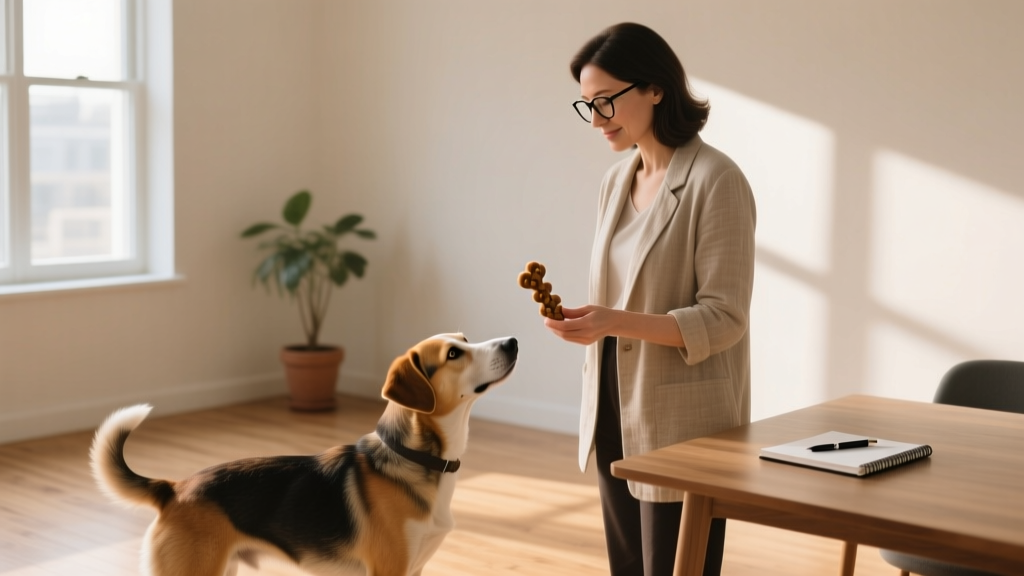
Dog Chewing Destruction: How to Stop It Using Positive Reinforcement
Is destructive dog chewing ruining your home? Learn root causes, vet rule-outs, and a step-by-step positive reinforcement protocol to stop it for good.

If you've come home to find your favorite sneakers demolished or your kitchen chair leg gnawed to splinters, you already know the frustration of destructive dog chewing. But before you lose your temper, it helps to understand that chewing is a natural canine behavior — the problem isn't the chewing itself, it's what your dog is choosing to chew and why.
This guide breaks down the real science behind destructive chewing, walks you through a veterinary rule-out checklist, and gives you a concrete, force-free training protocol you can start today. No punishment, no gimmicks — just evidence-based behavior modification that works with your dog's brain, not against it.
Destructive chewing is defined as any chewing behavior directed at household items that results in property damage, poses a safety risk to the dog (ingestion of non-food objects, broken teeth), or occurs at a frequency and intensity that disrupts the household. Normal chewing — such as working on a designated chew toy for 10–20 minutes — is healthy and expected. The threshold for "problem" chewing is crossed when:
- Your dog targets personal belongings, furniture, walls, or flooring
- Chewing occurs primarily when left alone (a separation anxiety indicator)
- Your dog has ingested non-food items (pica behavior)
- The behavior persists or escalates despite access to appropriate chew toys
- You notice broken teeth, oral bleeding, or GI symptoms from swallowed material
Why Does My Dog Chew Everything? Root Cause Analysis
Destructive chewing is a symptom, not a diagnosis. Before you can fix it, you need to identify what's driving it. Here's a diagnostic framework used by certified behaviorists to narrow down the cause.
| Root Cause | Key Indicators | Typical Dog Profile |
|---|---|---|
| Teething / Adolescent Exploration | Age 3–7 months; increased mouthing; swollen or bleeding gums; loose baby teeth | Puppies and adolescent dogs of all breeds |
| Boredom / Insufficient Enrichment | Chewing happens throughout the day; dog has <60 min structured activity; targets varied items | Working and sporting breeds (Huskies, Shepherds, Retrievers) with sedentary lifestyles |
| Separation Anxiety | Chewing only occurs when owner is absent; focused on exit points (door frames, window sills); accompanied by vocalization, house-soiling, or escape attempts | Dogs of any age; often adopted/rescue dogs or dogs with recent schedule changes |
| Stress / Fear-Based Displacement | Chewing spikes during storms, fireworks, or household tension; dog shows other stress signals (lip-licking, yawning, trembling) | Noise-sensitive breeds or dogs with limited early socialization |
| Medical / Nutritional Deficiency | Sudden onset in an adult dog; pica (eating non-food items); weight changes; GI upset; excessive licking of surfaces | Adult or senior dogs; dogs on restricted or homemade diets |
According to the ASPCA, the majority of destructive chewing cases in adult dogs trace back to either insufficient physical/mental stimulation or separation-related distress. Puppies, meanwhile, are almost always in a developmental teething phase that resolves with proper management and appropriate outlets.
Medical Rule-Out: When to See the Vet Before Training
Behavior modification will fail if an underlying medical condition is driving the chewing. Before investing weeks in a training protocol, consult your veterinarian if any of the following apply.
- ☐ The chewing began suddenly in an adult dog (over 18 months) with no environmental change
- ☐ Your dog is eating or attempting to eat non-food items (rocks, fabric, plastic, feces) — this is pica and can indicate nutritional deficiency, GI disease, or neurological issues
- ☐ You notice broken, cracked, or discolored teeth, or bleeding from the mouth
- ☐ Your dog has concurrent symptoms: vomiting, diarrhea, weight loss, increased thirst/urination, or lethargy
- ☐ The dog is on a homemade or raw diet that hasn't been formulated by a veterinary nutritionist
- ☐ There's a history of thyroid disease, Cushing's disease, or diabetes in your dog's breed line
- ☐ Chewing is accompanied by repetitive, compulsive patterns (e.g., flank sucking, tail chasing) that may indicate a compulsive disorder
Your vet will typically run a CBC (complete blood count), chemistry panel, and possibly a thyroid panel (T4/TSH). Expect to pay $150–$350 for a standard diagnostic workup, depending on your region. If nutritional deficiency is suspected, a cobalamin (B12) and folate test may be added ($40–$80). Ruling out medical causes isn't optional — it's the foundation everything else is built on.
Immediate Management: Stop the Damage While You Train
Every time your dog successfully chews a forbidden item, the behavior gets reinforced. Chewing is self-rewarding — it releases endorphins and relieves stress. That means management isn't just a temporary fix; it's a critical part of the protocol because it prevents the habit from getting stronger while you work on the root cause.
Environmental Setup (Do This Today)
- Remove temptation. Pick up shoes, remote controls, children's toys, and anything at dog-mouth height. Use closed storage — open shelving and floor-level baskets don't count.
- Use physical barriers. Baby gates (Regalo Easy Step Walk-Thru, ~$35) and exercise pens confine your dog to chew-proofed zones when unsupervised. For furniture legs, apply bitter sprays like Grannick's Bitter Apple ($8–$12 for 8 oz) — but know that bitter sprays work for roughly 60% of dogs and must be reapplied every 2–3 days.
- Provide a "yes" for every "no." Stock 5–8 appropriate chew items of varying textures: rubber (Kong Classic, $12–$18), nylon (Benebone Wishbone, $14–$20), edible (bully sticks, $4–$8 each), and frozen (stuffed Kongs frozen for 4+ hours). Rotate these every 2–3 days to maintain novelty.
- Crate train for unsupervised time. A properly sized crate (dog can stand, turn, and lie down — not much more) prevents destruction when you can't watch. Crate time should not exceed 4–5 hours for adult dogs during the day. This is management, not punishment.
Step-by-Step Training Protocol to Stop Destructive Chewing
This protocol uses positive reinforcement, redirection, and counter-conditioning — methods supported by the American Veterinary Society of Animal Behavior (AVSAB), which recommends reward-based training as the standard of care for all canine behavior modification.
Week 1–2: Foundation — Teach "Leave It" and "Trade"
- Leave It: Place a low-value item on the floor. When your dog looks at it, say "leave it" and reward with a high-value treat (freeze-dried liver, boiled chicken) from your hand the moment they look away. Progress to medium-value items over 10–15 daily sessions of 3–5 minutes each. Goal: dog voluntarily avoids the item 8 out of 10 trials.
- Trade Up: When your dog has an appropriate chew toy, offer a higher-value item (bully stick, stuffed Kong) and say "trade." When they drop the toy, give the higher-value item and return the toy after 10 seconds. This teaches that giving things up predicts good things — critical for dogs who resource-guard chewed items.
Week 3–4: Redirection and Appropriate Chewing Reinforcement
- Set up "chew sessions": Give your dog an appropriate chew, sit nearby, and calmly praise ("good chew") every 30–60 seconds they engage with it. Duration target: 10 consecutive minutes on an appropriate item.
- If your dog picks up a forbidden item: Interrupt calmly (a neutral "oops" or a gentle hand clap — no yelling), redirect to an appropriate chew, and reward heavily when they take it.
- Begin scent-association work: Rub appropriate chew toys with a small amount of your scent (wear them in your sock for an hour) to make them more attractive than household items carrying your smell.
Week 5–6: Generalization and Distraction-Proofing
- Practice "leave it" with progressively higher-value forbidden items (old shoe → newer shoe → remote control).
- Leave your dog alone for short intervals (start at 5 minutes, increase by 5-minute increments) with a frozen stuffed Kong. Monitor via camera (Wyze Cam v4, ~$36). If chewing of forbidden items occurs, decrease the alone-time interval and increase enrichment before the next trial.
- For separation-anxiety-related chewing: Pair departures with a high-value, long-lasting chew (frozen Kong filled with peanut butter and kibble). The chew should only appear when you leave and be removed when you return. This counter-conditions your departure as a predictor of something positive.
What About Punishment?
Should you use punishment to correct destructive chewing? The short answer is no — and here's the specific reason. Punishment (yelling, hitting, rubbing the dog's nose in damage, shock collars, prong collars) doesn't teach the dog what to chew instead. It only suppresses the behavior in your presence. Dogs punished for chewing typically learn to chew when you're not watching, which makes the problem harder to track and resolve. The AVSAB's position statement specifically advises against aversive methods, noting they can increase anxiety and damage the human-animal bond. Worse, a 2020 study published in the Journal of Veterinary Behavior found that dogs trained with aversive methods showed higher cortisol levels and more stress-related behaviors than those trained with positive reinforcement alone.
Tools That Help vs. Tools to Avoid
| Tool | Type | Price Range | How It Helps | Verdict |
|---|---|---|---|---|
| Kong Classic (Red/Black) | Enrichment toy | $12–$18 | Stuff with food, freeze for 4+ hrs; provides 30–60 min of appropriate chewing | ✅ Recommended |
| West Paw Toppl | Puzzle feeder | $18–$25 | Interlocking design increases difficulty; great for power chewers | ✅ Recommended |
| Adaptil Calm Diffuser | Pheromone aid | $25–$35 (30-day refill) | Synthetic dog-appeasing pheromone; reduces stress-related chewing in ~60% of dogs (per manufacturer studies) | ✅ Helpful adjunct |
| Lickimat Soother | Enrichment mat | $10–$15 | Spreading soft food on textured surface promotes licking (calming behavior) | ✅ Recommended |
| Shock / E-Collar | Aversive device | $30–$200 | Delivers electric shock to suppress behavior | ❌ Avoid — increases anxiety, worsens chewing long-term |
| Bitter Apple Spray | Taste deterrent | $8–$12 | Unpleasant taste discourages mouthing specific items | ⚠️ Partial — works for some dogs, requires frequent reapplication |
| Prong / Choke Collar | Aversive equipment | $10–$30 | Causes pain to suppress pulling or unwanted behavior | ❌ Avoid — no relevance to chewing; causes neck injury risk |
For power chewers who destroy standard rubber toys within days, upgrade to the Kong Extreme (black rubber, $18–$25) or the Goughnuts Maxx 50 ($30–$35), which includes a safety indicator — if your dog chews through to the red inner layer, the company replaces it free.
Realistic Timeline: How Long Will It Take to Fix Destructive Chewing?
There is no "fix it in 7 days" promise here — and anyone making that guarantee is selling something. Behavior modification timelines depend on the root cause, the dog's age, the duration of the existing habit, and your consistency. Here's what realistic progress looks like:
| Timeframe | Expected Progress | If No Progress, Reassess |
|---|---|---|
| Week 1–2 | Damage decreases significantly due to management; dog engages with appropriate chews when supervised | If damage continues, management setup is insufficient — add barriers, remove more items |
| Week 3–6 | Dog begins choosing appropriate chews independently when supervised; "leave it" response is reliable at 80%+ | If dog still targets forbidden items, increase exercise/enrichment by 20–30 min/day |
| Week 6–12 | Dog can be trusted with limited unsupervised access (2–3 hours) with appropriate chews available | If unsupervised chewing persists, separation anxiety is likely — consult a veterinary behaviorist |
| Month 3–6 | Reliable chewing habits established; occasional setbacks during stress (moves, schedule changes, new pets) | If full relapse occurs, revisit medical rule-out and reassess root cause |
Puppies going through teething (3–7 months) typically show the fastest improvement because the drive is developmental and temporary. Adult dogs with established chewing habits or separation anxiety often require 3–6 months of consistent work. Dogs with compulsive chewing disorders may need lifelong management combined with veterinary-prescribed behavioral medication (such as fluoxetine or clomipramine, $15–$45/month).
Is Destructive Dog Chewing Normal?
Chewing itself is entirely normal — it's how dogs explore their environment, relieve stress, maintain dental health, and pass time. Puppies chew more intensely during teething (roughly 3–7 months of age) as their 28 deciduous teeth are replaced by 42 permanent teeth. Adolescent dogs (7–18 months) often go through a second chewing peak as they test boundaries and burn excess energy.
What's not normal is chewing that results in self-injury (broken teeth, swallowed foreign objects), chewing that is exclusively tied to your absence (a hallmark of separation anxiety), or sudden-onset destructive chewing in a previously well-adjusted adult dog. These patterns warrant professional evaluation.
If your dog has swallowed a non-food object — especially fabric, plastic, rocks, or anything that could cause an intestinal blockage — contact your veterinarian or the ASPCA Animal Poison Control Center at (888) 426-4435 (24/7, consultation fee applies). Signs of intestinal blockage include vomiting, loss of appetite, abdominal pain, lethargy, and inability to pass stool. Emergency surgery for foreign body removal typically costs $2,000–$7,000.
Prevention: Setting Up Puppies and Newly Adopted Dogs for Success
The most effective way to deal with destructive chewing is to prevent it from becoming a habit in the first place. Whether you're bringing home an 8-week-old puppy or adopting an adult rescue, these protocols apply:
- Puppy-proof before arrival. Get down on your hands and knees and view your home from dog-level. Remove or secure electrical cords (use split-loom tubing, $10 for 10 ft), shoes, books, children's toys, and houseplants. The AKC recommends designating a single puppy-safe room for the first 2–4 weeks.
- Supervise or confine — no exceptions. For the first 3–6 months, your puppy or newly adopted dog should never be left unsupervised with free house access. Use a crate, exercise pen, or puppy-proofed room. Freedom is earned gradually, not given automatically.
- Build an enrichment rotation. Puzzle feeders (Outward Hound Nina Ottosson Dog Brick, $20–$28), snuffle mats ($15–$25), and frozen stuffed Kongs should be part of daily life. A mentally tired dog is significantly less likely to seek stimulation through destructive chewing. Aim for 20–30 minutes of structured enrichment per day, minimum.
- Exercise to breed standard. A Border Collie needs 90–120 minutes of vigorous activity daily. A Basset Hound may be satisfied with 30–45 minutes. Match exercise to your dog's breed energy profile — under-exercised dogs are the #1 demographic for boredom-driven chewing.
- Establish chew toy preferences early. Offer a variety of textures in the first week: rubber, nylon, rope, edible, and frozen. Note which types your dog gravitates toward and stock up. A dog with a clear preference for frozen rubber toys is much easier to redirect than one with no established "yes" item.
Consider hiring a certified professional if any of the following are true:
- Your dog's chewing is accompanied by other anxiety behaviors (pacing, panting, vocalization, house-soiling) when left alone — this suggests separation anxiety, which often requires a structured desensitization protocol that's difficult to implement alone.
- You've followed the management and training protocol above for 4–6 weeks with no measurable improvement.
- Your dog has caused injury to themselves (broken teeth, swallowed objects requiring vet intervention).
- The chewing is part of a larger pattern of compulsive behaviors (flank sucking, tail chasing, shadow chasing).
- You feel your frustration escalating to the point where you might use punishment — a professional can provide support and accountability.
Who to hire: Look for a Certified Applied Animal Behaviorist (CAAB or ACAAB, certified through the Animal Behavior Society) or a veterinary behaviorist (DACVB, a veterinarian with board certification in behavior). A Certified Professional Dog Trainer (CPDT-KA or CPDT-KSA) can handle straightforward boredom-chewing cases but should refer complex anxiety or compulsion cases to a behaviorist. Expect to pay $150–$300 for an initial behavior consultation and $80–$150 per follow-up session. Veterinary behaviorists typically charge $250–$500 for initial consultations and can prescribe medication if needed.
Frequently Asked Questions
Why does my dog chew things when I'm not home?
Chewing that occurs exclusively during your absence is one of the strongest behavioral indicators of separation anxiety. Your dog isn't "getting revenge" or acting out of spite — dogs don't experience spite. They chew to self-soothe, much like a person might bite their nails when stressed. The chewing releases endorphins that temporarily reduce their anxiety. If this pattern matches your dog, prioritize the separation anxiety protocol: gradual desensitization to departures, counter-conditioning with long-lasting chews, and a consultation with a veterinary behaviorist. In moderate-to-severe cases, medication combined with behavior modification produces significantly better outcomes than training alone.
How do I stop my dog from chewing furniture?
Combine three strategies simultaneously: (1) Block access using baby gates, exercise pens, or furniture barriers; (2) Apply a taste deterrent like Grannick's Bitter Apple to furniture legs and reapply every 2–3 days; (3) Provide a more attractive alternative — a frozen stuffed Kong or a Benebone flavored with real bacon — within 3 feet of the furniture your dog targets. Consistency across all three strategies is what works; any single strategy alone has a low success rate.
My dog is past puppy age — is it too late to stop the chewing?
No. Adult dogs can learn new chewing habits at any age, though the process typically takes longer than with puppies (3–6 months vs. 4–8 weeks). The key is identifying and addressing the root cause rather than just managing the symptom. An adult dog who chews out of boredom needs more exercise and enrichment. An adult dog who chews out of anxiety needs a desensitization protocol. The training protocol outlined above works for dogs of all ages — just adjust your timeline expectations.
Should I use a shock collar or spray bottle to stop chewing?
No. Aversive methods — including shock collars, spray bottles, citronella collars, and physical punishment — suppress the behavior temporarily without teaching the dog what to do instead. They also carry significant side effects: increased anxiety, fear of the owner, and in some cases, redirected aggression. The AVSAB explicitly recommends against aversive training methods. Positive reinforcement and environmental management are more effective long-term and carry no risk of psychological harm.
My dog ate something they shouldn't have — what now?
If your dog has ingested a non-food item, contact your veterinarian immediately. Do not induce vomiting unless specifically instructed by a professional. For potentially toxic items (certain plants, medications, chemicals), call the ASPCA Animal Poison Control Center at (888) 426-4435 (available 24/7, a consultation fee of approximately $95 applies). Keep a record of what was ingested, approximate quantity, and time of ingestion — your vet will need this information.
What are the best chew toys for destructive chewers?
For dogs who destroy standard toys within hours, look for products rated for "power chewers": Kong Extreme (black rubber, rated for aggressive chewers, $18–$25), Goughnuts Maxx 50 (with safety wear indicator, $30–$35), and Benebone Wishbone (nylon, $14–$20). Avoid rawhide (choking and blockage risk), cooked bones (splintering risk), and any toy small enough to be swallowed whole. Always supervise with new toys until you understand your dog's chewing style.
Aaron Whyte
All our authors care for dogs every day — read more of their work on the authors page.