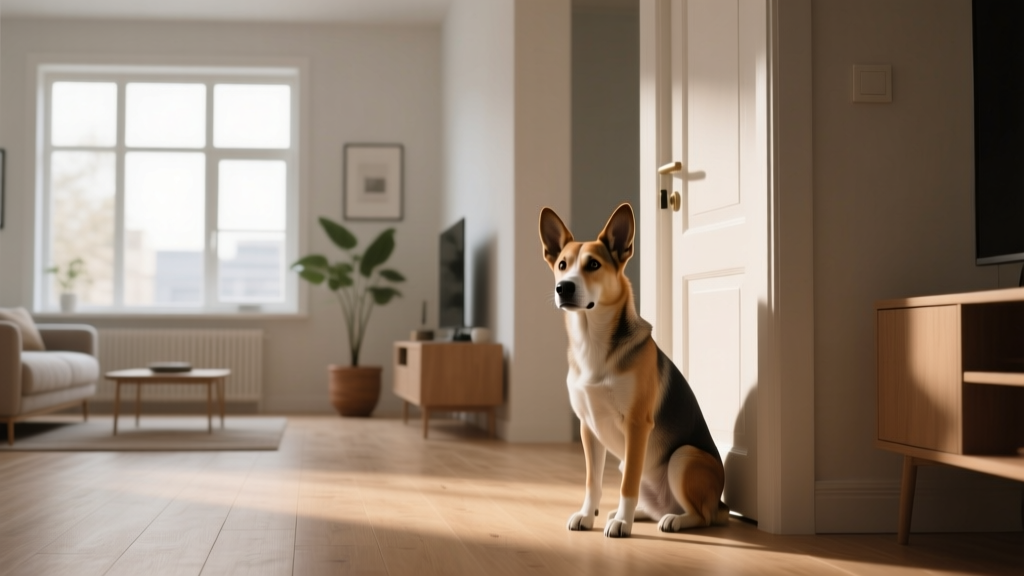
Service Dog for Anxiety
Discover how a service dog for anxiety is trained, what tasks they perform, behavior problem solutions, costs, and whether this path is right for you.

What Qualifies a Dog as a Service Dog for Anxiety?
Definition: A service dog for anxiety is a dog individually trained to perform specific tasks that mitigate a handler's diagnosed anxiety disorder — including generalized anxiety disorder (GAD), panic disorder, PTSD, or social anxiety. Under the Americans with Disabilities Act (ADA), the dog must be trained to do work or perform tasks directly related to the person's disability. Emotional support alone does not qualify a dog as a service animal.
Threshold for task-trained service work: The dog must reliably perform at least one trained task on cue or in response to environmental/handler cues — such as deep pressure therapy, interrupting panic attacks, room searches for PTSD handlers, or medication retrieval. A dog that simply "makes you feel better" by being present is an emotional support animal (ESA), not a service dog.
The distinction matters enormously. Service dogs have public access rights under federal law; ESAs do not. Training a service dog for anxiety requires 18–24 months of dedicated work, $15,000–$50,000 in professional program costs (or 1,000+ hours of owner-training), and a dog with the right temperament foundation. If you're considering this path — or you already have an anxiety service dog in training and are running into behavior problems — this guide breaks down the real-world behavioral challenges and evidence-based solutions.
Why Does My Dog Struggle With Anxiety Service Work?
Not every dog can be a service dog, and not every struggle means failure. Understanding the root cause of behavioral issues in anxiety service dogs (or candidates) is the first step toward solving them.
Common Underlying Causes of Behavior Problems in Anxiety Service Dogs
- Fear and environmental sensitivity: Service dogs must remain calm in grocery stores, airports, and crowded restaurants. Dogs with genetic fearfulness or inadequate early socialization may shut down, tremble, or attempt to flee in novel environments. The Merck Veterinary Manual notes that fear-based responses are among the most common barriers to working dog certification.
- Handler anxiety transfer (co-regulation failure): Dogs are extraordinarily sensitive to human cortisol levels and body language. A handler experiencing a panic attack may inadvertently communicate stress through leash tension, breathing patterns, and posture — which can cause the dog to become anxious rather than performing trained tasks. This bidirectional stress loop is unique to psychiatric service dog work.
- Insufficient task fluency: A dog may perform deep pressure therapy perfectly in the living room but fail to generalize the behavior to a park bench or a therapist's waiting room. Lack of proofing across environments, distances, and distraction levels is the most common training gap.
- Medical contributors: Pain (especially orthopedic), hypothyroidism, and gastrointestinal discomfort can cause irritability, avoidance, and task refusal. A dog that suddenly stops performing alert behaviors may be experiencing a medical issue, not a behavioral one.
- Overwork and burnout: Psychiatric service dogs often work long hours with limited decompression time. Chronic stress in working dogs manifests as displacement behaviors (lip licking, yawning, scratching), avoidance, or task refusal. A 2022 study in Applied Animal Behaviour Science found that assistance dogs benefit from structured off-duty recovery periods.
Medical Rule-Out: When to See Your Vet Before Behavior Modification
Before attributing task refusal, avoidance, or reactivity to a training problem, always rule out medical causes. Consult your veterinarian if your anxiety service dog shows any of the following:
Veterinary Checkpoints Before Behavior Training
- Sudden task refusal: A dog that previously performed deep pressure therapy (DPT) but now moves away when cued may have joint pain, particularly in the hips or shoulders. Request orthopedic evaluation including hip and elbow radiographs ($200–$500 depending on your region).
- Increased reactivity or irritability: Hypothyroidism can cause behavioral changes including aggression and anxiety in dogs. A full thyroid panel (T4, free T4, T3, TSH) costs $80–$200 and should be checked in any dog with unexplained behavior changes.
- Appetite changes, lethargy, or GI signs: Chronic GI discomfort (food sensitivities, inflammatory bowel disease) can cause a dog to be distracted and unable to focus on tasks. Gastrointestinal pain is a frequently overlooked contributor to working dog underperformance.
- Neurological signs: Disorientation, head pressing, or seizure activity requires immediate veterinary assessment. Some seizure disorders present as brief "zoning out" episodes that could be mistaken for task refusal or inattention.
- Sensory decline: Vision or hearing loss (especially in dogs over 7 years) can cause apparent task failure when the dog simply cannot perceive the cue or environmental trigger.
Always consult your veterinarian to rule out medical causes before beginning or intensifying a behavior modification protocol.
Immediate Management: Preventing Rehearsal During Training
Behavior modification takes weeks to months. In the meantime, every time your dog rehearses an unwanted behavior — lunging at strangers, shutting down in public, failing to perform an anxiety alert — the neural pathway for that behavior strengthens. Management is not a substitute for training; it's a bridge that prevents the problem from worsening while you train.
Management Strategies by Problem Type
| Problem Behavior | Immediate Management | Equipment |
|---|---|---|
| Environmental fear (shutdown, trembling in public) | Reduce public access outings to below-threshold environments only; use "decompression walks" in quiet areas 2x daily | Harness with handle (e.g., Ruffwear Web Master, $65–$80) for secure guidance without neck pressure |
| Reactivity to strangers/dogs while in vest | Increase working distance from triggers; use visual barriers (parked cars, shelving); avoid peak hours at stores | 6-foot leather or biothane leash (not retractable); treat pouch for high-value reinforcement |
| Task refusal (won't perform DPT or alert) | Return to last successful training step; increase reinforcement rate; shorten training sessions to 3–5 minutes | High-value treats (freeze-dried liver, boiled chicken); clicker or marker word |
| Handler anxiety transfer (dog mirrors handler stress) | Practice tasks when handler is calm; use recorded panic attack audio at low volume for desensitization; pair with another support person during initial training | Calming aids: Adaptil diffuser ($25–$35) in training space; Thundershirt for dog during early desensitization ($40–$50) |
| Overwork/burnout signs (excessive yawning, lip licking, avoidance) | Mandatory 48-hour break from all public access work; increase unstructured play and sniffing time; evaluate whether task load is appropriate | Snuffle mat ($15–$30) for decompression; frozen Kong stuffed with peanut butter for post-work recovery |
Step-by-Step Training Protocol for Anxiety Service Dog Tasks
Below is a structured protocol for training and troubleshooting the three most common anxiety service dog tasks: deep pressure therapy (DPT), panic attack interruption, and anxiety alerting. These protocols use desensitization, counter-conditioning, and positive reinforcement exclusively.
Protocol 1: Deep Pressure Therapy (DPT)
Goal: Dog lies across handler's lap or chest and maintains position for 2–5 minutes on cue, applying calming proprioceptive pressure.
- Foundation (Weeks 1–3): Shape the "lap" behavior using a clicker. Start with the dog placing front paws on your lap while seated. Click and treat. Gradually shape toward full body weight on lap. Keep sessions to 5 minutes, 2x daily. Reinforcement rate: continuous (every successful attempt earns a treat).
- Duration building (Weeks 4–6): Once the dog offers full DPT position, delay the click by 1 second, then 3, then 5, then 10. Use a release cue ("okay" or "free") to end the behavior. Target: 30 seconds sustained DPT with 3–5 treats delivered during the hold.
- Adding the cue (Weeks 6–8): Introduce your verbal cue ("pressure" or "DPT") just before the dog begins the behavior. Pair with a hand signal (patting your lap). Practice in 3 different rooms at home.
- Generalization (Weeks 8–14): Practice in progressively more distracting environments: backyard, front porch, quiet park bench, then empty store parking lot. At each new location, expect to temporarily reduce duration criteria back to 5 seconds and rebuild.
- Public access proofing (Weeks 14–24): Practice DPT in actual public settings during low-traffic hours. Begin with 30-second holds in a quiet corner of a store, building to 2–5 minutes. Fade treat frequency to variable reinforcement (treat every 2nd or 3rd successful hold).
Protocol 2: Panic Attack Interruption
Goal: Dog recognizes early signs of handler panic (rapid breathing, fidgeting, crying) and performs a trained interruptive behavior — nudging, pawing, or licking — to redirect the handler's focus.
- Teach the interruptive behavior (Weeks 1–4): Using shaping or luring, train a strong "touch" (nose boop to handler's hand or face) or "paw" behavior. This should be a default behavior the dog offers readily. Reinforce heavily — 10–15 repetitions per session, 2x daily.
- Pair with simulated anxiety cues (Weeks 4–8): While calm, simulate mild anxiety behaviors: rock back and forth, breathe rapidly, hold your head in your hands. Immediately cue "touch" and reinforce. The dog learns: when I see these body language cues, I should offer a touch.
- Counter-conditioning to handler distress (Weeks 8–12): This is the critical desensitization phase. Some dogs become stressed when their handler displays distress. If your dog shows calming signals (yawning, lip licking, turning away) when you simulate anxiety, you've gone too fast. Back up. Pair each simulated anxiety cue with a treat tossed to the dog BEFORE asking for the touch. The sequence becomes: handler rocks → treat appears → then "touch" cue. This counter-conditions the dog to associate handler distress with positive outcomes rather than stress.
- Real-world application (Weeks 12–24): Practice during actual low-level anxiety episodes. Do not attempt during a full panic attack until the dog is reliably responding in training. When the dog does interrupt a real episode, provide high-value reinforcement (jackpot: 5–6 treats and verbal praise).
Protocol 3: Anxiety Alert (Scent or Behavior-Based)
Goal: Dog alerts handler to rising anxiety levels before the handler is consciously aware, allowing preemptive coping strategies.
- Sample collection: Collect saliva or sweat samples during high-anxiety states (use cotton swabs, store in sealed glass jars in freezer). Also collect calm-state samples as controls. You need at least 10 high-anxiety samples before beginning scent training.
- Scent discrimination (Weeks 1–8): Using a "scent wheel" or multiple containers, teach the dog to indicate (sit, paw, or nose touch) the container with the anxiety sample. Start with 1 anxiety sample vs. 2 blank containers. Gradually increase difficulty. This requires professional guidance — consider working with a certified scent detection trainer.
- Alert behavior chain (Weeks 8–16): Once the dog reliably identifies the anxiety scent, train the alert chain: detect scent → perform alert behavior (paw at leg, persistent nudging) → handler acknowledges and performs coping strategy → dog receives reinforcement.
- Real-world proofing (Weeks 16–30+): Carry anxiety scent samples in public and present them covertly to test the dog's alert. This is the most difficult task to train and has the highest failure rate — estimated at 40–50% even in professional programs. Be prepared for this task to take 6–12 months of dedicated work.
Tools That Help vs. Tools to Avoid
The equipment you use directly impacts your dog's emotional state and learning speed. Here's an evidence-based comparison:
| Tool | Category | Purpose | Cost Range | Recommendation |
|---|---|---|---|---|
| Front-clip harness (e.g., Freedom No-Pull, 2 Hounds Design) | Management | Reduces pulling without neck pressure; gives handler control during public access training | $25–$45 | Recommended — especially for dogs in training who haven't mastered loose-leash walking |
| Service dog vest with handle (e.g., Working Service Dog brand) | Working equipment | Signals public access status; handle provides stability for handler and guidance for dog | $30–$70 | Recommended — introduce only after dog is comfortable wearing a basic harness |
| Clicker or marker word | Training | Precise communication of correct behavior during shaping | $2–$5 | Recommended — essential for task training precision |
| Treat pouch (e.g., Doggone Good Rapid Rewards) | Training | Quick treat delivery during public access training | $15–$25 | Recommended — choose one with magnetic closure for silent access |
| Adaptil diffuser or collar | Calming aid | Synthetic dog-appeasing pheromone; may reduce environmental stress | $15–$35 | Supplementary — evidence is mixed; some dogs benefit, others show no response. Use alongside training, not as a replacement. |
| Puzzle feeders (Kong Classic, Outward Hound Nina Ottosson) | Enrichment | Mental stimulation and decompression after working sessions | $10–$30 | Recommended — critical for preventing burnout; use daily during off-duty hours |
| Calming supplements (Zesty Calming Chews, Solliquin) | Supplementary | L-theanine, L-tryptophan, or milk protein-based calming support | $20–$45/month | Consult your vet — can be helpful adjuncts but should not replace training; check for NASC seal |
| Shock collar / e-collar | Aversive | Delivers electric stimulus to suppress behavior | $30–$200 | Never use — increases fear and anxiety; damages handler-dog bond; contraindicated for psychiatric service work where trust is paramount |
| Prong collar | Aversive | Pinches neck to suppress pulling | $15–$30 | Never use — causes pain and can increase reactivity; incompatible with service dog temperament requirements |
| Alpha rolls / physical corrections | Aversive | Physical dominance-based correction | N/A | Never use — debunked dominance theory; increases fear and aggression; AVSAB position statement explicitly recommends against |
Realistic Progress Timeline for Anxiety Service Dog Training
One of the most common questions from handlers in training is: "How long will it take to fix this behavior problem and get my dog fully task-trained?" The honest answer depends on the dog's starting point, the complexity of the task, and the consistency of training.
| Training Phase | Timeframe | Milestones | Common Setbacks |
|---|---|---|---|
| Foundation & socialization (puppies) or assessment (adult dogs) | 0–6 months | Basic obedience fluency (sit, down, stay, recall, loose-leash walking); environmental neutrality; crate comfort | Fear periods in puppies (8–11 weeks, 6–14 months) may temporarily halt progress |
| Task training (DPT, interruption) | 6–14 months | Dog performs 1–2 tasks reliably on cue at home with 90%+ accuracy | Task refusal in new environments; handler anxiety transfer disrupting sessions |
| Public access training | 12–20 months | Dog ignores food on floors, other dogs, strangers; maintains task performance in stores, restaurants, transit | Reactivity to unfamiliar dogs; environmental fear in loud/crowded spaces |
| Advanced proofing & scent alert (if applicable) | 18–30 months | Anxiety alert trained and proofed; dog performs all tasks in novel environments without handler prompting | Scent alert has highest washout rate; requires ongoing sample collection and maintenance training |
| Maintenance (ongoing) | Life of working partnership | Weekly practice sessions; annual recertification evaluation (if program-trained); continuing education | Burnout in dogs working 5+ years; handler life changes requiring task adjustments |
Note: These timelines assume 30–60 minutes of structured training daily, 5–6 days per week. Owner-trained dogs typically take longer than program-trained dogs. Approximately 50–70% of dogs that enter service dog training programs ultimately graduate — the rest are career-changed to pet homes, often through no fault of the dog or handler.
When to Hire a Professional: Behaviorist vs. Trainer
Knowing when to bring in professional help can save months of frustration and prevent a promising service dog candidate from washing out unnecessarily.
Seek a Certified Applied Animal Behaviorist (CAAB) or Veterinary Behaviorist (DACVB) If:
- Your dog shows aggression (growling, snapping, biting) in public settings
- Your dog has severe fear responses that haven't improved after 4–6 weeks of structured desensitization
- You suspect a medical-behavioral overlap (anxiety combined with possible pain or neurological issues)
- Your dog has been dismissed from a service dog program and you want a second opinion on trainability
- Cost range: $150–$350 for initial consultation; $80–$200 per follow-up session
Work With a Certified Professional Dog Trainer (CPDT-KA or IAADP-Certified) If:
- Your dog needs task training refinement or public access proofing
- You need help with loose-leash walking, settle behavior, or distraction training
- You're starting owner-training from scratch and need a structured curriculum
- Cost range: $60–$150 per private session; $1,500–$5,000 for comprehensive service dog training packages
Red Flags in Trainers to Avoid:
- Anyone who guarantees certification within a specific timeframe
- Trainers who use or recommend shock collars, prong collars, or dominance-based methods
- Anyone who offers to "certify" your service dog for a fee without evaluating the dog's task performance and public access behavior (online-only certifications are not legitimate)
- Trainers who cannot provide references from other psychiatric service dog teams
Look for trainers certified through the Certification Council for Professional Dog Trainers (CCPDT) or the International Association of Assistance Dog Partners (IAADP). The AKC Canine Good Citizen and Public Access Test are useful benchmarks for evaluating your dog's readiness.
Prevention: Setting Up Puppies and Newly Adopted Dogs for Success
If you're at the beginning of the journey — selecting a puppy or evaluating an adult rescue as a potential anxiety service dog — prevention is far more effective than rehabilitation.
For Puppies (8–16 Weeks)
- Socialization window: The critical socialization period closes around 14–16 weeks. Expose the puppy to 100+ novel stimuli (surfaces, sounds, people in hats/wheelchairs/uniforms, other animals) before 16 weeks, following the AVSAB's position on puppy socialization. Pair every new experience with treats and play.
- Temperament testing: Use structured assessments like the Volhard Puppy Aptitude Test at 7 weeks. Look for: recovery from startle within 3–5 seconds, willingness to follow a person, comfort being gently restrained, and moderate (not extreme) energy level.
- Early task foundations: Begin shaping DPT and nose-touch behaviors at 10–12 weeks using short (2–3 minute) sessions. Keep it fun — this is play, not pressure.
- Breed considerations: Labrador Retrievers, Golden Retrievers, and Standard Poodles have the highest success rates in assistance dog work. For anxiety-specific tasks, breeds with high handler focus and moderate energy (not high-drive working breeds like Belgian Malinois) tend to perform best.
For Adult Rescue Dogs
- Assessment period: Allow a minimum 30-day decompression period (the "3-3-3 rule": 3 days to decompress, 3 weeks to learn routines, 3 months to show true personality) before evaluating service dog potential.
- Temperament evaluation: Assess environmental stability, recovery from novel stimuli, handler focus, food/toy motivation, and response to body handling. A qualified behaviorist can perform a formal service dog candidate assessment ($200–$400).
- Realistic expectations: Adult rescue dogs can become excellent anxiety service dogs, but known behavioral issues (reactivity, resource guarding, separation anxiety) significantly extend the training timeline and may disqualify the dog from public access work. Approximately 15–25% of rescue dogs have the temperament stability required for service work.
Frequently Asked Questions
Is it normal for a service dog in training to struggle with tasks?
Yes. Task refusal, environmental distraction, and inconsistent performance are normal parts of the training process, especially during the generalization phase (months 8–18). The key is whether the dog is progressing over time. If a specific behavior hasn't improved after 4–6 weeks of consistent training, reassess the protocol or consult a professional trainer rather than assuming the dog will "grow out of it."
Should I use punishment to correct my service dog's mistakes during training?
No. Punishment — including verbal corrections, leash jerks, shock collars, and alpha rolls — is contraindicated for service dog training. The American Veterinary Society of Animal Behavior (AVSAB) recommends positive reinforcement methods exclusively. Punishment suppresses behavior temporarily but increases anxiety, damages the handler-dog bond, and can create new behavioral problems. For a dog whose job is to respond to your anxiety, trust and confidence are non-negotiable.
How long will it take to fix my dog's public access behavior problems?
For mild issues (occasional distraction, mild environmental sensitivity), expect 4–8 weeks of focused training with daily practice. For moderate issues (consistent reactivity, shutdown in specific environments), plan for 3–6 months. For severe issues (aggression, extreme fear, panic-related task refusal), expect 6–12 months with professional guidance — and be prepared that some dogs may not be suitable for public access work despite best efforts. There are no guaranteed timelines.
Can my dog be both a service dog and a family pet?
Yes — and in fact, the best service dogs have strong pet-dog foundations. Your anxiety service dog should have regular off-duty time for play, sniffing, and social interaction with other dogs. A dog that only "works" and never gets to be a dog is at high risk for burnout. Plan for at least 1–2 hours of unstructured enrichment daily.
What's the difference between a service dog for anxiety and an emotional support animal?
A service dog for anxiety is task-trained to perform specific behaviors that mitigate your disability — like interrupting panic attacks, providing deep pressure therapy, or alerting to rising anxiety. An emotional support animal provides comfort through presence alone, without trained tasks. Under the ADA, only task-trained service dogs have public access rights. ESAs have limited housing protections under the Fair Housing Act but no public access rights. Online "ESA registrations" and "service dog certifications" sold for a fee carry no legal weight.
When do I need a professional behaviorist instead of a trainer?
Consult a board-certified veterinary behaviorist (DACVB) or certified applied animal behaviorist (CAAB) when the behavior problem involves aggression, severe fear that hasn't responded to standard desensitization protocols, or suspected medical-behavioral overlap. Trainers are appropriate for task refinement, public access proofing, and general obedience. The distinction matters: behaviorists can diagnose behavioral conditions and collaborate with your veterinarian on medication if needed, while trainers focus on skill-building.
This article provides educational guidance and does not replace professional veterinary or behavioral consultation. If your dog is experiencing behavior problems that affect daily functioning or safety, consult a certified professional. For questions about service dog laws in your area, contact the ADA Information Line at 1-800-514-0301.
Jonas Cole
All our authors care for dogs every day — read more of their work on the authors page.