How a Scared Rescue Dog Was Comforted by Luna
Learn how a scared rescue dog was comforted by Luna and discover the step-by-step behavior recovery protocol for fearful adopted dogs.

When Sarah brought home a trembling, 40-pound mixed-breed rescue she named Luna, the dog spent her first 72 hours wedged behind the couch. Luna wouldn't eat, wouldn't make eye contact, and flinched at every footstep. Three months later, Luna was greeting visitors at the door with a wagging tail. Her transformation wasn't magic — it was the result of a structured, science-backed behavior recovery protocol that any rescue dog owner can replicate.
If you're living with a scared rescue dog, this guide breaks down exactly why fear manifests the way it does, what to do in the first critical days, and how to build a desensitization plan that actually works. Whether your dog is comforted by a calm companion animal like Luna or you're working solo, these methods are grounded in veterinary behavioral science.
What Qualifies as Fear Behavior in Rescue Dogs?
Behavior Definition: Canine Fear Response
A rescue dog exhibits clinically significant fear behavior when they display three or more of the following signs consistently across multiple contexts for more than 48 hours post-adoption:
- Active avoidance — hiding, retreating, refusing to enter rooms
- Freezing or tonic immobility (stiff body, wide eyes, held breath)
- Excessive panting, drooling, or trembling unrelated to temperature
- Appetite suppression lasting more than 24 hours in a new environment
- Startle responses to normal household sounds (footsteps, doors, TV)
- Submissive urination or defecation when approached
- Whale eye (showing whites of eyes), lip licking, yawning as displacement signals
- Aggression as a fear response — growling, snapping when cornered or reached for
Threshold note: Some stress behaviors are normal in the first 24–72 hours of adoption (the "decompression period"). If symptoms persist beyond 5 days or escalate in intensity, structured intervention is needed. According to the Merck Veterinary Manual, untreated fear can generalize into phobias and anxiety disorders within 4–8 weeks.
Why Is My Rescue Dog So Scared? Root Cause Analysis
Understanding the origin of your dog's fear determines which intervention will work. Here are the five most common root causes seen in rescue dogs, ranked by prevalence based on shelter behavior assessments:
| Root Cause | Estimated Prevalence | Key Indicators | Typical Onset |
|---|---|---|---|
| Under-socialization (critical period gap) | ~35% of fearful rescues | Fears novel objects, surfaces, people; no specific trigger event | Present from adoption |
| Past trauma / abuse | ~25% | Specific trigger reactions (raised hands, men, brooms); flinching | Present from adoption, may worsen with exposure |
| Genetic predisposition | ~20% | Fear despite positive socialization history; siblings may show similar traits | Present from puppyhood, persists despite environment changes |
| Shelter stress / learned helplessness | ~15% | Shut-down in shelter but improves rapidly (1–3 weeks) in home | Recent adoption; improves with decompression |
| Medical / pain-related | ~5% | Sudden onset; localized sensitivity; no behavioral history of fear | Can appear at any time; may coincide with adoption stress |
The Luna factor: In multi-pet households, a confident resident dog (like the storybook "Luna" in many rescue recovery narratives) can accelerate recovery by providing social modeling. A 2023 study in Applied Animal Behaviour Science found that fearful dogs housed with a confident conspecific showed 40% faster habituation to novel stimuli compared to dogs housed alone. However, this only works if the resident dog is genuinely calm — an anxious "helper" dog can amplify fear through emotional contagion.
Medical Rule-Out: When to See a Vet Before Training
Before launching into any behavior modification plan, rule out medical contributors. Pain, hormonal imbalances, and neurological conditions can mimic or exacerbate fear responses. According to the AVMA, up to 30% of behavior cases presented to veterinary behaviorists have an underlying medical component.
Pre-Training Veterinary Checklist (estimated cost: $150–$400)
- Complete physical exam — checking for orthopedic pain, dental disease, ear infections ($60–$120)
- Full thyroid panel (T4, free T4, TSH) — hypothyroidism is linked to anxiety and aggression in dogs ($80–$150)
- Urinalysis — ruling out UTI if submissive/excitement urination is present ($35–$65)
- Neurological screening — if fear behavior includes disorientation, staring, or seizures ($80–$200+)
- Pain assessment — especially for dogs that react when touched in specific areas; consider trial analgesic protocol ($50–$100)
Red flags requiring immediate vet visit before any training:
- Sudden behavior change with no environmental trigger
- Aggression that appeared without prior warning signs
- Fear behavior paired with physical symptoms (limping, head tilt, appetite changes)
- Any dog over age 7 showing new-onset fear (cognitive decline screening needed)
Veterinary Disclaimer: This guide provides behavioral education, not a medical diagnosis. Always consult your veterinarian before beginning a behavior modification plan, especially if your dog shows any physical symptoms alongside fear responses. Your vet may also discuss whether anti-anxiety medication (such as fluoxetine or trazodone) is appropriate as an adjunct to training.
Immediate Management: The First 72 Hours Protocol
The single biggest mistake new rescue adopters make is pushing a scared dog to "face their fears" immediately. This floods the dog's nervous system and can deepen fear pathways. Instead, implement a management plan that prevents rehearsal of fear responses while you build a training protocol.
The Decompression Setup (Day 1–3)
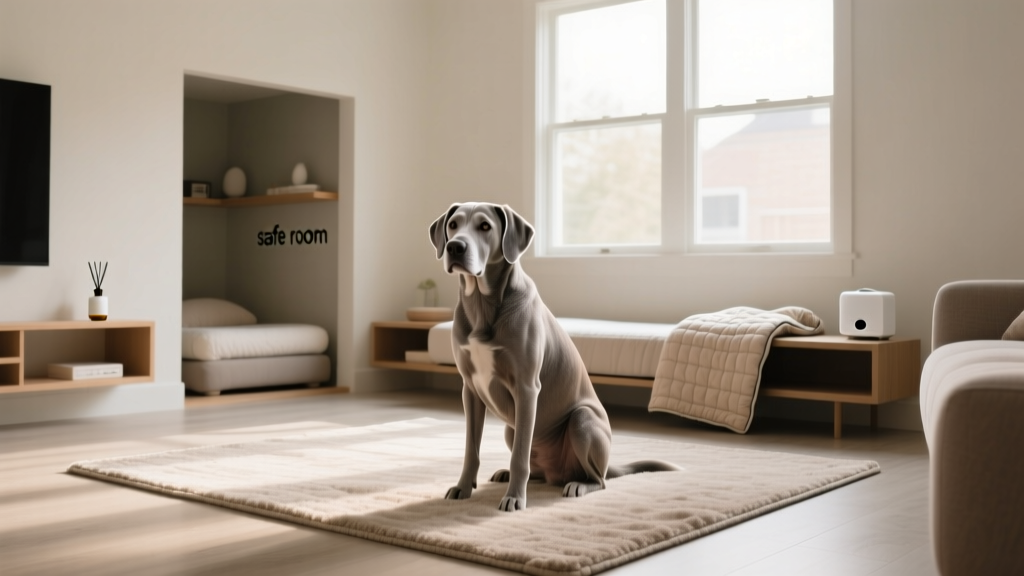
- Designate a safe zone: One quiet room (10×12 ft or larger) with a crate (door removed or left open), a covered bed, and water. Avoid high-traffic areas. Use a baby gate rather than a closed door so the dog doesn't feel trapped.
- Minimize stimuli: Keep TV volume low, avoid visitors for the first week, and maintain a predictable routine. Dogs process routine as safety — feed at the same times, walk the same route.
- Food as a bridge: Place high-value food (boiled chicken, freeze-dried liver treats — approximately $8–$15 per bag of brands like Stella & Chewy's or Primal) near the dog's safe zone. Don't force interaction. Let the dog discover food at their own pace.
- The 3-3-3 rule: Expect 3 days of decompression, 3 weeks of learning your routine, and 3 months of building trust. This framework, widely cited by rescue organizations, sets realistic expectations.
- Body language audit: Learn canine calming signals. If your dog is licking their lips, yawning, or turning their head away, they're asking for space. Respect it. According to ASPCA behavior resources, honoring these signals builds trust faster than forced socialization.
Step-by-Step Training Protocol: Desensitization and Counter-Conditioning
Once your dog is eating normally, exploring the safe zone voluntarily, and showing relaxed body language (soft eyes, loose tail, relaxed mouth) for at least 3–5 days, begin structured desensitization and counter-conditioning (DS/CC).
Phase 1: Foundation (Weeks 1–3)
Goal: Dog voluntarily approaches handler for treats in safe zone.
- Session length: 3–5 minutes, 2–3 times daily
- Technique: Sit on the floor at a distance where the dog shows no stress signals. Toss high-value treats (pea-sized pieces of chicken, cheese, or commercial training treats like Zuke's Mini Naturals, ~$6/bag) toward the dog. Do not reach toward, stare at, or talk to the dog.
- Success metric: Dog eats treats within 5 seconds and begins orienting toward you between tosses.
- Progression trigger: When the dog takes treats from your open palm without retreating (typically 7–14 days).
Phase 2: Engagement (Weeks 3–6)
Goal: Dog initiates contact and responds to name.
- Session length: 5–8 minutes, 2 times daily
- Technique — Name Game: Say the dog's name in a calm, neutral tone. When they look at you, mark with a soft "yes" and deliver a treat. Start at 1-second delay between name and look; gradually increase criteria to 2-second sustained eye contact.
- Technique — Touch target: Present your open palm at the dog's nose level. When they sniff or touch it, mark and reward. This builds positive association with human hands reaching toward them.
- Success metric: Dog looks at you when name is called in 8 out of 10 trials; dog touches palm target on first presentation.
- Progression trigger: When the dog follows you between rooms without hesitation.
Phase 3: Trigger Introduction (Weeks 6–12)
Goal: Dog encounters mild fear triggers without shutting down or fleeing.
- Session length: 5–10 minutes, 1–2 times daily
- Identify trigger hierarchy: List fear triggers from least to most intense. Example: distant footsteps → footsteps in same room → door closing → stranger entering room → stranger approaching → stranger reaching toward dog.
- Technique — Systematic desensitization: Present the lowest-intensity trigger at a level that produces no visible stress response. Pair with high-value treats continuously while the trigger is present. Remove trigger and stop treats simultaneously.
- Key rule: If the dog shows ANY stress signal (lip lick, freeze, retreat), you've moved too fast. Drop back two steps on your hierarchy and proceed more slowly.
- Success metric: Dog remains relaxed (loose body, willing to eat, ears neutral) at each trigger level for 5 consecutive sessions before advancing.
Phase 4: Generalization (Months 3–6+)
Goal: Dog applies learned calm responses in novel environments.
- Technique: Practice Phase 2 and 3 skills in progressively more challenging locations — backyard, front yard, quiet street, park at off-peak hours.
- Novel person protocol: Instruct visitors to ignore the dog completely. No reaching, no eye contact, no talking to the dog. Let the dog approach on their terms. Offer visitors treats to toss to the dog if the dog initiates.
- Success metric: Dog recovers from unexpected startle events (loud noise, sudden movement) within 10 seconds and returns to baseline behavior.
Tools That Help vs. Tools to Avoid
The right equipment supports your training; the wrong tools can undo weeks of progress by adding pain or fear to already-triggering situations.
| Tool | Type | Cost Range | Why It Works / Doesn't |
|---|---|---|---|
| Adaptil Calm Diffuser | Calming aid | $25–$40 (refills $15–$25) | Synthetic dog-appeasing pheromone (DAP); shown in studies to reduce stress behaviors in shelter and home settings. Plug in safe zone. |
| Thundershirt / Anxiety Wrap | Compression garment | $30–$55 | Gentle constant pressure may reduce sympathetic arousal. Effectiveness varies — works best for noise-sensitive dogs. Try before investing. |
| Kong Classic (appropriate size) | Puzzle feeder | $12–$20 | Licking and chewing release endorphins. Fill with peanut butter (xylitol-free) or frozen broth. Use during trigger exposure to create positive association. |
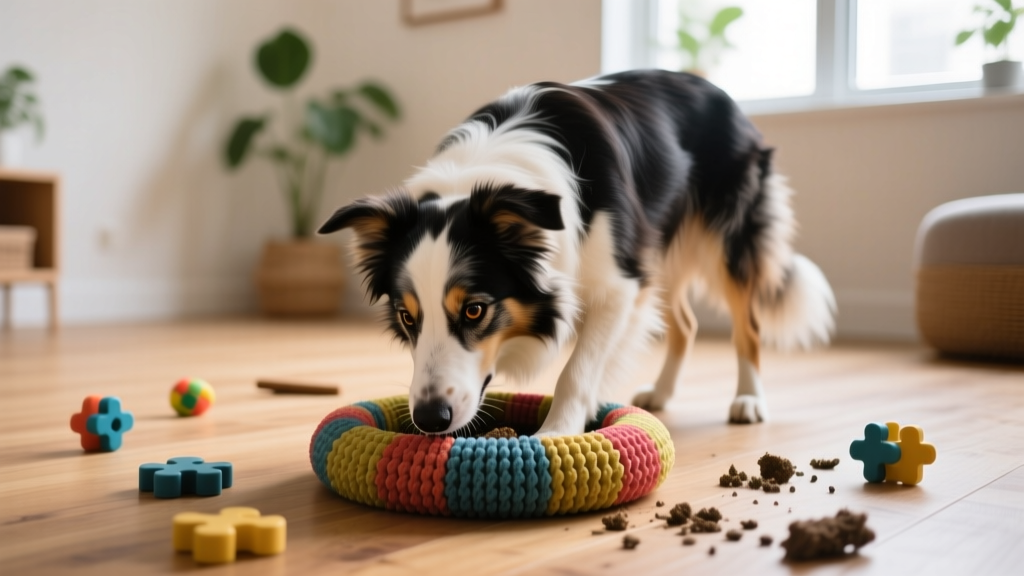
| Snuffle Mat | Foraging enrichment | $15–$35 | Encourages nose-work, which is naturally calming. Scatter treats or kibble. Builds confidence through problem-solving. |
| 6-foot leather or biothane leash | Training equipment | $20–$45 | Provides secure, comfortable connection without the pressure of retractable leashes. Allows dog to maintain distance choice. |
| Martingale collar | Safety collar | $10–$25 | Prevents escape (common in fearful rescues) without choking. Pair with harness for walks. |
| Shock / E-collar | Aversive | $40–$200 | DO NOT USE. Adds pain to fear triggers. Suppresses warning signals without resolving underlying emotion. Banned or restricted in multiple countries. |
| Prong / Pinch collar | Aversive | $15–$40 | DO NOT USE. Pain-based correction increases fear and can trigger fear-aggression. Especially dangerous on dogs with neck/thyroid issues. |
| Alpha rolls / dominance techniques | Aversive handling | Free (but costly in trust) | DO NOT USE. Forcing a fearful dog onto their back triggers defensive aggression and destroys the trust foundation needed for recovery. |
Realistic Timeline: What Progress Actually Looks Like
There is no "fix in 7 days" for fear in rescue dogs. Here are evidence-based milestones based on typical recovery trajectories for dogs with moderate fear (not severe phobia or aggression cases):
| Timeframe | Expected Milestone | What It Looks Like |
|---|---|---|
| Days 1–3 | Decompression | Dog may hide, refuse food, show stress signals. Normal and expected. |
| Days 4–7 | Initial settling | Eating regularly, exploring safe zone, sleeping more deeply. May still startle easily. |
| Weeks 2–3 | Trust foundation | Approaches handler voluntarily, takes treats from hand, follows between rooms. |
| Weeks 4–6 | Engagement | Responds to name, initiates play or contact, shows relaxed body language with family. |
| Weeks 6–12 | Trigger tolerance | Encounters mild triggers without full shutdown. May still need distance from strangers. |
| Months 3–6 | Generalization | Comfortable on walks, accepts visitors with management, recovers from startle events quickly. |
| Months 6–12 | Consolidation | Reliable calm behavior in most contexts. May always need management for specific triggers (thunder, certain people). |
Important caveats: Dogs with genetic fear predisposition may plateau at the "trigger tolerance" stage and require lifelong management plus possible medication. Dogs with severe trauma histories (documented abuse, prolonged confinement) may take 12–18 months to reach generalization. Progress is rarely linear — expect setbacks during environmental changes (moving, new family members, schedule disruptions).
When to Hire a Professional Behaviorist vs. a Trainer
Not all behavior challenges require a specialist, but knowing when to escalate saves time and prevents worsening.
Hire a Certified Applied Animal Behaviorist (CAAB) or Veterinary Behaviorist (DACVB) if:
- Your dog has bitten or attempted to bite a person (breaking skin or not)
- Fear responses are escalating despite 4+ weeks of consistent DS/CC work
- Your dog shows fear-aggression (growling, snapping, lunging when approached while fearful)
- You're considering medication to support the behavior plan
- Your dog has severe separation anxiety combined with fear (destructive behavior, self-injury when left alone)
- You feel unsafe or unable to manage the dog in your home
A certified positive-reinforcement trainer (CPDT-KA or KPA-CTP) is appropriate for:
- Mild to moderate fear (hiding, avoidance) without aggression
- Building foundational skills (name response, touch target, leash walking)
- Guidance on setting up your DS/CC hierarchy
- Ongoing accountability and session structure
Cost expectations (2026 ranges):
- Group positive-reinforcement class: $150–$300 for 6-week course
- Private trainer sessions: $80–$150 per hour
- Certified behaviorist consultation: $250–$500 initial assessment + $150–$300 follow-ups
- Veterinary behaviorist: $350–$600 initial consult + medication costs ($30–$120/month for fluoxetine, trazodone, or gabapentin)
Prevention: Setting Up Your Next Rescue for Success
Whether you're adopting a new dog or helping a current rescue build resilience, these prevention strategies reduce the likelihood of severe fear development:
For New Adoptions
- Request shelter behavior notes: Ask for the dog's behavior evaluation, known triggers, and any decompression observations. Many shelters use the ASPCA's SAFER or Match-Up II assessment protocols.
- Set up the safe zone before pickup: Have the decompression room ready with water, a bed, and a Kong stuffed with food. Avoid introducing the whole house on day one.
- Limit introductions: No more than 1–2 new people in the first week. Introduce resident pets through scent swapping (exchange blankets) before face-to-face meetings.
- Start enrichment immediately: Snuffle mats, lick mats, and scatter feeding engage the seeking system in the brain, which is incompatible with the fear system.
For Puppies (Preventing Future Fear)
- Socialization window: The primary socialization period closes around 12–14 weeks. Expose puppies to 100+ novel stimuli (surfaces, sounds, people types, objects) before 16 weeks using positive associations (treats, play).
- Handle daily: Touch ears, paws, mouth, tail gently while pairing with treats. This prevents fear of handling later in life.
- Enroll in a puppy kindergarten class: Look for classes that require vaccination proof and use positive methods only. Cost: $120–$250 for 6 weeks.
Frequently Asked Questions
Why does my rescue dog hide and refuse to come out?
Hiding is a self-protective strategy rooted in your dog's evolutionary need to avoid predators when feeling vulnerable. In rescue dogs, this typically stems from under-socialization during the critical period (3–14 weeks of age), past trauma, or the overwhelming sensory input of a new environment. Your dog isn't being stubborn — their nervous system is in a sympathetic (fight-flight-freeze) state. Provide a safe space, avoid pulling them out, and let them emerge on their own timeline while building positive associations with food tossed nearby.
How do I stop my rescue dog from being scared of everything?
You can't eliminate fear overnight, but you can systematically reduce it through desensitization and counter-conditioning (DS/CC). Start by identifying your dog's specific triggers and ranking them from mildest to most intense. Work at the lowest level where your dog can still eat treats, and pair the trigger's presence with high-value rewards. Progress only when your dog shows relaxed body language for 5+ consecutive sessions. For severe cases, consult a veterinary behaviorist about adding medication like fluoxetine (Prozac for dogs) to lower the anxiety threshold enough for learning to occur.
Is it normal for a rescue dog to be scared?
Yes — some degree of fear, caution, or withdrawal is normal in the first 72 hours after adoption. Shelter environments are chronically stressful (noise levels average 85–100 dB, comparable to a lawnmower), and many rescue dogs have experienced instability before arriving at the shelter. However, if fear behaviors persist beyond 1–2 weeks, intensify, or include aggression, this moves beyond "normal adjustment" and requires a structured behavior plan or professional intervention.
How long will it take to help my scared rescue dog feel safe?
Most rescue dogs with moderate fear show meaningful improvement within 6–12 weeks of consistent DS/CC work. Full recovery — defined as reliable calm behavior across most contexts — typically takes 3–12 months. Dogs with genetic fear predisposition or severe trauma histories may require ongoing management indefinitely. The 3-3-3 rule (3 days decompression, 3 weeks settling, 3 months bonding) is a useful framework, but individual timelines vary significantly based on the dog's history, genetics, and the consistency of your training protocol.
Should I use punishment to correct my scared rescue dog's behavior?
No. Punishment (yelling, physical corrections, shock collars, alpha rolls) is contraindicated for fear-based behavior. Punishment suppresses visible warning signs (growling, retreating) without resolving the underlying emotion. This creates a dog that appears "fine" but is internally terrified — and may escalate to biting without warning. Research published in the Journal of Veterinary Behavior consistently shows that aversive methods increase cortisol levels and aggression risk. Force-free, positive reinforcement methods are the only approach recommended by the AVMA, ASPCA, and the American College of Veterinary Behaviorists for fear-based behavior issues.
When do I need a professional behaviorist for my scared rescue dog?
Seek a certified behaviorist (CAAB or DACVB credentials) if your dog has bitten anyone, if fear is escalating despite 4+ weeks of consistent training, if you're considering medication, or if the fear is impacting your household's safety and quality of life. A general obedience trainer is not the same as a behaviorist — behaviorists have graduate-level training in animal learning theory, ethology, and psychopharmacology. You can find board-certified veterinary behaviorists through the American College of Veterinary Behaviorists directory or certified applied behaviorists through the Animal Behavior Society.
Can a confident companion dog (like Luna) really help a scared rescue?
Yes, social facilitation — where a fearful dog observes and mimics a calm, confident dog — is a documented phenomenon in canine behavior science. A confident resident dog can model that the environment is safe, demonstrate appropriate responses to triggers, and provide companionship that reduces isolation stress. However, this only works if the resident dog is genuinely relaxed (not anxious or reactive themselves) and if introductions are managed carefully. Never force interaction between dogs. Allow parallel walking at a distance and let the fearful dog choose proximity.
Helping a scared rescue dog recover is one of the most rewarding experiences in dog ownership. The path isn't always fast or linear, but with patience, positive methods, and a willingness to meet your dog where they are, transformation is possible. Luna's story — and thousands like hers — proves that even the most fearful dogs can learn to trust, connect, and thrive when given the right support.
Aaron Whyte
All our authors care for dogs every day — read more of their work on the authors page.