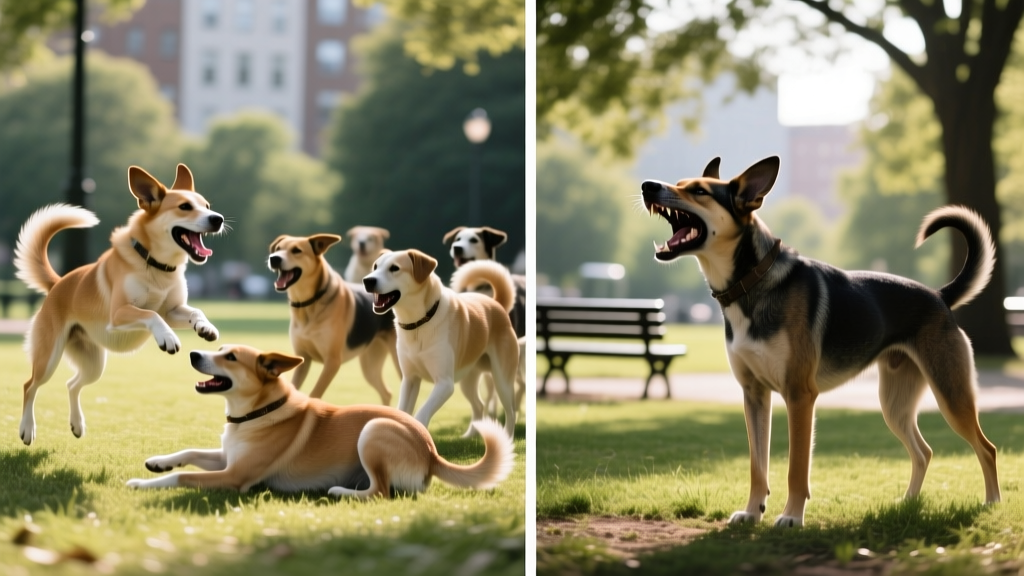
Obedience Training Dog
Master obedience training dog behavior problems with this force-free protocol.

If you've ever felt frustrated by your dog ignoring cues, jumping on guests, or pulling like a freight train on leash, you're not alone. Behavior problems are the number one reason dogs are surrendered to shelters, according to the AVMA. But here's what most owners don't realize: what looks like disobedience is rarely defiance. It's usually a gap in communication, an unmet need, or an emotional response your dog doesn't know how to manage.
This guide walks you through a comprehensive, force-free obedience training dog protocol designed to address the most common behavior problems — pulling, jumping, not coming when called, excessive barking, and counter-surfing — using evidence-based methods rooted in positive reinforcement, desensitization, and counter-conditioning.
What Qualifies as a Behavior Problem (and What's Normal Dog Behavior)
Not every unwanted behavior is a "problem" in the clinical sense. Here's how to distinguish normal canine behavior from something that needs intervention:
- Normal: Occasional barking at the doorbell, sniffing everything on walks, brief excitement jumping when you come home, stealing food left within reach.
- Needs training: Behaviors that occur multiple times daily, escalate in intensity, cause injury (scratches from jumping, rope burn from pulling), or prevent normal activities (can't have guests over, can't walk your dog safely).
- Needs professional intervention: Behaviors accompanied by growling, snapping, biting, or extreme fear responses (freezing, trembling, attempted escape). Any behavior where your dog seems "shut down" or unable to recover within minutes.
A useful benchmark: if a behavior happens more than 3–5 times per day, lasts longer than 2–3 minutes per episode, or has resulted in someone getting scratched, bitten, or genuinely frightened, it's crossed from "normal dog stuff" into territory that benefits from structured obedience training.
Root Cause Analysis: Why Does My Dog Do This?
Before you can fix a behavior, you need to understand what's driving it. Dogs don't act out of spite or jealousy — those are human projections. Here are the five most common root causes behind obedience training dog failures:
| Root Cause | Common Signs | Behaviors It Drives |
|---|---|---|
| Insufficient reinforcement history | Dog responds at home but not outside; ignores cues around distractions | Not coming when called, pulling on leash, ignoring "sit" |
| Fear or anxiety | Lip licking, yawning, whale eye, tucked tail, trembling, avoidance | Barking/lunging on leash, reactivity, hiding, bolting |
| Understimulation (boredom) | Destructive chewing, pacing, excessive licking, hyper-vigilance | Counter-surfing, digging, nuisance barking, jumping |
| Territorial/resource guarding | Stiffening, hard stare, growling when approached near food/toys/space | Barking at door, guarding food, aggression near valued items |
| Medical/pain-related | Sudden behavior change, reluctance to sit/lie down, irritability when touched | Aggression, resistance to handling, house soiling, restlessness |
The critical insight: a dog who is physically capable of performing a behavior but doesn't respond to your cue almost always falls into one of these categories. Identifying which one determines your entire training approach. A fearful dog who barks at strangers needs desensitization, not louder commands. A bored dog who counter-surfs needs enrichment, not punishment.
Medical Rule-Out: See Your Vet Before Starting Training
This step gets skipped constantly, and it's a mistake. According to the Merck Veterinary Manual, up to 30% of behavior problems in dogs have an underlying medical component. Before investing weeks in obedience training dog protocols, rule these out:
Consult your veterinarian if your dog shows any of the following before beginning behavior modification:
- Sudden onset aggression — especially in a previously friendly dog (could indicate pain, hypothyroidism, neurological issues)
- House soiling in a previously trained dog — rule out UTI, diabetes, Cushing's disease, kidney disease
- Reluctance to sit, lie down, or climb stairs — may indicate hip dysplasia, IVDD, arthritis (pain makes dogs irritable and non-compliant)
- Compulsive behaviors — tail chasing, flank sucking, shadow chasing (can have neurological basis)
- Excessive panting, pacing, inability to settle — could signal Cushing's, anxiety disorders, or cognitive dysfunction in senior dogs
- Increased reactivity or irritability — hypothyroidism is a documented contributor to aggression in dogs; a simple blood panel can rule it out
- Hearing or vision decline — a dog who "ignores" cues may simply not perceive them (common in senior dogs)
Cost context: A basic wellness exam with bloodwork typically runs $150–$300 depending on your region. A thyroid panel adds $50–$100. This is a worthwhile investment before spending $500–$1,500 on a behaviorist.
Immediate Management: Stop the Rehearsal Loop
Here's a concept from applied behavior analysis that changes everything: every time your dog performs an unwanted behavior, they get better at it. Barking at the mail carrier is self-reinforcing — the dog barks, the person leaves, the dog learns barking works. This is called a rehearsal loop, and breaking it is your first priority.
Management isn't training — it's the bridge that prevents the problem from getting worse while training takes effect. Think of it as damage control.
Immediate management strategies by behavior:
- Pulling on leash: Switch to a front-clip harness (e.g., Ruffwear Front Range or 2 Hounds Design Freedom Harness, $25–$45) that redirects forward momentum. Pair with a 6-foot leash — retractable leashes teach dogs that pulling extends the leash, reinforcing the behavior.
- Jumping on guests: Put your dog behind a baby gate or in a separate room when guests arrive until the training protocol (below) is established. Give them a stuffed Kong ($8–$15 for the Classic, $15–$25 for the Extreme) to create a positive association with visitors.
- Counter-surfing: Clear all counters completely. Use management tools like pet-proof container storage. If you can't supervise, confine your dog to another room. Every successful counter-surf raid reinforces the behavior with a jackpot reward.
- Excessive barking: Block visual triggers with window film ($15–$30 for frosted privacy film from any hardware store) or close blinds. Use white noise machines ($20–$40) to mask outdoor sounds. For doorbell barking, change your doorbell tone or temporarily disconnect it.
- Not coming when called: Keep your dog on a long line (15–30 ft biothane leash, $25–$50) in unfenced areas so they literally cannot practice ignoring your recall cue.
Step-by-Step Obedience Training Dog Protocol
Once management is in place, begin structured training. The following protocols use only force-free methods — positive reinforcement (R+), desensitization, and counter-conditioning — which the American Veterinary Society of Animal Behavior (AVSAB) recommends as the standard of care for behavior modification.
Protocol 1: Leash Pulling — The "Engage-Disengage" Game
Goal: Dog walks on loose leash by choice, not force.
- Start indoors with zero distractions. Hold treats in the hand closest to your dog. Take 3 steps. If the leash stays loose, mark ("yes!") and deliver a treat at your hip seam.
- Increase to 5 steps, then 10, rewarding at your side. If your dog pulls, stop immediately. Stand still. Wait for them to look back at you or the leash to slacken. Mark and reward. Do NOT jerk the leash.
- Add the "Find it" scatter cue: Toss 3–4 treats on the ground in front of you. This lowers arousal and keeps your dog engaged near you.
- Move to a low-distraction outdoor area (driveway, quiet cul-de-sac). Repeat steps 1–3. Expect to take 10–15 minutes to walk 50 feet initially. That's normal.
- Gradually increase environment difficulty: quiet street → busier street → park → park with other dogs present. Only move up when your dog succeeds 8 out of 10 trials at the current level.
Timeframe: 3–6 weeks of daily 10–15 minute sessions for reliable loose-leash walking in moderate-distraction environments.
Protocol 2: Jumping on People — "Four on the Floor"
Goal: Dog greets people with all four paws on the ground.
- Teach an incompatible behavior: Train a solid "sit" for greetings. Practice with family members first. Person approaches → dog sits → person pets. If dog jumps, person turns away and becomes boring (no eye contact, no talking, no touching).
- Scatter-feed protocol: When guests arrive, toss a handful of treats on the floor before your dog can jump. This keeps their head down and reinforces floor-level behavior.
- Leash management: Step on the leash (leave enough slack for sitting but not jumping). This physically prevents jumping while you reward sit behavior.
- Generalize: Practice with 5–10 different people in different locations before expecting reliability with novel visitors.
Timeframe: 2–4 weeks for family members; 4–8 weeks for reliable greeting with strangers.
Protocol 3: Reliable Recall — "Come" That Actually Works
Goal: Dog returns to you from distractions 9 out of 10 times.
- Choose a NEW cue word if your current recall is poisoned (dog has learned to ignore "come"). Try "here," "this way," or a whistle. Never call your dog for something they dislike (bath, nail trim, leaving the park) without pairing it with a high-value reward.
- Start at 3 feet distance indoors. Say your cue ONCE in an upbeat tone. If dog comes, jackpot reward (5–10 treats delivered one at a time over 10 seconds). If they don't come, don't repeat the cue — go get them gently and reset at a shorter distance.
- Increase distance in increments: 3 ft → 6 ft → 10 ft → across the room → different room → backyard → front yard on long line → park on long line.
- Add the "Premack recall": Call your dog, reward, then RELEASE them back to what they were doing (sniffing, playing). This teaches them that coming to you doesn't always mean fun ends.
- Proof against distractions: Practice near other dogs, squirrels, and people — always on a long line until you've achieved 90% reliability at that distraction level.
Timeframe: 4–8 weeks for reliable recall in moderate distractions; 3–6 months for reliable recall in high-distraction environments (off-leash parks, hiking trails).
Protocol 4: Excessive Barking — Desensitization and Counter-Conditioning (DS/CC)
Goal: Dog remains calm when triggers appear.
- Identify the trigger and threshold: At what distance or intensity does your dog start barking? For a dog who barks at other dogs on leash, this might be 50 feet. For doorbell barking, it might be the first ring.
- Work below threshold: Present the trigger at a distance/intensity where your dog notices but doesn't bark. The moment they look at the trigger, mark ("yes!") and give a high-value treat (boiled chicken, cheese, freeze-dried liver).
- Build new associations: Trigger appears → treat rain. Trigger disappears → treats stop. Over 20–50 repetitions, your dog begins to predict treats when the trigger appears, replacing the emotional response from alarm to anticipation.
- Gradually decrease distance or increase intensity by 10–20% only when your dog remains calm for 10+ consecutive trials at the current level.
- Teach a "quiet" cue: Wait for a natural pause in barking → mark → treat → add the verbal cue "quiet." Gradually extend the duration of silence required before marking.
Timeframe: 6–12 weeks for significant reduction in trigger-based barking; ongoing maintenance required.
Tools That Help vs. Tools to Avoid
The right equipment accelerates training. The wrong equipment can create new problems or worsen existing ones. Here's an honest breakdown:
| Tool | Type | Use Case | Price Range | Verdict |
|---|---|---|---|---|
| Front-clip harness (Ruffwear Front Range, 2 Hounds Freedom) | Management | Leash pulling | $25–$45 | ✅ Recommended |
| Kong Classic/Extreme + Kong Wobbler | Enrichment | Boredom, jumping, separation | $8–$25 | ✅ Recommended |
| Snuffle mat or lick mat (Hyper Pet IQ Pad) | Enrichment | Boredom, anxiety reduction | $10–$20 | ✅ Recommended |
| 15–30 ft biothane long line | Training | Recall training safety | $25–$50 | ✅ Recommended |
| Puzzle feeders (Outward Hound Nina Ottosson series) | Enrichment | Mental stimulation, slow feeding | $12–$35 | ✅ Recommended |
| Calming aids (Adaptil DAP diffuser, ThunderShirt) | Support | Anxiety, fear-based behaviors | $25–$75 | ✅ Recommended (adjunct, not standalone) |
| Treat pouch (Ruffwear Treat Trader, Starmark) | Training | Quick treat delivery | $10–$30 | ✅ Recommended |
| Shock/e-collars (any brand) | Aversive | N/A | $50–$300 | ❌ Avoid — AVSAB position statement opposes use; associated with increased aggression and fear |
| Prong/pinch collars | Aversive | N/A | $15–$40 | ❌ Avoid — causes pain, can increase reactivity, risks tracheal damage |
| Alpha rolls / dominance-based corrections | Aversive | N/A | Free (and costly) | ❌ Avoid — debunked dominance theory; significantly increases bite risk |
Realistic Progress Timeline: What to Expect
No ethical trainer will promise you "fix your dog in 7 days." Behavior modification is a process, and timelines depend on your dog's history, the severity of the behavior, your consistency, and the underlying cause. Here's an honest framework:
| Phase | Timeframe | What You'll See |
|---|---|---|
| Week 1–2: Management | Immediate | Behavior frequency drops because you've removed the opportunity for rehearsal. Dog may seem "better" — this is management, not learning yet. |
| Week 2–4: Foundation | Daily 10–15 min sessions | Dog begins offering desired behaviors in low-distraction settings. You'll see clear improvement at home but not yet in the real world. |
| Week 4–8: Generalization | Daily practice in new environments | Behaviors start transferring to outdoor and higher-distraction settings. Expect setbacks — a bad day doesn't mean failure, it means you moved too fast. |
| Month 2–4: Proofing | 3–5 sessions/week + real-world practice | Reliable responses in most everyday situations. Occasional failures under high distraction or stress — this is normal and manageable. |
| Month 4–6+: Maintenance | Ongoing integration into daily life | Behaviors are habitual. Periodic "tune-up" sessions keep skills sharp. Fear-based behaviors may require lifelong management at trigger thresholds. |
Important caveat: Fear-based and anxiety-driven behaviors (reactivity, separation anxiety, resource guarding) typically take longer — often 3–6 months minimum — because you're changing an emotional response, not just teaching a skill. Dogs with significant bite histories or trauma backgrounds may need 6–12 months of consistent work with a professional.
When to Hire a Professional: Trainer vs. Behaviorist
Not all behavior problems require a professional, and not all professionals are equally qualified. Here's how to decide:
- Your dog has basic obedience gaps (pulling, jumping, poor recall, basic manners)
- You need help with mechanics — timing, treat delivery, leash handling
- Your dog is friendly but untrained
- Expected cost: $60–$120/hour for private sessions; $150–$400 for 6-week group classes
- Your dog has bitten someone (especially if the bite broke skin)
- Your dog shows aggression toward people, children, or other dogs
- Your dog has severe separation anxiety (self-injury, destruction, non-stop vocalization)
- Medical causes have been ruled out and DIY training hasn't worked after 6–8 weeks
- Your dog has compulsive behaviors (tail chasing, flank sucking, fly snapping)
- Expected cost: $150–$350/hour for behaviorists; $250–$500+ for veterinary behaviorist consultations (may include medication)
Find credentialed professionals through the Certification Council for Professional Dog Trainers directory or the AVSAB consultant finder.
Prevention: Building a Well-Trained Dog from the Start
Whether you have a new puppy or a newly adopted adult dog, these strategies prevent behavior problems from developing in the first place:
For Puppies (8–16 weeks)
- Socialization window: The critical socialization period closes around 12–14 weeks. Expose your puppy to 100+ novel experiences (surfaces, sounds, people types, other animals) before 16 weeks. The AKC recommends structured, positive exposures — not just "let them figure it out."
- Handling exercises: Touch paws, ears, mouth, and tail daily while feeding treats. This prevents future resistance to grooming and veterinary care.
- Crate training: Start day one. Feed meals in the crate, provide high-value chews only in the crate, and never use the crate as punishment.
- Name recognition and recall foundation: Say puppy's name → treat when they look at you. Do this 20+ times daily for the first two weeks.
For Adopted Adult Dogs (Decompression Period)
- The 3-3-3 rule: Expect 3 days of overwhelm (hiding, not eating, shutting down), 3 weeks of settling in (learning routines, showing personality), and 3 months of true bonding (showing their real temperament). Don't judge your new dog's behavior in the first 3 weeks.
- Limit access initially: Use baby gates and a "safe room" rather than giving full house access immediately. Expand freedom as your dog earns it through appropriate behavior.
- Delay introductions: Wait 2–4 weeks before introducing to dog parks, busy pet stores, or large gatherings. Let your dog decompress first.
- Establish routines immediately: Feed, walk, and train at consistent times. Predictability reduces anxiety, which reduces problem behaviors.
Frequently Asked Questions
Is my dog's behavior normal?
Most behaviors owners find problematic — barking, pulling, jumping, sniffing, digging — are entirely normal canine behaviors. Dogs aren't being "bad"; they're being dogs. The question isn't whether the behavior is normal but whether it's appropriate for your living situation. If the behavior poses a safety risk (biting, bolting into traffic) or significantly impacts your quality of life, it warrants intervention regardless of whether it's "normal."
Should I use punishment to correct my dog's behavior?
The AVSAB's official position statement recommends against the use of punishment (positive punishment and negative reinforcement) for behavior modification. Punishment suppresses the visible behavior without addressing the underlying cause, often leading to fallout — increased fear, redirected aggression, or a "shut down" dog who appears compliant but is actually experiencing learned helplessness. Force-free methods (positive reinforcement, desensitization, counter-conditioning) are equally or more effective and carry none of these risks.
How long will it take to fix my dog's behavior problem?
For basic obedience issues (pulling, jumping, poor recall) with consistent daily practice: 4–8 weeks to see significant improvement. For fear-based or anxiety-driven behaviors (reactivity, separation anxiety): 3–6 months minimum. For severe cases involving bite histories or trauma: 6–12 months with professional guidance. There is no universal timeline — it depends on the behavior's history, your dog's temperament, your consistency, and whether medical factors are involved.
Why does my dog listen at home but not outside?
This is the most common frustration in obedience training, and it has a clear explanation: dogs don't generalize well. Your dog learned "sit" means sit in the kitchen with no distractions. Outside, there are 500 competing stimuli, and your dog hasn't learned that "sit" applies there too. The fix is systematic generalization — practice the same cue in incrementally more distracting environments, increasing difficulty by only 10–20% at a time, and using higher-value rewards (real meat, cheese) in harder environments.
My dog was trained with a shock collar — can I switch to positive reinforcement?
Yes, and you should. Transition gradually: remove the e-collar and replace it with a front-clip harness or head halter for management. Begin positive reinforcement training from scratch, using high-value rewards. Expect an "extinction burst" — a temporary increase in the unwanted behavior as your dog tests whether the old rules still apply. Stay consistent. Most dogs transition fully within 4–6 weeks. If your dog shows signs of fear associated with training equipment (flinching at leash clips, cowering), consult a behaviorist.
When do I need a professional behaviorist?
Seek professional help immediately if: your dog has bitten someone and broken skin; your dog shows aggression toward children; your dog's behavior is escalating despite 6–8 weeks of consistent training; your dog is injuring themselves (breaking teeth on crates, chewing through walls in separation anxiety); or you feel afraid of your dog. A veterinary behaviorist (DACVB) can also prescribe anti-anxiety medication when behavior modification alone isn't sufficient — medication can lower arousal enough for learning to occur.
Your Obedience Training Dog Action Plan
Here's your prioritized checklist to start today:
- Rule out medical causes — schedule a vet exam if the behavior is new, sudden, or escalating.
- Implement management immediately — prevent rehearsal of the unwanted behavior starting today.
- Choose ONE behavior to work on first — don't try to fix everything simultaneously. Prioritize safety-related behaviors (biting, bolting) over nuisance behaviors (jumping, barking).
- Train in 10–15 minute daily sessions — consistency beats duration. Five minutes twice daily outperforms one hour on weekends.
- Track progress weekly — rate the behavior on a 1–10 scale each Sunday. If you're not seeing improvement after 4 weeks of consistent effort, consult a professional rather than pushing through a flawed protocol.
- Celebrate small wins — your dog went from pulling 100% of the walk to pulling 60%? That's real progress. Keep going.
Disclaimer: This article provides general training guidance and does not replace professional veterinary or behavioral consultation. If your dog shows aggression, self-injury, or severe anxiety, consult your veterinarian or a certified behaviorist before beginning any training program.
Tom Renshaw
All our authors care for dogs every day — read more of their work on the authors page.