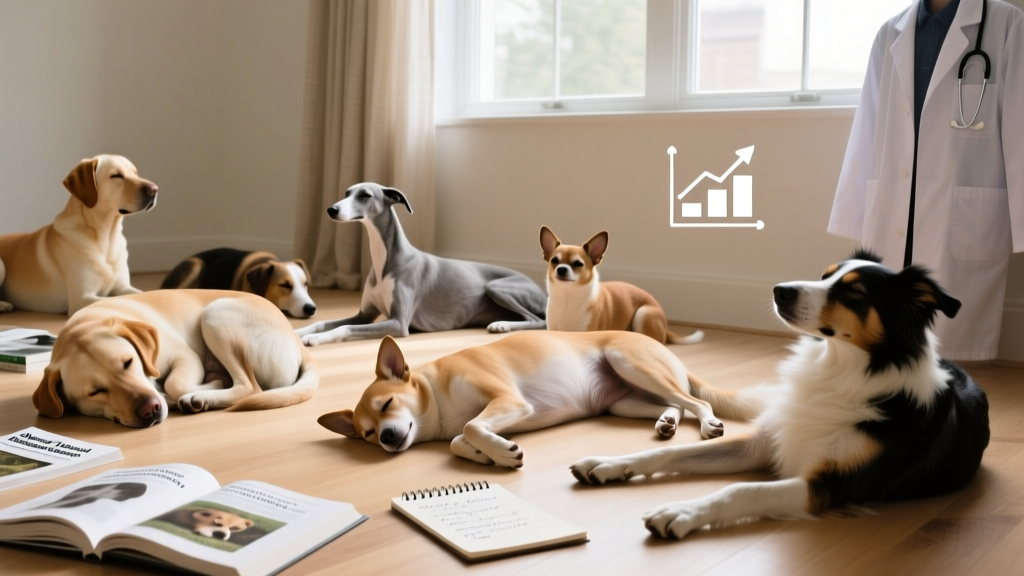
How to Stop Resource Guarding in Dogs: A Step-by-Step Behavior Guide
How to stop resource guarding in dogs with a force-free, step-by-step protocol covering root causes, desensitization, counter-conditioning, and when to
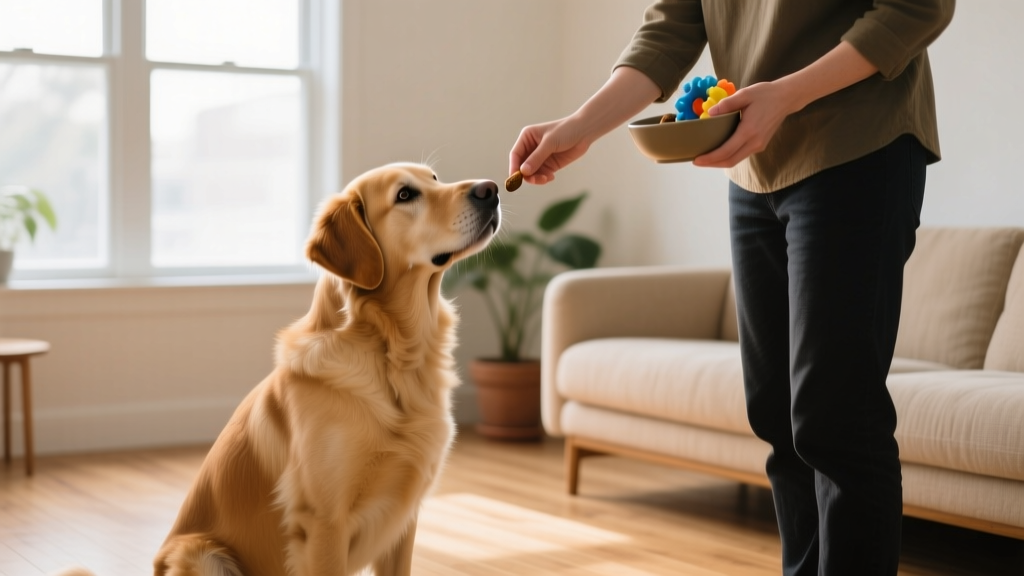
What Is Resource Guarding in Dogs?
Resource guarding is a defensive behavior where a dog uses threats — growling, snapping, lunging, or stiffening — to prevent a person or another animal from taking away a valued item. That item can be food, a bone, a toy, a sleeping spot, or even a person. According to the Merck Veterinary Manual, resource guarding falls under possessive aggression and is one of the most commonly reported behavioral complaints in veterinary practice.
Threshold indicators that your dog is resource guarding (not just being cautious):
- Freezing or going rigid when approached while eating or chewing
- Accelerated eating or gulping when someone walks nearby
- Low-pitched growl directed at a person or animal approaching the item
- Snapping or lunging with intent to make contact
- Blocking access to the item with their body
- Whale eye (showing the whites of the eyes) while holding an item
- History of biting when an item was removed
A dog that simply carries a toy away from you is not necessarily guarding. A dog that freezes, growls, or snaps when you reach toward their bowl is. The distinction matters because the training approach depends on the severity.
Why Does My Dog Resource Guard? Root Cause Analysis
Resource guarding is not spite, jealousy, or dominance. It is a survival-driven behavior rooted in the fear of losing something the dog perceives as essential. Here are the five most common underlying causes:
- Genetic predisposition and early learning: Puppies raised in high-competition environments (large litters, shelters, puppy mills) learn that food disappears unless they defend it. A 2023 study published in the Journal of Veterinary Behavior found that dogs from multi-dog households showed resource guarding at nearly twice the rate of single-dog households when food was involved.
- Fear and insecurity: Dogs with generalized anxiety or low confidence are more likely to guard. They do not trust that resources will be replenished, so they escalate defensive behavior.
- Learned reinforcement history: If a dog growled once and the person backed off, the dog learned that growling works. Every successful guard rehearsal strengthens the behavior.
- Medical pain or illness: A dog in pain — from dental disease, arthritis, hypothyroidism, or neurological conditions — has a lower aggression threshold. Pain lowers the bite threshold significantly, according to veterinary behaviorist Dr. Karen Overall's protocol published in Clinical Behavioral Medicine for Small Animals.
- Resource scarcity perception: Dogs on restricted feeding schedules, dogs that have experienced food deprivation, or dogs in environments where high-value items appear unpredictably may guard more intensely because they cannot predict when the resource will return.
Medical Rule-Out: See Your Vet Before Training
🩺 Rule Out Medical Causes First
Before starting any behavior modification program, consult your veterinarian to rule out pain or illness that could be driving or worsening the guarding. Sudden-onset resource guarding in a previously relaxed dog is a major red flag for an underlying medical issue.
Ask your vet to evaluate:
- Dental/oral pain: Tooth root abscesses, fractured teeth, and periodontal disease cause pain that flares when a dog chews or when someone touches their mouth area. Dental radiographs typically cost $150–$350.
- Orthopedic pain: Hip dysplasia, arthritis, or spinal issues (IVDD) can make a dog irritable and defensive, especially if someone approaches while they are lying down on a guarded bed or spot.
- Hypothyroidism: Low thyroid function is linked to aggression and irritability in dogs. A full thyroid panel (T4, free T4, TSH) costs $80–$200 at most veterinary labs.
- Neurological conditions: Partial seizures, cognitive dysfunction in senior dogs, or brain tumors can manifest as sudden behavioral changes including aggression.
- Gastrointestinal discomfort: Dogs with chronic nausea, IBD, or food sensitivities may guard food more intensely because eating is associated with discomfort.
When to prioritize the vet visit: If resource guarding appeared suddenly, worsened rapidly, or is accompanied by changes in appetite, sleep, mobility, or temperament — schedule a veterinary exam before attempting training.
Is Resource Guarding Normal in Dogs?
Yes and no. Resource guarding exists on a spectrum. Mild guarding behaviors — like eating faster when someone walks by or carrying a bone to another room — are within the range of normal canine behavior. Dogs are opportunistic scavengers by evolutionary design, and protecting valued resources has survival value.
However, guarding that escalates to growling, snapping, or biting is not acceptable in a household setting and requires intervention. The ASPCA notes that resource guarding is one of the most treatable forms of canine aggression when addressed with proper behavior modification — but it is also one of the most dangerous if ignored, because it tends to escalate over time.
The key distinction: a dog that gives warning signals (freezing, growling) and backs down when given space is communicating normally. A dog that escalates to biting without warning, or whose guarding generalizes to more items and more contexts over time, needs a structured intervention.
Immediate Management: Prevent Rehearsal While You Train
Behavior modification takes weeks to months. In the meantime, every time your dog successfully guards a resource, the behavior is rehearsed and strengthened. Management is not a substitute for training — it is the bridge that keeps everyone safe while training takes effect.
Management Strategies by Severity Level
| Severity Level | Behaviors Seen | Immediate Management |
|---|---|---|
| Mild | Faster eating, mild body blocking, carrying items away | Feed in a separate room or behind a baby gate. Pick up high-value items when not in supervised use. |
| Moderate | Freezing, hard staring, low growling | Never approach during meals. Use baby gates or crates for feeding. Trade up with higher-value treats from a distance. No children near the dog during resource access. |
| Severe | Snapping, lunging, biting, guarding multiple items/locations | Basket muzzle (Baskerville Ultra or similar) during high-risk situations. Complete environmental management — dog eats behind a closed door. Hire a certified behaviorist immediately. |
Critical management rules:
- Never punish the growl. The growl is your dog's warning system. Punishing it removes the warning and increases the likelihood of a bite without signal.
- Never forcibly take items from your dog's mouth. This escalates guarding and teaches the dog that people approaching means losing things — reinforcing the very fear driving the behavior.
- Supervise all dog-child interactions around food and toys. Children are the most common bite victims in resource guarding incidents because they do not read canine body language.
Step-by-Step Training Protocol to Stop Resource Guarding
The Desensitization and Counter-Conditioning Protocol
This protocol uses positive reinforcement to change your dog's emotional response from "people approaching means I lose my stuff" to "people approaching means better stuff happens." It requires patience, high-value treats (real chicken, cheese, freeze-dried liver), and consistency.
Phase 1: The Approach-and-Treat Exercise (Weeks 1–3)
- Set up: Give your dog their regular meal in a bowl. Stand at a distance where your dog notices you but does not freeze, growl, or speed up eating (this is their "threshold distance" — typically 6–10 feet for moderate guarders).
- Toss high-value treats: From that threshold distance, toss a piece of chicken or cheese into or near their bowl. Do not approach. Just toss and walk away.
- Repeat 10–15 times per session, 2 sessions per day. You are building the association: human nearby = bonus food appears.
- Watch for relaxed body language: Your dog should start looking up at you expectantly when you approach, rather than tensing over the bowl. This signals readiness for Phase 2.
Phase 2: Closer Approaches and the Trade-Up Game (Weeks 3–6)
- Decrease distance gradually: Move one step closer each session. If your dog tenses at any point, go back to the last comfortable distance and stay there for 2–3 more sessions.
- Introduce the trade: Once you can stand within 2 feet of the bowl without tension, hold a high-value treat (chicken, hot dog, cheese) near your dog's nose while they eat. When they release the bowl to take the treat, pick up the bowl, place the treat in it, and immediately return the bowl with the treat inside.
- Practice the "drop it" cue separately: During play with lower-value toys, offer a high-value treat in exchange for the toy. Mark the release with "yes" or a clicker, give the treat, then return the toy 70% of the time. Returning the toy teaches your dog that giving things up is temporary and rewarding.
Phase 3: Generalization and Real-World Application (Weeks 6–12+)
- Practice in different locations: Kitchen, living room, yard, on walks with found items.
- Practice with different people: Have family members and trusted friends run through the protocol.
- Practice with different items: Kongs, bully sticks, raw bones, stolen socks — vary what your dog is holding.
- Add the "leave it" cue: Once your dog reliably trades, introduce "leave it" for items they have not yet picked up. Reward compliance with a different treat, not the forbidden item.
Important note: This protocol works for mild-to-moderate resource guarding directed at humans. If your dog guards resources from other dogs, the protocol requires modifications for multi-dog management, and you should work with a certified professional to avoid injury.
Tools That Help vs. Tools to Avoid
| Tool | How It Helps | Cost Range (2026) |
|---|---|---|
| Kong Classic or West Paw Toppl | Slows eating, provides enrichment, reduces food-bowl guarding by making meals an activity rather than a scarce resource | $12–$25 |
| Snuffle mat or lick mat (Hyper Pet, Lickimat) | Encourages foraging behavior, reduces gulping, provides calming repetitive licking action | $10–$30 |
| Baby gates (Regalo, Carlson) | Creates physical separation during meals, prevents rehearsal of guarding behavior, keeps children safe | $30–$70 |
| Basket muzzle (Baskerville Ultra, Jafco) | Safety tool for severe guarders during training sessions and vet visits; allows panting and treat-taking | $15–$35 |
| Treat pouch (Ruffwear Treat Trader, Doggie Style) | Keeps high-value treats accessible for spontaneous training moments throughout the day | $12–$30 |
| Clicker (i-Click, Karen Pryor brand) | Precise marker for desired behavior during trade-up exercises; bridges the gap between behavior and reward | $3–$8 |
⛔ Tools and Methods to Avoid Completely
- Shock collars (e-collars, remote training collars): Punishing a growl with a shock suppresses the warning signal without addressing the underlying fear. The dog learns not to growl — and then bites without warning. The American Veterinary Society of Animal Behavior (AVSAB) recommends against aversive methods for aggression cases.
- Alpha rolls or physical dominance techniques: Forcing a dog onto its back increases fear and defensive aggression. There is no scientific support for dominance-based training in resource guarding contexts.
- Prong collars and choke chains: Pain-based tools escalate arousal and can redirect aggression toward the handler.
- "Taking the bowl away" as a desensitization method: Repeatedly removing the bowl without trading up teaches the dog that humans are unpredictable thieves — reinforcing the exact fear that drives guarding.
How Long Will It Take to Fix Resource Guarding?
There is no guaranteed timeline. Progress depends on severity, consistency, the dog's age, and whether underlying medical issues are resolved. Here is a realistic framework based on typical outcomes:
| Phase | Timeframe | Expected Milestones |
|---|---|---|
| Initial improvement | 2–4 weeks | Dog shows relaxed body language during approach-and-treat exercises at threshold distance; reduced freezing and gulping |
| Active trade reliability | 6–10 weeks | Dog voluntarily releases items for trade 80%+ of the time with high-value treats; growling frequency significantly reduced |
| Generalization | 3–6 months | Dog responds reliably across locations, people, and item types; "drop it" and "leave it" cues work in most contexts |
| Maintenance | Ongoing (lifelong) | Periodic refresher trades; management remains in place for highest-value items; periodic assessment for regression |
Factors that slow progress: inconsistent practice, multiple household members not following the protocol, ongoing access to high-value items without supervision, unresolved medical pain, and multi-dog households where competition persists.
Factors that accelerate progress: daily practice (even 5-minute sessions), single-dog household, early intervention before the behavior escalates to biting, and use of very high-value treats (real meat, not kibble).
When to Hire a Professional Behaviorist
🚨 Seek Professional Help If:
- Your dog has already bitten someone (especially if the bite broke skin — Level 3+ on the Dunbar Bite Scale)
- Guarding occurs around children in the household
- Multiple items, locations, and people trigger guarding
- You have tried the protocol for 4+ weeks with no improvement
- Guarding is escalating — new items, shorter warning distances, faster escalation to snapping
- You feel unsafe or unsure managing the behavior
Who to Hire (and What It Costs in 2026)
| Professional Type | Credentials to Look For | Typical Cost | Best For |
|---|---|---|---|
| Veterinary Behaviorist | DACVB (Diplomate of the American College of Veterinary Behaviorists) | $250–$500 initial consult; $100–$200 follow-ups | Severe cases, bite history, medication evaluation, medical-behavioral overlap |
| Certified Applied Animal Behaviorist | CAAB or ACAAB (through the Animal Behavior Society) | $150–$350 initial; $80–$150 follow-ups | Moderate-to-severe guarding, multi-dog household dynamics |
| Certified Professional Dog Trainer | CPDT-KA or CPDT-KSA (Certification Council for Professional Dog Trainers) | $75–$150 per session; packages $400–$800 | Mild-to-moderate guarding, protocol implementation, owner coaching |
| Fear Free Certified Professional | FFCP (Fear Free certification through Fear Free, Inc.) | $75–$150 per session | Anxiety-driven guarding, desensitization support |
Red flags when hiring: Avoid any trainer who guarantees a "fix" in a set number of sessions, recommends shock/prong collars for guarding, or uses dominance-based language ("you need to be the alpha"). The AVSAB's training hierarchy recommends positive reinforcement as the first-line approach for all behavioral issues.
Preventing Resource Guarding in Puppies and Newly Adopted Dogs
Prevention is significantly easier than treatment. Whether you have a new puppy or an adult rescue, these practices build a foundation of trust around resources:
For Puppies (8–16 Weeks)
- Hand-feed at least one meal per day during the first month. This builds the association that human hands near food = good things.
- Practice the bowl-add exercise: While the puppy eats from their bowl, approach calmly and add a small handful of something better (chicken, cheese) into the bowl. Do this 3–5 times per meal, 4–5 days per week, through at least 6 months of age.
- Trade, never confiscate: When your puppy picks up something they should not have, always offer a trade rather than taking it by force.
- Socialize around food: Have different people (adults, children with supervision, visitors) practice the bowl-add exercise so the puppy generalizes the positive association.
For Newly Adopted Adult Dogs
- Assume guarding history until proven otherwise. Feed behind a closed door or baby gate for the first 2–4 weeks. Do not test the dog by approaching their bowl — give them space to decompress.
- Introduce the approach-and-treat protocol from Day 1 at a comfortable distance, even if you have not observed guarding. Prevention costs nothing and builds trust.
- Avoid high-value chews (bully sticks, raw bones) in shared spaces until you understand the dog's guarding tendencies. Start with lower-value items and work up.
- Keep a behavior journal for the first 60 days noting any stiffening, growling, or avoidance around food, toys, beds, and people.
Frequently Asked Questions
Should I use punishment to correct resource guarding?
No. Punishment — including yelling, physical corrections, shock collars, and alpha rolls — suppresses the warning signals (growling, freezing) without resolving the underlying fear. A punished dog does not stop feeling threatened; they stop communicating the threat and go straight to biting. The AVSAB and the American College of Veterinary Behaviorists both recommend force-free, positive reinforcement-based approaches as the standard of care for aggression cases.
How do I stop my dog from guarding food specifically?
The approach-and-treat protocol described above is the gold standard for food guarding. Feed meals in a consistent, low-traffic location. Start tossing treats from a distance where your dog remains relaxed, and gradually decrease the distance over weeks. Add the trade-up game once your dog is comfortable with your proximity. Never reach into or remove the bowl without offering something better in exchange.
My dog only guards raw bones and bully sticks — can I just avoid giving them?
Yes, avoidance is a valid management strategy. If your dog guards only specific high-value items and you can control access to those items, removing them from the environment eliminates the trigger. However, if guarding is generalizing to other items, avoidance alone will not resolve the underlying behavior pattern — you still need the desensitization protocol.
Can resource guarding be completely cured?
Most dogs show significant improvement with consistent training, and many reach a point where guarding behaviors are rare or absent in managed environments. However, behaviorists generally frame it as "managed and improved" rather than "cured." Under stress, illness, or environmental changes, guarding can resurface. Ongoing maintenance — periodic trade exercises and smart management — keeps the behavior in check long-term.
My dog guards me from other dogs and people — is that the same thing?
This is a related but distinct behavior often called "person guarding" or "owner-directed possessive behavior." It shares the same underlying mechanism (fear of losing a valued resource) but requires a different protocol that focuses on building the dog's confidence and teaching them that other people and dogs approaching you predicts good things, not loss. This type of guarding often benefits from professional guidance.
What if my dog guards from my other dog, not from me?
Dog-to-dog resource guarding requires careful environmental management: feed dogs in separate rooms, pick up high-value items when dogs are together, and never leave guarded resources available in shared spaces. Counter-conditioning can help — feeding the dogs at a distance from each other and gradually decreasing the distance while both are relaxed. For severe cases, consult a certified behaviorist, as dog-to-dog aggression carries higher injury risk.
Final note: Resource guarding is one of the most responsive behavioral issues to structured, force-free training. The dogs who improve most are the ones whose owners commit to daily short sessions (5–10 minutes), maintain management protocols consistently, and seek professional help early when progress stalls. If at any point you feel overwhelmed or unsafe, contact a DACVB veterinary behaviorist or a CPDT-KA certified trainer — there is no shame in getting expert support for a behavior that puts your household at risk.
Marcus Aldridge
All our authors care for dogs every day — read more of their work on the authors page.