How to Stop a Dog from Digging: A Complete Behavior Guide
Learn how to stop a dog from digging with science-backed behavior strategies, root cause analysis, step-by-step training protocols, and realistic timelines.

What Qualifies as Problem Digging in Dogs?
Behavior Definition: Digging becomes a behavior problem when a dog repeatedly excavates holes or trenches in yards, gardens, or indoor surfaces (carpets, furniture) at a frequency or intensity that causes property damage, poses escape risk, or indicates underlying distress.
Thresholds that signal a problem:
- Digging daily or multiple times per day over 2+ weeks
- Holes large enough for the dog to escape through (under fences, gates)
- Indoor digging on carpets, couches, or beds that causes material damage
- Digging accompanied by other stress signals (pacing, whining, panting, destructiveness)
- Digging that persists despite environmental enrichment and adequate exercise
Occasional digging — a few shallow scrapes in the dirt once a week during warm weather — falls within normal canine behavior. Many breeds, particularly terriers and dachshunds, were selectively bred for centuries to dig after burrowing prey. The American Kennel Club notes that digging is an instinctual behavior hardwired into certain breed groups. The goal isn't to eliminate digging entirely but to redirect it into acceptable outlets and address any underlying distress driving excessive excavation.
Why Does My Dog Dig? Root Cause Analysis
Before you can stop the behavior, you need to understand what's driving it. Dogs dig for specific reasons, and the solution depends entirely on the cause. Misidentifying the root cause is the number one reason digging "solutions" fail.
1. Instinctual / Breed-Driven Digging
Signs: Dog digs in loose soil, appears focused and purposeful, targets specific areas, shows no other stress behaviors. Common in terriers (Jack Russell, Rat Terrier, Cairn Terrier), dachshunds, and northern breeds (Siberian Husky, Alaskan Malamute).
Mechanism: Predatory motor sequence — the dog is expressing the "search and dig" portion of the hunting chain. Northern breeds also dig cooling pits to regulate body temperature in warm weather.
2. Boredom and Under-Stimulation
Signs: Digging occurs when dog is left alone in yard for extended periods (2+ hours), accompanied by other destructive behaviors (chewing, barking), dog has less than 60 minutes of structured activity daily.
Mechanism: Digging is self-reinforcing — it provides sensory stimulation and physical exertion. An under-exercised, under-enriched dog will create their own entertainment.
3. Anxiety and Stress Relief
Signs: Digging occurs near fence lines or gates (escape-seeking), during thunderstorms or fireworks, when owner is absent (separation anxiety), or in newly adopted dogs during adjustment periods. Often paired with pacing, drooling, or vocalization.
Mechanism: Repetitive digging releases endorphins and serves as a displacement behavior — a coping mechanism for emotional overwhelm.
4. Comfort-Seeking / Temperature Regulation
Signs: Dog digs shallow depressions in shaded areas, then lies in them. More common in hot weather or in brachycephalic breeds and thick-coated breeds that overheat easily.
Mechanism: Exposed soil beneath the surface layer is cooler. The dog creates a natural cooling bed — an adaptive thermoregulation behavior.
5. Prey Drive / Scent-Triggered Digging
Signs: Dog targets specific spots (near tree roots, garden beds, compost piles), appears intensely focused, may vocalize while digging. Often triggered by rodents, insects, or buried organic matter.
Mechanism: The dog detects prey or interesting scents below the surface and is attempting to access them. This is especially common in rural or semi-rural properties with active rodent populations.
Medical Rule-Out: When to See Your Vet First
Behavior modification should never begin until medical causes are excluded. Certain health conditions can manifest as excessive digging or ground-scraping behaviors. Always consult your veterinarian before launching a training protocol if any of the following apply.
| Medical Condition | How It Connects to Digging | Diagnostic Tests | Estimated Cost |
|---|---|---|---|
| Allergies (environmental or food) | Itchy paws lead to excessive paw-licking and ground-scraping; dog digs to find cooler surfaces for relief | Skin cytology, elimination diet trial, IgE blood panel | $150–$500 |
| Arthritis or joint pain | Dog digs to create a softer, contoured resting spot; difficulty lying down on hard surfaces | Orthopedic exam, radiographs | $200–$600 |
| Canine cognitive dysfunction (senior dogs) | Repetitive, purposeless digging as a compulsive behavior linked to neurological decline | Cognitive assessment questionnaire, neurological exam, bloodwork to rule out metabolic causes | $250–$800 |
| Hypothyroidism | Behavioral changes including restlessness, anxiety-driven digging; heat-seeking or cold-seeking behavior changes | Full thyroid panel (T4, free T4, T3, TSH) | $100–$250 |
| Parasites (hookworms, fleas) | Paw irritation from hookworm larvae penetrating skin; flea allergy dermatitis causing paw-focused scratching and digging | Fecal flotation, skin exam | $50–$150 |
If your dog is over 7 years old and has recently started digging — or if the digging is accompanied by changes in appetite, sleep patterns, or mobility — schedule a veterinary exam before assuming it's purely behavioral.
Immediate Management: Stop the Rehearsal Now
Every time your dog digs a hole and finds it rewarding (cooler ground, prey scent, stress relief), the neural pathway reinforcing that behavior grows stronger. Management means preventing the dog from rehearsing the unwanted behavior while you work on long-term solutions. This is not the final fix — it's the bridge that keeps the problem from getting worse during training.
Yard Management Strategies
- Block access to favorite dig spots: Use garden fencing, chicken wire buried 6–12 inches deep, or heavy planters to cover high-target areas. Costs $15–$40 per section depending on materials.
- Fill existing holes with deterrent fill: Place the dog's own feces partially buried in the hole, then cover with soil. Dogs avoid soiling their own dig sites. Alternatively, fill with gravel or river rocks — textures dogs dislike digging through.
- Install dig-proof fence barriers: For escape-motivated diggers, bury hardware cloth (19-gauge, 1/2-inch mesh) at a 90-degree angle extending 18–24 inches outward from the fence base. Cover with soil or mulch. Typical cost: $2–$4 per linear foot for materials.
- Supervise or restrict yard time: Do not leave a chronic digger unattended in the yard. Use a long line (15–30 ft) attached to a harness so you can redirect immediately. If supervision isn't possible, limit unsupervised yard time to 15-minute intervals.
- Remove prey triggers: Set humane rodent traps (e.g., Havahart Live Trap, ~$25) near garden beds and fence lines. Eliminate food sources (fallen fruit, unsecured compost) that attract burrowing animals.
Indoor Digging Management
- Block access to targeted furniture or carpet areas using baby gates or exercise pens
- Provide a designated digging alternative: a "dig box" — a plastic storage bin filled with shredded paper, fleece strips, or child-safe play sand
- Use crate training during unsupervised periods to prevent rehearsal of the behavior
Step-by-Step Training Protocol to Stop Digging
This protocol uses positive reinforcement, redirection, and environmental modification — all force-free methods supported by the American Veterinary Society of Animal Behavior (AVSAB), which recommends against aversive training methods due to their documented negative effects on the human-animal bond and animal welfare.
Phase 1: Enrichment Overhaul (Weeks 1–2)
Goal: Eliminate boredom-driven digging by meeting the dog's physical and mental stimulation needs.
- Increase structured exercise to breed-appropriate levels: Working and sporting breeds need 60–90+ minutes daily. Companion breeds may need 30–45 minutes. Split into two sessions — morning and evening.
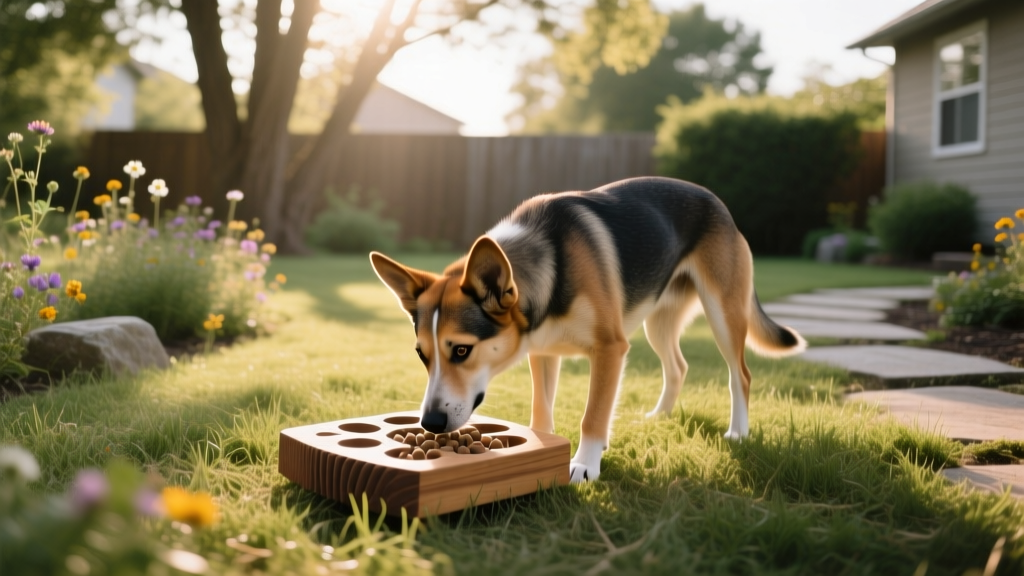
- Add daily mental enrichment: Use puzzle feeders (Outward Hound Nina Ottosson Dog Brick, ~$15–$25) for at least one meal per day. A dog working for food for 15–20 minutes burns mental energy equivalent to a 30-minute walk.
- Introduce scent work: Hide treats in the yard in designated areas away from garden beds. This channels the dog's nose-driven digging instinct into a controlled game. Start with treats placed on the surface, then partially buried, then buried 2–3 inches deep in approved zones.
- Rotate toys every 48 hours: Provide 3–4 toys at a time, swap them out to maintain novelty. Include at least one chew item (bully stick, yak cheese chew) daily.
Phase 2: Create an Approved Digging Zone (Weeks 2–4)
Goal: Give instinctual diggers an acceptable outlet rather than trying to suppress the behavior entirely.
- Build a dig pit: Use a child's sandbox or a 4×4 ft wooden frame filled with a mix of play sand and loose topsoil (about 12–18 inches deep). Cost: $40–$80 for materials.
- Bury high-value items: Place frozen Kongs, bully sticks, or favorite toys just below the surface of the dig pit. Let the dog discover them. This builds a strong positive association with the approved zone.
- Make non-approved areas less appealing: Use the deterrent fill methods described in the management section. The contrast between the rewarding dig pit and the unrewarding rest of the yard teaches the dog where digging "pays off."
- Reinforce dig pit use: When you catch your dog digging in the pit, calmly praise and toss a treat. Use a cue like "go dig!" to put the behavior on command.
Phase 3: Interrupt and Redirect (Weeks 3–6)
Goal: Teach the dog that digging in non-approved areas results in the activity ending, not in punishment.
- Supervise all yard time during this phase. Keep a long line attached for quick redirection.
- When the dog begins digging in a non-approved area: Use a calm interrupter — say "oops" or "let's go" in a neutral tone. Guide the dog away from the spot using the long line or by tossing a treat 6–8 feet away.
- Redirect to an incompatible behavior: Ask for a sit, down, or "come" and reward generously. Then direct the dog to the approved dig pit or initiate a different activity (fetch, training session).
- Never punish after the fact. If you find a hole but didn't see the dog dig it, management has failed — the dog had unsupervised access. Go back and tighten your management protocols. Rubbing the dog's nose in the hole or yelling accomplishes nothing; the dog cannot connect your anger to a behavior that happened minutes or hours ago.
Phase 4: Address Anxiety-Driven Digging (Weeks 4–12)
Goal: For dogs whose digging stems from separation anxiety, noise phobia, or general anxiety.
- Identify the anxiety trigger: Keep a behavior log for 7 days — note time of day, weather conditions, household activity, and what happened before the digging episode.
- Implement counter-conditioning: For separation anxiety, practice graduated departure desensitization — pick up keys, put on shoes, walk to the door, then sit back down. Repeat until the dog shows no anxiety response, then gradually increase to stepping outside for 5 seconds, 15 seconds, 1 minute, etc. Pair each step with a high-value food puzzle (frozen Kong stuffed with chicken and peanut butter).
- For noise phobias: Use a desensitization protocol with recorded storm/firework sounds played at very low volume (barely audible) during positive activities like feeding or play. Gradually increase volume over weeks as long as the dog remains relaxed.
- Consider calming aids: Adaptil (dog-appeasing pheromone) diffusers ($25–$35) or collars ($20–$30), Thundershirts ($40–$50), or discuss anti-anxiety medication (fluoxetine, clomipramine, trazodone) with your veterinarian for severe cases. Medication is not a last resort — it can lower anxiety enough for training to take hold.
Tools That Help vs. Tools to Avoid
The right tools support your training plan. The wrong tools create fallout — fear, aggression, or suppressed behavior that resurfaces worse than before.
| Category | Recommended Tools | Why They Work | Price Range |
|---|---|---|---|
| Mental enrichment | Nina Ottosson Dog Brick, Kong Classic, Snuffle Mat, Toppl | Channel foraging instinct, reduce boredom, tire the dog mentally | $10–$30 each |
| Physical containment | Long line (15–30 ft), exercise pen, baby gates | Allow supervision without constant leash tension, restrict access to dig zones | $15–$45 |
| Dig pit supplies | Sandbox frame, play sand, buried treat toys | Provide acceptable outlet for breed-driven digging instinct | $40–$80 total |
| Calming aids | Adaptil diffuser/collar, Thundershirt, calming chews (Zesty Paws, Solliquin) | Reduce baseline anxiety, support counter-conditioning work | $20–$55 |
| Deterrents (environmental) | Chicken wire buried at fence line, gravel fill, citrus peel mulch | Make non-approved areas physically or sensorially unpleasant | $15–$40 |
Tools and Methods to Avoid
The following aversive methods are ineffective for digging and carry documented risks of behavioral fallout, according to the AVSAB's position statement on punishment:
- Shock collars / electronic fences: Pain-based suppression of digging can create fence-line fear, redirected aggression, or generalized anxiety. Dogs may associate the shock with whatever they happen to see (a child, another dog) rather than the digging itself.
- Burying sharp objects or mousetraps in holes: Risk of serious paw or facial injury. This is animal cruelty in many jurisdictions.
- Alpha rolls or physical punishment: Dominance-based corrections have been debunked by modern canine science. They damage trust and increase fear-based behaviors.
- Yelling or spraying with water: Teaches the dog to dig when you're not watching rather than stopping the behavior. Creates fear of the owner.
- Ammonia or chemical repellents in holes: Risk of chemical burns to paw pads, respiratory irritation, and environmental contamination. If ingested, contact ASPCA Animal Poison Control at (888) 426-4435 immediately (24/7, consultation fee applies).
Realistic Progress Timeline: What to Expect
There is no "7-day fix" for digging. Behavior change depends on the root cause, the dog's reinforcement history, breed predisposition, and your consistency. Here's a realistic framework based on typical cases:
| Root Cause | Initial Improvement | Reliable Change | Notes |
|---|---|---|---|
| Boredom / under-stimulation | 1–2 weeks | 3–4 weeks | Fastest to resolve once enrichment needs are met. Relapses occur if exercise drops. |
| Instinctual / breed-driven | 2–4 weeks | 6–8 weeks | Digging won't disappear — it redirects to the approved zone. Ongoing management required. |
| Comfort-seeking (heat) | Immediate with management | N/A (seasonal) | Provide cooling alternatives (cooling mats, shaded dig pit, kiddie pool). Resolves with environmental change. |
| Prey-driven | 1–3 weeks | 4–6 weeks | Depends on eliminating the prey source. Relapses if new rodents move in. |
| Anxiety / separation anxiety | 4–8 weeks | 3–6 months | Slowest to resolve. Often requires veterinary support (medication) alongside behavioral work. |
Progress is not linear. Expect setbacks during weather changes, routine disruptions, or when new stressors are introduced. A dog who has dug daily for two years will take longer to retrain than a dog who started digging three weeks ago. The reinforcement history matters enormously.
When to Hire a Professional: Behaviorist vs. Trainer
Seek professional help if any of the following apply:
- Digging is paired with escape attempts and your dog has successfully gotten loose
- The behavior is accompanied by other anxiety signs: self-injury, vocalization for hours, destruction of door frames or windows
- You've followed the protocol above consistently for 6+ weeks with no improvement
- The digging started suddenly in an adult dog with no prior history (possible medical or acute stress trigger)
- You find yourself frustrated to the point of considering aversive methods — a professional can keep you on a humane, effective path
Who to Hire
| Professional Type | Credentials to Look For | When to Use | Typical Cost |
|---|---|---|---|
| Certified Dog Behavior Consultant | CDBC (IAABC), CPDT-KA with behavior specialization | Moderate digging problems, boredom/instinct-based issues, mild anxiety | $100–$200/hour or $500–$1,200 for a multi-session package |
| Veterinary Behaviorist | DACVB (Diplomate of the American College of Veterinary Behaviorists) | Severe anxiety, self-injury, medication management, cases unresponsive to standard training | $250–$500 initial consultation + $100–$200 follow-ups. There are approximately 100 DACVB diplomates in the US — many offer telemedicine consults. |
| Certified Professional Dog Trainer | CPDT-KA or CPDT-KSA (Certification Council for Professional Dog Trainers) | Basic redirection training, enrichment planning, dig pit setup guidance | $75–$150/hour for private sessions |
You can find credentialed professionals through the International Association of Animal Behavior Consultants directory or the CCPDT trainer search. Ask any professional about their training methodology — if they recommend dominance theory, alpha rolls, or shock collars, find someone else.
Prevention: Setting Puppies and Newly Adopted Dogs Up for Success
Preventing digging habits from forming is significantly easier than modifying established behavior. If you're bringing home a puppy or a newly adopted adult dog, implement these strategies from day one:
For Puppies (8 weeks – 6 months)
- Provide appropriate digging outlets early: Set up a dig box before the puppy discovers the joy of excavating your flower beds. Bury toys and treats at varying depths to build the habit of digging only in the approved zone.
- Supervise all outdoor time: Puppies explore the world with their mouths and paws. Unsupervised yard access teaches them that digging anywhere is rewarding.
- Meet enrichment needs through structured play: Short training sessions (5 minutes, 3–4 times daily), puzzle feeders, and supervised socialization prevent the boredom that leads to self-entertainment digging.
- Avoid inadvertently reinforcing digging: If a puppy digs and you laugh, chase them, or engage — you've just made digging a game that earns attention. Instead, calmly redirect to an appropriate activity.
For Newly Adopted Adult Dogs
- Expect a 2–4 week decompression period: Newly adopted dogs often display stress behaviors (including digging) during the transition to a new home. The "3-3-3 rule" — 3 days to decompress, 3 weeks to learn routine, 3 months to feel at home — is a useful framework.
- Restrict yard access initially: Use a long line or accompany the dog outside for the first 2–3 weeks. Learn their habits and preferences before giving free-range access.
- Establish a consistent exercise and enrichment schedule: Predictability reduces anxiety-driven digging. Feed, walk, and play at the same times daily.
- Document digging behavior: Keep a brief log for the first 2 weeks — when, where, and what seemed to trigger it. This data helps you identify the root cause quickly rather than guessing.
Frequently Asked Questions
Is digging normal dog behavior?
Yes — digging is a natural, species-typical behavior in dogs. Many breeds were developed specifically for digging (terriers for vermin control, dachshunds for badger hunting). The question isn't whether digging is normal but whether it's occurring at a frequency or location that creates problems for you. Moderate digging in appropriate areas is healthy self-expression. Excessive, compulsive, or escape-driven digging signals an unmet need.
Should I use punishment to correct digging?
No. Punishment — whether physical (alpha rolls, hitting), electronic (shock collars), or verbal (yelling) — suppresses the behavior temporarily without addressing the cause. The AVSAB position statement on punishment documents risks including increased fear, anxiety, and aggression. Punishment also teaches the dog to dig when you're not present rather than stopping the behavior. Positive reinforcement-based redirection and environmental management are both more effective and more humane.
How long will it take to stop my dog from digging?
Realistic timelines range from 2 weeks (boredom-based digging with immediate enrichment changes) to 6 months (severe anxiety-driven digging requiring medication and counter-conditioning). Most owners see meaningful improvement within 3–6 weeks of consistent protocol implementation. Breed-driven instinctual digging is managed and redirected rather than eliminated — expect ongoing maintenance.
My dog only digs when I'm not home. What does that mean?
Digging that occurs exclusively during owner absence strongly suggests separation anxiety or isolation distress, especially if paired with other signs: vocalization (neighbors report barking/howling), destruction near exit points, house soiling in a previously house-trained dog, or excessive greeting behavior when you return. This requires a separation anxiety-specific protocol (graduated departure desensitization) and often benefits from veterinary consultation regarding anti-anxiety medication.
Will getting a second dog stop the digging?
Not reliably, and it carries significant risk. If the digging is boredom-driven, a second dog might provide social enrichment — but you might also end up with two diggers. If the digging is anxiety-driven, adding a second dog adds household stress. If it's breed-driven, the second dog may learn the behavior from the first. Address the underlying cause before considering a multi-dog household addition.
Are certain breeds more prone to digging?
Yes. Breeds with the strongest digging instincts include: terriers of all sizes (Jack Russell, Rat Terrier, Airedale, Cairn, West Highland White), dachshunds, Siberian Huskies, Alaskan Malamutes, Australian Shepherds, and Beagles. If you own one of these breeds, plan for a designated dig pit from the start rather than trying to suppress a behavior that's been bred into them for centuries.
My dog digs at their bed or carpet before lying down. Is that the same problem?
This is a different behavior called "nesting" or "circling" — a normal ancestral behavior where dogs pat down vegetation to create a comfortable resting spot. It only becomes a problem if it damages surfaces. Provide a dedicated dog bed with bolsters or a nesting-friendly blanket they can arrange without destroying furniture. This behavior is generally not modifiable through training since it's a pre-sleep ritual rather than a response to boredom or anxiety.
Aaron Whyte
All our authors care for dogs every day — read more of their work on the authors page.