How to Keep Dogs From Digging: A Complete Behavior Guide
Learn how to keep dogs from digging with expert-backed root cause analysis, step-by-step positive reinforcement training, and realistic timelines.

What Qualifies as Problem Digging in Dogs?
Digging is a natural canine instinct. Terriers were literally bred to dig out burrowing prey, and many northern breeds dig cooling pits in summer soil. But when does a natural behavior cross into a problem that needs intervention?
Digging Behavior Thresholds: Normal vs. Problematic
| Category | Normal Digging | Problem Digging |
|---|---|---|
| Frequency | Occasional (1–2 times per week) | Daily or multiple times per day |
| Location | Designated area or soft soil patches | Along fence lines, garden beds, escape attempts |
| Duration | 5–10 minutes then self-discontinues | 20+ minute obsessive sessions, difficult to interrupt |
| Context | After play, on warm days, burying items | When left alone, during storms, at barrier boundaries |
| Damage Level | Shallow depressions, cosmetic | Deep holes (12+ inches), damaged irrigation, fence undermining, paw pad injuries |
| Redirectability | Easily called away with treats or toys | Won't respond to recall, appears "locked in" |
Rule of thumb: If your dog's digging causes property damage exceeding $100 in repairs, creates escape routes, or results in injured paws or nails, it's crossed into problem territory requiring active intervention.
Why Does My Dog Dig? Root Cause Analysis
Before you can stop the digging, you need to understand why it's happening. The solution changes dramatically depending on the underlying motivation. Here are the five most common root causes, ranked by prevalence in behavior cases:
Diagnostic Framework: Identifying Your Dog's Digging Motivation
1. Boredom & Understimulation (Most Common — ~40% of cases)
- Signs: Dog digs when left alone in yard for 2+ hours, also chews fences, barks repetitively, or paces
- Breed predisposition: Working breeds (Huskies, Malamutes, Border Collies), sporting breeds (Pointers, Retrievers) with insufficient exercise
- Key indicator: Digging decreases on days with adequate physical and mental exercise
2. Prey Drive & Instinct (~25% of cases)
- Signs: Digging concentrated in specific spots, often near foundations, woodpiles, or garden edges where rodents or insects nest; dog shows intense focus, may freeze and listen before digging
- Breed predisposition: Terriers (Jack Russells, Rat Terriers, Dachshunds), Hounds (Beagles, Basset Hounds)
- Key indicator: Digging follows a pattern — same spots, often after rain when earthworms and grubs are active near the surface
3. Escape-Motivated & Separation Anxiety (~15% of cases)
- Signs: Digging exclusively along fence lines or under gates; accompanied by howling, pacing at barriers, attempts to bolt when gate opens; dog digs only when owner is absent or on the other side of the fence
- Breed predisposition: Huskies, Hounds, any dog with strong social bonding or wanderlust tendencies
- Key indicator: Digging occurs at perimeter boundaries, not in the middle of the yard; often paired with other escape behaviors
4. Temperature Regulation (~10% of cases)
- Signs: Dog digs shallow depressions in shaded areas, then lies in the cool dirt; behavior peaks during hot weather (above 80°F / 27°C); dog is otherwise calm and not destructive
- Breed predisposition: Brachycephalic breeds (Bulldogs, Pugs), thick-coated northern breeds (Samoyeds, Chow Chows), overweight dogs
- Key indicator: Digging almost exclusively in summer months, always in shade, dog uses the hole as a cooling bed
5. Hiding & Caching Resources (~10% of cases)
- Signs: Dog digs, places a bone, toy, or food item in the hole, then covers it; may also dig up previously buried items; often done after receiving high-value treats
- Breed predisposition: Any breed, but especially common in Dachshunds, Terriers, and dogs from multi-dog households with resource competition
- Key indicator: Digging occurs within 10–15 minutes of receiving a chew, bone, or treat; dog checks on buried items periodically
When to See a Vet Before Starting Behavior Modification
Not all digging is behavioral. Certain medical conditions can trigger or intensify digging, and treating the behavior without addressing the underlying illness will fail. Run through this checklist before investing weeks in training:
Medical Rule-Out Checklist
Consult your veterinarian if your dog shows any of the following alongside digging behavior:
| Red Flag Symptom | Possible Medical Cause | Urgency |
|---|---|---|
| Sudden onset in a previously non-digging adult dog (age 3+) | Cognitive dysfunction, thyroid imbalance, neurological changes | Schedule within 2 weeks |
| Digging paired with excessive licking or chewing at paws | Allergies (environmental or food), interdigital cysts, pododermatitis | Schedule within 1 week |
| Digging only in one area of the yard, with apparent distress | Underground pest infestation attracting dog; possible exposure to rodenticides | Inspect yard immediately |
| Senior dog (age 8+) with new digging + disorientation | Canine cognitive dysfunction (CCD), vision loss | Schedule within 1 week |
| Intact female digging nests + nesting behavior | False pregnancy (pseudocyesis), hormonal changes | Schedule within 2 weeks |
| Digging paired with weight loss, increased thirst, restlessness | Hyperthyroidism (rare in dogs but possible), Cushing's disease, diabetes | Schedule within 1 week |
Always consult your veterinarian before beginning any behavior modification plan, especially if the digging is a new behavior in an adult dog or is accompanied by other physical symptoms. A basic wellness exam with bloodwork typically costs $150–$300 and can rule out the most common medical triggers.
Is Digging Normal Dog Behavior?
Yes — digging is a deeply ingrained canine instinct. The American Kennel Club notes that many breeds were specifically developed for digging-related work. Dachshunds were bred to dig into badger setts, Terriers to pursue foxes and rats underground, and northern breeds dig snow caves and earth pits for thermoregulation.
The goal isn't to eliminate digging entirely — that's unrealistic and unfair to the dog. Instead, the objective is to redirect the behavior to appropriate locations and reduce the frequency and destructiveness to a level you can live with. A dog that digs a designated sandbox is expressing natural behavior in an acceptable outlet. A dog that undermines your fence line and escapes into traffic is not.
Immediate Management: Stop the Damage While You Train
Behavior modification takes weeks to months. In the meantime, you need management strategies to prevent your dog from rehearsing the unwanted behavior. Every time your dog successfully digs an undesired hole, the behavior is reinforced — it's self-rewarding because it satisfies an instinctual drive. Here's how to interrupt the cycle:
Physical Barriers (Apply Immediately)
- Bury chicken wire (1-inch mesh, 19-gauge) 2–3 inches below the soil surface along fence lines. Dogs dislike the feel of wire under their paws. Cover with a thin layer of mulch or soil. Cost: $0.75–$1.50 per linear foot at hardware stores.
- Place large, flat river rocks (6–10 inches diameter) along the base of fences and around garden beds. Dogs cannot dig through rocks heavier than 15 lb each.
- Install an L-footer fence extension: Attach hardware cloth to the bottom of your existing fence, extending it 12–18 inches outward along the ground at a 90-degree angle, then bury or stake it. This prevents digging under the fence. Materials: approximately $3–$5 per linear foot.
- Use dig-proof ground covers like heavy-duty landscape fabric topped with 3–4 inches of crushed gravel in high-traffic digging zones.
Supervision & Interruption
- Never leave your dog unsupervised in the yard during the active training phase. If you can't watch them, bring them inside or use a secure, dig-proof pen.
- Interrupt digging calmly: Use a neutral interrupter cue like "Oops" or a kissy noise — not yelling. Then redirect to an approved activity (tug toy, sniffing game, designated dig pit).
- Limit yard time to 20–30 minutes when unsupervised. Extended solo yard time is the number one environmental factor in problem digging.
Environmental Enrichment (Deploy Same Day)
- Increase daily exercise: Add 20–30 minutes of structured walking or running. For high-energy breeds, aim for 60–90 minutes of combined physical and mental activity daily.
- Introduce food puzzle toys: The Kong Wobbler ($15–$20), Outward Hound Nina Ottosson puzzle feeders ($12–$30), or a snuffle mat ($15–$25) can absorb 15–30 minutes of mental energy that would otherwise go into digging.
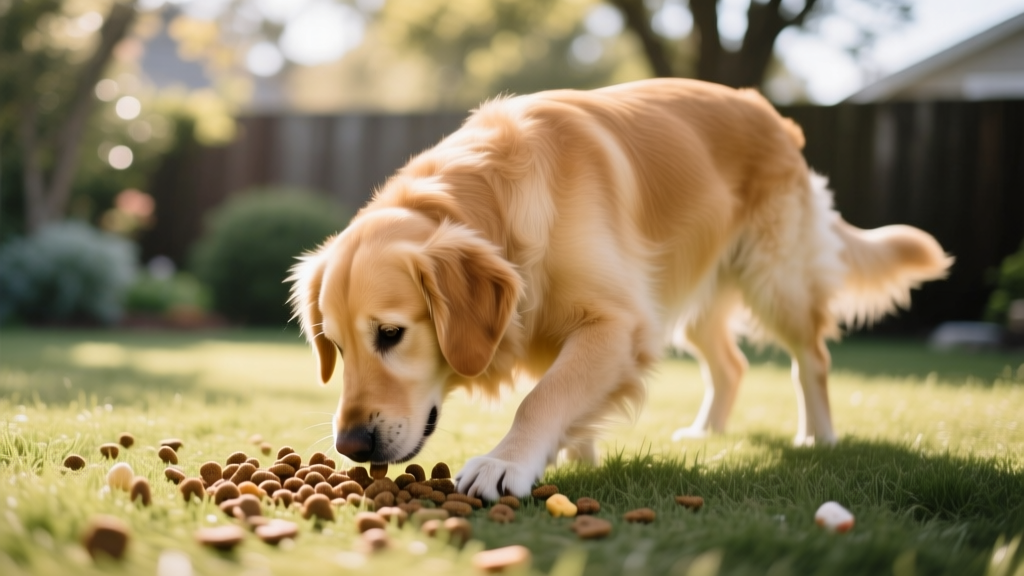
- Scatter feeding: Instead of bowl-feeding, scatter kibble across a grassy area. This triggers natural foraging behavior and tires the dog mentally.
Step-by-Step Training Protocol to Stop Unwanted Digging
Once you've ruled out medical causes and implemented management, begin this structured training protocol. This approach uses positive reinforcement, counter-conditioning, and redirection — methods endorsed by the American Veterinary Society of Animal Behavior (AVSAB), which recommends against punishment-based training due to its documented risks of worsening behavioral problems.
Phase 1: Build a Designated Dig Zone (Week 1–2)
- Choose a location: Pick a spot in your yard (minimum 3×3 feet) where digging is acceptable. A raised sandbox or a child's plastic wading pool filled with loose soil and sand works well.
- Make it attractive: Bury high-value items just below the surface — bully sticks, frozen Kong toys, favorite balls, or treat-stuffed puzzle toys. Start with items buried only 1–2 inches deep.
- Lead your dog to the pit: Use an enthusiastic "Go dig!" cue. Point to the pit, scratch the surface yourself to demonstrate, and praise heavily when your dog engages.
- Reward digging in the pit: Every time your dog digs in the approved zone, deliver a high-value treat (freeze-dried liver, chicken pieces) within 1–2 seconds. Pair with a verbal marker: "Yes! Good dig!"
- Practice 2–3 sessions per day, 5–10 minutes each, for the first two weeks.
Phase 2: Redirect Unwanted Digging (Week 2–4)
- Supervise all yard time. Keep your dog on a 15–20 foot long line (biothane or cotton, $15–$30) so you can gently guide them away from off-limits areas without chasing.
- When your dog begins digging in a prohibited spot: Use your interrupter cue ("Oops" or a gentle clap). Do not yell, grab the collar, or physically punish.
- Redirect immediately: Guide your dog to the designated dig pit using the long line. Use your "Go dig!" cue. When they dig in the pit, reward enthusiastically.
- If your dog won't redirect: End the yard session calmly. Bring them inside for 5 minutes, then try again. This teaches that digging in wrong spots = yard time ends, digging in right spot = rewards and continued freedom.
- Gradually increase the delay between redirect and reward so your dog learns to go to the pit independently.
Phase 3: Generalize & Fade Prompts (Week 4–8)
- Practice with increasing distractions: Have family members in the yard, leave toys scattered, simulate the conditions where your dog usually digs.
- Begin off-leash yard time with supervision. Watch for your dog to approach old digging spots. If they go to the pit instead, deliver a jackpot reward (3–5 treats in rapid succession).
- Reduce treat frequency to intermittent reinforcement — reward every 2nd or 3rd correct choice, then randomly. This actually strengthens the behavior long-term.
- Continue burying novel items in the dig pit 2–3 times per week to maintain its appeal. Rotate items to prevent habituation.
Phase 4: Maintenance (Ongoing)
- Keep the dig pit stocked and appealing. A neglected pit will lose its draw, and your dog may revert to old spots.
- Maintain adequate daily exercise and enrichment. Most digging regressions happen when owners reduce mental stimulation.
- Refresh physical barriers seasonally — check chicken wire for rust, ensure rocks haven't shifted, repair any fence gaps.
Tools That Help vs. Tools to Avoid
The right tools accelerate training. The wrong ones can worsen the problem — or cause harm. Here's an evidence-based breakdown:
| Tool | Type | How It Helps | Cost Range | Recommendation |
|---|---|---|---|---|
| Long line (15–20 ft) | Training equipment | Allows gentle redirection without chasing; maintains recall practice | $15–$35 | ✅ Recommended |
| Dig pit / sandbox | Environmental enrichment | Provides approved outlet for digging instinct | $20–$60 | ✅ Essential |
| Kong Classic / Wobbler | Food puzzle toy | Absorbs mental energy, reduces boredom-driven digging | $12–$22 | ✅ Recommended |
| Snuffle mat | Foraging enrichment | Engages scent-driven foraging behavior as alternative to digging | $15–$30 | ✅ Recommended |
| Lick mat (Hyper Pet, LickiMat) | Calming enrichment | Licking releases endorphins; reduces anxiety-driven digging | $8–$15 | ✅ Recommended |
| Adaptil Calm diffuser/collar | Pheromone calming aid | May reduce anxiety-driven digging; evidence is mixed but low-risk | $20–$35 | ⚠️ Supplemental only |
| Calming supplements (Zesty Paws, Solliquin) | Nutraceutical | L-theanine, chamomile, or casein-based; may support anxious dogs | $20–$40 | ⚠️ Consult vet first |
| Chicken wire / hardware cloth | Physical barrier | Prevents digging in specific zones | $0.50–$2.00/ft | ✅ Recommended |
| Shock collar / e-collar | Aversive punishment | Causes fear, pain; can increase anxiety and aggression | $30–$200 | ❌ Never use |
| Prong / choke collar | Aversive punishment | Pain-based; damages trachea; worsens stress behaviors | $15–$40 | ❌ Never use |
| Burying feces in holes | Punishment myth | Ineffective; dogs may eat feces (coprophagia); creates hygiene risk | Free | ❌ Never use |
| Spraying with hose / yelling | Positive punishment | Teaches dog to dig only when you're absent; damages trust | Free | ❌ Avoid |
Why Punishment Doesn't Work for Digging
Digging is a self-reinforcing behavior — the act itself is rewarding to the dog because it satisfies an instinctual drive. Punishment applied after the fact (finding a hole and scolding the dog) is meaningless because dogs cannot connect delayed consequences to past actions. Even punishment delivered during the act typically teaches the dog to dig only when you aren't watching — the behavior doesn't stop, it goes underground (literally).
Research published in the Journal of Veterinary Behavior has consistently shown that dogs trained with aversive methods display higher cortisol levels, more stress-related behaviors, and increased risk of aggression compared to dogs trained with positive reinforcement. The AVSAB's official position statement recommends against the use of punishment for behavior modification.
How Long Will It Take to Fix My Dog's Digging?
There is no universal timeline — progress depends on your dog's motivation, breed drive, age, how long the behavior has been rehearsed, and your consistency. Here are realistic expectations based on typical cases:
| Timeline | Expected Milestone | What You Should See |
|---|---|---|
| Week 1 | Management in place | Physical barriers installed, dig pit established, yard time supervised. Damage rate drops 50–70% through management alone. |
| Week 2–3 | Dog uses dig pit reliably with prompting | Your dog goes to the pit when cued and shows enthusiasm for buried items. Still attempts to dig elsewhere without supervision. |
| Week 4–6 | Redirection becomes habitual | Your dog begins choosing the dig pit independently 50–60% of the time. Interruption of unwanted digging is easier and faster. |
| Week 8–12 | Significant reduction in problem digging | Unwanted digging occurs rarely (1–2 times per week or less) and primarily when enrichment or exercise has lapsed. |
| 3–6 months | Maintenance phase | Digging is largely confined to the designated pit. Occasional regression possible during schedule changes, seasons, or stress events. |
| 6+ months | Long-term management | Behavior is manageable but never fully "cured" — instinct doesn't disappear. Ongoing enrichment and pit maintenance required. |
Important: Dogs with strong genetic digging drives (Terriers, Dachshunds, northern breeds) may never fully stop attempting to dig outside the pit. The goal is reliable redirection, not total elimination. Expect longer timelines (12–16 weeks to see consistent results) for breeds with high prey drive.
When to Hire a Professional Behaviorist
Most digging problems can be resolved with the protocol above. However, certain situations warrant professional intervention:
Hire a Certified Professional If:
- Escape-motivated digging is paired with separation anxiety — your dog panics when left alone, destroys property indoors, howls for extended periods, or has injured themselves trying to escape. This requires a structured desensitization protocol best guided by a professional.
- The digging is compulsive — your dog digs obsessively for 30+ minutes, cannot be interrupted even with high-value food, appears "tranced," or digs to the point of paw pad injury.
- You've followed the protocol for 8+ weeks with no improvement — this suggests either a misidentified root cause or an underlying medical issue that needs further investigation.
- The digging is paired with aggression — your dog resource-guards dig sites, growls or snaps when interrupted, or shows aggression around buried items.
- Your dog has escaped through a dug hole and been lost or injured — this is a safety emergency requiring immediate professional management.
Who to Hire:
| Professional Type | Credentials to Look For | When to Use | Typical Cost (2026) |
|---|---|---|---|
| Certified Applied Animal Behaviorist | CAAB or ACAAB (PhD or DVM + behavior residency) | Complex cases: compulsive behavior, severe anxiety, aggression comorbidity | $200–$400/session |
| Veterinary Behaviorist | DACVB (board-certified, can prescribe medication) | Cases requiring medication + behavior modification; medical-behavioral overlap | $250–$500/consult |
| Certified Professional Dog Trainer | CPDT-KA or CPDT-KSA (knowledge-assessed, force-free) | Straightforward digging with clear boredom or prey-drive motivation | $80–$150/session |
| IAABC Certified Dog Behavior Consultant | CDBC (International Association of Animal Behavior Consultants) | Mid-level complexity: anxiety-driven digging, multi-dog households | $100–$200/session |
Verify credentials through the Certification Council for Professional Dog Trainers (CCPDT) directory or the AVSAB member directory. Avoid trainers who advertise "guaranteed results" or who use e-collars, prong collars, or "dominance" methods.
Preventing Digging in Puppies and Newly Adopted Dogs
Prevention is always easier than correction. If you're bringing home a puppy or a newly adopted adult dog, implement these strategies from day one:
For Puppies (8 weeks – 6 months)
- Set up a dig pit before the puppy arrives. Make it the most interesting spot in the yard with buried toys and treats. Puppies explore with their mouths and paws — give them a target immediately.
- Supervise all outdoor time. A puppy left alone in a yard will self-entertain, and digging is one of the most accessible self-reinforcing behaviors available.
- Provide 3–5 minutes of structured enrichment per month of age, twice daily. An 8-week-old puppy needs 15–20 minutes of mental activity per session. Snuffle mats, frozen Kongs, and training sessions all count.
- Never leave chew toys or bones unattended in the yard. Puppies will instinctively bury them, which initiates the digging-burying cycle.
For Newly Adopted Adult Dogs
- Implement a 2-week "decompression" period with minimal unsupervised yard access. Newly adopted dogs may dig due to stress from environmental transition — this often resolves as the dog settles.
- Assess exercise needs proactively. Shelters often cannot provide adequate exercise, so adopted dogs may have pent-up energy that manifests as digging. Start with 45–60 minutes of structured activity daily and adjust based on behavior.
- Ask the shelter or rescue about the dog's history. Dogs from rural environments or those kept in outdoor kennels may have established digging habits that need redirection.
- Install physical barriers immediately along fence lines if the dog is a breed predisposed to digging or escape behavior. Prevention is cheaper than repairing undermined fences.
Frequently Asked Questions
Why does my dog dig holes and then lie in them?
This is thermoregulation behavior. The soil just a few inches below the surface is significantly cooler than ambient air temperature in summer. Dogs, especially thick-coated or brachycephalic breeds, instinctively dig cooling pits. The solution is to provide alternative cooling options: a shaded cooling mat ($20–$40), a shallow kiddie pool with a few inches of water, or a raised cot in a breezy, shaded area. Ensure your dog has access to these alternatives before the digging starts — place them in the yard before temperatures peak.
My dog only digs when I'm not home. Is this separation anxiety?
Possibly, but not necessarily. Digging only when alone can indicate boredom (the dog has nothing else to do), escape motivation (the dog wants to find you or roam), or separation anxiety (the dog is in genuine distress). The differentiator is the full behavioral picture. Separation anxiety typically includes indoor destruction, inappropriate elimination, excessive vocalization (neighbors report prolonged howling), drooling, and panting. If your dog is calm indoors but digs only outdoors when alone, boredom or escape motivation is more likely. A certified behaviorist can help distinguish these through a structured assessment.
Will getting my dog a companion stop the digging?
Not reliably, and it may make it worse. While some dogs dig less when they have a playmate, many simply dig together — now you have two dogs destroying your yard. Adding a second dog also doubles your exercise, enrichment, and management workload. Address the current dog's digging through training and enrichment before considering a second dog as a "solution." If you do add a companion, choose based on temperament compatibility, not as a behavior fix.
Should I use cayenne pepper or vinegar in the holes to deter my dog?
These are commonly recommended online but are unreliable and potentially harmful. Cayenne pepper can cause eye irritation, paw pad burning, and respiratory discomfort if inhaled. Vinegar may temporarily deter some dogs but washes away with rain and doesn't address the underlying motivation. Both are band-aid solutions that fail to teach the dog what to do instead. Physical barriers (chicken wire, rocks) combined with positive reinforcement training are far more effective and humane.
My terrier digs no matter what I do. Is this just the breed?
Terrir breeds were selectively bred for hundreds of years to dig — it's one of the strongest instinctual drives in the canine world. You likely cannot eliminate digging in a Jack Russell Terrier, Dachshund, or Rat Terrier entirely. However, you can channel it. A well-maintained dig pit with regularly rotated buried treasures, combined with 60+ minutes of daily physical and mental exercise, will reduce unwanted digging to manageable levels. Accept that some digging will happen, and focus on directing it to acceptable outlets rather than fighting genetics.
How long will it take to stop my dog from digging?
Most dogs show significant improvement within 4–8 weeks of consistent training and management. Full reliability typically takes 3–6 months. Dogs with strong genetic digging drives (terriers, hounds, northern breeds) may require ongoing management indefinitely. The key variables are consistency of supervision, adequacy of exercise and enrichment, and whether the root cause has been correctly identified. If you see no improvement after 8 weeks, consult a certified behavior professional for a reassessment.
Digging is one of the most solvable behavior problems in dogs when you approach it systematically: identify the cause, rule out medical issues, manage the environment, and train an alternative behavior using positive reinforcement. Patience and consistency — not punishment — are what transform a yard-destroying digger into a dog who channels that instinct into an approved outlet.
Anouk Beaumont
All our authors care for dogs every day — read more of their work on the authors page.