How to Housebreak an Older Dog: A Complete Behavior Guide
Learn how to housebreak an older dog with vet-approved behavior protocols, medical rule-outs, and positive reinforcement training steps that actually work.

What It Means When an Older Dog Isn't Housebroken
Housebreaking (or house training) an older dog isn't just about the occasional accident. A genuine housebreaking problem exists when a dog over 6 months of age consistently eliminates indoors more than twice per week despite having regular outdoor access. This threshold matters because isolated incidents can stem from a one-time stomach upset, a schedule change, or a missed walk — not a behavioral pattern.
Housebreaking Problem Threshold: An adult or senior dog (6+ months) that urinates or defecates inside the home 3 or more times per week over a 2-week period, excluding confirmed medical episodes. Sub-threshold accidents (1–2 per week) often resolve with schedule adjustments alone.
Older dogs arrive in homes through various routes — shelter adoptions, family rehoming, or even dogs that were partially trained as puppies but developed regression. According to the ASPCA, house soiling is among the top five behavioral reasons dogs are surrendered to shelters, which means many adoptable older dogs carry this baggage into new homes.
The good news: dogs of any age can learn appropriate elimination habits. The process simply requires understanding why the behavior exists, ruling out medical contributors, and applying consistent, positive-reinforcement-based protocols.
Why Does My Older Dog Keep Having Accidents Indoors?
Before labeling the problem as "stubbornness" or "spite" — neither of which are real canine motivations — it's critical to identify the actual root cause. Dogs don't eliminate indoors to punish their owners. They do it because something in their environment, body, or history makes indoor elimination feel normal or necessary.
Five Common Root Causes of Indoor Elimination in Older Dogs:
- Medical conditions — Urinary tract infections, diabetes, kidney disease, Cushing's disease, and canine cognitive dysfunction (CCD) all increase urgency or frequency. A 2023 study in the Journal of Veterinary Internal Medicine found that 38% of dogs presented for house soiling had an underlying medical cause.
- Incomplete or inconsistent prior training — Dogs from shelters, puppy mills, or homes where training was never completed lack a clear "outside only" concept. They may have spent months or years eliminating on concrete, newspaper, or carpet without correction.
- Anxiety and stress — Separation anxiety, environmental changes (moves, new family members, construction noise), and generalized anxiety can trigger submissive urination or stress-related elimination. Dogs with anxiety often eliminate in specific indoor locations — near doors, on the owner's bed, or in corners.
- Substrate preference — Some dogs develop a strong preference for certain surfaces. A dog that lived on artificial turf or indoor potty pads may seek out similar textures (area rugs, bath mats) in a new home. This is especially common in small breeds and dogs raised in apartments.
- Marking behavior — Intact dogs (and some neutered/spayed dogs) may urine-mark territory indoors, particularly after a move, the introduction of a new pet, or when detecting another dog's scent. Marking typically involves small amounts of urine on vertical surfaces and is distinct from full-bladder elimination.
Medical Rule-Out: When to See Your Vet First
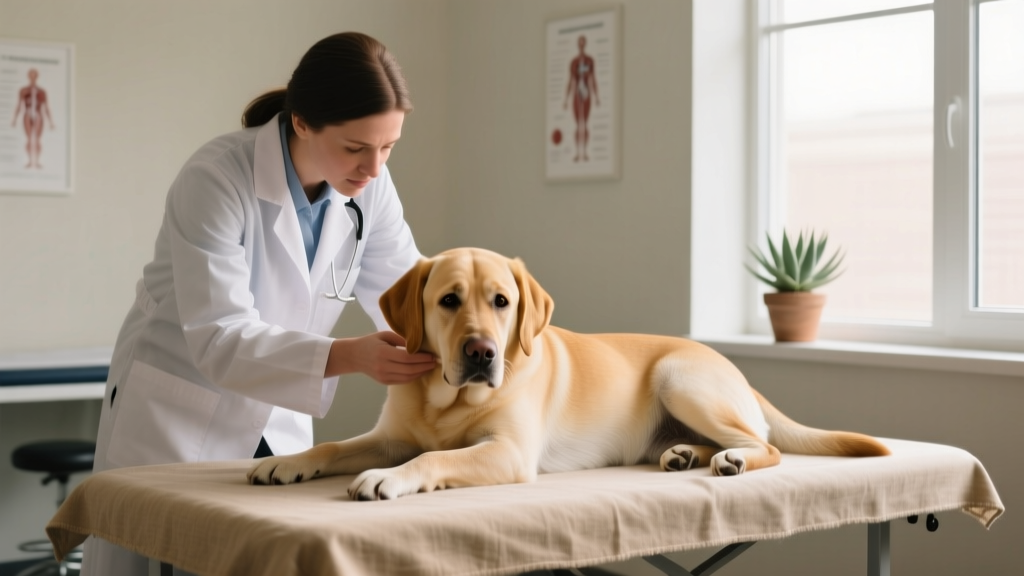
Behavior modification will fail if a medical condition is driving the accidents. Before starting any training protocol, schedule a veterinary exam. This is non-negotiable for older dogs, especially those over 7 years of age or dogs that were previously house-trained and have suddenly regressed.
Ask your veterinarian to evaluate for these conditions:
- Urinalysis and urine culture — Rules out UTI, crystals, and blood in urine. Cost: $50–$120 depending on lab.
- Blood chemistry panel (CBC + chemistry) — Screens for diabetes mellitus, kidney disease, liver disease, and Cushing's disease. Cost: $100–$250.
- Thyroid panel (total T4, free T4, TSH) — Hypothyroidism can contribute to lethargy and altered elimination patterns. Cost: $80–$150.
- Neurological assessment — For dogs showing signs of canine cognitive dysfunction (disorientation, altered sleep-wake cycles, house soiling in previously trained dogs). Your vet may recommend an MRI or refer to a veterinary neurologist if spinal issues like IVDD are suspected. Neurology consult: $200–$500.
- Orthopedic evaluation — Dogs with hip dysplasia, arthritis, or mobility issues may avoid going outside because stairs, slippery floors, or cold weather cause pain. If your dog hesitates at the door or seems reluctant to walk, mention this specifically.
Once your veterinarian confirms your dog is medically clear — or once any identified conditions are being managed — you can move forward with behavioral housebreaking. Keep in mind that some medical conditions (like chronic kidney disease or CCD) may require ongoing management alongside training, and your dog may always need more frequent outdoor breaks.
Always consult your veterinarian before beginning any behavior modification program, especially for senior dogs or dogs with known comorbidities.
Immediate Management: Stop Accidents While You Train
Training takes time. In the meantime, every indoor accident reinforces the habit. Management means controlling your dog's environment so that mistakes simply can't happen while the new behavior is being built.
The Supervision Protocol
For the first 2–4 weeks of retraining, your dog should never have unsupervised access to the full house. Use one of these strategies:
- Tethering: Attach your dog to you with a 6-foot leash clipped to your belt. They go where you go. This prevents sneaking off to a back bedroom to eliminate.
- Confinement: Use a crate (sized so the dog can stand, turn, and lie down but not eliminate in one corner and sleep in another) or a gated area with easy-to-clean flooring. Dogs naturally avoid soiling their sleeping area, making crates powerful housebreaking tools.
- Baby gates: Block access to carpeted rooms or previously soiled areas. Restrict your dog to tile, hardwood, or laminate areas where you can monitor them easily.
Enzymatic Cleaning Is Mandatory
Standard household cleaners don't remove the uric acid crystals that dogs can smell long after humans can't. If your dog can detect residual urine scent, they'll return to that spot. Use an enzymatic cleaner specifically formulated for pet urine — products like Nature's Miracle Advanced or Rocco & Roxie Professional Strength. Saturate the area fully (not just the surface), allow it to dwell for 10–15 minutes, and let it air-dry completely. For carpet padding that has been repeatedly soiled, you may need to pull up the carpet, treat the subfloor, and replace the padding. A blacklight (UV flashlight, $15–$25) can reveal old urine stains you didn't know existed.
Step-by-Step Housebreaking Protocol for Older Dogs
Phase 1: Establish a Schedule (Weeks 1–2)
- Take your dog outside on leash to a designated elimination spot first thing in the morning, after every meal, after naps, after play sessions, and before bed. For most adult dogs, this means 5–7 outdoor trips per day during retraining.
- Use a consistent verbal cue — "go potty," "do your business," or whatever phrase you prefer — said in a calm, neutral tone as your dog begins to eliminate. Don't say it before they start; pair it with the action.
- Immediately reward with a high-value treat (real chicken, cheese, or freeze-dried liver, not dry kibble) within 1–2 seconds of finishing. The treat must be delivered outside, at the elimination spot, not after returning indoors.
- After eliminating, give 5–10 minutes of supervised free time or a walk as a "bonus reward." This teaches the dog that eliminating outside leads to fun, not just going back inside immediately.
- Keep a housebreaking log (a simple notebook or phone note) recording: time outside, whether the dog eliminated, and what they did (urination, defecation, or both). This data reveals patterns within 5–7 days.
Phase 2: Increase Freedom Gradually (Weeks 3–5)
- Once your log shows 14 consecutive days with zero indoor accidents, begin expanding your dog's indoor access one room at a time.
- Start with the room closest to your primary living area. Allow 30–60 minutes of supervised access, then return to the confined area.
- If an accident occurs in the newly accessible room, reduce freedom back to the previous level for another 7 days before trying again.
- Continue all outdoor trips on schedule. Do not reduce frequency during this phase.
Phase 3: Fade the Schedule (Weeks 6–10)
- Begin spacing outdoor trips by 15–30 minute increments. If you were going out every 2 hours, try every 2.5 hours for 3–4 days.
- If accidents occur at the new interval, revert to the previous schedule for 5–7 days.
- Most adult dogs can eventually hold for 4–6 hours during the day. Overnight, healthy adult dogs can typically hold 7–9 hours.
- Continue rewarding outdoor elimination, but begin transitioning from every-time treats to intermittent reinforcement (treat every 2nd or 3rd time) to maintain the behavior long-term.
Counter-Conditioning for Surface Preferences
If your dog prefers eliminating on carpet or rugs, you'll need to change their association with those surfaces. Place a piece of the preferred substrate (a small carpet square, for instance) outside in the designated elimination area. Gradually, over 2–3 weeks, reduce the size of the carpet piece until your dog is eliminating on grass or gravel alone. Simultaneously, cover indoor carpeted areas with plastic sheeting or aluminum foil — textures dogs dislike — to break the indoor habit.
Tools That Help vs. Tools to Avoid
The right equipment makes housebreaking faster and less frustrating. The wrong tools can damage your relationship with your dog and create new behavioral problems.
| Tool | Category | How It Helps | Cost Range |
|---|---|---|---|
| Appropriately sized wire or plastic crate (MidWest iCrate or Vari Kennel) | ✅ Recommended | Uses natural den instinct to prevent indoor elimination during unsupervised periods | $35–$80 |
| Enzymatic pet urine cleaner (Nature's Miracle, Rocco & Roxie) | ✅ Recommended | Removes uric acid residue that attracts dogs back to soiled spots | $12–$25 per bottle |
| UV blacklight flashlight | ✅ Recommended | Reveals hidden urine stains on carpet, walls, and furniture | $15–$25 |
| High-value training treats (Zuke's Mini Naturals, freeze-dried liver) | ✅ Recommended | Provides strong reinforcement for outdoor elimination | $8–$18 per bag |
| Belly bands (male dogs) or dog diapers | ✅ Management aid | Prevents mess during transition period; not a training solution but reduces cleanup stress | $15–$35 for a set of 3 |
| Indoor grass potty systems (Fresh Patch, DoggieLawn) | ⚠️ Situational | Useful for high-rise apartment dwellers or mobility-limited owners; can create indoor surface preference if not phased out | $30–$50 per unit + subscription |
| Shock collars / e-collars | ❌ Avoid | Punishment for elimination creates fear of eliminating in front of the owner, leading to hiding behavior and increased anxiety | N/A |
| Rubbing dog's nose in waste | ❌ Avoid | Teaches the dog to fear the owner; does not create an association between the act and the punishment since dogs cannot connect delayed consequences to past actions | N/A |
| Alpha rolls / physical punishment | ❌ Avoid | Increases anxiety and can trigger submissive urination, making the problem worse | N/A |
Realistic Timeline: What Progress Actually Looks Like
One of the most common questions from frustrated owners is "how long will it take to fix this?" The honest answer depends on the root cause, the dog's history, and your consistency. Here's a realistic framework based on typical cases:
| Milestone | Typical Timeline | What It Looks Like |
|---|---|---|
| Pattern identification | 5–7 days | Your housebreaking log reveals when and where accidents happen, and you've adjusted the schedule accordingly |
| Reduced accidents | 2–3 weeks | Accidents drop by 50–75% with management and scheduled outdoor trips |
| Reliable with supervision | 4–6 weeks | Zero accidents when dog is supervised or confined; occasional accident only when management lapses |
| Reliable with limited freedom | 8–12 weeks | Dog can access 2–3 rooms without accidents during the day |
| Fully housebroken | 3–6 months | Full house access with zero to rare accidents (less than 1 per month); dog signals or waits for outdoor trips |
Dogs with severe anxiety, long shelter histories, or cognitive decline in senior dogs may take longer — sometimes 6–12 months for reliable habits. Dogs with simple schedule issues or mild substrate preferences often improve within 3–4 weeks. There are no guaranteed timelines, and any program promising to "fix your dog in 7 days" is misleading.
Should I Use Punishment to Correct Indoor Accidents?
No. Punishment-based correction is counterproductive for housebreaking at every level. Here's why, from a canine learning science perspective:
Dogs associate consequences with whatever they're doing in the exact moment the consequence occurs. If you come home and find a puddle, then scold your dog, they associate your arrival and your angry tone with punishment — not with the puddle that happened 20 minutes ago. This creates a dog that fears your return and may begin hiding to eliminate (behind furniture, in closets), making the problem harder to manage.
Even catching your dog in the act and yelling "no" can backfire. Many dogs learn that eliminating in front of you is dangerous, so they simply wait until you leave the room or until they're alone. This is why punishment-based approaches often appear to "work" for a week or two before the dog starts eliminating in hidden locations.
The American Kennel Club and the American Veterinary Society of Animal Behavior both recommend positive reinforcement as the standard for house training. If you catch your dog mid-accident, calmly interrupt with a neutral sound ("oops" or a clap), immediately take them outside to finish, and reward the outdoor completion. Then clean the indoor spot thoroughly with enzymatic cleaner.
When Do You Need a Professional Behaviorist?
Most housebreaking problems resolve with the protocol above. But some situations require professional intervention beyond what a general dog trainer can provide.
Seek a certified behaviorist (CAAB, DACVB, or IAABC-certified) if:
- Your dog has zero improvement after 6 weeks of consistent protocol implementation
- Accompanying behaviors suggest anxiety: pacing, panting, destructive behavior, vocalization, or self-injury when left alone
- Your dog shows aggression when interrupted during indoor elimination or when approached near soiled areas
- You're dealing with a senior dog showing signs of canine cognitive dysfunction (confusion, staring at walls, altered sleep patterns) alongside house soiling
- Multiple dogs in the household are marking, suggesting a social/territorial dynamic
Cost expectations:
- Certified professional dog trainer (CPDT-KA): $75–$150 per session
- Certified Applied Animal Behaviorist (CAAB): $150–$350 per consultation
- Veterinary Behaviorist (DACVB): $250–$500+ per consultation (may prescribe medication)
A general obedience trainer is appropriate for straightforward housebreaking coaching. A behaviorist is necessary when anxiety, aggression, or neurological factors are involved. The distinction matters — and the investment in the right professional saves months of frustration.
Prevention: Setting Up Puppies and Newly Adopted Dogs for Success
Whether you're bringing home a puppy or an adult rescue, prevention is always easier than retraining. Apply these principles from day one:
- Assume the dog is not housebroken until proven otherwise. Even dogs described as "house-trained" by shelters or previous owners may regress in a new environment due to stress. Start with full supervision and a tight schedule.
- Establish the outdoor elimination spot immediately. Take your dog to the same spot on leash for the first week. The consistent scent builds a strong location association.
- Feed on a schedule. Dogs that eat at consistent times (typically twice daily, morning and evening) develop predictable elimination patterns. Free-feeding (leaving food out all day) makes it nearly impossible to predict when your dog needs to go.
- Crate train from the start. A properly introduced crate becomes your dog's safe space and your most reliable management tool. The Merck Veterinary Manual notes that crate training leverages dogs' natural den instincts and is one of the most effective housebreaking aids when used correctly.
- Never punish accidents. From the first day home, use interruption-and-redirect, not punishment. This builds trust and keeps your dog comfortable eliminating in your presence — which is essential for outdoor training.
Frequently Asked Questions
Why does my older dog suddenly pee inside after being housebroken for years?
Sudden regression in a previously trained adult dog is a medical red flag until proven otherwise. Urinary tract infections, diabetes, kidney disease, Cushing's disease, and canine cognitive dysfunction (in dogs over 8–10 years) are the most common causes. Schedule a veterinary exam with a urinalysis and blood panel before assuming it's behavioral.
How do I stop my dog from peeing on the carpet specifically?
Block access to carpeted rooms with baby gates, cover high-target areas with plastic sheeting or aluminum foil, and clean all previously soiled carpet with enzymatic cleaner to remove residual scent. Simultaneously, build a strong outdoor habit with high-value rewards. If your dog has a substrate preference, transition a small carpet square to the outdoor elimination area and gradually reduce its size over 2–3 weeks.
Is it normal for an older rescue dog to have accidents in a new home?
Yes. Stress-related accidents in the first 2–4 weeks after adoption are extremely common and don't necessarily indicate a long-term housebreaking problem. The transition to a new environment disrupts routines and increases anxiety. Use management (crating, supervision, frequent outdoor trips) during the adjustment period, and most dogs settle into reliable habits within a month.
How long will it take to housebreak my older dog?
Most older dogs show significant improvement within 2–4 weeks of consistent schedule-based training with positive reinforcement. Full reliability (zero to rare accidents with full house access) typically takes 3–6 months. Dogs with anxiety-related elimination, long histories of indoor habits, or cognitive decline may need 6–12 months. Consistency is the single largest variable — inconsistent schedules can double or triple the timeline.
Should I use pee pads for my older dog?
Indoor pee pads can be useful in specific situations — high-rise apartments, extreme weather climates, or dogs with mobility limitations — but they teach the dog that eliminating indoors is acceptable. If your goal is full outdoor housebreaking, avoid pee pads during training. If you must use them for practical reasons, place them near the exit door and gradually move them outside over 2–3 weeks.
My dog only pees inside when I'm not home. Is this separation anxiety?
It could be. Elimination that occurs exclusively when the dog is left alone, especially combined with destructive behavior, vocalization (neighbors report barking or howling), pacing, or excessive salivation, strongly suggests separation anxiety. This requires a different treatment approach than standard housebreaking — typically involving desensitization to departure cues, counter-conditioning, and potentially anti-anxiety medication prescribed by your veterinarian or a veterinary behaviorist.
Can I housebreak a 10-year-old dog?
Yes, but with important caveats. Senior dogs may have reduced bladder capacity, cognitive decline, arthritis that makes going outside painful, or medical conditions requiring more frequent elimination. Work with your veterinarian to manage any age-related health issues, adjust your expectations for how long your dog can hold it (every 2–3 hours may be necessary), and use supportive tools like ramps for stairs and non-slip mats for slippery floors. A senior dog can absolutely learn new habits — it just requires patience and veterinary partnership.
Priya Sutaria
All our authors care for dogs every day — read more of their work on the authors page.