How Can I Train My Dog to Sit? A Step-by-Step Positive
Learn how to train your dog to sit using proven positive reinforcement methods.

Teaching your dog to sit is often the first training goal new owners pursue — and for good reason. A reliable sit serves as a foundation behavior for impulse control, polite greetings, and safety in everyday situations. But if you've been wondering how can I train my dog to sit and your pup seems confused, distracted, or simply uninterested, you're not alone. In my years working with dog owners, I've found that most "stubborn" sit problems trace back to unclear communication, poor timing, or an overlooked underlying issue rather than a willful dog.
This guide walks you through exactly what qualifies as a sit training problem, the root causes that sabotage progress, and a detailed step-by-step protocol grounded in positive reinforcement methods recommended by the AKC. Whether you're starting with an 8-week-old puppy or retraining an adult rescue, you'll find specific techniques, realistic timelines, and clear guidance on when to call in a professional.
What Qualifies as a Sit Training Problem?
Behavior Definition: Failure to Perform a Cued Sit
A sit training problem exists when a dog consistently fails to respond to the verbal cue "sit" or a hand signal within 3 seconds after the cue is given, despite at least 5 consecutive training sessions (each 3-5 minutes long) using clear luring or capturing techniques. This threshold applies to dogs over 12 weeks of age with no orthopedic limitations.
Normal vs. Problematic:
- Normal: Puppy sits for lure but not yet for verbal cue alone (first 1-2 weeks of training)
- Normal: Dog sits at home but not in high-distraction environments (proofing phase, weeks 2-6)
- Problematic: Dog physically cannot lower hindquarters or shows pain when attempting to sit
- Problematic: Dog has received 20+ sessions with consistent technique and still shows no comprehension
It's worth noting that a dog who sits perfectly in your kitchen but ignores the cue at a busy park isn't being disobedient — they simply haven't generalized the behavior across environments yet. This is a training gap, not a behavior problem, and the protocol below addresses it directly.
Why Won't My Dog Sit? Root Cause Analysis
Before layering on more training sessions, identify what's blocking your dog's progress. Most sit failures fall into one of these categories:
| Root Cause | Signs to Look For | Prevalence |
|---|---|---|
| Pain or Orthopedic Discomfort | Hesitation before sitting, "puppy sit" (sliding to one side), yelping, reluctance on hard surfaces | Common in large breeds, seniors, overweight dogs |
| Confusion / Unclear Cues | Dog offers other behaviors (spin, paw, lie down), looks at handler with tilted head, sits only when lured | Very common — #1 cause in first-time owners |
| Over-Arousal or Distraction | Dog can sit in quiet room but not outdoors, jumping, pulling, inability to focus for more than 2 seconds | Common in adolescent dogs (6-18 months) |
| Fear or Anxiety | Cowering, lip licking, whale eye, tail tucking when handler approaches or gives cue | More common in rescue dogs, under-socialized puppies |
| Low Motivation (Reward Value) | Dog sniffs treat then looks away, works for food at home but not outside, loses interest after 2-3 reps | Common with low-value treats or overfed dogs |
Notice that "spite" or "stubbornness" does not appear on this list. Dogs don't refuse sits out of defiance — they refuse because the behavior is physically uncomfortable, unclear, insufficiently rewarded, or emotionally overwhelming in that context. The AVMA emphasizes that punishment-based responses to training failures worsen the underlying problem and damage the handler-dog bond.
Medical Rule-Out: When to See Your Vet First
This is the step most online training guides skip entirely. If your dog physically cannot sit comfortably, no amount of treat-based motivation will fix the problem — and pushing through pain can worsen an injury.
Consult your veterinarian before continuing sit training if your dog shows any of these:
- Hip or knee pain indicators: Bunny-hopping gait, difficulty rising from rest, reluctance to climb stairs, sitting asymmetrically (one hip rotated out). These may signal hip dysplasia, cranial cruciate ligament (CCL) injury, or arthritis — conditions that affect up to 20% of adult dogs according to the Merck Veterinary Manual.
- Spinal or neurological signs: Dragging rear feet, knuckling over toes, sudden hind-end weakness, incontinence. These may indicate intervertebral disc disease (IVDD) or degenerative myelopathy and require immediate veterinary evaluation.
- Gastrointestinal discomfort: Bloated or tense abdomen, restlessness, repeated stretching (prayer position). Could indicate GI distress, pancreatitis, or the emergency condition gastric dilatation-volvulus (bloat).
- Recent surgery or injury: Any dog recovering from orthopedic surgery, TPLO, or spinal procedures should only resume sit training under veterinary guidance.
- Senior dogs (7+ years) with new-onset sit refusal: A previously compliant dog who suddenly won't sit likely has pain, not a training problem. A veterinary exam with orthopedic assessment typically costs $80-$250 depending on your region.
For puppies under 16 weeks, an awkward or slow sit is usually developmental — their proprioception and muscle coordination are still maturing. But if a puppy consistently slides to one side or seems to collapse rather than lower into a sit, mention it at your next wellness visit.
Immediate Management: Prevent Rehearsal While You Train
While you're building a reliable sit, you need management strategies that prevent your dog from practicing unwanted behaviors in situations where a sit would be expected. Every time your dog successfully jumps on a guest instead of sitting, that jumping behavior gets stronger.
Management tactics to use right now:
- Leash your dog for greetings: A 4-6 foot leash (not retractable) gives you physical control to prevent jumping while you train an alternative sit behavior. Hold the leash short enough that jumping is physically impossible.
- Use a "place" or mat behavior as a temporary substitute: If sit isn't reliable yet, send your dog to a designated mat or bed when guests arrive. This is easier to train initially because it involves going to something rather than inhibiting movement.
- Pre-feed before training sessions: A mildly hungry dog is more motivated. Feed 60-70% of your dog's daily caloric intake at meals and reserve 30-40% as training rewards. For a 50 lb (23 kg) dog eating 1,000 calories daily, that's roughly 300-400 calories in training treats.
- Control the environment: Train in low-distraction areas first (bathroom, quiet hallway). Close doors, put other pets away, and turn off the TV. You're setting up success, not testing willpower.
Step-by-Step Sit Training Protocol
This protocol uses positive reinforcement — specifically lure-reward and capture methods — which the ASPCA recommends as the most effective and humane approach to basic obedience training. No force, no physical manipulation, no aversive tools.
Phase 1: Lure and Reward (Days 1-5)
Goal: Dog follows a food lure into a seated position 8 out of 10 attempts.
- Setup: Stand in front of your dog in a quiet room. Have 10-15 pea-sized treats (soft, high-value: boiled chicken, cheese, or commercial training treats like Zuke's Mini Naturals at ~3 calories each) in a treat pouch at your hip.
- Lure: Hold a treat between your thumb and fingertips, 1-2 inches from your dog's nose. Slowly move the treat upward and slightly backward over their head. As their nose follows up, their hindquarters naturally lower.
- Mark and reward: The instant their bottom touches the ground, say "Yes!" (or click a clicker) and give the treat within 1 second. Timing is critical — marking late teaches the dog that standing back up is what earned the reward.
- Release: After rewarding, toss a second treat a few feet away to reset your dog's position. This also builds enthusiasm — they return to you expecting another opportunity.
- Repetitions: Do 5-8 reps per session, 2-3 sessions per day. Stop while your dog is still eager — never train to the point of disinterest.
Phase 2: Add the Verbal Cue (Days 5-10)
Goal: Dog begins to associate the word "sit" with the action.
- Say "sit" clearly one time, pause for 1 second, then lure as before. The pause is important — it gives your dog a chance to respond to the verbal cue before the physical prompt arrives.
- If your dog sits on the verbal cue alone (no lure needed), immediately reward with a "jackpot" — 3-4 treats given one at a time with enthusiastic praise.
- If your dog doesn't respond to the verbal cue, lure as before. Don't repeat the word — saying "sit, sit, sit" teaches your dog that the cue is background noise.
- Gradually make the lure less obvious: move your hand in the same motion but without a treat in it, then reward from your pouch. This transitions from lure to hand signal.
Phase 3: Fade the Lure, Strengthen the Cue (Days 10-21)
Goal: Dog sits reliably for verbal cue or hand signal without food lure.
- Use an empty hand signal (same upward motion) followed by reward from pouch. Vary the reward — sometimes one treat, sometimes three, sometimes a quick game of tug. Variable reinforcement builds stronger behavior than predictable rewards.
- Begin adding a duration component: ask for sit, wait 1 second before marking and rewarding. Gradually increase to 2, 3, 5, then 10 seconds. If your dog breaks the sit, simply reset without reward and try a shorter duration.
- Start practicing in new locations: hallway, living room, backyard, front porch. Each new environment is essentially re-learning the behavior, so expect to temporarily increase reward value in harder locations.
Phase 4: Proofing and Distraction Training (Weeks 3-8)
Goal: Dog sits reliably in real-world situations with moderate distractions.
- Introduce distractions gradually. Start with mild ones (a family member walking by, a toy on the floor 10 feet away) and reward heavily for compliance.
- Practice the "sit for greetings" protocol: leash your dog, approach a calm helper, ask for sit. If your dog sits, the helper approaches and greets. If your dog stands or jumps, the helper turns and walks away. This teaches that sitting causes good things to happen.
- Work toward a 30-second sit-stay with you standing 6 feet away. This builds impulse control that transfers to door manners, vet waiting rooms, and café patios.
Training Tools: What Helps and What to Avoid
The right tools make training faster and more enjoyable for both of you. The wrong tools create fear, confusion, and behavioral fallout.
| Category | Recommended Tools | Tools to Avoid |
|---|---|---|
| Rewards | Zuke's Mini Naturals (~$7/6oz bag), boiled chicken breast, freeze-dried liver (Stewart Pro-Treat, ~$12/5.5oz), cheese bits | Large biscuits (too slow to eat, fills dog up fast), toxic human foods (grapes, xylitol products, chocolate) |
| Equipment | Front-clip harness (Ruffwear Front Range, ~$40), 4-6ft nylon or leather leash, treat pouch (Ruffwear Treat Trader, ~$30), clicker (i-Click by Karen Pryor, ~$5) | Shock collars / e-collars, prong collars, choke chains, retractable leashes for training |
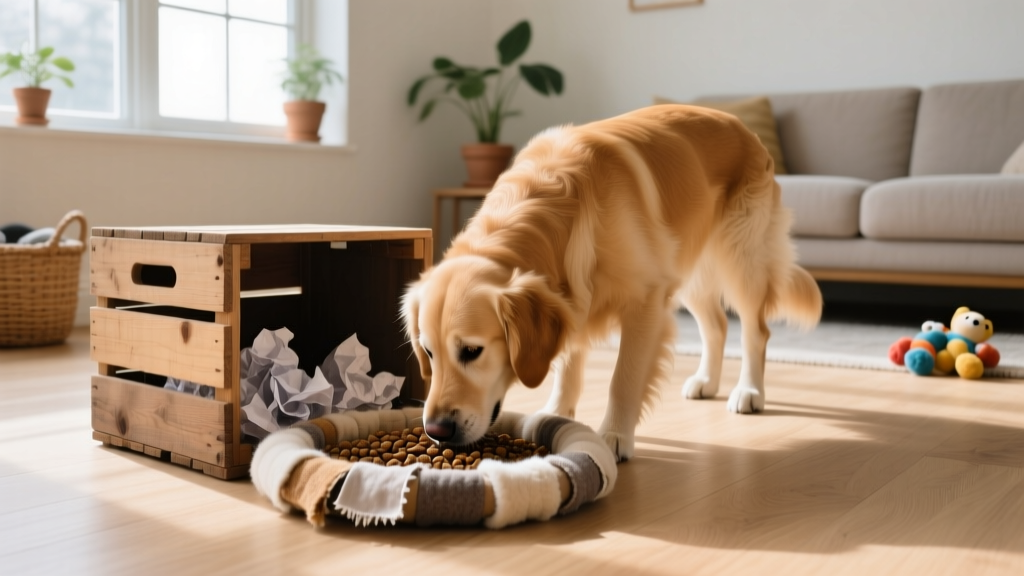
| Management | Exercise pen for containment during sessions, non-slip mat (yoga mat works), puzzle feeders (Kong Classic ~$15, Outward Hound Nina Ottosson puzzles ~$15-$30) for pre-training mental warm-up | Crate as punishment, physical pushing/forcing dog into sit position, alpha rolls |
| Calming Aids (if anxiety is a factor) | Adaptil pheromone spray (~$25), Thundershirt (~$40), calming chews with L-theanine (Zesty Paws ~$25) | Sedating medications without veterinary prescription, essential oils applied directly to dog |
A note on physical manipulation: Never push your dog's hindquarters down into a sit. This can cause discomfort (especially in breeds prone to hip dysplasia like German Shepherds, Labrador Retrievers, and Golden Retrievers), teaches the dog to resist pressure, and can create a negative association with the training process itself. If lure-and-reward methods aren't working, the issue is almost always in timing, reward value, or environment — not in the need for physical force.
Realistic Timeline: How Long Will It Take?
One of the most common questions I hear is "how long until my dog sits reliably?" The honest answer depends on your dog's age, history, and the consistency of your practice. Here are evidence-based milestones:
| Milestone | Puppies (8-16 weeks) | Adult Dogs (No Prior Training) | Adult Dogs (Retraining) |
|---|---|---|---|
| Sits reliably with food lure | 1-3 days | 1-5 days | 1-2 days |
| Sits for verbal cue at home (low distraction) | 5-14 days | 5-10 days | 3-7 days |
| Sits for verbal cue in yard / moderate distraction | 2-4 weeks | 2-3 weeks | 1-2 weeks |
| Sits for greetings (people approaching) | 4-8 weeks | 3-6 weeks | 2-4 weeks |
| Sits reliably in high-distraction public settings | 2-6 months | 6-12 weeks | 4-8 weeks |
| Sit-stay (30+ seconds) with distance | 3-6 months | 4-8 weeks | 3-6 weeks |
These timelines assume 2-3 short sessions per day (3-5 minutes each), consistent technique across all household members, and adequate reward value. If your progress is significantly slower than these benchmarks, revisit the root cause analysis above — there's likely an identifiable barrier.
Important caveat: Adolescent dogs (6-18 months) often show a training regression around 8-10 months. Hormonal changes, brain development, and increased environmental awareness can make previously reliable behaviors seem to "disappear." This is normal and temporary. Maintain your criteria, increase reward value, and avoid the temptation to assume your dog has "forgotten everything." They haven't — they're just distracted teenagers.
Is It Normal for My Dog to Struggle With Sit?
Yes — and the reasons vary widely by individual. Some dogs are naturally more active and find stationary behaviors boring compared to movement-based ones like fetch or tug. Brachycephalic breeds (Bulldogs, Pugs, Boston Terriers) may find sitting uncomfortable due to their body conformation and compromised breathing. Giant breeds (Great Danes, Mastiffs) sometimes prefer to stand or lie down because lowering and rising from a sit puts more strain on their joints.
If your dog struggles with sit specifically but learns other behaviors (down, touch, go-to-mat) easily, consider whether the physical mechanics of sitting are uncomfortable for their body type. You can train a "stand" or "down" as an alternative default behavior for polite greetings — the goal is impulse control, not a specific body position.
When to Hire a Professional
Seek professional help if:
- You've followed this protocol consistently for 3+ weeks with no measurable progress
- Your dog shows signs of fear (trembling, cowering, avoidance) when you begin training sessions
- Your dog's sit refusal is accompanied by aggression (growling, snapping, biting when physically guided)
- You find yourself getting frustrated to the point of wanting to use physical force — this is a sign you need support, not a character flaw
- Your dog has a complex behavioral history (bite history, severe anxiety, resource guarding) that complicates basic training
Who to hire:
- Certified Professional Dog Trainer (CPDT-KA): Ideal for straightforward sit training that isn't progressing. Sessions typically cost $75-$150/hour for private in-home training, or $150-$350 for a 6-week group class. Look for certification through the Certification Council for Professional Dog Trainers.
- Certified Applied Animal Behaviorist (CAAB) or Veterinary Behaviorist (DACVB): Necessary when fear, anxiety, or aggression complicates training. Veterinary behaviorists can prescribe medication if needed. Consultations typically cost $300-$600 for the initial assessment.
- Karen Pryor Academy (KPA) or Fear Free certified trainers: Specifically trained in force-free, positive reinforcement methods. A good fit if you want to ensure your trainer's philosophy aligns with the methods in this guide.
Avoid trainers who guarantee specific timelines ("I'll have your dog sitting in one session"), who use terms like "dominance" or "pack leader" as training frameworks, or who recommend starting with aversive tools. These are red flags for outdated methods that the American Veterinary Society of Animal Behavior (AVSAB) has specifically advised against.
Prevention: Starting Right With Puppies and Newly Adopted Dogs
The easiest sit to train is one that was built correctly from the start. Whether you're bringing home an 8-week-old puppy or a 3-year-old rescue, these prevention strategies set the foundation:
For puppies (8-16 weeks):
- Capture sits before you cue them: In the first few days home, simply watch your puppy and mark/reward every spontaneous sit. This builds a dog who offers sitting as a default behavior — incredibly valuable for impulse control later.
- Pair the word with the action, not before: Don't say "sit" until your puppy is already reliably following the lure into position. Pairing the word too early (when the dog doesn't understand the action) teaches that "sit" is meaningless noise.
- Keep sessions absurdly short: 2-3 minutes maximum for puppies under 12 weeks. Their attention span is genuinely limited, and ending on a success builds enthusiasm for the next session.
- Never call your puppy to you and then do something unpleasant (nail trim, bath, crate confinement) without a buffer of positive experiences first. This erodes recall and willingness to engage in training.
For newly adopted adult dogs:
- Allow a 3-7 day decompression period before formal training. Newly adopted dogs are often stressed, and stress impairs learning. Let them settle, establish routines, and build trust first.
- Assess what they already know: Many rescue dogs have partial training. Test a few cues gently (sit, down, come) with high-value rewards to see what's already in their repertoire.
- Assume nothing about their history: A dog who flinches at raised hands may have been hit. A dog who won't sit on tile floors may have been punished in a kitchen. Adapt your training environment to avoid triggering fear responses.
Frequently Asked Questions
Should I use punishment to correct my dog for not sitting?
No. Punishment (yelling, leash jerking, physical force) suppresses behavior temporarily without teaching the dog what you want them to do. It also creates negative associations with training and with you. Research published in the Journal of Veterinary Behavior (2020) found that dogs trained with aversive methods showed significantly more stress behaviors and were more likely to develop fear-based responses to their handlers. If your dog isn't sitting, the solution is better teaching — not stronger correction.
My dog sits at home but not outside. What am I doing wrong?
You're not doing anything wrong — this is a normal stage called "generalization." Dogs are contextual learners, and a sit in the kitchen is, to your dog, a completely different behavior than a sit on a busy sidewalk. Go back to basics in the new environment: use higher-value treats (real chicken, not kibble), start with fewer distractions, and rebuild the behavior from scratch in each new location. Most dogs need to practice a behavior in 5-10 different environments before it becomes truly generalized.
My dog only sits when I have a treat visible. How do I fix this?
This is called "lure dependency" and it's easily resolved. Start hiding the treat in your treat pouch or behind your back, give the verbal cue, and only produce the treat after your dog sits. You can also use "life rewards" — ask for a sit before opening the door, putting down the food bowl, or throwing a toy. This teaches that sitting earns access to things your dog already wants, not just food.
Is it too late to train an older dog to sit?
It's almost never too late. Senior dogs can learn new behaviors, though they may need shorter sessions, softer treats (if dental issues are present), and consideration for joint comfort. If your senior dog has arthritis, practice sits on soft, non-slip surfaces (carpet, yoga mat) rather than hardwood or tile. Always consult your veterinarian about appropriate exercise for senior dogs with orthopedic conditions.
How many treats per day is too many during sit training?
Training treats should not exceed 10% of your dog's daily caloric intake. For a 30 lb (14 kg) dog needing roughly 700 calories per day, that's about 70 calories in treats — roughly 20-25 Zuke's Mini Naturals (3 cal each) or 15 small pieces of boiled chicken (5 cal each). Reduce meal portions slightly on heavy training days to prevent weight gain. Monitor your dog's body condition score (BCS) weekly — you should be able to feel ribs easily without pressing hard, and see a visible waist when viewed from above.
Can I train sit without treats?
Initially, food rewards are the most efficient way to teach a new behavior because they're fast, repeatable, and universally motivating. Once the behavior is learned, you can transition to other reinforcers: toy play, verbal praise paired with petting, or access to environmental rewards (going outside, sniffing a tree). However, even well-trained dogs benefit from occasional food reinforcement to maintain behavior reliability — think of it as a paycheck for a job well done.
Training your dog to sit doesn't require special talent or expensive equipment — it requires patience, clear communication, and a pocket full of good treats. Follow the protocol above, respect your dog's physical and emotional limits, and celebrate the small wins along the way. Most dogs genuinely enjoy training when it's done well. If you're struggling, a few sessions with a certified positive reinforcement trainer can make a world of difference — for both of you.
Aaron Whyte
All our authors care for dogs every day — read more of their work on the authors page.