Growling Dog: Why It Happens and How to Stop It Safely
Is your dog growling? Learn the root causes, medical red flags, and a step-by-step positive reinforcement protocol to address a growling dog safely.

What Qualifies as Problematic Growling in Dogs?
Growling is a low-frequency vocalization dogs use to communicate discomfort, warning, or distress. It becomes a behavior problem requiring intervention when it meets any of these thresholds:
- Frequency: Occurs more than 2–3 times per week in non-play contexts
- Escalation: Has progressed from stiffening/lip-licking to snapping or biting
- Triggers: Happens during routine interactions (petting, passing by the food bowl, handling paws)
- Intensity: Low, sustained growl with a fixed stare, rigid body, or raised hackles — as opposed to play-growling with a loose, wiggly body
Growling itself is not aggression. According to the American Veterinary Medical Association, growling is a distance-increasing signal — your dog is asking for space. Punishing the growl removes the warning system and can lead to a dog that bites without signaling first.
The distinction between play growling and warning growling matters enormously. During tug-of-war or wrestling, a dog may vocalize with a relaxed mouth, soft eyes, and a body that moves fluidly. Warning growling is accompanied by stillness, hard eye contact, ears pinned forward or flat, and weight shifted forward or frozen in place. If you are uncertain which type you are seeing, record a 30-second video and show it to a certified behavior consultant.
Why Does My Dog Growl? Root Cause Analysis
Step 1 — Identify the trigger, then trace it to one of these five categories:
| Root Cause | Typical Triggers | Body Language Clues | Prevalence Estimate |
|---|---|---|---|
| Fear / Anxiety | Strangers, unfamiliar dogs, loud noises, new environments | Tail tucked, ears back, whale eye, trembling, attempts to retreat | ~40–50% of growling cases seen by behaviorists |
| Resource Guarding | Food bowl, bones, toys, sleeping spots, people | Freeze over item, side-eye, lip curl, accelerated eating when approached | ~20–25% of cases (per Merck Veterinary Manual) |
| Pain / Medical | Being touched in a specific area, picked up, groomed, or during/after exercise | Growl only when a body region is contacted; sudden onset in a previously tolerant dog | ~15–20% — often missed because owners assume it is "behavioral" |
| Territorial / Protective | Doorbell, someone approaching the home, people near the car or crate | Barking precedes growling, lunging at barriers, posturing at windows or fences | ~10–15% |
| Frustration / Barrier Reactivity | Seeing dogs/people while on leash, behind a gate, or through a window | Pulling toward trigger while vocalizing; often friendly when the barrier is removed | ~10–15% |
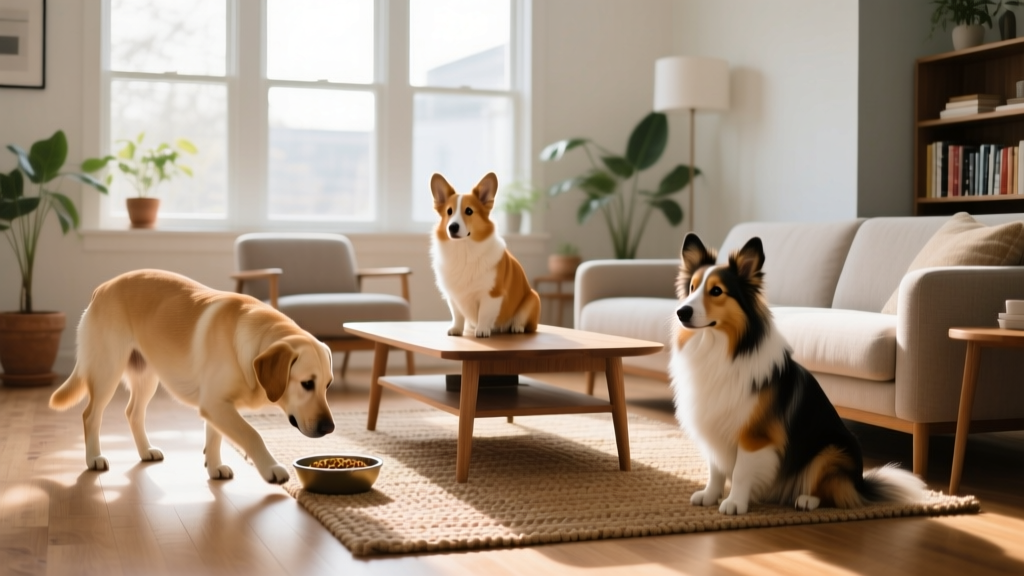
In my experience working with multi-dog households, resource guarding toward people ("I don't want you near my human") is one of the most misunderstood causes. The dog is not being "jealous" in a human emotional sense — they are guarding a valued social resource. The treatment protocol is the same as guarding a bone: change the emotional association so the presence of the other person predicts good things rather than loss.
Medical Rule-Out: See Your Vet Before Training
Before starting any behavior modification program, rule out these medical conditions. Sudden-onset growling in a dog over age 4 should always trigger a veterinary exam first.
- Osteoarthritis / Hip Dysplasia: Pain in joints causes growling when touched, lifted, or during movement. Common in German Shepherds, Labrador Retrievers, Golden Retrievers, and large breeds over age 6. Diagnostic cost: $200–$400 for radiographs.
- Dental Disease: Oral pain can cause growling during face/head handling or when chewing hard items. A full dental exam with dental radiographs runs $150–$350.
- Hypothyroidism: Low thyroid function is linked to irritability and aggression in dogs. A full thyroid panel (T4, free T4, TSH, thyroid antibodies) costs $150–$300. The Merck Veterinary Manual notes that behavioral changes may precede classic physical symptoms.
- Ear Infections (Otitis): Painful ears cause head-shy behavior and growling when the head is petted. Especially common in Cocker Spaniels, Basset Hounds, and floppy-eared breeds. Exam and cytology: $80–$150.
- Cognitive Dysfunction Syndrome (CDS):strong> In dogs over age 10, confusion and disorientation can trigger fear-based growling. Prevalence estimated at 14–35% of senior dogs (per veterinary neurology literature).
- Neurological Issues: Brain tumors, partial seizures, or syringomyelia (common in Cavalier King Charles Spaniels) can cause sudden behavioral changes. MRI diagnostics: $1,500–$3,000.
Always consult your veterinarian if growling has a sudden onset, is localized to a specific type of handling, or is accompanied by changes in appetite, sleep, mobility, or elimination habits.
Immediate Management: Prevent Rehearsal While You Train
Every time your dog rehearses a growling episode, the neural pathway strengthens. Management is not a permanent fix — it is a holding pattern that prevents the behavior from getting worse while you work on the underlying cause. Here is a practical management framework:
Environmental Controls
- Identify and list every known trigger. Keep a growl log for 7 days: date, time, trigger, distance to trigger, intensity (1–5 scale), what happened afterward. This data is gold for a behavior consultant.
- Increase distance from triggers. If your dog growls at visitors, use a baby gate (Regalo Super Wide, ~$55–$70) or a closed door to separate your dog from the entry area. Feed high-value treats (freeze-dried liver, boiled chicken) on their bed so they associate the doorbell with good outcomes at a safe distance.
- Remove guarded items. If your dog guards rawhides or specific toys, pick them up and only offer them in a controlled training context. Replace with a Kong Classic ($15–$18) stuffed with frozen peanut butter — the dog chews in their crate or on a mat, and the item is consumed rather than hoarded.
- Muzzle train proactively. A basket muzzle (Baskerville Ultra, $20–$30) allows panting, drinking, and treat-taking while preventing bites. Introduce it with peanut butter smeared inside, building duration over 5–10 sessions before needing it in a real scenario.
Safety Protocols for Households with Children
If your dog growls at children, implement a zero-tolerance management plan immediately: the dog and children are never in the same unsupervised space. Use crate rotations, baby gates, and tethering to a sturdy anchor point with a 6-foot leash. The ASPCA emphasizes that children under 10 should never be left alone with a dog displaying warning signals, even if the dog has "never bitten." Children's unpredictable movements and high-pitched voices can escalate a fearful dog's response faster than an adult can intervene.
Step-by-Step Training Protocol for a Growling Dog
This protocol uses desensitization and counter-conditioning (DS/CC) — the gold standard for fear-based and guarding-related growling. It relies entirely on positive reinforcement. You will need: a treat pouch, high-value treats (real chicken, cheese, hot dogs cut into pea-sized pieces), a clicker or marker word ("yes!"), and a calm environment.
Phase 1: Establish Baseline and Threshold Distance (Weeks 1–2)
- Determine the threshold. Have the trigger (e.g., a person walking by) appear at a distance where your dog notices but does NOT growl. For many dogs, this is 20–40 feet outdoors. If your dog growls at 10 feet, start at 25 feet.
- Pair the trigger with food. The moment your dog sees the trigger at sub-threshold distance, say "yes!" and deliver a high-value treat. Repeat 10–15 times per session. The dog should begin looking at you expectantly when the trigger appears — this is called "operant conditioning" and signals the emotional association is shifting.
- Keep sessions short. 5–10 minutes, 2–3 times per day. End on a success. If your dog growls during a session, you moved too fast — increase distance by 5–10 feet and try again next session.
Phase 2: Gradual Distance Reduction (Weeks 3–6)
- Decrease distance by 2–5 feet per session only if your dog remains relaxed (loose body, soft eyes, willing to eat treats). If they refuse treats, you are too close — back up.
- Add duration. Once your dog can stay relaxed at 15 feet for 30 seconds, ask for a sit or a "watch me" before delivering the treat. This builds an incompatible behavior — a dog sitting and looking at you cannot simultaneously stiffen and growl.
- Generalize. Practice in at least 3 different locations. A dog who is calm around strangers in the park may still growl at strangers in the driveway because the territorial context changes the emotional response.
Phase 3: Real-World Application (Weeks 6–12+)
- Introduce controlled real-life scenarios. Have a friend visit and toss treats from a distance, gradually moving closer over multiple visits. The visitor should ignore the dog — no direct eye contact, no reaching to pet — until the dog approaches voluntarily with relaxed body language.
- For resource guarding specifically: Practice the "trade-up" game. Offer your dog a low-value item (a plain toy), then present a high-value treat. When they drop the toy for the treat, say "yes!" and give the treat, then return the toy. This teaches the dog that giving something up predicts getting something better — and getting the item back. Never take an item away without trading.
- For handling sensitivity: Touch the area your dog dislikes (e.g., paw) for 0.5 seconds, immediately treat. Gradually increase touch duration by 0.5-second increments across sessions. If growling returns, reduce duration and progress more slowly.
Tools That Help — and Tools to Avoid
| Tool | Category | How It Helps | Average Cost (2026) |
|---|---|---|---|
| Kong Classic / Kong Extreme | Enrichment | Reduces boredom-driven reactivity; provides a calming chewing outlet | $15–$25 |
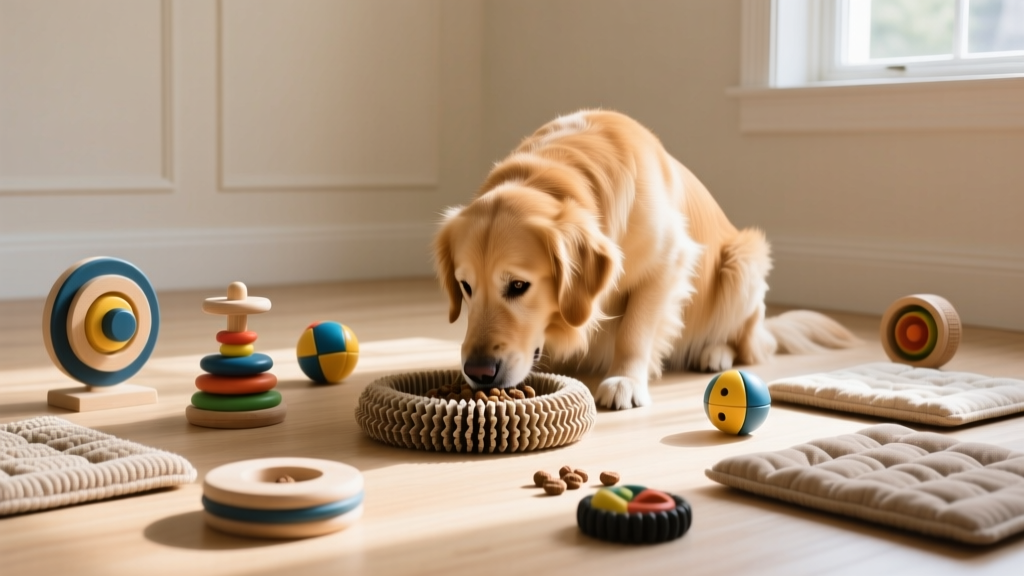
| Snuffle Mat (e.g., AWOOF brand) | Enrichment | Slows eating, engages foraging instinct, reduces mealtime guarding arousal | $20–$35 |
| Adaptil Calm Diffuser (DAP pheromone) | Calming Aid | Synthetic dog-appeasing pheromone; modest evidence for reducing anxiety in some dogs. Plug in near the dog's resting area. | $30–$45 (diffuser + 30-day refill) |
| Thundershirt / Anxiety Wrap | Calming Aid | Light pressure garment; works for some noise-anxious dogs, mixed evidence for aggression-related anxiety | $40–$55 |
| Long Line (15–30 ft cotton or biothane) | Training Equipment | Allows safe distance management during outdoor desensitization sessions | $15–$30 |
| Basket Muzzle (Baskerville Ultra) | Safety Equipment | Prevents bites during training while allowing panting and treat-taking | $20–$35 |
| Treat Pouch (e.g., Starmark or Ruffwear) | Training Equipment | Keeps high-value treats accessible for rapid reinforcement during sessions | $12–$25 |
Tools to Avoid Completely
- Shock collars (e-collar / remote trainer): Suppress the growl without addressing the cause. Studies published in the Journal of Veterinary Behavior show that dogs trained with electronic collars exhibit more stress behaviors and are at higher risk of redirected aggression. A dog who learns that growling results in pain may skip the warning and go straight to biting.
- Prong collars / choke chains: Cause pain around the neck and can create negative associations with whatever the dog is looking at when the collar tightens — making fear-based growling worse.
- Alpha rolls (forcing a dog onto its back): This confrontational technique, popularized by outdated dominance theory, increases fear and defensive aggression. The AVMA has explicitly stated that dominance-based training methods are not supported by current behavioral science.
- Spray bottles / citronella sprays: Startle the dog temporarily but do not change the underlying emotional state. Can create a dog who is fearful of the owner.
Realistic Timeline: How Long Will It Take to Fix Growling?
Behavior modification is not linear. Here is a realistic framework based on cases with consistent daily practice (5–10 minutes, 2–3 sessions/day):
| Timeframe | Expected Progress | Notes |
|---|---|---|
| Week 1–2 | Reduced frequency of growling in managed environments; dog begins to offer alternative behaviors (looking at owner, moving away) when triggers appear at threshold distance | Management is doing most of the work here. Do not test the dog by exposing them to full-intensity triggers. |
| Week 3–6 | Noticeable decrease in growling intensity; dog may still growl at closer distances but recovers faster (seconds vs. minutes); begins to seek owner when trigger appears | This is the most common point where owners relax management too early and trigger a setback. |
| Week 6–12 | Growling significantly reduced or eliminated in trained contexts; dog may still react in novel environments or with high-value resources | Generalization takes longer than initial learning. Practice in new locations and with different people. |
| 3–6 months | Reliable calm behavior in most routine scenarios; occasional growling may occur under stress (illness, fatigue, high-stimulation environments) | Maintenance sessions 2–3x/week prevent regression. This is a lifelong management skill, not a one-time fix. |
| 6–12+ months | Deeply ingrained new emotional associations; growling is rare and mild when it occurs | Dogs with severe fear or a bite history may always need management in specific high-risk situations. |
Factors that slow progress: inconsistent practice, continued exposure to unmanaged triggers (e.g., dog still encounters the mail carrier at close range daily), underlying untreated medical issues, multiple stressors stacking (e.g., moving house + new baby + thunderstorm season simultaneously).
When to Hire a Professional: Trainer vs. Behaviorist
Hire a professional immediately if any of these apply:
- Your dog has bitten someone and broken skin (Level 3 or higher on the Ian Dunbar Bite Scale)
- Growling occurs toward children in the household
- You feel afraid of your dog or are avoiding parts of your home
- Growling has escalated from occasional to daily within 2–4 weeks
- You have tried management and DS/CC for 4+ weeks with no improvement
- Your dog freezes completely before growling (a "freeze-growl-bite" sequence is high-risk)
Who to Hire
| Professional | Credentials to Look For | When to Use | Typical Cost (2026) |
|---|---|---|---|
| Certified Applied Animal Behaviorist (CAAB) | PhD in animal behavior + certification from the Animal Behavior Society | Severe aggression, bite history, complex multi-factor cases, court-required evaluations | $200–$400/hour; initial assessment often $350–$600 |
| Diplomate of ACVB (Veterinary Behaviorist) | DVM + board certification in veterinary behavior | Cases with suspected medical components, medication needs, severe anxiety or aggression | $250–$500/consultation; can prescribe medication |
| Certified Professional Dog Trainer (CPDT-KA) | Certification Council for Professional Dog Trainers; 300+ hours experience, exam-passed | Mild-to-moderate growling, leash reactivity, basic resource guarding | $80–$150/hour; packages of 6 sessions $450–$800 |
| IAABC Certified Behavior Consultant (CBCC-KA or CDBC) | International Association of Animal Behavior Consultants | Mid-level cases; good bridge between trainer and behaviorist | $100–$200/hour |
Avoid anyone who advertises "dominance-based" training, "pack leader" methods, or guarantees to "fix" aggression in a set number of sessions. Reputable professionals will always start with a thorough history intake (30–60 minutes of questions before meeting the dog) and will recommend a veterinary exam to rule out medical causes.
Preventing Growling in Puppies and Newly Adopted Dogs
Prevention is dramatically easier than rehabilitation. Whether you are bringing home an 8-week-old puppy or a 3-year-old rescue, these protocols build a dog who defaults to calm communication:
For Puppies (8–16 Weeks)
- Handling exercises: Daily, gently touch your puppy's ears, paws, tail, mouth, and belly for 2–5 seconds, followed immediately by a treat. Do this 10–20 times per day across different contexts. By 16 weeks, most puppies will offer their paws and lean into handling.
- Resource guarding prevention: Periodically add a high-value treat to your puppy's food bowl while they eat. Hand-feed meals 2–3 times per week. Practice the "trade-up" game with toys from day one. The goal is for the puppy to learn that human hands near their stuff means something good is happening, not that something is being taken.
- Socialization exposure: Between 8–14 weeks (the primary socialization window), expose your puppy to 100+ novel people, surfaces, sounds, and environments — always paired with food and never forced. A puppy who learns the world is safe is far less likely to develop fear-based growling later.
For Newly Adopted Adult Dogs
- The 3-3-3 Rule: Expect 3 days of decompression (shut down, hiding, or overly clingy), 3 weeks of settling in (showing true personality, testing boundaries), and 3 months of building trust. Do not force interactions during the first 2 weeks. Let the dog approach you.
- Provide a safe space: A crate or gated room with a bed, water, and a Kong. The dog should never be disturbed while in their safe space — this is their retreat when overwhelmed.
- Assess before assuming: Run through a modified version of the ASPCA's SAFER assessment or ask the shelter for their behavioral evaluation notes. Knowing the dog's known triggers on day one lets you set up management before a growling incident occurs.
- Avoid the "honeymoon trap": Many rescue dogs are subdued for the first 2–4 weeks, then begin showing true behavioral tendencies once they feel secure. A dog who was quiet in the shelter may begin resource guarding or showing barrier reactivity at home. This is normal — manage proactively rather than reacting with surprise.
Frequently Asked Questions
Is growling normal dog behavior?
Yes — growling is a normal canine communication signal. Dogs growl during play, when mildly annoyed, and as a warning. It becomes a concern when it is frequent, escalating, directed at family members during routine interactions, or accompanied by stiff body language and hard staring. A dog who never growls and goes straight to biting is more dangerous than a dog who growls as a warning. The goal is not to eliminate growling entirely but to address the underlying cause so the dog does not feel the need to warn.
Should I use punishment to correct growling?
No. Punishing a growl — whether through yelling, leash corrections, shock collars, or physical force — suppresses the warning signal without resolving the emotional cause. You risk creating a dog who bites without warning. A 2009 study published in the Journal of Applied Animal Behaviour Science found that dogs trained with confrontational methods (including hitting, kicking, alpha rolls, and staring down) were significantly more likely to display aggression toward their owners. Positive reinforcement-based desensitization and counter-conditioning addresses the root emotion rather than the symptom.
My dog only growls at my partner / one specific person. Why?
This typically indicates that the dog has a negative association with that specific person — perhaps they were the one who administered a bath, trimmed nails, or inadvertently startled the dog. It can also occur if that person's body language (direct eye contact, leaning over the dog, loud voice) is perceived as threatening. The solution is for that person to become the source of all good things: they feed meals, toss high-value treats without making direct eye contact, and engage in calm, low-pressure interactions. Avoid forcing the dog to interact with the person.
My dog growls when I move them off the couch. What should I do?
This is a form of spatial resource guarding. First, manage it: stop asking the dog to get off the couch. Instead, teach a reliable "place" command by luring them to a dog bed with a high-value treat, marking the moment all four paws are on the bed, and rewarding generously. Make the bed more appealing than the couch — put a Kong stuffed with frozen peanut butter on it. Over time, the dog will choose the bed voluntarily. If you need the dog off furniture in the moment, toss a treat on the floor to lure them rather than reaching for their collar (which can trigger a bite in a guarding context).
How do I stop my dog from growling at other dogs on walks?
Leash reactivity growling is typically rooted in fear or frustration. Use the desensitization protocol outlined above: start at a distance where your dog can see the other dog without reacting (often 50–100 feet in open spaces), pair the sight with high-value treats, and gradually decrease distance over weeks. Walk at off-peak hours to reduce unexpected encounters. Use a front-clip harness (e.g., Ruffwear Front Range, ~$40) to reduce pulling. Never force your dog to greet another dog if they are signaling discomfort — advocate for their space by crossing the street or stepping behind a parked car.
Can growling be completely cured?
Most dogs show significant improvement with consistent training, but "cured" is not the right framework. Think of it as management and emotional rehabilitation. A dog with mild fear-based growling may reach a point where they rarely vocalize and handle triggers calmly. A dog with severe resource guarding or a bite history will likely always need some level of management in high-risk situations (e.g., around children, during meal prep). The goal is a safe, predictable dog whose quality of life — and yours — has improved dramatically.
Tom Renshaw
All our authors care for dogs every day — read more of their work on the authors page.