Dog Tail Wagging: What Each Pattern Really Means
Not all tail wags mean happiness. Learn to read tail position, speed, and direction to understand what your dog is actually communicating.

Tail Wagging Is Not Always Friendly
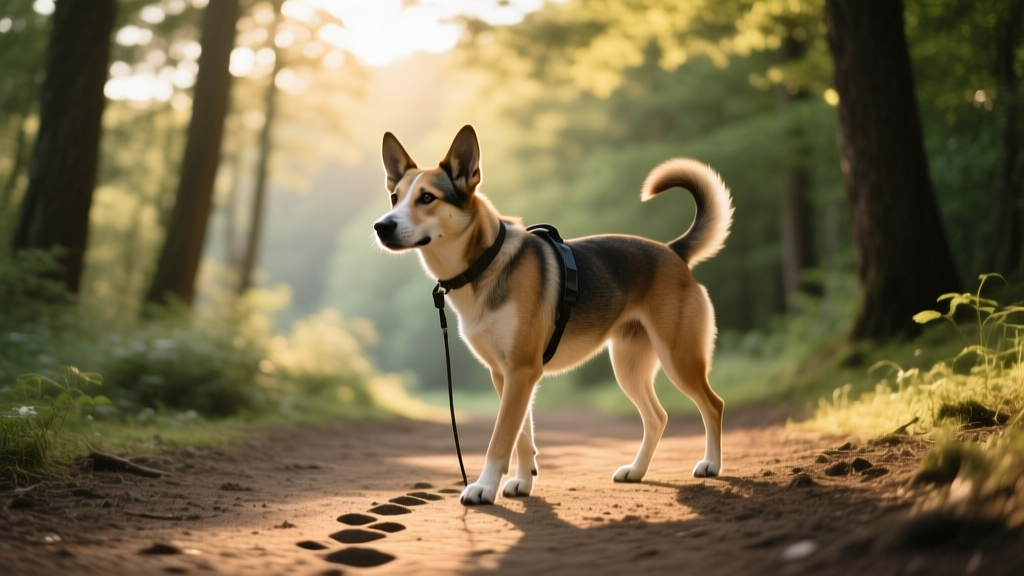
The biggest misconception about dogs is that a wagging tail means a happy dog. It does not. A wagging tail means an aroused dog, and arousal can be excitement, anxiety, aggression, or playfulness. The difference lies in the details: height, speed, and direction.
Tail Height: The Confidence Meter
- Tail held high (above spine level): Confidence, alertness, possible challenge. A stiff high tail is a warning.
- Tail at spine level: Relaxed, neutral state. Your dog is comfortable.
- Tail held low or tucked: Fear, submission, or anxiety. A tucked tail between the legs is a strong fear signal.
- Tail held horizontally: Curiosity, investigation. Your dog has noticed something and is assessing it.
Wag Speed: The Arousal Gauge
- Slow, wide wags: Cautious friendliness. Your dog is approaching carefully.
- Fast, narrow wags: High arousal. Could be excitement or tension, check the rest of the body.
- Helicopter (full-circle) wags: Genuine joy. This is the I am so happy to see you wag.
- Twitching at the tip: Focused attention, often before a hunt or pounce.
The Left-Right Bias
Research from the University of Trento in Italy found something remarkable: dogs wag more to the right when seeing their owner (positive emotion) and more to the left when seeing an unfamiliar dominant dog (negative emotion). Other dogs can read this bias, they approach more cautiously when a dog wags left.
Reading the Whole Picture
Never interpret a tail wag in isolation. Combine it with ear position (forward equals alert, back equals uncertain or friendly), mouth (open and relaxed equals happy, tight and closed equals tense), body posture (loose and wiggly equals friendly, stiff and still equals on guard), and eyes (soft and squinty equals content, hard and staring equals challenge).
Breed Differences
Some breeds have naturally low tails (Greyhounds), curly tails (Pugs), or docked tails. This makes reading tail signals harder or impossible. With these breeds, rely more on body posture, ear position, and vocalisation to assess emotional state.
Anouk Beaumont
All our authors care for dogs every day — read more of their work on the authors page.