Dog Humping: Why It Happens and How to Stop It Humanely
Understand why dog humping happens, rule out medical causes, and follow a force-free behavior modification protocol with realistic timelines.

What Qualifies as Problematic Dog Humping?
Behavior Definition: Dog humping (also called mounting) is a rhythmic clasping and pelvic-thrusting motion directed at other dogs, people, objects, or air. It becomes a behavior problem when it occurs:
- More than 3–4 times per day outside of play contexts
- Persistently targets one specific dog, person, or object despite redirection
- Triggers fights or injuries in multi-dog households
- Causes visible distress to the target (human or canine)
- Interferes with daily functioning — your dog can't settle, focus on training, or relax without mounting
Occasional mounting during high-energy play between intact dogs is generally normal. The threshold for intervention is frequency, intensity, and impact on welfare.
Many owners feel embarrassed or assume dog humping is purely sexual. In reality, mounting is a multi-motivational behavior — meaning several different emotional states can produce the same physical action. Before you can address it, you need to identify which root cause is driving your dog's specific pattern.
Why Does My Dog Hump? Root Cause Analysis
Dog humping rarely has a single explanation. According to the ASPCA's behavior resources, mounting can stem from arousal (not necessarily sexual), stress, social communication, or underlying medical conditions. Here is a diagnostic framework to narrow down the cause in your dog:
| Root Cause | Typical Triggers | Body Language Clues | Most Common In |
|---|---|---|---|
| Overstimulation / Arousal | Excited greetings, vigorous play, new environments, visitors arriving | Play bows, zoomies, dilated pupils, panting, inability to settle | Adolescent dogs (6–18 months), high-energy breeds |
| Stress / Anxiety Displacement | Vet visits, thunderstorms, conflict between household dogs, changes in routine | Lip licking, yawning, whale eye, trembling, tucked tail before mounting | Rescue dogs, dogs with separation anxiety, noise-sensitive dogs |
| Social Communication / Status Testing | Meeting unfamiliar dogs, entering a new dog group, resource proximity | Stiff posture, direct stare, tall tail, placing chin over other dog's back before mounting | Intact males, socially confident dogs, multi-dog households |
| Boredom / Learned Attention-Seeking | Owner on phone, long periods without enrichment, after being ignored | Glancing at owner before mounting, stopping when owner reacts, resuming when ignored again | Dogs with insufficient mental stimulation, dogs that learned humping gets a reaction |
| Medical Causes | No clear environmental trigger, sudden onset in previously non-mounting dog, elderly dogs | Licking genitals excessively, straining to urinate, skin irritation, restlessness at night | Senior dogs, dogs with UTIs, allergies, or hormonal imbalances |
A key insight many owners miss: the same dog can hump for different reasons in different contexts. Your dog might mount during play out of overstimulation but also mount your leg when stressed about a thunderstorm. Treat each context separately.
Medical Rule-Out: When to See Your Vet First
Before starting any behavior modification for dog humping, rule out medical causes. The Merck Veterinary Manual notes that compulsive mounting can occasionally signal underlying physiological issues. Skipping this step wastes training time and may worsen a treatable condition.
Veterinary Rule-Out Checklist — Schedule an exam if your dog shows ANY of these:
- ☐ Sudden onset of humping in a dog over 3 years old with no prior history
- ☐ Excessive licking of the genital or perineal area
- ☐ Straining to urinate, frequent small urinations, or accidents in a previously house-trained dog (possible UTI or urinary crystals)
- ☐ Skin redness, rash, or hair loss around the groin, inner thighs, or prepuce (allergies, yeast infection)
- ☐ Scooting or licking at the rear (anal gland impaction or infection)
- ☐ Increased thirst, appetite changes, or weight fluctuation (thyroid dysfunction, Cushing's disease)
- ☐ Mounting paired with apparent discomfort — yelping, stiffness, reluctance to jump (orthopedic pain, neurological issues)
- ☐ Intact female: mounting during or after heat cycle (hormonal fluctuation, possible pyometra risk)
What to ask your vet for: A complete physical exam including urinalysis ($45–$85), skin cytology if irritation is present ($35–$60), and a thyroid panel (total T4, free T4, TSH — typically $80–$150) if the behavior is new and your dog is over 5 years old. Total diagnostic workup typically ranges from $150–$350 depending on tests needed.
Always consult your veterinarian before beginning a behavior modification plan, especially if the humping is new, sudden, or accompanied by any physical symptoms.
Is Dog Humping Normal?
Yes — with important caveats. Mounting is a species-typical behavior observed in puppies as young as 3–4 weeks old during social play. Neutered and spayed dogs mount. Female dogs mount. Puppies mount. It is not inherently abnormal.
What determines whether it's "normal" is context, frequency, and whether it causes harm. A dog who mounts a stuffed toy once or twice during a play session and then moves on to chewing it is exhibiting normal exploratory behavior. A dog who cannot greet another dog without immediately mounting, who causes the other dog to snap or flee, or who mounts people's legs repeatedly at gatherings has a problem that needs intervention.
One common misconception: humping is always about dominance. Modern canine behavior science, including research referenced by the AVMA, has largely moved away from dominance-based explanations for most pet dog behaviors. Mounting is more accurately understood as a response to emotional arousal — which can be excitement, anxiety, frustration, or social uncertainty — rather than a calculated attempt to "dominate" another being.
Immediate Management: Stop the Rehearsal Cycle
Every time your dog practices humping, the neural pathway strengthens. Management is not the final solution, but it prevents the behavior from becoming more ingrained while you work on the training protocol below.
Management Strategies by Context
| Context | Immediate Management | Why It Works |
|---|---|---|
| Humping visitors | Leash your dog before guests enter. Keep a 6-foot leash attached to a front-clip harness (e.g., Ruffwear Front Range, ~$40). Practice "go to mat" on a raised cot (Cooler Cot by Kuranda, ~$130) at least 8 feet from the door. | Physical barrier prevents rehearsal; mat gives an incompatible alternative behavior. |
| Humping other dogs at park | Temporarily avoid off-leash dog parks. Switch to structured parallel walks with one known, calm dog. Keep sessions under 15 minutes. | Reduces overstimulation while maintaining socialization in a controlled setting. |
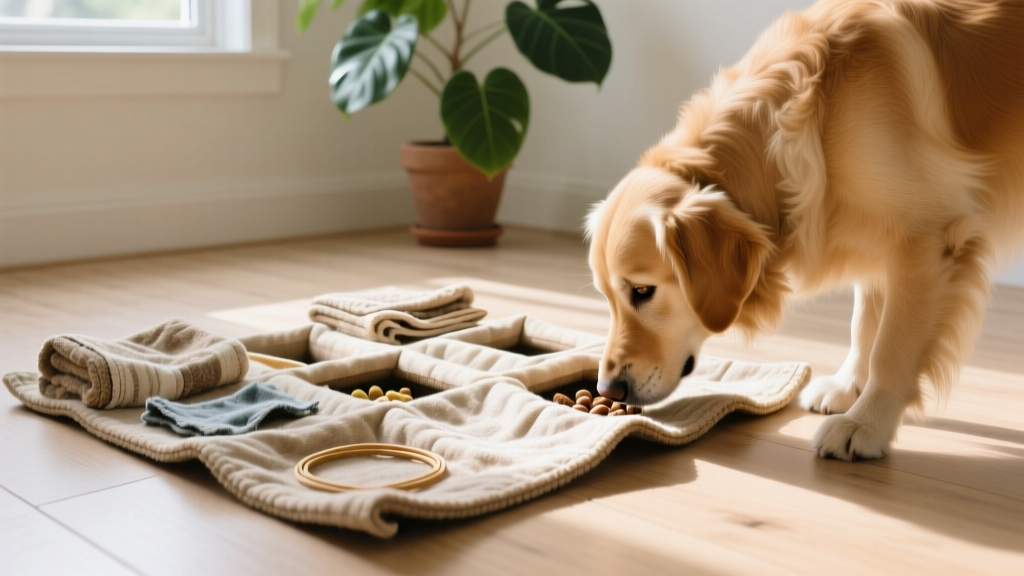
| Humping stuffed toys or bedding | Remove the specific object. Replace with a food-stuffed Kong Classic (Large, ~$16) or a West Paw Toppl (~$22) frozen with a mixture of plain yogurt and pumpkin. | Redirects oral and physical energy into a calming, licking-based enrichment activity. |
| Humping people (legs, arms) | Stand still, fold arms, look away — zero eye contact, zero verbal response. After 5–10 seconds of all four paws on the floor, calmly mark "yes" and reward with a treat tossed to the floor away from you. | Removes the attention payoff; rewards the alternative behavior of standing calmly. |
| Humping during play at home | Implement a "two-toy rotation" — when arousal escalates, redirect to a tug toy or flirt pole session (Outward Hound Tail Teaser, ~$18) for 60 seconds, then ask for a sit and reward. | Channels physical arousal into structured play with built-in impulse control practice. |
Step-by-Step Training Protocol to Reduce Dog Humping
This protocol uses positive reinforcement, desensitization, and counter-conditioning — all force-free methods supported by the American Veterinary Society of Animal Behavior (AVSAB). Expect to work through these phases over weeks, not days.
Phase 1: Foundation Skills (Weeks 1–2)
Goal: Build impulse control and a reliable "settle" behavior before tackling triggers directly.
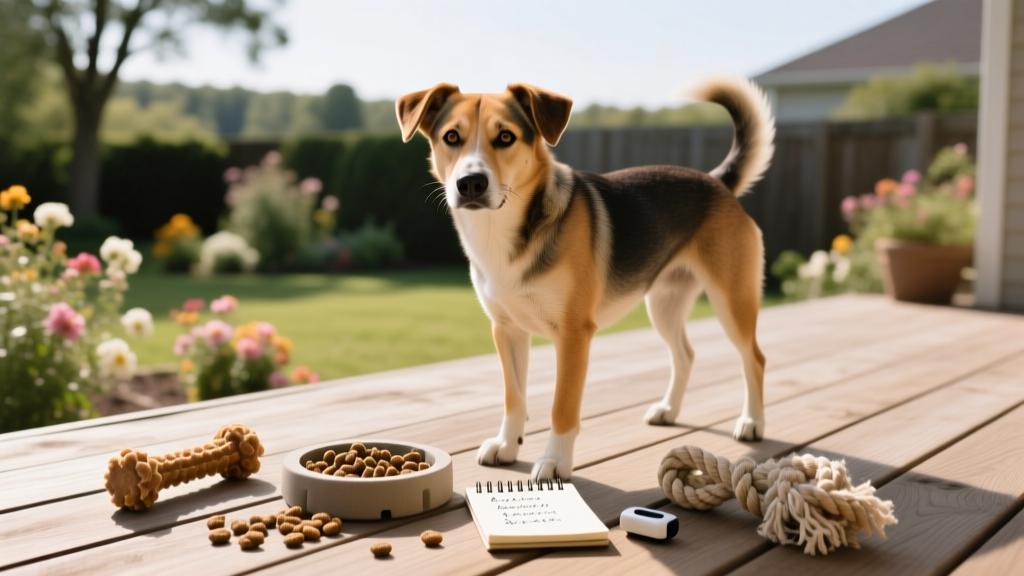
- Teach "Go to Mat" — Use a raised cot or designated mat. Lure your dog onto it, mark (clicker or verbal "yes"), and reward. Gradually increase duration from 2 seconds to 60 seconds before rewarding. Practice 3 sessions/day, 5 minutes each. Cost: a basic training clicker (Starmark Pro-Training Clicker, ~$5) and a mat or cot.
- Teach "Leave It" — Place a low-value treat in your closed fist. Wait for your dog to stop nosing your hand (even a 1-second pause counts). Mark and reward from your OTHER hand with a higher-value treat (freeze-dried liver or chicken, ~$8–$12 per bag). Progress to leaving items on the floor. This gives you a verbal interrupter you can use before mounting begins.
- Capture Calmness — Throughout the day, any time your dog voluntarily lies down and relaxes without being asked, quietly place a treat between their front paws. Do not speak or make eye contact. This reinforces the default behavior of settling — the opposite of the aroused state that drives humping.
Phase 2: Trigger Desensitization (Weeks 3–5)
Goal: Reduce the emotional arousal response to specific triggers.
- Identify the top 3 triggers — e.g., doorbell ringing, a specific dog at the park, children running. Rank them from least to most arousing.
- Work at sub-threshold distance — Start with the easiest trigger at an intensity that does NOT cause humping. If your dog humps when visitors enter, start by playing a doorbell sound recording at 20% volume while feeding high-value treats. If your dog can eat and remain relaxed, increase volume by 10% per session. If your dog shows arousal (panting, pacing, stiffening), decrease intensity — you went too fast.
- Pair triggers with incompatible behaviors — Once your dog can tolerate the trigger at low intensity without humping, ask for a behavior that physically prevents mounting: "go to mat," "sit," or "fetch a toy" (a dog holding a toy in their mouth cannot mount). Reward generously — 3–5 treats per successful repetition.
Phase 3: Real-World Application (Weeks 6–10)
Goal: Transfer trained behaviors to real-life situations.
- Controlled exposure to real triggers — Invite one calm friend over. Leash your dog. Ask for "go to mat" BEFORE the friend enters. Reward continuously (one treat every 3–5 seconds) while the friend is present and your dog remains on the mat. Gradually increase the interval between treats over multiple sessions.
- Structured dog introductions — Use parallel walking (two dogs walking in the same direction, 10–15 feet apart) with a known calm dog. After 10 minutes of calm parallel walking, allow a brief 5-second sniff greeting, then call your dog away and reward. Repeat, gradually increasing greeting duration only if no mounting occurs.
- Interrupt-and-redirect protocol — If your dog begins to mount, use your trained "leave it" cue in a calm, neutral tone. The instant they disengage, mark "yes" and redirect to an incompatible behavior (sit, come, fetch). Reward heavily. Never physically pull your dog off, yell, or use punishment — this increases stress and can worsen the behavior.
Tools That Help — and Tools to Avoid
| Category | Recommended Tools | Avoid |
|---|---|---|
| Enrichment | Kong Classic or Extreme ($12–$20), West Paw Toppl ($18–$25), snuffle mats ($20–$35), lick mats ($8–$15), puzzle feeders like Outward Hound Nina Ottosson Dog Brick ($25–$30) | None — enrichment is universally helpful for reducing boredom-driven humping |
| Calming Aids | Adaptil DAP diffuser ($25–$35, lasts ~30 days), ThunderShirt ($40–$50), VetriScience Composure chews ($20–$28 for 60 chews), classical music playlists (Through a Dog's Ear, free on streaming) | Essential oil diffusers near dogs (many are toxic), unregulated CBD products without third-party lab testing |
| Training Equipment | Front-clip harness (Ruffwear Front Range ~$40 or Kurgo Tru Fit ~$35), 6-foot biothane leash ($20–$30), treat pouch (Starmark Pro-Training Deluxe ~$15), raised cot (Cooler Cot ~$130) | Shock collars / e-collars, prong collars, choke chains, citronella spray collars — these increase anxiety and can worsen mounting as a stress response |
| Management | Baby gates ($30–$50) for separating dogs, belly bands for intact males in multi-dog homes ($15–$25 for a 3-pack, prevents marking after mounting), crate for safe decompression time | Alpha rolls, scruffing, kneeing the dog in the chest, spraying water in the face, yelling "no" — all are aversive and damage the human-dog bond |
How Long Will It Take to Fix Dog Humping?
There is no universal timeline, and any source promising a specific number of days is not being honest about how behavior modification works. However, based on typical progression in force-free training programs, here are realistic milestones:
| Timeframe | Expected Progress | Caveats |
|---|---|---|
| Week 1–2 | Reduction in frequency by 20–40% through management alone. Dog begins learning "go to mat" and "leave it." | Management is not training — the underlying motivation hasn't changed yet. |
| Week 3–5 | Noticeable decrease in intensity and duration of humping episodes. Dog begins to offer alternative behaviors (sitting, going to mat) when mildly aroused. | High-arousal triggers may still cause breakthroughs. This is normal, not failure. |
| Week 6–10 | Reliable response to "leave it" interrupter in 80%+ of low-to-moderate arousal situations. Humping becomes occasional rather than habitual. | Novel or extreme triggers (new dog, exciting event) may still produce episodes. |
| Month 3–6 | Behavior is manageable in most contexts. Dog has a strong default "settle" response. Occasional episodes may occur during peak excitement but are brief and easily interrupted. | Complete elimination of mounting is unlikely and unnecessary — the goal is reduction to a non-problematic frequency. |
| Ongoing | Maintenance training 2–3 times per week. Continued enrichment. Periodic refreshers on foundation skills. | Regression can happen during life changes (moving, new pet, illness). Return to earlier protocol phase if needed. |
Factors that extend timelines: dogs with a long reinforcement history (years of unmanaged humping), intact dogs in environments with intact dogs of the opposite sex, dogs with comorbid anxiety disorders, and inconsistent application of the protocol by household members.
Should I Use Punishment to Correct Dog Humping?
No. Aversive corrections — including shock collars, alpha rolls, physical force, yelling, or kneeing — are contraindicated for mounting behavior for several evidence-based reasons:
- Mounting is often stress-driven. Adding punishment increases stress, which can paradoxically increase the very behavior you're trying to stop. A dog who humps out of anxiety will hump more when anxious about being punished.
- Punishment suppresses symptoms without addressing the cause. Your dog may stop mounting in front of you but continue when alone — or redirect the underlying emotional state into a different problem behavior like excessive licking, destructiveness, or aggression.
- It damages trust. Dogs subjected to physical corrections for mounting may begin to associate the owner, the visitor, or the other dog with the aversive experience, potentially developing fear-based aggression.
- AVSAB position statement (2021, reaffirmed in subsequent years) explicitly recommends against the use of aversive methods in dog training, citing evidence that positive reinforcement methods are equally or more effective with fewer welfare risks.
The alternative is not "doing nothing." The protocol outlined above is active, structured intervention — it simply uses reinforcement of desired behaviors and management of the environment rather than punishment of unwanted ones.
Preventing Humping in Puppies and Newly Adopted Dogs
Prevention is always more efficient than rehabilitation. Whether you're raising a puppy or settling in a newly adopted adult dog, these strategies reduce the likelihood that humping becomes an entrenched habit:
For Puppies (8 weeks – 6 months)
- Provide structured play with built-in breaks. Puppies overstimulate easily. After every 3–5 minutes of play, pause and ask for a sit (or simply wait for a natural pause), reward, then resume. This teaches arousal regulation from the start.
- Redirect early. If a puppy begins mounting a littermate, toy, or your leg, calmly redirect to a tug toy or scatter treats on the floor for a sniffing session. Sniffing is inherently calming and incompatible with mounting.
- Ensure adequate sleep. Puppies need 16–20 hours of sleep per day. Overtired puppies exhibit more hyperactive and disinhibited behaviors, including humping. Enforce nap times in a crate or pen if needed.
- Socialize broadly but carefully. Exposure to diverse environments, people, and vaccinated dogs reduces the novelty-driven arousal that can trigger mounting later. Follow the AKC's socialization guidelines for age-appropriate exposure.
For Newly Adopted Adult Dogs
- Implement a 2-week decompression period. Limit social introductions, keep routines predictable, and provide a quiet safe space. Many adopted dogs hump during the first weeks home due to the stress of transition — this often resolves spontaneously as the dog settles.
- Establish enrichment routines immediately. Two to three enrichment feeding sessions per day (puzzle feeders, snuffle mats, frozen Kongs) reduce boredom-driven mounting.
- Manage multi-dog introductions carefully. Separate new dogs from resident dogs with baby gates for the first 3–7 days. Allow scent exchange through swapped bedding before face-to-face meetings. Keep initial meetings brief (5–10 minutes) and on-leash.
When to Hire a Professional Behaviorist
Seek professional help if any of the following apply:
- Humping is paired with aggression — growling, snapping, or biting when interrupted
- The behavior is compulsive — your dog mounts for extended periods (5+ minutes continuously), seems unable to stop, or mounts inanimate objects obsessively to the exclusion of eating, drinking, or sleeping
- You've followed the protocol above consistently for 6+ weeks with no measurable improvement
- The humping is causing injury to another dog or person
- You feel yourself becoming frustrated to the point of considering aversive methods — a professional can support you before the situation escalates
Who to Hire: Credentials Matter
| Professional Type | Credentials to Look For | Best For | Typical Cost (2026) |
|---|---|---|---|
| Veterinary Behaviorist | DACVB (Diplomate of the American College of Veterinary Behaviorists) | Compulsive mounting, cases with suspected medical comorbidity, aggression paired with mounting, medication evaluation | $250–$500 initial consultation, follow-ups $150–$300 |
| Certified Applied Animal Behaviorist (CAAB) | CAAB or ACAAB through the Animal Behavior Society | Complex multi-dog household issues, long-standing compulsive patterns, cases requiring detailed functional assessment | $150–$350 per session, packages $800–$2,000 |
| Certified Professional Dog Trainer (CPDT-KA/KSA) | CPDT-KA or CPDT-KSA through the Certification Council for Professional Dog Trainers | Mild-to-moderate humping in otherwise well-adjusted dogs, owner coaching on the protocol above, puppy prevention | $80–$175 per session, board-and-train $1,500–$3,500 for 2–4 weeks |
A note on medication: in cases of compulsive mounting or mounting driven by severe anxiety, a veterinary behaviorist may recommend behavioral medication (such as fluoxetine or clomipramine) alongside the training protocol. Medication is not a "last resort" — it can lower the emotional arousal threshold enough to make training effective. Your veterinarian or veterinary behaviorist will determine if this is appropriate for your dog.
Frequently Asked Questions
Why does my dog hump my leg specifically?
Legs are at the right height for mounting, and your movement (walking, shifting weight) can inadvertently trigger the clasping reflex. Additionally, if you've historically reacted — even by pushing the dog away or saying "stop" — your dog may have learned that humping your leg produces interaction. The fix is the same protocol above: zero reaction during the behavior, calm reward when all four paws are on the floor, and teaching an incompatible behavior like "go to mat" when you're standing or moving around.
Does neutering stop dog humping?
Neutering reduces testosterone-driven mounting in approximately 50–60% of intact male dogs, according to studies cited in veterinary behavior literature. However, if the humping has been practiced for months or years, it may persist as a learned behavior even after hormone levels drop. Neutering is a reasonable step for intact males (and has health benefits), but it is not a standalone cure for established humping. Spayed females also mount, confirming that the behavior is not exclusively hormonal.
My dog only humps one specific dog at the park. What does that mean?
This often indicates that the specific dog triggers high arousal in your dog — either through their play style, energy level, or social signaling. It can also mean your dog is uncertain about that particular dog and uses mounting as a displacement behavior. Management: avoid pairing those two dogs in unstructured settings. Work on parallel walks at a distance, and only allow brief, supervised greetings. If the other dog shows distress (snapping, hiding, flattened ears), separate immediately — the other dog's welfare matters too.
Is it okay to let my dog hump stuffed toys?
If it happens occasionally during play and your dog can be easily redirected to other activities, it's generally harmless. However, if your dog becomes fixated on the toy, guards it, or spends significant time mounting it to the exclusion of other activities, remove the toy and replace it with food-based enrichment. The concern is that rehearsing the behavior strengthens it, making it more likely to generalize to other targets.
How long will it take to fix dog humping?
Most owners see measurable improvement within 3–5 weeks of consistent application of the protocol above. Meaningful reduction (80%+ fewer episodes) typically takes 6–10 weeks. Complete elimination is not a realistic or necessary goal — occasional mounting in high-excitement contexts is normal dog behavior. If you see no improvement after 6 weeks of daily practice, consult a certified behavior professional to reassess the root cause.
When do I need a professional behaviorist?
Contact a DACVB veterinary behaviorist or CAAB-certified professional if the humping is compulsive (your dog seems unable to stop), is paired with aggression, or has not improved after 6 weeks of consistent force-free training. A CPDT-KA certified trainer can help with milder cases and owner coaching. See the credential table above for guidance on who to hire and what to expect in cost.
Dr. Hannah Wickes
All our authors care for dogs every day — read more of their work on the authors page.