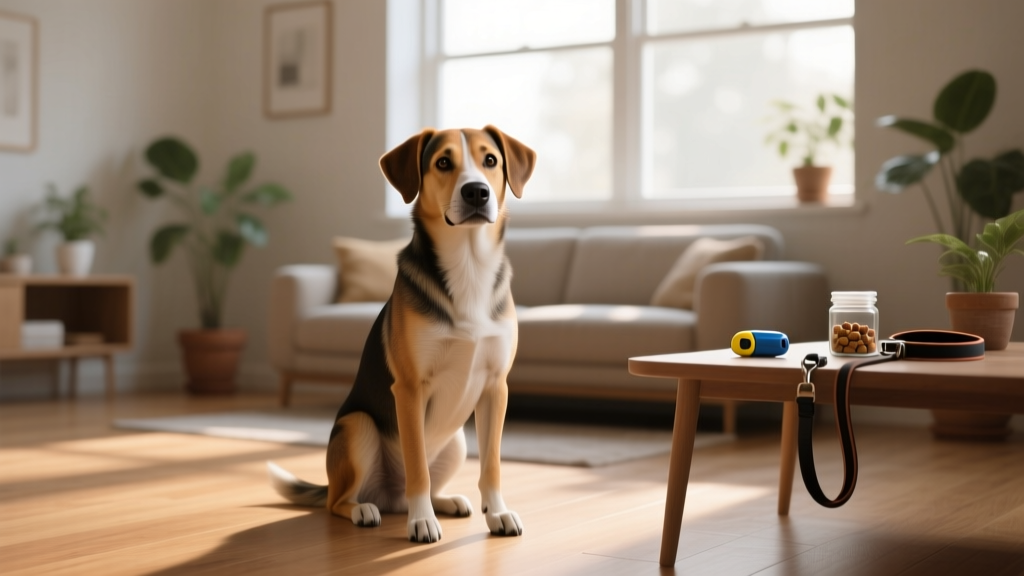
Dog Howling: Why It Happens and How to Stop It
Understand why your dog howls and learn proven, force-free methods to reduce excessive howling with this complete behavior guide for dog owners.

Howling is one of the most primal and misunderstood vocalizations in canine communication. While a single howl at a distant siren might be endearing, chronic or excessive howling can strain your relationship with your dog — and your neighbors. Whether you're dealing with a Husky who serenades the moon every night or a rescue who howls the moment you leave the house, understanding why the behavior happens is the first step toward resolving it.
This guide breaks down the root causes of dog howling, helps you rule out medical issues, and provides a structured, force-free training protocol you can start today.
What Qualifies as Problematic Dog Howling?
Not all howling is a problem. Dogs naturally howl in response to high-pitched sounds (sirens, music), during play, or as a brief greeting. Howling becomes a behavior problem when it meets any of these thresholds:
- Frequency: Occurs multiple times per day, every day, for more than 2 weeks
- Duration: Individual howling episodes last longer than 5–10 minutes without an obvious trigger (like a passing ambulance)
- Context: Happens exclusively when left alone (separation-related) or escalates into other behaviors like destructiveness or pacing
- Impact: Generates noise complaints, causes household sleep disruption, or signals underlying distress
If your dog howls briefly at sirens and then settles, that's normal vocalization — not a problem to solve.
Why Does My Dog Howl? Root Cause Analysis
Howling is a functional behavior — dogs do it because it serves a purpose. Before you can modify the behavior, you need to identify which driver is at play. Most howling falls into one of these five categories:
| Root Cause | Typical Triggers | Behavioral Clues | Common Breeds Affected |
|---|---|---|---|
| Separation Distress | Owner departure, being crated alone, isolation | Howling begins within 5–30 min of departure; paired with pacing, drooling, destructiveness near exits | Any breed; common in rescues, Velcro breeds (Vizslas, German Shepherds) |
| Boredom / Understimulation | Long periods alone without enrichment, insufficient exercise | Howling interspersed with chewing, digging, repetitive pacing; improves with activity | Working breeds (Huskies, Malinois, Border Collies) |
| Alert / Territorial | Strangers approaching, other dogs vocalizing nearby, wildlife | Howling directed at windows/doors; body is tense, ears forward; stops when stimulus leaves | Hounds (Beagles, Coonhounds), livestock guardians |
| Anxiety / Fear | Thunderstorms, fireworks, novel environments, vet visits | Howling paired with trembling, hiding, lip-licking, panting; may refuse food | Any breed; common in noise-sensitive dogs |
| Medical / Pain | Arthritis, dental disease, cognitive decline (seniors), GI discomfort | New-onset howling in previously quiet dogs; howling at night; howling when touched in specific areas | Senior dogs of all breeds; brachycephalic breeds with BOAS |
According to the Merck Veterinary Manual, vocalizations including howling can serve as distance-increasing signals (alert/territorial) or distance-decreasing signals (separation distress, social contact-seeking). Correctly categorizing the function of the howl determines which training protocol will actually work.
Medical Rule-Out: When to See a Vet Before Training
A sudden increase in howling — especially in a dog over 7 years old or a dog who has never been vocal before — should always prompt a veterinary exam before you begin any behavior modification. Pain, cognitive dysfunction, and certain metabolic conditions can manifest as vocalization.
- ☐ Howling started suddenly with no environmental change
- ☐ Your dog is over 8 years old and howling is a new behavior (possible canine cognitive dysfunction)
- ☐ Howling occurs when your dog is touched in a specific area or changes position
- ☐ Nighttime howling is accompanied by disorientation, pacing in circles, or getting "stuck" in corners
- ☐ Your dog is howling and simultaneously showing signs of GI distress (vomiting, diarrhea, hunched posture)
- ☐ Howling is paired with excessive panting, restlessness, or inability to settle even when you're present
- ☐ Your dog has a known thyroid condition and howling coincides with other behavioral changes
What your vet may run: A full physical exam, senior blood panel ($150–$300), thyroid panel ($80–$150), urinalysis, and possibly radiographs if pain is suspected. Total diagnostic cost typically ranges from $200–$500 depending on your region.
Do not attempt to suppress howling through training if a medical cause has not been ruled out. You risk masking a symptom of a treatable condition. Always consult your veterinarian when behavioral changes appear suddenly.
Is Dog Howling Normal?
Yes — howling is a natural, species-typical behavior. Wolves howl to assemble pack members, define territory, and communicate over long distances. Domestic dogs retain this instinct, though the context and frequency vary dramatically by breed and individual.
Hound breeds (Beagles, Bloodhounds, Coonhounds) were selectively bred to vocalize while tracking game — their howl (sometimes called a "baying" or "aroo") is hardwired. Northern breeds (Siberian Huskies, Alaskan Malamutes) howl as a primary form of social communication. Expecting these breeds to never howl is unrealistic and sets you up for frustration.
What matters is not whether your dog howls, but why, how often, and whether it indicates distress. A Husky who howls during a morning "conversation" with you is socially engaged. A Husky who howls for 45 minutes after you leave for work is experiencing separation distress and needs help.
Immediate Management: Stop the Rehearsal Cycle
Every time your dog practices a behavior, the neural pathway strengthens. This means management — preventing the howling from happening while you implement long-term training — is not optional. It's essential. Here's how to manage each root cause immediately:
For Separation Distress Howling
- Don't leave your dog alone yet. Arrange pet sitters, doggy daycare ($25–$50/day), or work-from-home days while you build a desensitization protocol.
- Use a pet camera (Furbo, Wyze Cam — $35–$170) to monitor when howling starts and what precedes it.
- Provide a long-lasting food item (frozen Kong stuffed with peanut butter and kibble, bully sticks) at departure — but note: dogs with true separation anxiety often refuse food when alone, which is itself a diagnostic clue.
For Boredom-Related Howling
- Increase physical exercise to breed-appropriate levels: 60–90 minutes daily for working breeds, 30–45 minutes for most others.
- Introduce daily mental enrichment: snuffle mats ($15–$30), puzzle feeders like the Outward Hound Nina Ottosson Dog Brick ($15–$25), or scatter feeding in the yard.
- Rotate toys weekly to maintain novelty. A dog with 15 toys available all the time is a bored dog.
For Alert/Territorial Howling
- Block visual triggers: Apply frosted window film ($10–$20 per roll) to lower window panes. Close blinds in rooms your dog frequents.
- Mask auditory triggers: Run a white noise machine (LectroFan, $25–$40) or play calming music (Through a Dog's Ear playlist on Spotify) during high-traffic hours.
- Manage the environment: If your dog howls at the door when guests arrive, use a baby gate to keep them in a back room during arrivals, then bring them out once settled.
Step-by-Step Training Protocol to Reduce Howling
The following protocol uses desensitization (gradual exposure to the trigger at sub-threshold intensity), counter-conditioning (changing the dog's emotional response to the trigger), and differential reinforcement (rewarding an incompatible behavior). These are force-free, evidence-based methods supported by the American Veterinary Society of Animal Behavior (AVSAB).
Protocol A: Separation Distress Howling
Goal: Dog remains calm and quiet for your target departure duration.
- Baseline assessment (Day 1): Record your dog on camera during a normal departure. Note the exact minute howling begins. This is your threshold.
- Pre-departure desensitization (Weeks 1–2): Perform departure cues (picking up keys, putting on shoes, opening the door) without actually leaving. Repeat 10–15 times per session, 2 sessions/day. Reward calm behavior with treats. This breaks the predictive chain that triggers anxiety.
- Micro-departures (Weeks 2–4): Leave for durations BELOW the howling threshold. If your dog howls at 8 minutes, start with 30-second departures. Return calmly — no excited greetings. Gradually increase by 15–30 seconds per session as long as the dog remains quiet.
- Counter-conditioning pairing (Weeks 3+): Give a high-value, long-lasting treat (frozen Kong, lick mat) only when you leave. Pick it up when you return. The departure becomes a predictor of something good.
- Build duration (Weeks 4–8+): Increase departure time by 10–20% per week. If howling returns, you've moved too fast — drop back to the last successful duration.
Protocol B: Alert/Territorial Howling
Goal: Dog notices trigger and offers an alternative behavior (going to mat, looking at you) instead of howling.
- Teach an incompatible behavior: Train a solid "go to mat" or "go to bed" cue using positive reinforcement. Practice in low-distraction settings until the dog offers the behavior reliably (80%+ success rate, typically 2–3 weeks of daily 5-minute sessions).
- Introduce the trigger at low intensity: Have a friend walk past the house at a distance where your dog notices but does NOT howl. Mark (click or "yes") and reward for noticing without vocalizing.
- Gradually decrease distance: Over multiple sessions, have the trigger move closer. If your dog howls, increase distance — that's your new threshold.
- Add the incompatible behavior: Once your dog can observe the trigger without howling at a moderate distance, cue "go to mat" and reward heavily on the mat.
- Generalize: Practice with different triggers (delivery drivers, neighbor's dog, children playing) in varied contexts.
Protocol C: Boredom-Related Howling
Goal: Dog self-entertains with appropriate activities instead of vocalizing.
- Audit your dog's daily stimulation: Track exercise minutes, training sessions, enrichment activities, and social interaction for one week. Compare against breed-appropriate benchmarks.
- Fill the gaps: Add 20–30 minutes of structured activity (training, nosework, flirt pole) and 1–2 enrichment items per day.
- Teach a "quiet" cue: When your dog is naturally quiet (resting, chewing a toy), mark and reward. Pair with a verbal cue like "quiet" or "settle." Over 3–4 weeks, the dog learns that quiet behavior earns reinforcement.
- Reinforce duration: Gradually increase the time your dog must remain quiet before earning a reward — from 5 seconds to 30 seconds to several minutes.
Tools That Help — and Tools to Avoid
The right tools accelerate your training. The wrong tools can make howling worse by suppressing the symptom while escalating the underlying emotional state.
| Tool | How It Helps | Cost Range | Best For |
|---|---|---|---|
| Kong Classic (red or black rubber) | Provides long-lasting food enrichment; stuff and freeze for 20–40 min engagement | $12–$22 | Boredom, separation distress (if dog accepts food when alone) |
| Adaptil Calm Diffuser (DAP pheromone) | Releases synthetic dog-appeasing pheromone; studies show modest reduction in anxiety-related behaviors | $25–$40 (refills $18–$25) | Mild anxiety, environmental stress; use as adjunct, not standalone |
| Thundershirt / calming wrap | Provides gentle, constant pressure; may reduce anxiety in some dogs (similar to swaddling) | $30–$50 | Noise phobia (storms, fireworks); variable efficacy |
| Pet camera with treat toss (Furbo 360°) | Monitor and remotely reward quiet behavior; identify triggers and timing | $130–$200 | Separation distress, identifying howling onset |
| White noise machine (LectroFan) | Masks environmental triggers (footsteps, traffic, other dogs) | $25–$45 | Alert/territorial howling in apartments or thin-walled homes |
| Lick mat (Hyper Pet IQ Mate) | Low-intensity enrichment; licking is self-soothing for dogs | $8–$15 | Mild boredom, pre-departure calming ritual |
- Shock/bark collars (static, citronella, ultrasonic): These punish the symptom (vocalization) without addressing the cause. For separation anxiety, they increase distress and can escalate to self-injury. The AVSAB explicitly recommends against punishment-based devices for anxiety-related behaviors.
- Alpha rolls or physical intimidation: These damage the human-dog bond and can trigger defensive aggression. Howling is communication — suppressing it through force teaches the dog that communicating leads to punishment.
- Debarking surgery (ventriculocordectomy): This is a controversial surgical procedure that does not address the underlying emotional state and carries significant welfare concerns. It is banned in several countries and opposed by the AVMA and most veterinary behaviorists.
How Long Will It Take to Fix Dog Howling?
There is no universal timeline. Progress depends on the root cause, the dog's reinforcement history (how long the behavior has been practiced), breed predisposition, and your consistency. Here are realistic expectations based on clinical experience and published behavior modification outcomes:
| Root Cause | Typical Timeline to Noticeable Improvement | Full Resolution Expectation | Factors That Slow Progress |
|---|---|---|---|
| Boredom / Understimulation | 1–3 weeks with adequate enrichment | Often fully resolved within 4–6 weeks | Inconsistent exercise, multi-dog households where howling is socially reinforced |
| Alert / Territorial | 3–6 weeks of consistent counter-conditioning | Significant reduction in 8–12 weeks; some breeds may always alert-vocalize at low levels | High-trigger environments (apartment hallways, busy streets), lack of environmental management |
| Separation Distress (mild) | 4–6 weeks of graduated departure training | 6–12 weeks for most dogs to tolerate 2–4 hours alone | Inconsistent protocol, moving too fast, owner anxiety transferring to dog |
| Separation Distress (severe) | 8–12 weeks with professional support | 3–6+ months; some dogs require ongoing medication support (SSRIs like fluoxetine, prescribed by a vet) | History of rehoming, panic-level responses, inability to arrange interim care |
| Noise Phobia (storms, fireworks) | Variable — management may be primary strategy | Desensitization can take 3–6 months with recorded sounds; real-world generalization is difficult | Unpredictable onset of triggers, intensity of real events vs. recordings |
A key principle: if you don't see any improvement within the timeline for your dog's root cause, reassess. You may have misidentified the cause, moved too quickly through steps, or need professional support.
When Do You Need a Professional Behaviorist?
Not every howling problem requires a professional, but some situations benefit enormously from expert guidance — and waiting too long can allow the behavior to become more entrenched.
Hire a certified professional if:
- Your dog's howling is paired with self-injury (chewing at paws, tail, or flanks; injuring themselves trying to escape a crate or room)
- You've followed a structured protocol for 4+ weeks with no improvement
- The howling is causing housing instability (lease violations, neighbor complaints escalating to landlord action)
- Your dog shows signs of panic (salivating profusely, destroying door frames or window sills, injuring teeth/nails trying to escape) when left alone
- You feel overwhelmed, frustrated, or are considering rehoming
Who to hire:
| Professional | Credentials to Look For | When to Choose | Typical Cost (2026) |
|---|---|---|---|
| Veterinary Behaviorist | DACVB (Diplomate of the American College of Veterinary Behaviorists) | Severe anxiety, medication may be needed, complex cases with comorbidities | $300–$600 initial consult; $150–$250 follow-ups |
| Certified Applied Animal Behaviorist | CAAB or ACAAB (through the Animal Behavior Society) | Moderate-to-severe behavior problems; can design behavior modification plans but cannot prescribe medication | $200–$400 initial consult |
| Certified Professional Dog Trainer | CPDT-KA or CPDT-KSA (through CCPDT); look for those who specifically list behavior consulting | Mild-to-moderate boredom, alert howling, basic separation work | $80–$175 per session; packages often $500–$1,200 |
Always verify credentials. The dog training industry is unregulated — anyone can call themselves a "behaviorist." The credentials above require documented experience, passing examinations, and continuing education. You can verify CPDT status at ccpdt.org and DACVB status through the ACVB directory.
Prevention: Setting Up Puppies and Newly Adopted Dogs for Success
Preventing problematic howling is far easier than treating it. Whether you're bringing home an 8-week-old puppy or a 4-year-old rescue, these practices build a foundation for quiet confidence:
- Practice short separations from day one. Even 30 seconds in a separate room (while the puppy is safely confined) teaches that being alone is temporary and safe. Gradually build to 5, 10, 15 minutes over the first two weeks.
- Never rush to a howling puppy. If you let a puppy out of the crate or pick them up while they're howling, you've taught them that howling = freedom/contact. Wait for 3–5 seconds of quiet, then release or engage.
- Build a positive crate association. Feed meals in the crate, provide special chew toys only in the crate, and practice closing the door while you sit nearby — before ever leaving the room.
- Provide breed-appropriate daily stimulation. A physically and mentally tired dog is a quiet dog. Research your breed's exercise and enrichment needs before bringing them home.
- Socialize broadly during the critical period (3–14 weeks). Puppies exposed to diverse sounds, environments, and experiences during this window are less likely to develop fear-based howling later. Follow the AVSAB's puppy socialization guidelines for safe exposure protocols.
- For adopted dogs, implement a decompression period. The "3-3-3 rule" (3 days to decompress, 3 weeks to learn routine, 3 months to feel at home) is a useful framework. Minimize alone time during the first 1–2 weeks. Let the dog build confidence and attachment before expecting them to handle long separations.
Frequently Asked Questions
Should I use punishment to correct my dog's howling?
No. Punishment-based methods (shock collars, yelling, spray bottles) suppress the outward behavior without resolving the underlying cause. For anxiety-driven howling, punishment increases stress and can escalate the problem — a dog who was howling from separation distress may progress to self-injury or panic-level destruction when the howl is suppressed. Force-free methods that address root causes produce more reliable, lasting results without welfare risks.
My dog howls at sirens and music. Is that a problem?
This is one of the most common and benign forms of howling. Dogs have sensitive hearing (they detect frequencies up to 45–65 kHz compared to our 20 kHz) and often respond to sustained, high-pitched sounds with a vocalization that's essentially a reflexive social response. If your dog howls for the duration of the siren and then stops, no intervention is needed. If the howling continues for minutes after the sound stops or escalates into distressed behavior, consult a trainer.
My dog only howls at night. What's going on?
Nighttime howling can stem from several causes: cognitive dysfunction in senior dogs (sundowning — confusion that worsens in the evening), separation distress if the dog sleeps apart from you, environmental triggers (nocturnal wildlife, neighborhood dogs), or insufficient daytime stimulation leading to pent-up energy. Track the timing, duration, and context for 5–7 nights to identify patterns before intervening.
Can medication help with howling?
In cases of genuine separation anxiety or noise phobia, medication prescribed by a veterinarian or veterinary behaviorist can be a valuable component of treatment. Common options include fluoxetine (Reconcile, FDA-approved for canine separation anxiety), clomipramine, and situational medications like trazodone or gabapentin. Medication is most effective when combined with a behavior modification protocol — it lowers the dog's anxiety threshold enough for learning to occur. Never use human anxiety medications without veterinary guidance.
How do I stop my dog from howling when I leave?
Follow the separation distress protocol outlined above: pre-departure desensitization, micro-departures below the howling threshold, counter-conditioning with high-value treats, and gradual duration building. Key mistakes to avoid: leaving for too long too soon (this re-triggers the full anxiety response), making departures and arrivals emotional events (keep them boring), and relying solely on enrichment toys without addressing the emotional component.
Dog howling is communication. Your job isn't to silence your dog — it's to understand what they're telling you and teach them more effective ways to get their needs met. With patience, consistency, and the right protocol, most howling problems improve significantly within weeks to months. If you're struggling, professional help is a sign of good ownership, not failure.
Marcus Aldridge
All our authors care for dogs every day — read more of their work on the authors page.