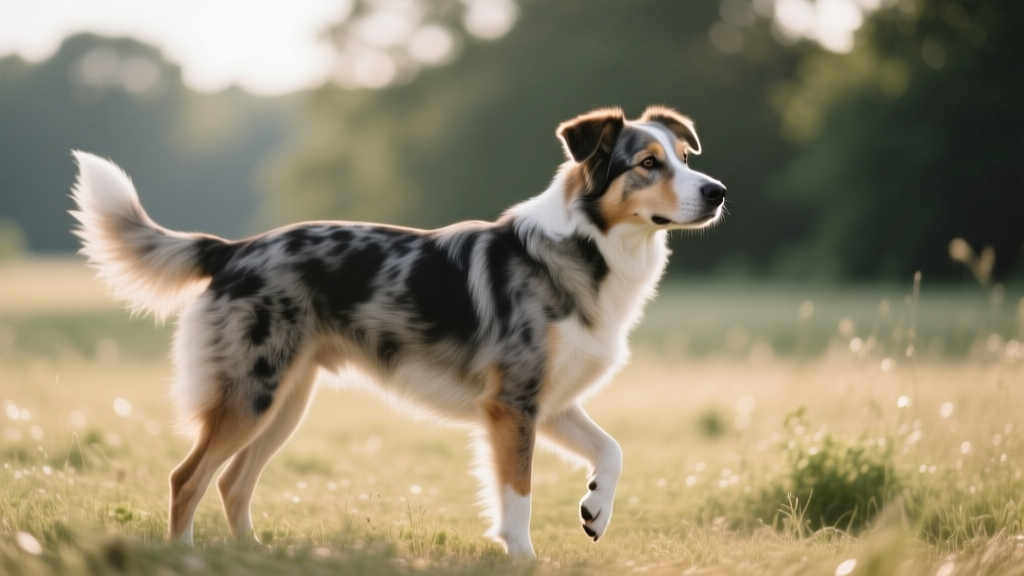
Dog Chewing Tail: Root Causes, Medical Red Flags & How to Stop It
Why is your dog chewing their tail? Learn the 5 root causes, medical red flags to rule out first, and a step-by-step positive-reinforcement protocol to stop it.

Is Dog Chewing Tail Normal — or a Sign of Something Serious?
Watching your dog gnaw at their own tail can range from mildly amusing to deeply alarming. A quick nibble during grooming is perfectly normal canine behavior. But when tail chewing becomes repetitive, intense, or results in hair loss, open sores, or bleeding, it crosses into a behavioral or medical problem that requires intervention.
According to the Merck Veterinary Manual, compulsive behaviors in dogs — including tail chasing and tail chewing — affect an estimated 1-2% of the general dog population, but the number rises significantly in dogs with underlying anxiety, allergies, or pain. The challenge for owners is that the same outward behavior (chewing the tail) can stem from completely different causes, and treating the wrong one will get you nowhere.
This guide walks you through a systematic diagnostic approach — starting with medical rule-outs, moving through root cause analysis, and finishing with a concrete training and management protocol. If your dog is chewing their tail to the point of injury, consult your veterinarian before attempting behavioral modification. Pain and disease must be ruled out first.
Tail chewing qualifies as a clinical concern when any of the following thresholds are met:
- Frequency: More than 5-6 focused chewing sessions per day, each lasting longer than 30 seconds
- Duration: The behavior has persisted for more than 48-72 hours without stopping
- Physical damage: Visible hair loss (alopecia), redness, raw skin, open wounds, scabbing, or bleeding on the tail or base of the tail
- Interference: The dog interrupts eating, sleeping, playing, or social interaction to chew their tail
- Escalation: The behavior is increasing in intensity or frequency over time
If your dog meets even one of these criteria, it's time to take structured action.
Why Does My Dog Chew Their Tail? A Root Cause Analysis
Tail chewing is a symptom, not a diagnosis. Before you can stop the behavior, you need to identify what's driving it. In my years working with dog owners and veterinary behaviorists, I've seen tail chewing fall into five primary cause categories — and it's not uncommon for two or more to overlap in the same dog.
| Root Cause | Key Indicators | Typical Onset | Prevalence |
|---|---|---|---|
| Allergies / Dermatitis | Seasonal patterns, licking paws too, ear infections, hot spots at tail base | Gradual; often seasonal or after diet change | ~30-40% of tail chewing cases |
| Fleas / Parasites | Flea dirt at tail base, scooting, biting at hindquarters, outdoor access | Rapid; within days of exposure | ~15-25% of cases |
| Anxiety / Stress | Triggered by departures, loud noises, new environments; other stress signals (panting, pacing) | After specific trigger event or environmental change | ~20-25% of cases |
| Boredom / Understimulation | Occurs during idle time, dog is otherwise healthy, high-energy breed, long alone hours | Gradual; worsens over weeks of insufficient activity | ~15-20% of cases |
| Pain / Neurological | Tail held differently, sensitivity to touch, hindquarter weakness, anal gland issues | Variable; can be sudden (injury) or gradual (arthritis) | ~10-15% of cases |
Allergies and Skin Irritation
Environmental allergies (atopic dermatitis), food allergies, and contact dermatitis are the single most common driver of tail chewing. The base of the tail is a classic location for allergic reactions because it's where flea saliva concentrates and where pollen and dander accumulate on the coat. Dogs with atopic dermatitis often chew at their tail base, flanks, and paws simultaneously.
Flea Allergy Dermatitis (FAD)
Even a single flea bite can trigger an intense allergic reaction in sensitized dogs. The tail base and lower back are the most common sites for flea feeding, making this area intensely itchy. FAD can persist for weeks after the fleas themselves are gone because the allergic cascade continues.
Anxiety and Compulsive Behavior
Some dogs develop tail chewing as a displacement behavior — a coping mechanism for stress. In severe cases, this escalates into a compulsive disorder, where the dog chews their tail even in the absence of the original stressor. Separation anxiety, noise phobias, and social stress (new pets, new babies, moves) are common triggers.
Boredom and Insufficient Enrichment
Working breeds and high-energy dogs (Border Collies, German Shepherds, Huskies, Australian Shepherds) are disproportionately affected. When a dog's physical exercise and mental stimulation needs aren't met, self-directed behaviors like tail chewing can become a default activity — essentially, the dog is creating their own "job."
Pain, Anal Gland Issues, and Neurological Causes
Impacted or infected anal glands, tail injuries (fractures, sprains), spinal problems like cauda equina syndrome, and hip dysplasia can all cause a dog to focus attention on their tail region. Older dogs with arthritis in the hip or lumbar spine may chew at their tail area as a pain response.
Medical Rule-Out: What to Check Before Behavior Training
This is the step most owners skip — and it's the reason many behavior modification plans fail. If your dog's tail chewing is driven by itch, pain, or disease, no amount of training will solve it. You must rule out medical causes first.
- ☐ Visible fleas, flea dirt (black specks), or signs of mites on skin scraping
- ☐ Red, inflamed, or oozing skin at the tail base or surrounding area
- ☐ Foul odor from the tail region (possible anal gland impaction or infection)
- ☐ Hair loss in symmetrical patterns (possible hormonal imbalance — hypothyroidism, Cushing's disease)
- ☐ Tail held at an unusual angle or limp (possible fracture or luxation)
- ☐ Sensitivity or yelping when the tail or lower back is touched
- ☐ Hindquarter weakness, dragging feet, or difficulty rising (neurological signs)
- ☐ Scooting on the floor (anal gland or parasite indicator)
- ☐ Recent diet change correlating with symptom onset
- ☐ Chewing that occurs only at specific times of year (seasonal allergies)
Expected vet visit cost: $80-$250 for exam + skin scraping, $150-$400 if bloodwork or imaging is needed. Pet insurance typically covers diagnostic workups for new symptoms.
Diagnostic Tests Your Vet May Run
Depending on the clinical picture, expect some combination of: skin cytology or scraping ($40-$80), flea comb exam (included in exam fee), anal gland expression and evaluation ($20-$50), complete blood count and chemistry panel ($120-$200), thyroid panel ($80-$150), and possibly radiographs of the tail and lumbar spine ($150-$350). If allergies are suspected, your vet may recommend an elimination diet trial (8-12 weeks on a novel protein or hydrolyzed diet) or intradermal allergy testing ($250-$500 through a veterinary dermatologist).
Immediate Management: Stop the Damage While You Work on the Cause
While you're waiting for vet results or beginning a behavior plan, you need to prevent your dog from continuing to damage their tail. Every repetition of the behavior strengthens the neural pathway, making it harder to extinguish. Management isn't a long-term solution, but it buys you time.
Physical Barriers
- Elizabethan collar (E-collar): The classic "cone of shame" is the most reliable short-term barrier. Soft inflatable collars are more comfortable but less effective for dogs with flexible bodies who can still reach their tail. Cost: $10-$25 for standard, $15-$35 for inflatable.
- Recovery suit or onesie: A snug-fitting recovery suit covers the tail base and prevents direct access. Brands like Alfie Pet and Comfy Recovery Suit ($18-$35) work well for tail-focused chewing. You can also modify a human baby onesie for small dogs.
- Bitter deterrent sprays: Products like Bitter Apple or Bitter Yuck! ($8-$15) can be applied to the tail (not open wounds). Effectiveness varies widely — approximately 30-40% of dogs are deterred. Never apply to broken skin.
Environmental Management
- Interrupt and redirect: When you see your dog starting to chew, calmly interrupt with a neutral sound ("uh-uh" or a gentle hand clap) and immediately redirect to an approved chew item or activity. Do not yell or punish — this increases anxiety and can worsen the behavior.
- Supervised-only time: During the initial management phase, don't leave your dog unsupervised with access to their tail. Use a crate, exercise pen, or baby-gated room when you can't watch them.
- Increase exercise immediately: Add 20-30 minutes of structured physical activity per day (leash walks, fetch, flirt pole) while you work on the underlying cause. For high-energy breeds, aim for 60-90 minutes of combined physical and mental exercise daily.
Step-by-Step Training Protocol to Stop Tail Chewing
Once medical causes are ruled out or treated, you can implement a structured behavior modification plan. This protocol uses desensitization, counter-conditioning, and differential reinforcement — all evidence-based, force-free methods supported by the American Veterinary Society of Animal Behavior.
- Phase 1 — Baseline Tracking (Days 1-3): Keep a log of every tail chewing episode. Note the time, duration, what happened right before (antecedent), and what happened after (consequence). This data reveals patterns you can't see from memory alone. Use a simple notebook or a phone app like Petfolk or 11Pets.
- Phase 2 — Antecedent Arrangement (Days 3-7): Based on your log, modify the environment to reduce triggers. If chewing happens when the dog is crated alone, adjust crate time or add a frozen Kong. If it happens after visitors leave (anxiety), begin a desensitization protocol for departures. If it happens during evening downtime (boredom), schedule a 15-minute training session or puzzle feeder at that exact time.
- Phase 3 — Differential Reinforcement of Incompatible Behavior (DRI) (Weeks 1-3): Teach and heavily reinforce a behavior that physically cannot happen at the same time as tail chewing. The best options are: "go to your mat" (dog lies on a designated bed), "hold a toy" (dog carries a plush toy in their mouth), or "touch" (dog boops their nose to your hand). Practice these behaviors 3-5 times per day in short 2-minute sessions, using high-value treats (real chicken, cheese, freeze-dried liver). Reward rate: 1 treat every 3-5 seconds of sustained behavior initially.
- Phase 4 — Counter-Conditioning to Tail Sensitivity (Weeks 2-5): If your dog is reactive to their own tail being touched or near their body, build a positive association. Start by touching the dog's lower back (far from the tail) and immediately delivering a treat. Over days, gradually move closer to the tail base. If the dog shows any stress signals (lip lick, whale eye, stiffening), move back to the previous successful step. This process typically takes 2-4 weeks with daily 3-minute sessions.
- Phase 5 — Enrichment Protocol (Ongoing): Replace the function the tail chewing was serving. For boredom-driven chewing: minimum 2 puzzle feeders per day (Kong Wobbler $15, Outward Hound Nina Ottosson puzzles $12-$30), 15-20 minutes of sniffari walks, and 1 structured training session. For anxiety-driven chewing: calming mat work, Adaptil pheromone diffuser ($25-$40), and a predictable daily routine.
- Phase 6 — Graduated Freedom (Weeks 4-8+): Slowly remove management tools as the new behaviors become habitual. Start by removing the recovery suit during supervised time. If no chewing occurs for 5 consecutive days, try short unsupervised periods (10 minutes, then 30, then 1 hour). If chewing returns, go back one phase and proceed more slowly.
Tools That Help — and Tools to Avoid
The right tools can accelerate progress dramatically. The wrong ones can make the problem worse or create new behavioral fallout.
| Tool | Category | Cost Range | Verdict |
|---|---|---|---|
| Kong Classic / Kong Wobbler | Enrichment / Redirect | $10-$20 | ✅ Recommended — durable redirect for chewing drive |
| Adaptil DAP Diffuser | Calming Aid | $25-$40 (starter kit) | ✅ Recommended — pheromone support for anxiety-based chewing |
| Snuffle Mat / Lick Mat | Enrichment | $10-$25 | ✅ Recommended — promotes calming licking behavior |
| Recovery Suit / Onesie | Physical Barrier | $18-$35 | ✅ Recommended — prevents access during healing |
| Clicker + Treat Pouch | Training Equipment | $8-$20 | ✅ Recommended — precision timing for DRI training |
| L-Theanine / Zesty Paws Calming Bites | Supplement | $18-$30 | ⚠️ Consult Vet First — may help mild anxiety; not a standalone fix |
| Shock Collar / E-Collar | Aversive Punishment | $30-$200 | ❌ Avoid — increases anxiety, worsens compulsive behavior, creates fallout |
| Alpha Roll / Physical Dominance | Aversive Punishment | N/A | ❌ Avoid — scientifically discredited, increases fear and aggression risk |
| Muzzle (for tail chewing) | Physical Barrier | $15-$40 | ❌ Avoid for this purpose — unsafe for unsupervised use, does not address cause |
Realistic Timeline: How Long Will It Take to Fix Tail Chewing?
There is no universal timeline. The speed of resolution depends entirely on the root cause, the severity, and how consistently you implement the protocol. Here are realistic milestone ranges based on clinical experience and behavioral literature:
| Root Cause | Initial Improvement | Significant Reduction | Full Resolution |
|---|---|---|---|
| Fleas / Parasites | 24-72 hours after treatment | 1-2 weeks | 2-4 weeks (allergic cascade subsides) |
| Allergies / Dermatitis | 1-3 weeks (with medication) | 4-8 weeks | 8-16 weeks; may be ongoing management |
| Boredom / Understimulation | 3-7 days with enrichment increase | 2-4 weeks | 4-8 weeks with consistent routine |
| Anxiety / Stress | 2-4 weeks | 6-10 weeks | 3-6 months; may require medication support |
| Compulsive Disorder | 4-8 weeks (with medication + behavior plan) | 3-6 months | 6-12+ months; may be lifelong management |
Important: Compulsive tail chewing that has been present for more than 6 months is significantly harder to resolve than behavior that started recently. Early intervention matters. Don't "wait and see" — start the protocol as soon as you identify the problem.
When to Hire a Professional: Behaviorist vs. Trainer
Not every case requires a professional, but knowing when to bring one in can save you months of frustration and prevent the behavior from becoming more entrenched.
Hire a certified professional dog trainer (CPDT-KA or equivalent, $60-$120/session) if:
- The behavior is recent (less than 4 weeks) and mild (no significant tissue damage)
- You've ruled out medical causes and identified a clear boredom or mild anxiety trigger
- You need help implementing the training protocol above with correct timing and technique
Hire a veterinary behaviorist (DACVB or CAAB, $200-$500 initial consultation) if:
- The behavior has persisted for more than 6-8 weeks despite consistent management
- Your dog has caused significant self-injury (open wounds, bleeding, infection)
- You suspect a compulsive disorder (chewing continues even in enriched, calm environments)
- The behavior is paired with other anxiety signs (destructive behavior, vocalization, house soiling when alone)
- Medication may be needed (only a veterinarian or veterinary behaviorist can prescribe SSRIs like fluoxetine or clomipramine, which are sometimes necessary for compulsive disorders)
Find a veterinary behaviorist through the American College of Veterinary Behaviorists directory, or a certified applied animal behaviorist through the Animal Behavior Society.
Preventing Tail Chewing in Puppies and Newly Adopted Dogs
Prevention is always easier than intervention. Whether you're bringing home a puppy or an adult rescue, these strategies reduce the risk of tail chewing developing in the first place.
For Puppies (8-16 Weeks)
- Teething management: Puppies explore the world with their mouths and may chew their tail during teething (3-6 months). Provide 4-6 appropriate chew toys of varying textures (rubber, rope, frozen washcloth) and rotate them every 2-3 days to maintain novelty.
- Enrichment baseline: Establish a daily routine that includes at least 2 mental enrichment activities (training sessions, food puzzles, scent games) from day one. This prevents boredom-based habits from forming.
- Body handling desensitization: Gently handle your puppy's tail, paws, ears, and mouth daily, pairing each touch with treats. This builds comfort with their own body and reduces the chance of tail sensitivity developing.
- Flea prevention: Start veterinarian-recommended flea prevention by 8 weeks of age. Products like Simparica Trio, NexGard, or Bravecto are safe for puppies at the labeled age/weight minimums.
For Newly Adopted Adult Dogs
- Decompression period: Allow 2-4 weeks of low-demand adjustment (the "3-3-3 rule"). Don't overload a newly adopted dog with new experiences, people, or other pets during this window. Stress from transition can trigger tail chewing.
- Veterinary baseline: Schedule a vet visit within the first week to check for parasites, skin conditions, and pain that could be driving the behavior. Shelter environments often mask medical issues.
- Observe before intervening: Keep a brief behavior log for the first 2 weeks. Note when tail chewing happens, what precedes it, and how long it lasts. This data is invaluable if you need to consult a professional later.
Frequently Asked Questions
Is tail chewing normal in dogs?
Occasional, brief tail grooming is normal. Repetitive, focused chewing that lasts more than a few seconds, occurs multiple times daily, or causes any physical damage is not normal and indicates an underlying issue — medical, environmental, or behavioral.
Should I punish my dog for chewing their tail?
No. Punishment — including yelling, physical corrections, shock collars, or alpha rolls — is contraindicated for tail chewing. The behavior is driven by discomfort, anxiety, or unmet needs, not defiance. Punishment increases stress, which frequently makes the chewing worse or redirects it to another compulsive behavior (flank sucking, paw licking). The AVSAB explicitly recommends against aversive methods for compulsive behaviors.
Can tail chewing cause permanent damage?
Yes. Untreated tail chewing can lead to secondary bacterial infections, deep tissue damage, and in severe cases, partial tail amputation may become medically necessary. Chronic chewing also creates scar tissue and can damage the vertebrae and nerves in the tail. Early intervention prevents these outcomes.
My dog only chews their tail at night — why?
Nighttime-only tail chewing often points to boredom (the dog has nothing else to do once the household is quiet), anxiety (darkness or being alone triggers stress), or allergies (histamine levels naturally rise in the evening, increasing itchiness). Try providing a frozen Kong or lick mat at bedtime, and discuss antihistamine options with your vet.
Could my dog's diet be causing the tail chewing?
Food allergies can cause skin irritation that leads to tail chewing, though they account for only about 10-15% of allergic skin disease cases (environmental allergies are far more common). If you suspect a food allergy, your vet can guide you through an 8-12 week elimination diet trial using a novel protein (rabbit, venison, kangaroo) or a hydrolyzed protein diet like Royal Canin HP or Hill's z/d. Do not switch foods randomly — this makes it impossible to identify the allergen.
How do I know if it's behavioral or medical?
You often can't tell without veterinary diagnostics. A general rule: if the chewing started suddenly, is paired with physical signs (redness, odor, hair loss, sensitivity), or occurs in a dog with no other behavioral concerns, lean toward a medical cause. If it started after an environmental change, occurs only in specific contexts, and your dog has other anxiety indicators, lean toward behavioral. But always get the medical rule-out first — it's the faster, cheaper path if something physical is wrong.
Tom Renshaw
All our authors care for dogs every day — read more of their work on the authors page.