Best Dog Chew Toys for Teething Puppies: A Behavior & Relief Guide
Discover the best dog chew toys for teething puppies, learn why destructive chewing happens, and follow a step-by-step behavior protocol to save your belongings.
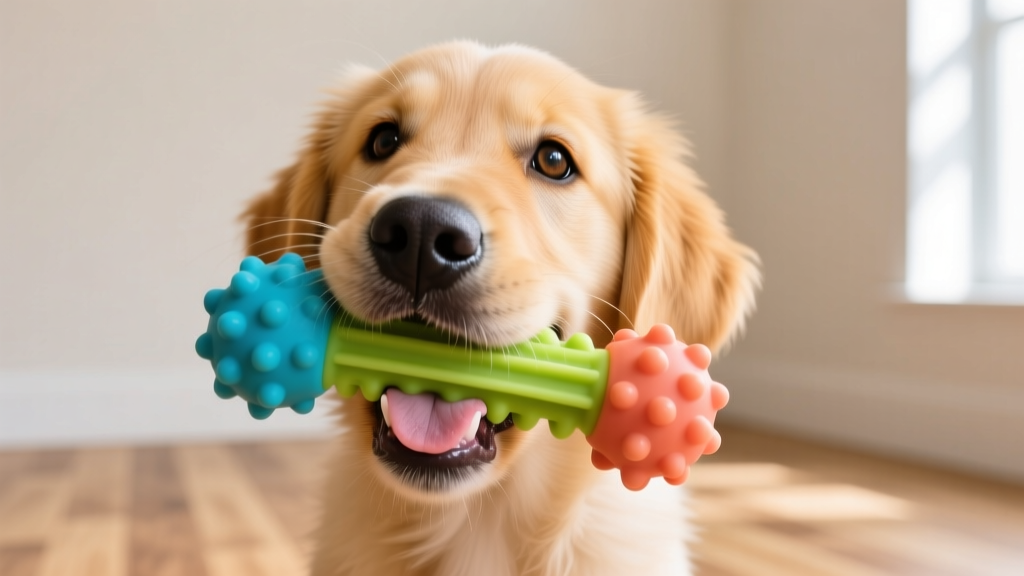
Between the ages of 3 and 7 months, most puppies will chew through at least one pair of shoes, a phone charger, and possibly a corner of your favorite rug. It's not spite. It's biology. Teething is one of the most physically uncomfortable developmental stages a puppy endures, and the right dog chew toys for teething can mean the difference between a few slobbery toys and thousands of dollars in property damage.
But chew toys alone won't solve destructive chewing if you don't understand the behavior behind it. This guide combines veterinary dental science with force-free behavior modification to help you choose the right toys, redirect inappropriate chewing, and build lasting good habits — all while your puppy's adult teeth are coming in.
What Qualifies as Problem Chewing in Teething Puppies?
Behavior Definition: Destructive Chewing
Normal puppy chewing: Your puppy gnaws on designated toys, occasionally mouths your hands during play, and explores objects with their mouth for 10–20 minutes at a time. This is developmentally appropriate.
Problem chewing (thresholds):
- Chewing non-food items more than 5 times per day despite toy availability
- Targeting specific high-value items repeatedly (shoes, furniture legs, remote controls)
- Chewing sessions lasting longer than 30 minutes with intense fixation
- Swallowing non-food material (fabric, plastic, wood splinters)
- Chewing that continues past 8 months of age without improvement
Why it matters: Ingested foreign bodies are one of the top reasons puppies land in emergency surgery. According to ASPCA, intestinal blockages from swallowed objects can cost $3,000–$7,000 to treat surgically.
Why Does My Puppy Chew Everything? Root Cause Analysis
Teething is the obvious driver, but destructive chewing is almost always multi-factorial. Understanding the root causes lets you address the real problem instead of just managing symptoms.
5 Common Root Causes of Destructive Chewing
| Root Cause | Signs to Look For | Peak Age |
|---|---|---|
| Teething pain — 28 deciduous teeth shed, 42 adult teeth erupt | Drooling, red/swollen gums, decreased appetite, blood on toys | 3–7 months |
| Boredom / under-stimulation — insufficient mental or physical exercise | Chewing increases when left alone, targets novel objects first, pacing or whining | Any age, peaks 6–18 months |
| Separation anxiety — distress when owner is absent | Chewing concentrated near exits (doors, window frames), paired with vocalization and elimination | Often emerges 6–12 months |
| Exploratory behavior — normal developmental mouthing | Samples many different objects, short chewing bouts, easily redirected to toys | 2–5 months |
| Attention-seeking — learned behavior from owner reactions | Grabs items when you're watching, drops them when you engage, makes eye contact while chewing | Any age |
Medical Rule-Out: When to See Your Vet Before Behavior Training
Before you invest weeks in a behavior modification plan, rule out medical conditions that drive excessive chewing. The Merck Veterinary Manual notes that dental abnormalities are more common than most owners realize, especially in brachycephalic and small breeds.
Vet Visit Triggers — Rule These Out First
- Retained deciduous teeth: Baby teeth that don't fall out can cause severe pain and misalignment. Common in Chihuahuas, Yorkshire Terriers, Pomeranians, and other toy breeds. Your vet may need to extract them under anesthesia ($200–$600 per tooth).
- Oral infections or abscesses: Foul breath beyond normal puppy smell, facial swelling, pawing at the mouth, or refusal to eat hard food.
- Gastrointestinal parasites: Puppies with heavy worm burdens sometimes chew non-food items (pica). A fecal float test costs $35–$65.
- Nutritional deficiencies: Low-quality diets lacking adequate minerals can trigger pica. Ensure your puppy food meets AAFCO growth standards.
- Neurological conditions: Repetitive, rhythmic chewing motions without an object in the mouth may indicate focal seizures — rare but documented in puppies.
Consult your veterinarian if any of these signs are present before starting behavior modification.
How to Stop Destructive Chewing: Immediate Management Strategies
Behavior modification takes weeks. Management prevents your puppy from rehearsing the unwanted behavior in the meantime. Every time your puppy successfully chews a shoe, that neural pathway gets stronger. Your job is to make the wrong choice impossible and the right choice irresistible.
Environmental Management Checklist
- Puppy-proof at puppy eye-level: Crawl on hands and knees through every room. Remove shoes, cords, children's toys, and small objects from floor level and low tables.
- Use exercise pens or crate training: When you cannot actively supervise, confine your puppy to a safe area with 2–3 appropriate chew toys. A 36-inch wire exercise pen costs $35–$55 and gives more room than a crate for longer periods.
- Apply bitter deterrents strategically: Products like Bitter Apple Spray ($8–$12) or Grannick's Bitter Apple ($10–$14) can discourage chewing on furniture legs and baseboards. Reapply every 2–3 days. Note: approximately 20% of dogs are not deterred by bitter sprays — test on a cotton ball first.
- Rotate chew toys every 48 hours: Novelty maintains interest. Keep 6–8 chew toys in rotation, offering 3 at a time and swapping them out. This costs nothing extra and dramatically extends toy engagement.
- Use baby gates: Block access to high-risk rooms (home offices with cords, laundry rooms with detergent pods). A 30-inch pressure-mounted gate runs $25–$45.
The Best Dog Chew Toys for Teething: What Actually Works
Not all chew toys are created equal. The right teething toy needs to satisfy three criteria: appropriate texture for sore gums, safety (no breakable pieces that can be swallowed), and engagement value that competes with your belongings.
| Toy Type | Best For | Price Range | Safety Notes | Top Picks |
|---|---|---|---|---|
| Rubber teething toys (freezable) | Gum pain relief, cold therapy | $8–$18 | Choose puppy-specific softness; adult KONG rubber is too hard for baby teeth | KONG Puppy ($10–$14), Nylabone Puppy Chew ($7–$12) |
| Textured rubber rings | Massaging erupting gums | $6–$15 | Supervise; discard if chunks break off | Benebone Puppy Wishbone ($12–$16), Petstages Cool Teething Stick ($8–$11) |
| Edible dental chews | Puppies who destroy non-edible toys quickly | $15–$30 (30-pack) | Calorie-dense — adjust meals accordingly; choking risk for gulpers | Greenies Teenie ($18–$24), Whimzees Puppy ($15–$20) |
| Frozen food-stuffed toys | Extended engagement (20–40 min sessions) | $10–$18 (toy + filling cost) | Freeze with puppy-safe peanut butter (no xylitol) or plain yogurt; never use chocolate | KONG Puppy + fill, West Paw Toppl ($16–$20) |
| Braided rope toys (wet and frozen) | Cold relief + flossing action on new teeth | $5–$12 | Supervise closely; remove if strands unravel and puppy swallows fibers | Mammoth Flossy Chews ($6–$10), DIY braided towel |
Toys and Objects to Avoid
- Rawhide: High choking and intestinal blockage risk, especially for aggressive chewers. Often chemically processed with formaldehyde and hydrogen peroxide.
- Cooked bones (any type): Splinter into sharp shards that can perforate the esophagus, stomach, or intestines. The FDA has issued warnings about bone treats causing injuries and deaths.
- Hard nylon bones meant for adult dogs: Too rigid for puppy teeth — can cause tooth fractures. Look for "puppy" on the label.
- Children's toys and stuffed animals: Teach puppies that soft, plush items are fair game. Plastic eyes and squeakers are ingestion hazards.
- Tennis balls: The felt contains fiberglass particles that gradually wear down tooth enamel. Use rubber balls designed for dogs instead.
Step-by-Step Training Protocol to Redirect Chewing
This protocol uses positive reinforcement and redirection — the methods endorsed by the American Veterinary Society of Animal Behavior (AVSAB) and supported by peer-reviewed evidence. Punishment-based methods (yelling, hitting, shock collars) increase anxiety and can worsen chewing or create fear-based aggression.
5-Step Redirect-and-Reward Protocol
Step 1: Interrupt calmly (0–2 seconds after catching them)
When you see your puppy chewing something inappropriate, make a neutral interruptive sound — a calm "oops" or a soft clap. Do not yell, chase, or grab the item from their mouth. Chasing turns it into a game. Yelling creates fear without teaching an alternative.
Step 2: Offer a high-value trade (2–5 seconds)
Present an appropriate chew toy that is MORE interesting than what they had. A frozen, peanut-butter-stuffed KONG beats a dry rope toy. Hold it near their nose and let them choose to release the forbidden item. The moment they drop it, say "yes" and let them have the trade toy.
Step 3: Reward engagement with the correct toy (5–30 seconds)
As your puppy chews the appropriate toy, offer calm verbal praise: "Good chew." Every 15–20 seconds, drop a small training treat near the toy. This pairs the toy with food reward, building positive association through counter-conditioning.
Step 4: Practice "Leave It" as a preemptive cue
Train "leave it" in low-distraction settings first. Hold a treat in a closed fist. When your puppy stops nosing your hand (even for 1 second), mark with "yes" and reward from your OTHER hand. Progress to open palm, then floor level, then actual household objects. This takes 2–4 weeks of daily 5-minute sessions.
Step 5: Practice "Drop It" for emergency retrieval
During play with a toy, offer a high-value treat near your puppy's nose. When they release the toy, mark "yes," give the treat, then RETURN the toy. Returning the toy teaches that "drop it" doesn't mean losing the fun — it means getting a bonus. Practice 5–10 reps per session, 2 sessions daily.
Should I Use Punishment to Correct Chewing?
No. Physical punishment, shock collars, prong collars, alpha rolls, rubbing your puppy's nose in a destroyed item, or putting hot sauce on objects are all aversive techniques that the AVSAB explicitly recommends against. Research published in the Journal of Veterinary Behavior has shown that dogs trained with aversive methods display more stress behaviors and are more likely to develop anxiety-related problems — including, ironically, more destructive chewing as a stress response.
If your puppy chews something when you're not watching, that's a management failure, not a training failure. You didn't puppy-proof well enough or supervise closely enough. Adjust the environment, don't punish the dog.
How Long Will It Take to Fix Destructive Chewing?
Honest answer: it depends on your puppy's age, breed, the root cause, and your consistency. Here are realistic milestones based on typical outcomes with daily training.
| Timeframe | Expected Progress | What to Focus On |
|---|---|---|
| Week 1–2 | Puppy begins choosing designated toys 40–50% of the time when supervised | Environmental management, toy rotation, establishing trade protocol |
| Week 3–4 | "Leave it" response improves to 60–70% in low-distraction settings | Formal leave-it training, increasing toy engagement through food-stuffing |
| Week 5–8 | Significant reduction in inappropriate chewing when supervised; occasional lapses with high-value items (shoes, remotes) | Generalizing leave-it to new rooms, beginning short unsupervised periods in puppy-proofed area |
| Month 3–4 | Most puppies show 80–90% compliance if teething phase is ending; chewing becomes mostly toy-directed | Gradually expanding freedom, continuing to provide appropriate outlets |
| Month 6+ | Chewing should be primarily toy-directed; residual chewing often signals boredom or anxiety rather than teething | Assess exercise and enrichment; consider anxiety evaluation if chewing persists |
Important variable: Large and giant breeds (Great Danes, Mastiffs, German Shepherds) may continue teething-related chewing until 8–9 months. Small breeds often finish by 5–6 months. Individual variation is significant.
Tools That Help vs. Tools to Avoid
| ✅ Recommended Tools | How They Help | Cost |
|---|---|---|
| Puzzle feeders (Outward Hound Nina Ottosson Dog Brick, $22–$30) | Mental stimulation reduces boredom-driven chewing by 40–60% | $15–$35 |
| Snuffle mats ($18–$28) | Engages foraging instinct; 10 minutes of sniffing tires a puppy like a 30-minute walk | $18–$28 |
| Calming pheromone diffusers (Adaptil Junior, $25–$35) | Dog-appeasing pheromone reduces anxiety-related chewing; clinical studies show 50–70% improvement | $25–$35 + $15–$20 refills |
| Wire exercise pen (MidWest 36-inch, $35–$55) | Safe confinement with more space than a crate; prevents rehearsal of bad habits | $35–$55 |
| High-value training treats (Zuke's Mini Naturals, $6–$9 per bag) | Small, soft, smelly — ideal for rewarding drop-it and leave-it responses | $6–$9 |
| ❌ Tools to Avoid | Why They're Harmful |
|---|---|
| Shock collars / e-collars | Create fear and anxiety; puppy doesn't connect the shock to the behavior — they connect it to the environment or to you |
| Prong / choke collars | Pain-based; risk of tracheal damage in puppies; no evidence of long-term behavior change |
| Alpha rolls (forced submission) | Based on debunked dominance theory; increases defensive aggression and fear |
| Bitter spray as sole strategy | Only works if paired with offering appropriate alternatives; 20% of dogs are unaffected |
| Muzzle for unsupervised periods | Muzzles are not a substitute for supervision; risk of overheating and distress in puppies left alone muzzled |
Prevention: Starting Right with Puppies and Newly Adopted Dogs
The single most effective prevention strategy is proactive enrichment before the chewing starts. Here's a framework for setting up success from day one:
Day 1–7: Setup Phase
- Purchase 6–8 chew toys across at least 3 texture categories before bringing your puppy home
- Puppy-proof every room using the crawl-level inspection method
- Set up a designated "chew station" — a specific mat or bed where chew toys live. This builds a location association over time
- Begin crate training immediately for safe unsupervised periods (crate should be large enough to stand, turn, and lie down — no larger, or puppy may eliminate in one corner)
Week 2–4: Habit Formation Phase
- Offer a frozen chew toy after every meal and nap (peak chewing times due to increased blood flow to gums)
- Practice 5-minute "leave it" and "drop it" sessions twice daily
- Provide at least 15–20 minutes of structured mental enrichment per day (puzzle feeders, training sessions, snuffle mats)
- Ensure physical exercise appropriate to age: 5 minutes of structured walking per month of age, twice daily (a 4-month-old gets 20-minute walks)
Ongoing: Maintenance Phase
- Continue toy rotation indefinitely — novelty prevents habituation
- Gradually increase freedom as your puppy demonstrates reliable toy-only chewing for 2+ consecutive weeks
- If chewing regresses during adolescent fear periods (common at 8–11 months), tighten management temporarily rather than punishing
When to Hire a Professional Behaviorist or Trainer
Red Flags That Require Professional Help
Most teething-related chewing resolves with consistent management and positive reinforcement. However, seek professional help if you observe any of the following:
- Chewing continues or worsens past 8 months of age despite consistent training
- Puppy swallows non-food items frequently (pica) — this can indicate a medical or compulsive behavioral disorder
- Resource guarding over chew items: growling, snapping, or biting when you approach them while chewing
- Chewing paired with other anxiety signs: excessive panting, trembling, pacing, self-mutilation
- You feel frustrated to the point of considering punishment — a professional can help before the situation escalates
Who to Hire (and What It Costs)
| Professional | When to Choose | Typical Cost (2026) | Credentials to Look For |
|---|---|---|---|
| Certified Professional Dog Trainer (CPDT-KA) | Basic chewing redirection, leave-it training, general puppy manners | $60–$120 per session; $300–$600 for 6-week group class | CPDT-KA or CPDT-KSA via CCPDT |
| Certified Applied Animal Behaviorist (CAAB) or Veterinary Behaviorist (DACVB) | Compulsive chewing, severe anxiety, resource guarding, aggression | $150–$350 initial consult; $100–$200 follow-ups | CAAB via Animal Behavior Society; DACVB via ACVB |
| IAABC Certified Dog Behavior Consultant | Mid-level issues that haven't responded to basic training | $80–$150 per session | CDBC or CBCC-KA |
Ask any professional about their training methods before booking. If they mention "dominance," "pack leader," or recommend aversive tools, look elsewhere.
Frequently Asked Questions
Is teething chewing normal, or is something wrong with my puppy?
Teething chewing is completely normal. Every puppy goes through it. The 28 deciduous (baby) teeth begin erupting at 2–4 weeks and are replaced by 42 permanent teeth between 3 and 7 months. Chewing provides counter-pressure that helps loosen baby teeth and soothes inflamed gums. What's NOT normal is swallowing non-food objects, bleeding that doesn't stop, or refusal to eat for more than 24 hours. Those warrant a vet visit.
How do I stop my puppy from chewing furniture when I'm not home?
Management is your only reliable option when you can't supervise. Use a crate or exercise pen with 2–3 engaging chew toys (frozen, food-stuffed toys are best for long solo sessions). Gradually increase unsupervised freedom only after your puppy has gone 2+ weeks with zero inappropriate chewing while supervised. A puppy camera ($30–$60, like the Furbo or Wyze Cam) lets you monitor behavior remotely and catch issues early.
My puppy is 9 months old and still chewing everything — is this still teething?
By 9 months, all adult teeth should be fully erupted. Persistent chewing at this age usually points to boredom, insufficient exercise, anxiety, or a learned habit that was never properly redirected. Increase daily mental enrichment to at least 20–30 minutes, evaluate whether your dog's physical exercise meets their breed's needs, and consider a consultation with a certified trainer or behaviorist if the problem doesn't improve within 2–3 weeks.
Are frozen washcloths safe for teething puppies?
Yes, with supervision. Wet a clean washcloth, twist it into a rope shape, and freeze it for 2–3 hours. The cold provides pain relief and the texture massages gums. However, you MUST supervise the entire session and remove the cloth if your puppy begins tearing off and swallowing fabric pieces. Some puppies do better with commercially made fabric teething toys (like the Petstages Cool Teething Stick, $8–$11) that are designed to resist shredding.
Can I give my puppy ice cubes for teething?
Ice cubes are generally safe for puppies over 12 weeks old and can provide soothing cold relief. Use small cubes (standard ice tray size) and supervise to prevent choking. Some puppies crunch them; others let them melt. Avoid very large cubes for small-breed puppies. An alternative is freezing low-sodium chicken broth in an ice cube tray for added palatability.
What if my puppy swallowed something they shouldn't have?
If you suspect your puppy has swallowed a non-food object (sock, toy piece, rubber band, etc.), contact your veterinarian or the ASPCA Animal Poison Control Center at (888) 426-4435 (24/7, consultation fee applies). Watch for signs of intestinal blockage: vomiting, loss of appetite, lethargy, abdominal pain, straining to defecate, or no bowel movement for 24+ hours. These are emergency signs — do not wait.
How long will it take to stop my puppy's destructive chewing?
With consistent daily training and proper management, most puppies show significant improvement within 3–4 weeks and near-complete resolution by the time teething ends (5–7 months for most breeds). However, chewing driven by boredom or anxiety may persist beyond teething and requires ongoing enrichment and, in some cases, professional behavior consultation. There is no overnight fix — anyone promising one is selling something.
Quick-Reference Summary: Your Teething Puppy Action Plan
- Rule out medical issues — Visit your vet if you notice retained teeth, oral swelling, pica, or foul breath
- Puppy-proof your home — Remove temptations at puppy eye-level; use gates and exercise pens
- Stock 6–8 appropriate chew toys — Mix textures (rubber, fabric, edible) and rotate every 48 hours
- Freeze food-stuffed toys — Cold therapy relieves gum pain and extends engagement to 20–40 minutes
- Train "leave it" and "drop it" — 5 minutes, twice daily, using positive reinforcement
- Redirect, don't punish — Trade forbidden items for high-value toys; reward correct choices
- Provide mental enrichment — Puzzle feeders, snuffle mats, and training sessions reduce boredom chewing
- Be patient — Expect 3–4 weeks to see real improvement; full resolution may take months
This article is for informational purposes only and does not replace professional veterinary or behavioral advice. Always consult your veterinarian for health concerns and a certified behavior professional for persistent behavioral issues.
Dr. Hannah Wickes
All our authors care for dogs every day — read more of their work on the authors page.