Dog Bite Supportive Therapy: A Complete Behavior Recovery Guide
Learn dog bite supportive therapy techniques including root cause analysis, step-by-step desensitization protocols, management tools, and when to hire a

Biting is one of the most emotionally and financially stressful behaviors a dog owner can face. Whether your dog has nipped a visitor, bitten a family member, or shown aggression toward other dogs, the path forward requires more than a quick fix. Dog bite supportive therapy is a structured, multi-phase approach that combines veterinary assessment, environmental management, and evidence-based behavior modification to reduce and ultimately eliminate biting incidents. This guide walks you through every stage of the process with specific protocols, realistic timelines, and the tools that actually work.
What Qualifies as a Biting Problem?
Bite Threshold Scale
Not all mouth contact constitutes a biting problem. Understanding where your dog falls on the bite inhibition scale is the first step in dog bite supportive therapy:
| Level | Description | Severity |
|---|---|---|
| Level 1 | Air snap — no contact with skin | Warning behavior |
| Level 2 | Teeth touch skin but no puncture | Moderate — requires intervention |
| Level 3 | 1-4 punctures, none deeper than half the length of the dog's canine teeth | Serious — professional help needed |
| Level 4 | 1-4 punctures with at least one deeper than half the canine tooth length, or bruising from clamp-and-hold | Severe — urgent professional intervention |
| Level 5 | Multiple Level 3+ bites in a single incident or multiple incidents | Critical — safety plan required immediately |
| Level 6 | Dog kills victim or causes death through injury | Extreme — behavioral euthanasia evaluation likely |
Adapted from Dr. Ian Dunbar's bite level classification system. Any Level 3 or above warrants consultation with a veterinary behaviorist or certified applied animal behaviorist (CAAB).
A biting problem exists when a dog has made contact with human skin (Level 2+) on more than one occasion, or has delivered any single Level 3+ bite. Puppies under 16 weeks engaging in mouthing during play are typically exhibiting normal developmental behavior — but this still requires structured redirection before it solidifies into a habit.
Why Does My Dog Bite? Root Cause Analysis
Before any training protocol begins, you must identify what is driving the behavior. Dogs do not bite out of spite, jealousy, or a desire to "be dominant." Biting is a functional behavior — it achieves something the dog wants or needs.
The 5 Primary Drivers of Biting
- Fear-Based Aggression (most common — estimated 40-50% of bite cases): The dog perceives a threat and bites to increase distance. Common triggers include strangers approaching, reaching over the head, loud noises, or cornering. Fear-biters often show body language precursors: lip licking, whale eye, tucked tail, flattened ears, and freezing before the bite.
- Pain or Medical Discomfort (estimated 15-25%): Dogs in pain bite when touched near the source of discomfort. Conditions like hip dysplasia, dental disease, ear infections, arthritis, and hypothyroidism can all lower bite thresholds. A 2023 study published in the Journal of Veterinary Behavior found that approximately 28% of dogs presented for aggression had an underlying painful condition.
- Resource Guarding (estimated 15-20%): The dog bites to protect food, toys, sleeping areas, or people. This is not "dominance" — it is a natural survival behavior that becomes problematic in domestic settings. Dogs may guard from family members, strangers, or other pets.
- Territorial/Predatory Aggression (estimated 10-15%): Triggered by movement (joggers, cyclists, children running) or intrusion into perceived territory. Predatory bites tend to be silent and rapid, making them particularly dangerous because there are fewer warning signals.
- Frustration-Based or Redirected Aggression (estimated 5-10%): The dog is aroused by a stimulus it cannot reach (another dog on the other side of a fence, for example) and redirects the bite onto the nearest available target — often the owner. Barrier frustration is a major contributor.
Medical Rule-Out: See Your Vet First
Every dog bite supportive therapy plan must begin with a comprehensive veterinary examination. Behavioral modification will fail if an untreated medical condition is driving the aggression. According to the Merck Veterinary Manual, sudden-onset aggression in an adult dog with no prior history should be treated as a medical symptom until proven otherwise.
Essential Veterinary Workup for Biting Dogs
| Test | What It Rules Out | Typical Cost Range |
|---|---|---|
| Complete blood count (CBC) + chemistry panel | Infection, organ dysfunction, metabolic disease | $150–$300 |
| Full thyroid panel (T4, free T4, T3, TSH, thyroid antibodies) | Hypothyroidism — linked to aggression in multiple studies | $120–$250 |
| Orthopedic/neurological exam | Joint pain, spinal issues, neurological deficits | $100–$400 (imaging additional) |
| Dental examination | Tooth root abscesses, periodontal pain | $50–$150 (dental cleaning $300–$800) |
| Urinalysis | UTI, kidney disease causing systemic discomfort | $50–$100 |
| Pain assessment (multimodal) | Chronic pain from arthritis, injury, or disease | Included in exam or $200–$500 with imaging |
Red flags suggesting a medical cause: Sudden behavior change with no environmental trigger, aggression only when touched in specific areas, aggression in a dog over 7 years old with no prior history, or aggression that fluctuates day to day. If any of these apply, consult your veterinarian before starting any behavior modification.
Immediate Management: Preventing Rehearsal
Every time your dog bites, the neural pathway for that behavior is reinforced — even if the outcome is negative for the dog. This is why management is not optional; it is the foundation of dog bite supportive therapy. Your immediate goal is to prevent any opportunity for biting while the longer-term behavior modification plan takes effect.
The Management Protocol
- Muzzle conditioning: Introduce a basket muzzle (Baskerville Ultra or similar) using positive reinforcement. Spread peanut butter inside, let the dog insert their nose voluntarily, and gradually increase duration. A properly conditioned dog will willingly put their face into the muzzle. This is a safety tool, not a punishment. Expect 2–4 weeks of daily 5-minute conditioning sessions before reliable voluntary acceptance.
- Environmental management: Use baby gates, crates, and separate rooms to prevent access to known triggers. If your dog bites visitors, the dog goes to a separate room with a frozen Kong before guests arrive — every single time, no exceptions.
- Leash protocol: In any situation where a bite is possible, the dog should be on a 6-foot leash (not retractable) attached to a front-clip harness (such as the Freedom No-Pull Harness or Ruffwear Front Range). Never use choke chains, prong collars, or shock collars — these increase fear and aggression in the majority of cases.
- Trigger logging: Keep a detailed bite journal documenting date, time, trigger, distance from trigger, dog's body language precursors, environmental factors (sleep, exercise, feeding schedule), and outcome. This data is invaluable for your behaviorist.
- Exercise and enrichment: Ensure the dog receives species-appropriate physical exercise and mental stimulation daily. Under-stimulated dogs have lower frustration thresholds. Aim for 30–60 minutes of structured activity plus 15–20 minutes of sniffing/nosework per day.
Step-by-Step Training Protocol
Once medical causes are ruled out and management is in place, begin the structured behavior modification protocol. These techniques are rooted in desensitization and counter-conditioning (DS/CC) and positive reinforcement — the methods supported by the American Veterinary Society of Animal Behavior (AVSAB) and the American College of Veterinary Behaviorists.
Phase 1: Foundation Skills (Weeks 1–3)
- Engage-Disengage Game: At a distance where your dog notices the trigger but does NOT react (this is the "sub-threshold" distance — could be 20 feet, could be 100 feet), mark with a clicker or "yes" when the dog looks at the trigger, then reward when the dog turns toward you. Repeat 10–15 times per session, 2–3 sessions daily. The goal: the dog learns that seeing the trigger predicts good things from you, not danger.
- Muzzle as a cue for good things: Present the muzzle, dog puts nose in, high-value treat (real chicken, cheese, hot dog) is delivered through the front. Gradually increase duration from 1 second to 30 seconds to 5 minutes. Never force the muzzle on.
- Emergency "U-turn" cue: Teach a reliable "let's go" cue that means "turn 180 degrees and follow me for a jackpot reward." Practice in low-distraction environments first, then gradually add distractions. This is your safety net when an unexpected trigger appears.
Phase 2: Systematic Desensitization (Weeks 3–10)
- Identify the threshold distance: Using your trigger log, determine the exact distance at which your dog first shows stress signals (lip licking, ear position change, stiffening). This is your starting point.
- Counter-conditioning protocol: Trigger appears at sub-threshold distance → dog notices trigger → you immediately present high-value food → trigger disappears → food stops. The dog learns: "Trigger = amazing food. Trigger gone = food gone." This creates a positive conditioned emotional response (CER).
- Gradual distance reduction: Only decrease distance when the dog shows a clear CER (looks at trigger, then eagerly looks at you for food, with relaxed body language). Typical progression: reduce distance by 10-20% per week if the dog is consistently sub-threshold. If the dog shows stress at the new distance, increase distance again and proceed more slowly.
- Duration building: Once the dog is comfortable at a given distance with brief trigger exposure (2-3 seconds), gradually increase how long the trigger is present while continuing to feed. Work toward 30-second exposures at each distance before moving closer.
Phase 3: Generalization and Proofing (Weeks 10–20+)
- Vary the context: Practice in different locations, with different trigger presentations (different types of people, different speeds of approach, different environments). Dogs do not generalize well — success in the living room does not mean success at the park.
- Add real-life scenarios: Once the dog is reliable at close distances in controlled setups, begin practicing with real-world trigger presentations — but always with the muzzle on and the leash secured until the dog has demonstrated consistent reliability across multiple contexts.
- Maintenance: Even after significant improvement, continue periodic "booster" sessions to maintain the positive association. Behavior modification is not a one-time fix; it requires ongoing management and reinforcement.
Tools That Help vs. Tools That Harm
| Category | Recommended Tools | Why They Work | Price Range (2026) |
|---|---|---|---|
| Muzzle | Baskerville Ultra, BUMAS custom-fit, Jafco vinyl | Allows panting, drinking, and treat delivery while preventing bites | $15–$65 |
| Harness | Freedom No-Pull (front clip), Ruffwear Front Range, Perfect Fit | Front clip redirects forward momentum; no neck pressure | $25–$70 |
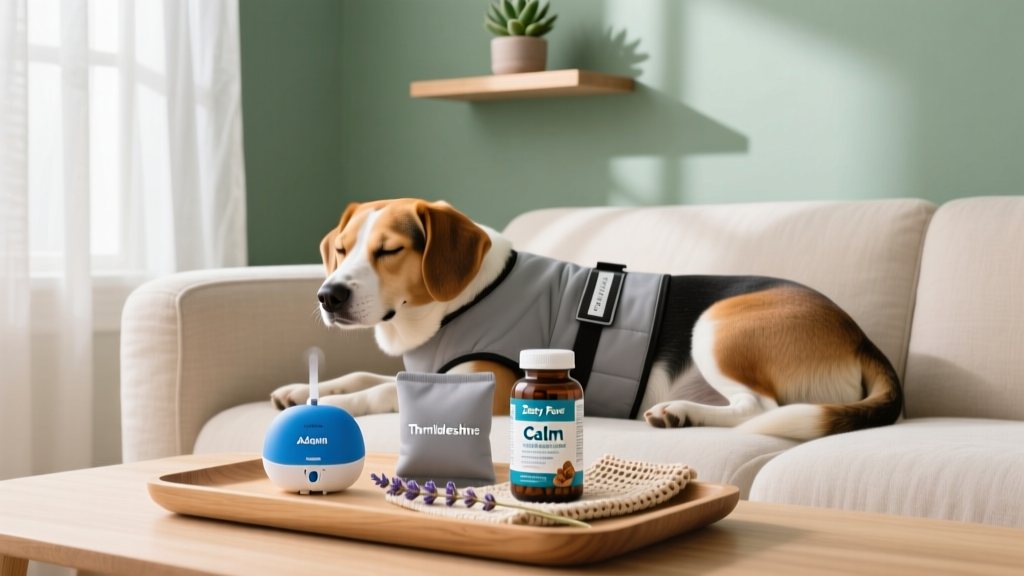
| Calming aids | Adaptil (DAP) diffuser, ThunderEase, Zylkene supplement, Solliquin | Pheromone and nutraceutical support to lower baseline arousal | $20–$60/month |
| Puzzle feeders | Kong Classic, West Paw Toppl, Outward Hound Nina Ottosson puzzles | Reduces frustration, provides mental stimulation, lowers overall arousal | $12–$35 each |
| Training treats | Zuke's Mini Naturals, freeze-dried liver, boiled chicken, string cheese | High-value rewards necessary for counter-conditioning to override fear response | $5–$15 per bag |
| Barrier tools | Regalo baby gates, exercise pens, crate (MidWest iCrate or similar) | Prevents rehearsal of biting behavior during management phase | $30–$80 |
Tools to Avoid — and Why
- Shock collars (e-collar, remote trainer): Pain-based punishment suppresses warning signals (growling, snarling) without addressing the underlying emotional state. Dogs punished for growling often escalate to biting without any warning. A 2020 position statement by the AVSAB specifically recommends against their use for aggression.
- Prong/pinch collars: Create pain associations that can be redirected toward nearby people or animals, worsening aggression.
- Alpha rolls / dominance-based handling: Physically forcing a dog onto its back increases fear and defensive aggression. This technique has been discredited by veterinary behaviorists and the American Kennel Club.
- Leash corrections/jerks: Can create negative associations with the trigger ("every time I see that person, my neck hurts") and increase reactivity.
Realistic Timeline: How Long Does Bite Therapy Take?
| Phase | Timeframe | Expected Progress | Management Level |
|---|---|---|---|
| Medical workup & setup | Weeks 1–2 | Baseline established, triggers identified, management in place | Maximum — muzzle, gates, separation |
| Foundation training | Weeks 2–5 | Dog engages with handler in presence of distant triggers, muzzle conditioned | High — all triggers managed |
| Active DS/CC | Weeks 5–14 | Threshold distance decreases, dog shows CER (looks at trigger, then handler) | Moderate — controlled exposures increasing |
| Generalization | Weeks 14–24 | Dog reliable in multiple contexts at close distances with muzzle | Graduated — muzzle still used in high-risk scenarios |
| Maintenance | Ongoing (months to years) | Dog responds to cues, minimal reactivity in normal life, but may always need management in specific contexts | Reduced but never zero — some triggers may require lifelong management |
Important: These timelines assume consistent daily practice (minimum 15–30 minutes of structured sessions plus management throughout the day), no medical complications, and a dog with Level 2–3 biting history. Dogs with Level 4+ bites or complex multi-trigger cases may require 6–12 months of professional-guided work before significant improvement. There is no guaranteed timeline, and any program promising to "fix biting in 7 days" should be avoided.
When to Hire a Professional Behaviorist
Not all cases of biting can or should be managed by the owner alone. Professional help is not a sign of failure — it is a critical safety measure.
Hire a Professional Immediately If:
- Your dog has delivered a Level 3 or higher bite
- A child, elderly person, or immunocompromised person lives in or regularly visits the home
- The dog's biting is unpredictable (you cannot identify consistent triggers)
- You feel afraid of your own dog
- The dog has bitten multiple people or in multiple contexts
- You have tried management and basic training for 4+ weeks with no improvement or worsening
- The dog shows predatory aggression (silent, quick bites with minimal warning)
Who to Hire:
| Credential | What It Means | Best For | Typical Cost (2026) |
|---|---|---|---|
| DACVB (Diplomate, American College of Veterinary Behaviorists) | Veterinarian with 3+ years of residency in behavior; can prescribe medication | Complex cases, medication evaluation, severe aggression, medical-behavioral overlap | $250–$500 initial consultation; $100–$200 follow-ups |
| CAAB (Certified Applied Animal Behaviorist) | PhD in animal behavior + supervised experience; certified by Animal Behavior Society | Complex behavior modification, bite cases, multi-dog aggression | $150–$350 initial; $80–$150 follow-ups |
| ACAAB (Associate Certified Applied Animal Behaviorist) | Master's degree in behavior-related field + supervised experience | Moderate behavior issues, fear-based aggression, resource guarding | $100–$250 initial; $75–$125 follow-ups |
| CPDT-KA/CPDT-KSA (Certified Professional Dog Trainer) | 300+ hours training experience, passed certification exam, continuing education | Basic obedience, puppy mouthing, mild reactivity (Level 1–2 only) | $75–$150 per session; $500–$1,500 for packages |
Always verify credentials. The dog training industry is unregulated — anyone can call themselves a "behaviorist" without formal education. Look for the credentials above and check directories through the AVSAB, the Animal Behavior Society, or the Certification Council for Professional Dog Trainers (CCPDT).
Medication consideration: For many dogs with fear-based aggression, behavior modification alone is insufficient. Psychotropic medications (SSRIs like fluoxetine, TCAs like clomipramine, or adjunctive medications like trazodone or gabapentin) can lower baseline arousal enough for training to be effective. A DACVB or your primary veterinarian can evaluate whether medication is appropriate. Medication is not a last resort — it can accelerate progress when used early in the protocol.
Prevention: Building Bite Inhibition in Puppies and Newly Adopted Dogs
The most effective dog bite supportive therapy is the one you never need. Prevention starts in puppyhood and continues through the first year of life.
Puppy Bite Inhibition Protocol (8–16 weeks)
- Allow gentle mouthing: Puppies learn bite inhibition through feedback. When teeth touch skin, say "oops" in a neutral tone and withdraw attention for 3–5 seconds. Resume play. This teaches the puppy that gentle mouth = continued play, hard mouth = play stops.
- Redirect to appropriate items: Always have a chew toy available. When the puppy mouths your hand, present the toy and reward chewing on it with praise and continued interaction.
- Structured socialization: Expose the puppy to diverse people (children, elderly, people wearing hats/glasses/uniforms, people of different ethnicities) in positive, controlled settings before the socialization window closes around 14–16 weeks. Pair every new experience with treats and play.
- Handling exercises: Daily, gently handle the puppy's paws, ears, mouth, tail, and belly while feeding treats. This builds tolerance for veterinary exams, grooming, and unexpected touches throughout life.
Newly Adopted Dog Protocol
- Two-week decompression period: Newly adopted dogs need time to adjust. Minimize visitors, keep routines predictable, and do not test the dog's limits during this period. Use management (crate, gates, leash) to prevent rehearsing unwanted behaviors before you know the dog's triggers.
- Consent testing: Before petting, offer your hand and observe. If the dog leans in, pet for 3 seconds, then stop and observe. If the dog solicits more, continue. If the dog moves away or shows tension, respect that signal.
- Resource guarding prevention: Practice "trading up" — offer a higher-value item in exchange for whatever the dog has. Never forcibly take items from the dog's mouth. Feed meals by hand for the first week to build positive associations with human hands near food.
Frequently Asked Questions
Why does my dog bite me but not others?
This is often a sign of redirected frustration or a specific learned association. Your dog may feel more comfortable expressing stress around you (because you are a "safe" person), or they may have learned that biting you makes an unwanted interaction stop. Resource guarding directed at the owner is also common — the dog perceives you as a threat to their valued resource. A behaviorist can help identify the specific dynamic through detailed history-taking.
Is biting normal dog behavior?
Mouthing and gentle play-biting are normal in puppies under 16 weeks. Hard biting that breaks skin is not "normal" in the sense that it should be accepted — but it is a natural canine communication behavior that has become maladaptive in a domestic setting. Dogs use their mouths the way humans use their hands; the goal of bite supportive therapy is to teach the dog that human skin is entirely off-limits while providing appropriate outlets for oral behavior.
How do I stop my dog from biting?
Stopping biting requires a three-part approach: (1) manage the environment to prevent rehearsal of the behavior, (2) identify and address the underlying emotional driver (fear, pain, frustration, guarding), and (3) implement a systematic desensitization and counter-conditioning protocol to change the dog's emotional response to triggers. There is no single technique that stops biting — it requires a comprehensive plan tailored to your specific dog and situation.
How long will it take to fix my dog's biting?
Most dogs with Level 2–3 bite histories show measurable improvement within 8–14 weeks of consistent daily work. However, "fix" is the wrong framework — behavior modification is management and improvement, not a cure. Some dogs will always need management in specific situations (vet visits, children running, unfamiliar men entering the home). Plan for a minimum of 4–6 months of active training, followed by ongoing maintenance.
Should I use punishment to correct biting?
No. Punishment-based methods (hitting, yelling, shock collars, alpha rolls, leash jerks) suppress warning signals without addressing the underlying emotional cause. A dog that is punished for growling may learn to skip the growl and go straight to biting — creating a more dangerous dog. The AVSAB, the American College of Veterinary Behaviorists, and the American Kennel Club all recommend against aversive methods for aggression. Positive reinforcement and counter-conditioning produce more reliable, lasting results with significantly lower risk of escalation.
When do I need a professional behaviorist?
You should consult a credentialed professional (DACVB, CAAB, or ACAAB) immediately if your dog has delivered a Level 3+ bite, if children or vulnerable individuals are in the home, if the biting is unpredictable, or if you have not seen improvement after 4 weeks of consistent management and training. Early professional intervention improves outcomes and reduces the risk of a serious incident.
Can my dog be rehomed if biting doesn't improve?
Rehoming a dog with a bite history is legally and ethically complex. Most shelters and rescues require full disclosure of bite history, and many will not accept dogs with Level 3+ bites. In some jurisdictions, a documented bite triggers legal requirements (quarantine, dangerous dog designation). Consult with a veterinary behaviorist about the full range of options, including long-term management, before considering rehoming or behavioral euthanasia. A DACVB can help you make this decision with full information about prognosis and quality of life for both you and your dog.
Disclaimer: This article provides educational information about dog bite supportive therapy and does not replace professional veterinary or behavioral consultation. If your dog has bitten a person, consult your veterinarian and a credentialed behavior professional immediately. For urgent safety concerns, contact the ASPCA Animal Poison Control at (888) 426-4435 or your nearest emergency veterinary clinic.
Robin Maitland
All our authors care for dogs every day — read more of their work on the authors page.