Canine Stress Relief: Training Guide for Anxious Dogs
Evidence-based canine stress relief strategies covering root causes, step-by-step desensitization protocols, calming tools, and when to hire a certified behaviorist.

If your dog paces during thunderstorms, destroys furniture when left alone, or licks their paws until they're raw, you're watching a dog in distress—not a dog "acting out." Canine stress is one of the most misunderstood behavioral states in pet ownership, and the wrong response can deepen the problem rather than resolve it. This guide breaks down how to identify stress signals, rule out medical causes, and implement a structured relief protocol using force-free methods backed by veterinary behavior science.
What Qualifies as Canine Stress? Defining the Behavioral Thresholds
Canine stress is a physiological and behavioral response to perceived threats, environmental pressure, or unmet needs. It becomes a clinical concern when stress behaviors:
- Occur more than 3–4 times per week in predictable patterns
- Interfere with normal eating, sleeping, or social behavior
- Escalate in intensity over a 2–4 week period
- Include self-injury (acral lick dermatitis, tail chasing to the point of wound)
- Persist for more than 20 minutes after the trigger is removed
Key distinction: Occasional stress responses (trembling during fireworks, panting at the vet) are normal. Chronic stress—where the dog's baseline arousal stays elevated—requires intervention.
Stress behaviors fall into observable categories that help pinpoint severity:
| Category | Mild Indicators | Moderate Indicators | Severe Indicators |
|---|---|---|---|
| Body Language | Lip licking, yawning, whale eye | Tucked tail, trembling, crouching | Freezing, shutdown, learned helplessness |
| Vocalization | Occasional whining | Persistent barking, howling | Screaming, self-directed growling |
| Destructive | Chewing inappropriate items | Door/frame scratching when alone | Self-mutilation, pica (eating non-food items) |
| Physiological | Panting, shedding | Diarrhea, loss of appetite | Chronic GI issues, immune suppression |
Why Is My Dog Stressed? Root Cause Diagnostic Framework
Effective canine stress relief starts with accurate cause identification. Dogs don't experience stress "for no reason"—there's always a trigger, even if it's internal. Work through these five common root causes systematically:
- Fear-Based Stress: Triggered by specific stimuli (strangers, loud noises, other dogs). Onset often traces to insufficient socialization during the 3–14 week critical period or a traumatic event. Dogs show avoidance, flight behavior, or defensive aggression when cornered.
- Separation-Related Stress: Manifests exclusively or primarily when the dog is left alone or separated from a specific person. According to the ASPCA, approximately 20–40% of dogs exhibit some form of separation-related behavior. Signs include following owners room-to-room, distress vocalization within 5–30 minutes of departure, and inappropriate elimination only when alone.
- Boredom and Understimulation: Common in working breeds (Border Collies, Belgian Malinois, German Shepherds) kept in low-activity environments. Stress manifests as compulsive behaviors—spinning, shadow chasing, excessive licking—rather than classic anxiety signs.
- Environmental/Social Stress: Multi-dog household tension, recent moves, schedule changes, new family members (human or animal). Dogs are sensitive to routine disruption; even positive changes like a new baby can trigger stress responses lasting 4–8 weeks during adjustment.
- Medical-Origins Stress: Chronic pain (arthritis, dental disease), hypothyroidism, cognitive dysfunction syndrome (CDS) in seniors, and neurological conditions can all present as behavioral stress. This is why medical rule-out always comes first.
Medical Rule-Out: When to See Your Vet Before Starting Behavior Modification
Before investing weeks in training protocols, you must rule out medical contributors. The Merck Veterinary Manual emphasizes that pain and metabolic disorders frequently masquerade as behavioral problems. A dog with undiagnosed hip dysplasia may appear "anxious" on walks because movement hurts. A hypothyroid dog may seem fearful due to metabolic fatigue.
Schedule a veterinary behavioral workup if your dog shows:
- Sudden onset of stress behaviors in a previously confident dog (especially dogs over 7 years)
- Stress responses paired with physical changes: weight gain/loss, coat deterioration, lethargy
- Aggression or reactivity that appears "out of character"
- Compulsive behaviors (tail chasing, flank sucking) that could indicate neurological involvement
- House soiling in a previously house-trained dog (rule out UTI, kidney disease, CDS)
- Appetite changes alongside behavioral changes
Ask your vet to run: Complete blood count (CBC), chemistry panel, urinalysis, thyroid panel (total T4, free T4, TSH). For senior dogs, request a cognitive dysfunction screening. Cost range: $150–$400 depending on your region and whether specialist referral is needed.
Consult your veterinarian before beginning any behavior modification protocol, particularly if your dog is already on medication or has chronic health conditions. Some stress-related behaviors respond dramatically once an underlying medical issue is treated.
Immediate Management: Preventing Stress Rehearsal While Training
Every time your dog rehearses a stress behavior—pacing for 45 minutes during a storm, destroying a door when left alone—the neural pathway deepens. Management isn't a substitute for training; it's the scaffolding that makes training possible by preventing rehearsal of unwanted patterns.
Environment modification strategies by trigger type:
| Trigger | Immediate Management Tool | Estimated Cost | Why It Works |
|---|---|---|---|
| Noise phobia (storms, fireworks) | Sound-dampened safe space + white noise machine (e.g., LectroFan High Output) | $30–$60 | Reduces auditory stimulus below fear threshold |
| Separation distress | Graduated departure protocol + pet camera (Furbo 360° or Wyze Cam v4) | $35–$170 | Allows monitoring stress levels in real-time during absences |
| Leash reactivity | Visual barriers + distance management (walk at off-peak hours) | $0 | Prevents threshold breach before counter-conditioning begins |
| Multi-dog tension | Physical separation with baby gates + resource stations in separate rooms | $30–$80 | Eliminates competition-based stress triggers |
| Visitor anxiety | Crate or gated room with frozen Kong during arrivals | $15–$40 | Provides alternative behavior incompatible with stress response |
The threshold rule: Management succeeds when your dog stays under their stress threshold—the point where they can notice a trigger but still accept food, respond to cues, and think clearly. Above threshold, learning shuts down. If your dog won't take treats, they're too close to the trigger. Increase distance, reduce intensity, or remove the trigger entirely.
Step-by-Step Canine Stress Relief Training Protocol
This protocol combines desensitization (gradual exposure below threshold) with counter-conditioning (pairing the trigger with positive outcomes) and positive reinforcement of calm alternative behaviors. The AVMA supports force-free methods as the standard of care for behavioral modification.
Phase 1: Foundation (Weeks 1–2)
- Identify the specific trigger hierarchy. List every variant of the stressor from least to most intense. Example for noise phobia: recorded thunder at volume 1 → volume 3 → volume 5 → real distant thunder → storm overhead.
- Establish a "safe zone." Choose a location (crate, specific room, mat) where your dog voluntarily relaxes. Feed meals here. Offer high-value chews here. Never use this space for punishment or forced confinement.
- Teach an incompatible behavior. Train "go to mat" or "settle" using positive reinforcement. Reward duration: start with 3 seconds, build to 5 minutes over 10–14 sessions. Use high-value rewards (real chicken, cheese, freeze-dried liver) at $0.15–$0.30 per treat equivalent.
Phase 2: Desensitization (Weeks 3–8)
- Present the trigger at sub-threshold intensity. For noise phobia: play recorded storm sounds at volume where your dog notices but doesn't react (ears perk, but body stays relaxed). This is typically 10–20% of normal volume.
- Pair immediately with high-value reward. The sequence is: trigger appears → treat delivered → trigger stops. You're building a conditioned emotional response: "thunder predicts chicken."
- Increase intensity by 10–15% only when your dog shows zero stress signals for 3 consecutive sessions. If stress appears, drop back two levels and proceed more slowly.
- Session length: 3–5 minutes maximum, 2–3 times daily. Shorter sessions prevent sensitization (making the fear worse through overexposure).
Phase 3: Generalization (Weeks 8–16)
- Practice in multiple locations. A dog who's calm during recorded thunder in the bedroom may still panic in the living room.
- Add real-world variables gradually. For separation anxiety: practice departures at different times, wearing different clothes, using different doors.
- Reduce treat frequency while maintaining behavior. Shift from continuous reinforcement (treat every time) to variable ratio (treat every 2nd, then every 3rd, then unpredictably) once behavior is reliable.
Tools That Support Canine Stress Relief (and Tools to Avoid)
The right tools accelerate progress. The wrong tools suppress visible symptoms while increasing internal stress—a dangerous combination that often leads to sudden behavioral escalation.
| Category | Recommended Tools | Price Range | Evidence Base |
|---|---|---|---|
| Calming Aids | Adaptil (DAP) diffuser/spray, ThunderShirt, Solliquin supplement | $20–$80 | Peer-reviewed studies show modest efficacy for mild anxiety; best combined with behavior modification |
| Mental Enrichment | Kong Classic, West Paw Toppl, Outward Hound Nina Ottosson puzzles (Level 2–3) | $12–$35 | Mental stimulation reduces cortisol in understimulated dogs; 15 min of puzzle work ≈ 30 min of physical exercise for stress reduction |
| Training Equipment | Front-clip harness (Freedom No-Pull or Ruffwear Front Range), long line (15–30 ft), treat pouch | $25–$65 | Front-clip reduces pulling without pain; long lines allow safe distance management during reactivity work |
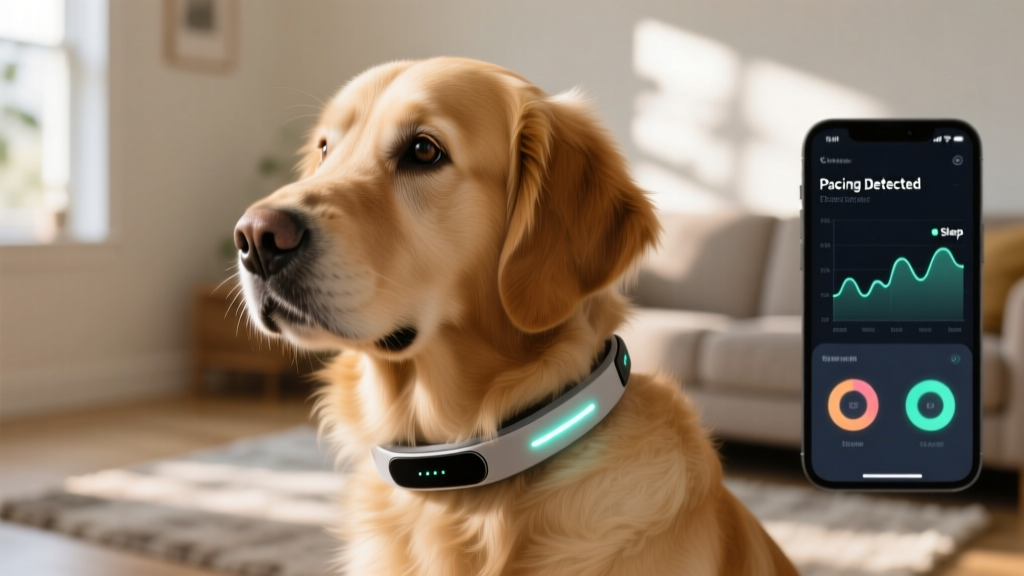
| Monitoring | Pet camera with treat toss (Furbo, Eufy Pet), heart rate variability monitors (research-grade) | $40–$200 | Cameras allow threshold assessment during alone time; essential for separation anxiety protocols |
Tools to avoid—always:
- Shock/e-collars: Suppress stress signals without resolving underlying fear. A 2020 study in the Journal of Veterinary Behavior found dogs trained with shock collars showed more stress behaviors and elevated cortisol compared to reward-trained dogs.
- Prong/choke collars: Add pain to already stressed dogs, creating negative associations with the environment.
- Alpha rolls or physical "dominance" corrections: Based on debunked wolf-pack theory. Increase fear and erode trust.
- Flooding (forced prolonged exposure): Locking a noise-phobic dog in a room with loud thunder "until they get used to it" causes sensitization, not habituation.
Realistic Timeline: What Progress Actually Looks Like
Behavior modification isn't linear. Expect plateaus, occasional setbacks, and breakthroughs that seem sudden after weeks of apparent stagnation. Here's what a realistic canine stress relief timeline looks like for common presentations:
| Stress Type | Mild Cases | Moderate Cases | Severe Cases | Ongoing Maintenance |
|---|---|---|---|---|
| Noise phobia | 4–8 weeks | 3–6 months | 6–12 months + medication | Seasonal refreshers before storm/firework seasons |
| Separation anxiety | 6–8 weeks | 3–6 months | 6–18 months + medication | Never fully unsupervised without camera monitoring |
| Leash reactivity | 4–6 weeks | 2–4 months | 4–8 months | Weekly practice walks in low-trigger environments |
| Generalized anxiety | 6–10 weeks | 4–8 months | Ongoing management | Daily enrichment + structured routine indefinitely |
Progress milestones to track:
- Week 2–3: Dog begins offering calm behaviors voluntarily in safe zone
- Week 4–6: Recovery time after trigger exposure shortens (e.g., from 45 minutes of pacing to 10 minutes)
- Week 6–10: Dog shows anticipatory calm—settling before trigger appears because they predict positive outcome
- Month 3–6: Threshold distance decreases (dog can be closer to trigger without reacting)
- Month 6+: Generalized calm in novel environments with familiar protocols
Setbacks are normal and don't mean failure. Common triggers for regression: illness, schedule disruption, moving, adding a new pet, aging. When setbacks occur, return to the last successful step in the protocol and rebuild forward.
When to Hire a Professional Behaviorist vs. a Trainer
Not all stress cases require professional help—but knowing the difference between a trainer and a behaviorist, and when each is appropriate, saves time and prevents worsening.
Hire a certified professional dog trainer (CPDT-KA) when:
- Your dog's stress is mild and tied to a single, identifiable trigger
- You need help with protocol mechanics (timing, criteria, management setup)
- Cost is a primary concern ($60–$120/session)
Hire a certified applied animal behaviorist (CAAB) or veterinary behaviorist (DACVB) when:
- Your dog has bitten or is at risk of biting due to fear
- Multiple stress triggers are present and you can't identify the hierarchy
- Medication may be needed (only a veterinarian or DACVB can prescribe)
- You've followed a protocol for 6–8 weeks with no measurable progress
- Self-injury or severe compulsive behaviors are present
- Cost: $150–$350/consultation; veterinary behaviorists charge $250–$500+ for initial assessment
Credential verification: Look for certification through the CCPDT (trainers), the Animal Behavior Society (CAAB), or the American College of Veterinary Behaviorists (DACVB). Avoid anyone who guarantees results, uses aversive tools, or claims titles like "certified dog psychologist" from unrecognized institutions.
Prevention: Building Stress Resilience in Puppies and Newly Adopted Dogs
The most effective canine stress relief is prevention. Dogs with strong early foundations handle life disruptions with resilience that stressed adult dogs can only approximate through months of work.
For puppies (8–16 weeks):
- Expose to 100+ novel stimuli before 16 weeks during the socialization window: surfaces, sounds, people of varying appearances, other vaccinated dogs, handling of paws/ears/mouth
- Pair every novel experience with high-value food—build a "new things predict good things" default
- Practice brief separations (1–5 minutes) daily from the first week home to prevent separation distress
- Teach a relaxation protocol: Karen Overall's Protocol for Relaxation (15-step mat training) is the gold standard, freely available through veterinary behavior resources
For newly adopted adult dogs:
- Implement a structured 2-week decompression period: limit visitors, avoid dog parks, maintain predictable schedule, provide a safe crate/room
- Don't assess "true personality" until 3–4 weeks in—shelter stress masks temperament
- Begin mental enrichment from day one: food puzzles, sniff walks (allowing 15–20 minutes of free sniffing on a long line), scent games
- Establish a predictable daily routine within the first 72 hours—predictability itself is a stress reliever for dogs navigating transition
Frequently Asked Questions About Canine Stress Relief
Is it normal for my dog to be stressed?
Acute stress responses to genuinely threatening stimuli are normal—a dog who startles at a loud bang and then recovers within minutes has a healthy nervous system. Chronic stress, where your dog lives in a persistent state of elevated arousal (hypervigilance, inability to settle, constant panting or pacing in non-triggering environments), is not normal and indicates unmet needs or an underlying condition requiring intervention.
How do I stop my dog from showing stress behaviors?
You don't stop the behavior directly—you address the cause. Suppressing stress signals (through punishment or aversive tools) without resolving the underlying fear or anxiety creates a dog who appears calm but remains internally distressed. This often leads to behavioral fallout: redirected aggression, compulsive disorders, or sudden escalation. The protocol above—management, desensitization, counter-conditioning—changes how the dog feels, and the behaviors follow.
Should I use punishment to correct stress behaviors?
No. Punishment applied to a stressed dog adds a second aversive to an already aversive experience. A dog who's punished for growling at strangers doesn't become comfortable with strangers—they learn to skip the warning growl and go straight to biting. Force-free methods are the only approach supported by the AVMA, ASPCA, and the American College of Veterinary Behaviorists for treating stress-related behaviors.
How long will it take to fix my dog's stress?
There is no universal timeline because stress severity, duration, the dog's individual neurochemistry, and owner consistency all vary. Mild noise sensitivity might improve noticeably in 4–6 weeks. Severe separation anxiety with self-injury may require 12–18 months of daily protocol work plus medication. Anyone promising a specific "fix" timeline is not being honest about behavioral science. What you can expect: measurable improvement in recovery time within 3–4 weeks of consistent protocol implementation.
Can medication help with canine stress?
Yes—when prescribed by a veterinarian or veterinary behaviorist. Common medications include fluoxetine (Prozac), clomipramine (Clomicalm), and trazodone for situational use. Medication doesn't "sedate" the dog; it lowers the neurochemical baseline so that behavior modification can work. Dogs on appropriate medication often learn faster because they're no longer trapped above threshold. Medication combined with behavior modification shows significantly better outcomes than either approach alone for moderate to severe cases.
When do I need a professional behaviorist?
Seek professional help immediately if your dog has bitten someone, if stress behaviors include self-injury, if you've followed a structured protocol for 6–8 weeks with no progress, or if the stress is severely impacting your dog's quality of life (won't eat, won't sleep, constant pacing/vocalization). A certified applied animal behaviorist (CAAB) or veterinary behaviorist (DACVB) can design a customized protocol and, in the case of DACVBs, prescribe medication if indicated.
Canine stress relief is a commitment, not a quick fix—but the dogs who work through structured, force-free protocols with patient owners emerge more resilient, more trusting, and genuinely calmer. Start with the medical rule-out, build your management plan, and trust the process. Progress is measured in weeks and months, not days, but every session builds a dog who feels safer in their world.
Jonas Cole
All our authors care for dogs every day — read more of their work on the authors page.