Canine Insect Bites: Why Dogs Obsess Over Bites and How to
Canine insect bites can trigger obsessive licking, scratching, and self-mutilation.

If your dog won't stop licking, chewing, or scratching at a spot where they were bitten by a mosquito, flea, bee, or spider, you're dealing with a problem that's partly medical and partly behavioral. Canine insect bites cause intense localized irritation, and some dogs develop compulsive grooming patterns around the bite site that persist long after the initial sting or itch has resolved. Left unaddressed, these patterns can lead to hot spots, secondary infections, and deep behavioral habits that are increasingly difficult to break.
This guide walks you through exactly why dogs obsess over insect bite sites, when the behavior crosses from normal irritation into a problem requiring intervention, and a step-by-step positive-reinforcement protocol to redirect the behavior — all while keeping your dog comfortable and healing properly.
What Qualifies as Problematic Behavior After Canine Insect Bites
Normal response: Brief sniffing, a few scratches, or one or two licks at a bite site immediately after being bitten. The dog moves on within minutes. Mild redness resolves in 24-48 hours.
Problematic response: Repetitive licking, chewing, or scratching at the bite site lasting more than 5 minutes per session, occurring more than 10 times per day, or continuing beyond 48 hours after the initial bite. The dog cannot be easily redirected, shows signs of distress when interrupted, or has caused visible skin damage (hair loss, raw patches, bleeding, or a moist hotspot).
Severe/compulsive threshold: Sessions lasting 15+ minutes, refusal to eat or play because of fixation, self-mutilation causing open wounds, or the behavior generalizing to areas where no bite occurred.
The distinction matters because normal post-bite grooming is a healthy cleaning instinct. Once the behavior crosses into the problematic range, it begins to self-reinforce — the act of licking releases endorphins in dogs, which means the behavior becomes its own reward independent of the original itch.
Why Does My Dog Obsess Over Insect Bite Sites?
Understanding the root cause is essential before you can change the behavior. Dogs don't obsess over bite sites out of spite or stubbornness. Several overlapping mechanisms drive the fixation:
1. Persistent Pruritus (Itch)
The most common cause. Flea saliva contains at least 15 identified allergens, and dogs with flea allergy dermatitis (FAD) can react to a single bite for 7-14 days. Mosquito bites trigger histamine release that peaks at 24-48 hours. The itch is real, and the dog is trying to relieve genuine discomfort.
2. Secondary Infection
Broken skin from initial scratching introduces bacteria (commonly Staphylococcus pseudintermedius) or yeast (Malassezia). These infections create a new itch cycle that is often more intense than the original bite. The dog is responding to a current medical problem, not the old bite.
3. Anxiety and Stress Displacement
Dogs with baseline anxiety — separation anxiety, noise phobia, generalized anxiety — often channel stress into grooming behaviors. An insect bite provides a focal point, and the licking becomes a self-soothing mechanism similar to nail-biting in humans. Research published in the Journal of Veterinary Behavior has linked overgrooming in dogs to elevated cortisol levels.
4. Boredom and Understimulation
Dogs receiving fewer than their breed-appropriate daily exercise and mental enrichment minutes will fixate on any available stimulation. A mildly itchy bite site becomes the most interesting thing in their environment when they lack alternatives.
5. Learned Attention-Seeking
If every time your dog licks the bite you rush over, talk to them, examine the spot, or give them a treat to distract them, the dog learns that licking the bite produces social interaction. The behavior becomes an attention bid.
Medical Rule-Out: See Your Vet Before Behavior Modification
Behavior modification will fail if an underlying medical issue is driving the fixation. This is the single most common mistake owners make — trying to train away a problem that is fundamentally a health issue. Schedule a veterinary exam if any of the following apply:
| Red Flag | What It May Indicate | Action |
|---|---|---|
| Bite site is swollen beyond 2 inches / 5 cm diameter | Allergic reaction or abscess | Same-day vet visit |
| Warmth, pus, or foul odor from the site | Secondary bacterial infection | Vet within 24 hours; may need antibiotics |
| Bite site is hot, painful, or dog yelps when touched | Spider bite (brown recluse, black widow) or bee sting with retained stinger | Emergency vet visit |
| Facial swelling, hives, vomiting, or difficulty breathing | Anaphylaxis — life-threatening allergic reaction | Emergency vet immediately |
| Behavior persists beyond 7 days despite home management | Unresolved allergy, infection, or compulsive disorder | Full veterinary workup including skin scrape, cytology |
| Multiple bite sites with generalized itching | Flea infestation, mites (sarcoptic or demodectic), or environmental allergy (atopic dermatitis) | Veterinary dermatology assessment |
| Dog is also drinking excessively, losing hair symmetrically, or lethargic | Hypothyroidism or Cushing's disease (can cause skin changes that mimic bite irritation) | Blood panel: thyroid, cortisol, CBC, chemistry |
Your veterinarian may prescribe a short course of anti-inflammatory medication (such as Apoquel/oclacitinib at 0.4-0.6 mg/kg twice daily, or Cytopoint injections) to break the itch cycle before behavior work can be effective. Always consult your veterinarian before starting or adjusting any medication.
Immediate Management: Preventing Rehearsal of the Behavior
Every time your dog licks, chews, or scratches the bite site, the neural pathway for that behavior strengthens. This is called rehearsal, and it's why the behavior gets worse over time rather than better. Your first job is to physically prevent the behavior while you address the underlying cause and implement training.
Physical Barriers That Work
| Tool | Best For | Cost Range (2026) | Notes |
|---|---|---|---|
| Recovery cone (traditional Elizabethan collar) | Any body location | $15-$35 | Most effective but restricts vision and mobility; dogs often bump into furniture |
| Soft inflatable collar (e.g., KONG Cloud Collar) | Body and limb bites; dogs who panic with hard cones | $18-$30 | More comfortable; less effective for tail or paw bites on long-bodied dogs |
| Recovery suit (e.g., Suitical Recovery Suit) | Torso, belly, and upper leg bites | $25-$45 | Excellent alternative to cones for body bites; machine washable; dogs adjust faster |
| Bitter Apple or bitter cherry spray on bandage/wrap | Limb and paw bites (applied to wrap, not directly on wound) | $8-$14 | Deterrent only; some dogs habituate within 2-3 days; never apply to open wounds |
| Baby sock or lightweight boot over paw | Paw pad and toe bites | $5-$15 for dog boots | Secure with veterinary wrap; check every 2 hours for circulation |
Environmental Management
- Reduce access to the trigger: If bites happened in the backyard, limit unsupervised outdoor time until the behavior pattern is broken.
- Increase supervision: Use a tether or keep the dog in the same room as you during the first 5-7 days so you can interrupt the behavior early.
- Remove scratching aids: If the dog rubs the bite on carpet or furniture edges, block access to those surfaces or cover them with smooth material (a taped-down plastic sheet works).
Step-by-Step Training Protocol to Redirect the Behavior
This protocol uses desensitization, counter-conditioning, and differential reinforcement — all evidence-based, force-free methods supported by the American Veterinary Society of Animal Behavior (AVSAB). Expect to work through these steps over 2-6 weeks depending on how entrenched the behavior is.
Phase 1: Interrupt and Redirect (Days 1-5)
- Catch it early: Watch for the first lip-lick or head-turn toward the bite site. The sooner you interrupt, the easier the redirect.
- Use a neutral interrupter: Say a consistent cue like "oops" or "ah-ah" in a calm, low tone. Do NOT yell, startle, or physically pull the dog away — this increases anxiety and can make the behavior worse.
- Redirect to an incompatible behavior: Ask for a behavior that physically prevents licking — "touch" (nose-to-hand target), "go to your mat," or "fetch your toy." The dog cannot lick their leg while touching your hand or carrying a toy.
- Reward generously: Give a high-value treat (freeze-dried liver, boiled chicken, or a lick of peanut butter from a spoon) immediately after the redirect succeeds. You are teaching the dog that NOT licking the bite produces better outcomes than licking it.
- Repeat 15-20 times per day: Consistency is critical in the first 5 days. Set a phone timer for every 90 minutes during waking hours as a reminder to check and practice.
Phase 2: Build an Alternative Coping Behavior (Days 5-14)
- Teach "leave it" for the body: Place a treat on the floor near the dog. Say "leave it." When they look away, mark ("yes!") and reward from your hand. Gradually move the treat closer to their body, then onto their paw, then near the bite site (if accessible). This generalizes impulse control to the area of fixation.
- Introduce a settle protocol: Dr. Karen Overall's Relaxation Protocol — a structured 15-day mat-training program — is the gold standard here. It teaches the dog to remain calm on a mat through increasing distractions. Practice it twice daily for 10-15 minutes.
- Add a calming cue: Pair a specific word ("settle" or "relax") with a calm state. Say the cue only when the dog is already lying down and relaxed, then give a treat. Over 7-10 sessions, the dog associates the word with the physical state of calm.
Phase 3: Desensitize the Bite Area to Handling (Days 10-21)
- Start away from the bite: Touch a neutral body area (shoulder, back) and treat. Repeat 10 times.
- Move incrementally closer: Touch 6 inches from the bite site, treat. Then 4 inches. Then 2 inches. Then adjacent to the site. Then lightly touch the site itself. If the dog shows stress (panting, lip-licking, pulling away) at any step, return to the previous distance and do 10 more repetitions before advancing.
- Add duration: Once the dog tolerates touch at the bite site, hold your hand there for 1 second, treat. Then 2 seconds, treat. Build to 10 seconds of calm contact.
- Simulate grooming: Gently stroke the area as you would during normal petting. This desensitizes the dog to the sensation without the self-directed, obsessive quality of their own licking.
Phase 4: Proof and Fade Management (Days 21-42)
- Remove the cone/recovery suit for short supervised periods: Start with 5-minute sessions where the dog is untethered and you are actively watching. Redirect if needed.
- Increase unsupervised time gradually: Add 5 minutes per session each day. If the dog licks during an unsupervised session, go back to the previous duration for 2 more days before advancing.
- Test in different environments: Practice the "leave it" and redirect protocol in the yard, at a park, and with visitors present. The behavior must generalize beyond the living room.
Tools That Help vs. Tools to Avoid
| Category | Recommended Tools | Why They Work |
|---|---|---|
| Mental enrichment | KONG Classic (stuffed and frozen), West Paw Toppl, Snuffle Mat, Outward Hound Nina Ottosson Dog Brick puzzle | Redirects oral fixation to a productive outlet; frozen KONG provides 20-40 minutes of licking that satisfies the urge without targeting the bite |
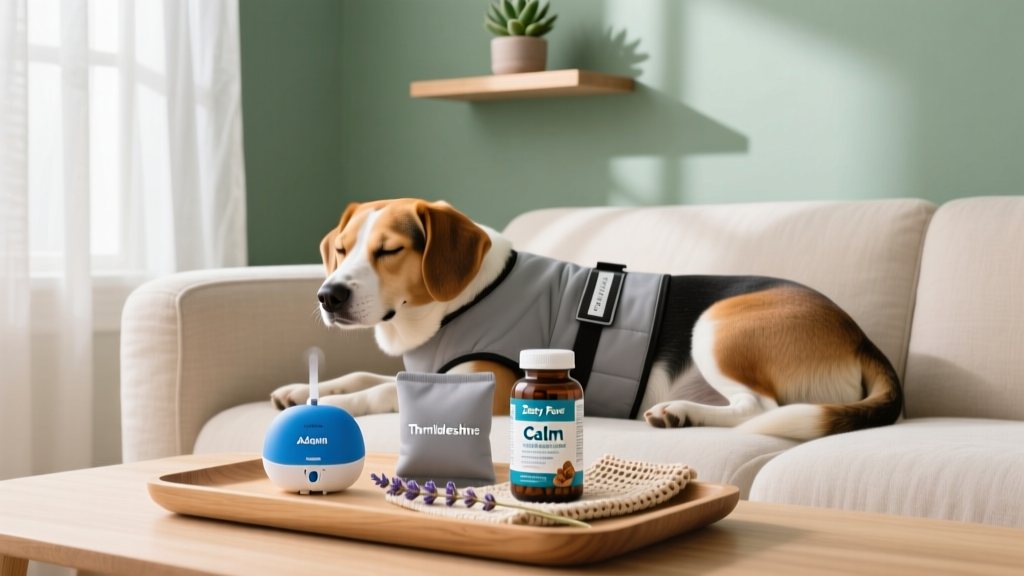
| Calming aids | Adaptil (DAP) diffuser or collar, Thundershirt, VetriScience Composure chews (colostrum + L-theanine), Zesty Paws Calming Bites | Reduce baseline anxiety that amplifies obsessive grooming; Adaptil mimics maternal pheromones; L-theanine at 5-10 mg/kg shows anxiolytic effects in studies |
| Training tools | Clicker (i-Click or Clik-R), treat pouch (Doggy Bag or Ruffwear Treat Trader), 6-foot leash for tethering, non-slip mat (Yoga mat or Vetbed) | Clicker provides precise marking of desired behavior; treat pouch keeps rewards accessible; tethering prevents rehearsal |
| Topical relief | Veterinary-recommended hydrocortisone spray, colloidal oatmeal spray, aloe vera gel (pure, no alcohol) | Reduces the actual itch sensation so the dog has less physiological drive to lick; must be vet-approved for use on the specific wound type |
Tools and Methods to Avoid
Never use these to address post-bite obsessive behavior:
- Shock collars / e-collars: Pain-based interruption increases anxiety and can create new behavioral problems (fear of the environment, redirected aggression). The AVSAB explicitly recommends against their use.
- Prong or choke collars: Same aversive mechanism; no role in treating anxiety-driven grooming.
- Alpha rolls or physical restraint: Dominance-based techniques are debunked and increase stress hormones. A stressed dog will groom more, not less.
- Yelling or physical punishment: Creates fear without teaching an alternative behavior. The dog may suppress licking in your presence but will lick more intensely when alone.
- Bitter sprays applied directly to wounds: Alcohol-based deterrents cause pain on open skin and delay healing.
How Long Will It Take to Fix the Behavior?
There is no universal timeline — progress depends on how long the behavior has been rehearsed, the underlying cause, and consistency of management. Here are realistic milestones based on clinical behavior modification experience:
| Timeline | Expected Progress | If Not Here Yet |
|---|---|---|
| Days 1-3 | Reduced session length (from 15+ min to 5-8 min per episode); dog responds to interrupter within 2-3 seconds | Check: Is the cone fitting properly? Are you interrupting early enough? Is a medical issue unaddressed? |
| Days 5-7 | Fewer total daily episodes (50%+ reduction); dog begins to offer alternative behaviors (looking at you instead of the bite) without prompting | Review treat value — are rewards motivating enough? Increase enrichment. Verify no secondary infection. |
| Weeks 2-3 | Dog can be unsupervised for 15-30 minutes without licking; redirect is successful 80%+ of the time with a single cue | Normal plateau. Continue protocol. If regression occurs, return to Phase 1 for 3 days. |
| Weeks 4-6 | Bite site fully healed; dog shows minimal interest in the area; recovery gear fully removed; occasional glances at the site but no sustained licking | If fixation persists beyond 6 weeks, consult a veterinary behaviorist — this may be a compulsive disorder requiring medication (e.g., fluoxetine at 1-2 mg/kg daily). |
Dogs with a history of prior obsessive grooming, high-anxiety temperaments, or underlying atopic dermatitis may need 8-12 weeks. This is normal, not failure.
Prevention: Protecting Puppies and Newly Adopted Dogs
The best time to prevent obsessive bite-site behavior is before it starts. Puppies and newly adopted dogs are especially vulnerable because they lack established coping behaviors and may have heightened stress responses.
Insect Bite Prevention
- Year-round flea and tick preventive: Products like Bravecto (fluralaner, 12-week chew), NexGard (afoxolaner, monthly), or Simparica Trio (sarolaner + moxidectin + pyrantel, monthly) prevent flea bites entirely. Cost ranges from $50-$80 per dose depending on dog weight.
- Heartworm preventive with mosquito repellency: Heartgard Plus and Interceptor Plus prevent heartworm but do not repel mosquitoes. For mosquito-heavy areas, discuss adding a topical repellent (K9 Advantix II, which contains permethrin — note: permethrin is highly toxic to cats; never use in multi-pet households with cats).
- Yard management: Remove standing water (mosquito breeding), keep grass below 3 inches, and consider pet-safe outdoor insect control like beneficial nematodes (Steinernema carpocapsae) for flea larvae — approximately $30-$50 for a 2,000 sq ft treatment.
- Timing of outdoor activity: Mosquitoes peak at dawn and dusk. Schedule walks for mid-morning and mid-afternoon in summer months to reduce exposure.
Building Resilience Against Obsessive Behavior
- Teach "leave it" and "touch" as foundation behaviors within the first 2 weeks of bringing a new dog home. These become your redirect tools if a bite ever occurs.
- Provide 30-60 minutes of daily mental enrichment (breed-dependent — working breeds need more). A mentally tired dog is less likely to fixate on minor irritations.
- Practice handling exercises daily: Touch paws, ears, tail, and belly while giving treats. A dog comfortable with being handled is easier to examine and treat if bitten.
- Establish a relaxation protocol early: Karen Overall's Relaxation Protocol or Emily Larlham's "capturing calmness" technique teaches the dog that settling is a default, rewarded behavior.
When Do I Need a Professional Behaviorist?
Not every case requires a specialist, but knowing when to escalate saves time and prevents the behavior from becoming deeply ingrained.
Contact a certified professional if:
- The behavior has persisted beyond 4 weeks despite consistent application of the protocol above.
- Your dog has caused significant self-injury (open wounds requiring veterinary treatment, repeated hotspot recurrence).
- The licking/chewing has generalized to multiple body sites with no corresponding bites.
- You notice other anxiety indicators: pacing, panting, trembling, destructive behavior, or aggression when interrupted.
- You feel frustrated, overwhelmed, or are tempted to use punitive methods — a professional can support you and keep the training humane.
Who to hire:
- Veterinary Behaviorist (DACVB): A veterinarian with board certification in behavior. Can diagnose medical vs. behavioral causes, prescribe medication (SSRIs, TCAs), and design a behavior modification plan. Cost: $250-$500 for initial consultation (1.5-2 hours). Find one via the American College of Veterinary Behaviorists directory.
- Certified Applied Animal Behaviorist (CAAB): PhD-level animal behaviorist certified by the Animal Behavior Society. Cannot prescribe medication but provides expert behavior modification plans. Cost: $150-$350 per session. Directory at animalbehaviorsociety.info.
- Certified Professional Dog Trainer (CPDT-KA) or IAABC-certified behavior consultant: For less severe cases or implementation support after a behaviorist has created a plan. Cost: $80-$150 per session. Look for force-free certifications only.
Frequently Asked Questions
Is it normal for my dog to lick an insect bite?
A few licks immediately after being bitten is normal — dogs instinctively clean wounds and the mild anesthetic properties of saliva provide brief relief. The problem starts when licking becomes repetitive, prolonged, or continues beyond the initial healing window. If your dog spends more than a minute or two checking the spot and then moves on, there's no cause for concern.
How do I stop my dog from licking an insect bite at night?
Nighttime is when most obsessive licking happens because the dog is unsupervised and bored. Use a recovery suit or cone during the first 7-14 nights. Place a frozen KONG in the crate at bedtime to provide a competing licking outlet. A white noise machine or calming music (Through a Dog's Ear, available on streaming platforms) can reduce nighttime anxiety that fuels the behavior.
Should I use punishment to stop my dog from chewing at a bite?
No. Punishment suppresses behavior temporarily without addressing the underlying drive (itch, anxiety, boredom) and increases stress hormones that make obsessive grooming worse. Dogs punished for licking often develop covert licking — they wait until you leave the room and then lick more intensely. Positive reinforcement of alternative behaviors is more effective and doesn't damage your relationship with your dog.
Can insect bites cause long-term behavioral changes in dogs?
A single bite is unlikely to cause lasting behavioral change. However, dogs that experience severe reactions — such as a painful spider bite or multiple bee stings — may develop fear responses to the location or context where the bites occurred (e.g., refusing to enter the backyard, fear of buzzing sounds). This is classical conditioning and can be addressed with systematic desensitization. Additionally, dogs that develop a habit of obsessive grooming during a bite episode may carry that habit forward to future itches, even unrelated ones.
My dog was bitten by a bee — when is it an emergency?
Seek emergency veterinary care immediately if your dog shows facial swelling (especially around the muzzle and throat), hives spreading beyond the sting site, vomiting, diarrhea, pale gums, difficulty breathing, or collapse. These are signs of anaphylaxis, which can be fatal within 20-30 minutes without treatment. Dogs stung inside the mouth or throat (from snapping at a bee) are at higher risk because swelling can obstruct the airway. For mild reactions — localized swelling under 2 inches, mild discomfort — you can apply a cold compress and monitor, but call your vet for guidance. If you suspect your dog has ingested a toxic insect (such as a blister beetle or certain caterpillars), contact the ASPCA Animal Poison Control Center at (888) 426-4435 (24/7, consultation fee applies).
Are certain breeds more prone to obsessing over insect bites?
Yes. Breeds predisposed to atopic dermatitis — including West Highland White Terriers, French Bulldogs, Golden Retrievers, Labrador Retrievers, and German Shepherds — have heightened itch responses and are more likely to develop obsessive grooming after bites. Breeds prone to anxiety and compulsive disorders — such as Doberman Pinschers (flank sucking), Bull Terriers (spinning/tail chasing), and German Shepherds — may also fixate more readily. Brachycephalic breeds (bulldogs, pugs) with skin folds are at higher risk for secondary infections at bite sites in fold areas, which perpetuates the itch cycle.
Robin Maitland
All our authors care for dogs every day — read more of their work on the authors page.