Anxiety Service Dog Training: Behavior Solutions That Actually Work
Guide to training an anxiety service dog: root causes, step-by-step desensitization protocols, management tools, and realistic timelines for success.

What Qualifies as Anxiety-Related Problem Behavior in Service Dogs?
Not every nervous reaction disqualifies a dog from service work — but certain thresholds matter when a dog's job is to support a handler with a psychiatric disability. An anxiety service dog (also called a psychiatric service dog or PSD) must remain task-focused in public settings while performing trained mitigating behaviors like deep pressure therapy, grounding, interruption of self-harm, or room checks. When anxiety-driven behaviors interfere with these tasks, both handler safety and ADA public access rights are at stake.
- Frequency: Anxiety responses (panting, trembling, avoidance, whining) occurring in more than 3 out of 5 public access outings
- Intensity: Dog breaks task to exhibit displacement behaviors (excessive licking, scratching, sniffing) for more than 30 continuous seconds
- Recovery time: Takes longer than 2 minutes to return to baseline after a trigger exposure
- Generalization failure: Performs trained tasks at home but cannot execute them in novel environments
- Handler impact: Dog's anxiety amplifies the handler's own anxiety symptoms rather than mitigating them
According to the Assistance Dogs International (ADI), service dogs must demonstrate stable temperament and reliable task performance across varied environments. A dog that cannot meet these standards isn't "failing" — it may simply need a different behavioral protocol, additional training time, or may be better suited as an in-home companion rather than a public access working dog.
Root Cause Analysis: Why Is My Anxiety Service Dog Struggling?
Before modifying any behavior, you need to identify what's driving it. Anxiety in service dogs typically stems from one or more of these five root causes. Understanding the origin determines which training protocol will actually work.
- Incomplete Socialization (Fear-Based Anxiety)
- Signs: Dog freezes, cowers, or attempts to flee from specific stimuli (men in hats, automatic doors, loud noises)
- Typical onset: Becomes apparent between 8-14 months as fear periods solidify
- Prevalence: Affects an estimated 30-40% of dogs identified in a 2020 study published in Scientific Reports examining fear-related behaviors
- Overstimulation / Environmental Overload
- Signs: Dog works well for 20-30 minutes then deteriorates — increased panting, loss of focus, task refusal
- Typical onset: Gradual, often noticed after increasing public access duration
- Common in: High-drive breeds (Border Collies, Belgian Malinois) placed in low-stimulation home environments before training
- Handler Emotional Contagion
- Signs: Dog mirrors handler's anxiety escalation; performs poorly specifically when handler is symptomatic
- Typical onset: Develops over weeks/months of close handler-dog pairing
- Key indicator: Dog works fine with a different handler or trainer
- Medical / Pain-Based Anxiety
- Signs: Sudden behavioral change, reluctance to perform physical tasks (deep pressure, retrieval), irritability when touched
- Typical onset: Can appear at any age; often acute
- Common culprits: Hip dysplasia, ear infections, GI discomfort, hypothyroidism
- Insufficient Task Foundation (Boredom / Frustration)
- Signs: Dog offers displacement behaviors, creates its own "jobs" (counter-surfing, leash grabbing), appears restless during work
- Typical onset: Appears when training plateaus or tasks are too simple for the dog's cognitive capacity
- Common in: Highly intelligent breeds given only 1-2 tasks without cognitive enrichment
Medical Rule-Out: When to See a Vet Before Behavior Modification
This step is non-negotiable. The Merck Veterinary Manual emphasizes that behavioral changes can be the first indicator of underlying medical conditions. Attempting behavior modification on a dog in pain or with a hormonal imbalance wastes time and can worsen the problem.
Schedule a full workup with your veterinarian if your anxiety service dog shows any of the following:
- ☐ Sudden behavioral change (previously confident dog now avoids tasks or environments)
- ☐ Reluctance to perform physical tasks — especially deep pressure therapy, brace work, or retrieval
- ☐ Sleep disruption — restlessness at night, difficulty settling
- ☐ Appetite changes — decreased interest in food or training treats
- ☐ Excessive panting or drooling not correlated with temperature or exercise
- ☐ Gastrointestinal signs — loose stools, vomiting, excessive gas (stress colitis is common in anxious working dogs)
Ask your vet to run: Complete blood count (CBC), chemistry panel, thyroid panel (full T4, free T4, T3 — not just total T4), urinalysis, and orthopedic exam. Cost range: $250-$500 depending on your region and whether sedation is needed for imaging.
Always consult your veterinarian before starting any behavior modification program, especially if medication may be indicated.
Immediate Management: Stop the Rehearsal Cycle
Every time your anxiety service dog rehearses a fear response — panicking in a store, shutting down at a crosswalk, barking at a stranger — the neural pathway for that response strengthens. Management means structuring the dog's environment so those rehearsals stop while you build new, adaptive responses through training.
Environmental management strategies to implement immediately:
- Reduce public access outings by 50-75% during the initial 4-6 week training phase. Use your dog only in environments where it has already demonstrated success.
- Implement "decompression walks" — 20-30 minute sniffing sessions on a long line (15-25 ft) in low-traffic natural areas, 3-5 times per week. Research from the ASPCA supports sniffing as a natural cortisol-reducing activity.
- Use a "safe station" protocol — teach your dog to go to a specific mat or bed and settle. This becomes the default behavior when you cannot actively train.
- Limit exposure to known triggers below threshold. If your dog reacts to other dogs at 30 feet, maintain 50+ feet distance during this phase. The goal is zero rehearsals of the problem behavior.
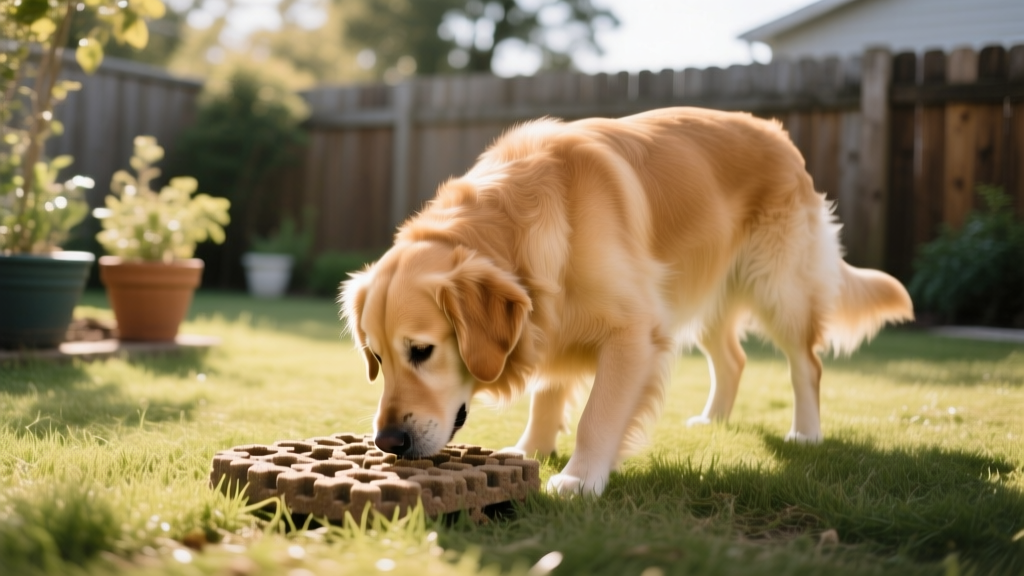
- Provide cognitive enrichment at home — puzzle feeders (Kong Wobbler, Outward Hound Nina Ottosson puzzles, $15-$35), frozen Kongs, snuffle mats. A mentally tired dog has a lower stress baseline.
Step-by-Step Training Protocol for Anxiety Service Dogs
This protocol uses desensitization, counter-conditioning, and positive reinforcement — the gold standard for fear and anxiety modification. Expect to work through these phases sequentially. Do not skip steps.
Phase 1: Baseline Assessment (Week 1-2)
- Identify your dog's top 3-5 anxiety triggers and rank them by intensity (1 = mild concern, 5 = full panic)
- Find each trigger's threshold distance — the point where your dog notices but does not react (ears forward, can still take treats, body relaxed)
- Establish a high-value reward hierarchy: rank treats from everyday kibble to "jackpot" items (freeze-dried liver, boiled chicken, cheese). Anxiety work requires the top tier.
- Baseline duration: record how long your dog can maintain a "settle" or "watch me" at home with zero distractions. This is your starting benchmark.
Phase 2: Desensitization + Counter-Conditioning (Week 3-10)
- Week 3-4: Expose trigger at sub-threshold intensity (e.g., recorded thunderstorm at volume 1/10, stranger at 80 feet). Pair with jackpot treat. 5-10 repetitions per session, 2 sessions per day.
- Week 5-6: Increase intensity by one step (volume 2/10, stranger at 60 feet). Dog should still be under threshold — able to eat treats readily, body loose. If dog refuses treats, you've moved too fast. Drop back one step.
- Week 7-8: Begin adding duration — dog must maintain calm for 5 seconds at new intensity before treat delivery. Build to 10 seconds, then 15.
- Week 9-10: Introduce mild environmental complexity (new location, one additional distraction). Keep trigger intensity at the level your dog is currently succeeding at.
Phase 3: Task Integration (Week 11-16)
- Begin asking for trained service tasks (deep pressure, alert, retrieval) at sub-threshold trigger distances
- Reward task completion with jackpot treats + verbal marker ("yes!")
- Gradually decrease distance to trigger by 5-10 feet per week, only if dog continues to perform tasks willingly
- Practice "emergency settle" — a trained behavior where dog lies down and makes eye contact with handler on cue, regardless of environment
Phase 4: Generalization + Proofing (Week 17-24+)
- Take trained responses to 5+ novel locations at sub-threshold distances
- Introduce controlled "setbacks" — brief exposures to slightly above-threshold stimuli, then immediately return to successful distance and reward heavily
- Begin timed public access practice: start with 10-minute outings, increase by 5 minutes per successful session
- Record all sessions in a training log: date, location, trigger distance, dog's response (1-5 scale), tasks performed
Tools That Help — and Tools to Avoid
The right equipment supports your training protocol. The wrong tools can escalate anxiety and damage your dog's trust. Here's a practical comparison based on current behavioral science.
| Tool | Category | Why / Why Not | Cost Range |
|---|---|---|---|
| Front-clip harness (Ruffwear Front Range, Kurgo Tru-Fit) | ✅ Recommended | Reduces pulling without neck pressure; gives handler control during anxiety episodes | $25-$55 |
| Calming vest (ThunderShirt, Anxiety Wrap) | ✅ May Help | Gentle compression may reduce arousal in some dogs; evidence is mixed but low-risk intervention | $30-$70 |
| Puzzle feeders (Kong Wobbler, Nina Ottosson Dog Brick) | ✅ Recommended | Mental enrichment lowers baseline stress; use during management phase and as decompression after training | $12-$40 |
| Adaptil (DAP) diffuser/collar | ✅ May Help | Synthetic dog-appeasing pheromone; some studies show modest calming effects. Use as adjunct, not primary treatment | $20-$50 |
| Long training line (15-25 ft biothane or cotton) | ✅ Recommended | Essential for decompression walks; gives dog freedom to sniff and explore while maintaining safety | $15-$35 |
| Lick mat (Hyper Pet IQ, LickiMat Soother) | ✅ Recommended | Licking is self-soothing for dogs; spread with peanut butter or yogurt and freeze for 15-20 min calming sessions | $8-$18 |
| Shock/e-collars | ❌ Avoid | Suppresses outward signs of anxiety without addressing root cause; increases cortisol; risks fallout including redirected aggression | — |
| Prong/pinch collars | ❌ Avoid | Pain-based correction damages trust; anxious dogs may shut down or escalate; incompatible with force-free service dog training standards | — |
| Alpha rolls / physical domination | ❌ Avoid | Debunked dominance theory; causes fear, not compliance; a service dog must trust its handler to work reliably | — |
Realistic Timeline: How Long Will It Take to Fix Anxiety Behaviors?
Honest answer: there is no universal timeline. Anxiety modification is measured in months, not days. However, based on typical case progressions in service dog training programs, here's what realistic milestones look like.
| Timeframe | What You Should See | If You Don't See This |
|---|---|---|
| Week 2-3 | Dog takes treats more readily at sub-threshold distances; body language slightly more relaxed during controlled exposures | Reassess threshold distance — you may be too close to trigger |
| Week 6-8 | Noticeable reduction in intensity of anxiety responses; dog recovers from mild trigger exposures within 30-60 seconds | Consult a veterinary behaviorist; medication may be needed to lower anxiety baseline |
| Week 12-16 | Dog performs 1-2 trained tasks at moderate trigger distances; handler reports increased confidence in public settings | Review task foundation; ensure tasks are fluent at home before adding environmental difficulty |
| Month 6-9 | Dog works reliably in 3+ public environments; anxiety responses are mild and self-resolving within seconds | Evaluate whether dog is suited for public access work; in-home service dog status may be more appropriate |
| Month 12+ | Maintenance training 2-3x per week; occasional "booster" sessions for specific triggers; ADI Public Access Test readiness | Ongoing setbacks after 12 months warrant full re-evaluation with a certified behaviorist |
When to Hire a Professional: Behaviorist vs. Trainer
Not all anxiety cases can be managed with owner-led protocols. Knowing when to bring in a professional — and which type — can save months of frustration and prevent welfare compromises for your dog.
- Your dog has bitten or snapped at a person or another animal during an anxiety episode
- Anxiety responses are escalating in intensity despite 4+ weeks of consistent protocol work
- Your dog cannot eat treats in any public environment (indicates arousal above the "appetite threshold")
- You feel unsafe, overwhelmed, or unable to implement the protocol consistently
- Your dog shows signs of learned helplessness — shutting down completely, refusing to move, becoming unresponsive
Who to hire and what they do:
- Diplomate of the American College of Veterinary Behaviorists (DACVB): A veterinarian with advanced residency training in behavior. Can diagnose medical contributors, prescribe anxiolytic medication (fluoxetine, clomipramine, trazodone), and design comprehensive behavior modification plans. Cost: $300-$600 initial consultation, $150-$300 follow-ups. There are fewer than 100 DACVB diplomates in the US — expect wait times of 2-6 months. Find one at dacvb.org.
- Certified Applied Animal Behaviorist (CAAB): PhD-level animal behaviorist certified by the Animal Behavior Society. Cannot prescribe medication but provides expert behavior modification plans. Cost: $150-$350 per session.
- Certified Professional Dog Trainer — Knowledge Assessed (CPDT-KA): Experienced trainer with demonstrated knowledge of learning theory. Best for implementation support — they help you execute the plan. Cost: $75-$150 per session. Look for trainers with specific service dog experience through the CCPDT directory.
- ADI-Accredited Service Dog Organization: If your dog came from a program, contact them first. Most reputable programs offer lifetime training support and may take the dog back for retraining or career-change if needed.
Prevention: Building Resilience in Puppies and Newly Adopted Dogs
The best anxiety intervention is prevention. Whether you're raising a service dog prospect from puppyhood or evaluating a newly adopted adult dog, these strategies build the emotional resilience that anxiety service dogs need.
For puppies (8-16 weeks — critical socialization window):
- Expose to 100+ novel stimuli before 16 weeks: surfaces (gravel, metal grates, wet grass), sounds (recorded fireworks, construction noise, children screaming), people (different ethnicities, ages, clothing, mobility aids), and environments (parking garages, elevators, busy sidewalks)
- Every novel experience must be paired with food and choice — let the puppy approach voluntarily; never force exposure
- Enroll in a well-run puppy socialization class (veterinary-supervised, vaccination-protocol-compliant) — the AVMA supports early socialization classes for puppies who have received at least their first DHPP vaccine
- Practice "settle" protocols daily: Karen Overall's Relaxation Protocol (20 incremental steps over 20 days) is the industry standard
For newly adopted adult dogs:
- Implement a structured 2-week "decompression period" — minimal outings, predictable routine, no public access training, limited visitors
- Use the 3-3-3 rule: expect 3 days of shutdown behavior, 3 weeks of personality emergence, 3 months of true bonding and routine establishment
- Assess temperament formally before beginning task training: the AKC Temperament Test provides a standardized framework for evaluating reactivity, confidence, and sociability
- Build a "confidence portfolio" — a list of 20+ things your dog does willingly and happily. This becomes your foundation for task selection
Frequently Asked Questions
Why does my anxiety service dog become anxious if it's supposed to help with anxiety?
This is one of the most common misconceptions about psychiatric service dogs. A service dog is not born anxiety-proof — it's trained to perform specific tasks despite environmental stressors. However, dogs have their own emotional lives and stress responses. A dog can be highly trained yet still experience anxiety when environmental demands exceed its coping capacity. This is why ongoing training, veterinary care, and handler awareness of the dog's stress signals are essential components of any service dog partnership. The dog supports you — but you also need to support the dog.
How do I stop my dog from shutting down during public access work?
Shutdown (freezing, refusing to move, becoming unresponsive) indicates your dog is above its anxiety threshold. Immediately reduce environmental demands: move to a quieter area, give your dog space, and offer high-value treats without demanding any behavior. Do not force your dog to continue working. Long-term, you need to rebuild the dog's confidence through systematic desensitization at sub-threshold distances, starting in low-stimulation environments and gradually increasing difficulty. If shutdown episodes recur despite protocol work, consult a veterinary behaviorist to discuss whether medication support is appropriate.
Is it normal for a service dog in training to show anxiety?
Some anxiety during training is expected — especially during adolescence (6-18 months) when dogs go through fear periods and hormonal changes. The AKC notes that even well-bred service dog prospects may show temporary sensitivity to novel stimuli during these developmental windows. What's not normal is persistent, escalating anxiety that doesn't improve with consistent training over 8-12 weeks, or anxiety so severe that the dog cannot eat, play, or rest normally. The distinction matters: temporary developmental phases resolve with patient training, while clinical anxiety requires professional intervention.
How long will it take to fix my service dog's anxiety?
Realistic timelines range from 3-12 months for mild to moderate anxiety, and 12-24+ months for severe cases or dogs with complex trauma histories. Some dogs never fully overcome certain triggers and instead learn to manage them with handler support. There is no shortcut — any program promising results in days or weeks is using suppression, not genuine behavior modification. Progress is non-linear: expect plateaus, occasional setbacks, and gradual improvement rather than steady upward movement.
Should I use punishment to correct anxiety behaviors in my service dog?
No. Punishment — including shock collars, prong collars, leash corrections, verbal reprimands, or physical force — suppresses the outward expression of anxiety without addressing the underlying emotional state. Your dog is not "misbehaving" when it shows anxiety; it is communicating distress. Punishing distress signals teaches the dog that expressing fear leads to negative consequences, which can result in shutdown, learned helplessness, or redirected aggression. Force-free, positive reinforcement methods are the only approach supported by the veterinary behavior community and by Assistance Dogs International standards for service dog training.
When do I need a professional behaviorist for my anxiety service dog?
Consult a veterinary behaviorist (DACVB) or Certified Applied Animal Behaviorist (CAAB) if: your dog has shown aggression of any kind, anxiety is worsening despite 4+ weeks of consistent protocol work, your dog cannot eat in public environments, you're experiencing handler burnout or emotional distress from managing the behavior, or you're considering removing the dog from service work. Early professional intervention typically produces better outcomes and costs less long-term than months of trial-and-error. Many veterinary behaviorists now offer telemedicine consultations ($200-$400) if you don't have one locally.
Can medication help my anxiety service dog?
Yes — and in some cases, it's essential. Medications like fluoxetine (Prozac), clomipramine (Clomicalm), and trazodone can lower a dog's baseline anxiety enough for behavior modification to take effect. Think of medication as lowering the volume on your dog's anxiety so training can actually reach them. Medication should always be prescribed by a veterinarian (ideally a veterinary behaviorist) and paired with a structured behavior modification plan. Medication alone without training rarely produces lasting results. Your vet will determine the appropriate drug, dosage, and monitoring schedule.
Disclaimer: This article provides educational guidance and is not a substitute for professional veterinary or behavioral consultation. Every dog is an individual — work with qualified professionals to develop a plan tailored to your specific dog and situation. Service dog laws vary by jurisdiction; consult local regulations and the ADA for public access requirements.
Marcus Aldridge
All our authors care for dogs every day — read more of their work on the authors page.