Anxiety Pills for Dogs: When Medication Is (and Isn't) the Right Move
A comprehensive guide to anxiety pills for dogs: when medication helps, behavior protocols that work, costs, timelines

If your dog destroys the couch every time you leave, trembles during thunderstorms, or lunges at every dog on the street, you've probably typed "anxiety pills for dogs" into a search bar at 2 a.m. You're not alone. According to a 2023 study published in the Journal of Veterinary Behavior, approximately 72.5% of dogs exhibit at least one anxiety-related behavior, with noise sensitivity and separation anxiety topping the list.
Medication can be a powerful tool — but it's rarely the whole solution. This guide walks you through when anxiety medication makes sense, which drugs your vet might consider, the behavior modification protocols that create lasting change, and how to combine both for the best outcome.
What Qualifies as Clinical Anxiety in Dogs?
Normal stress response: Your dog pants during a vet visit, hides briefly during fireworks, or whines when you first leave but settles within 15–20 minutes. These are adaptive, temporary reactions.
Clinical anxiety threshold: The behavior persists beyond the trigger, escalates over time, causes physical harm (self-injury, broken teeth from crate escape attempts), or prevents the dog from eating, sleeping, or learning. If anxiety responses occur daily or last longer than 30 minutes after the trigger ends, you're likely dealing with a clinical-level problem that warrants professional evaluation.
Key behavioral indicators that cross the line from normal to concerning include:
- Destructive behavior targeted at exit points (doors, windows, door frames)
- Excessive vocalization (howling, barking) for 30+ minutes without stopping
- Self-mutilation — licking paws raw, chewing at the tail or flanks until wounds form
- Inability to settle even in familiar, safe environments
- Repetitive or compulsive behaviors: flank sucking, tail chasing, shadow staring
- Elimination in a previously house-trained dog, specifically when left alone
- Refusal to eat or drink when the owner is absent
- Aggression triggered by fear (lunging, biting when cornered or approached during a fear episode)
Why Does My Dog Have Anxiety? Root Cause Analysis
Anxiety isn't a single diagnosis — it's a symptom with multiple possible drivers. Before reaching for medication, understanding the root cause determines which treatment path will actually work.
| Root Cause | Typical Presentation | Common Triggers | Medication Role |
|---|---|---|---|
| Separation anxiety | Destruction, vocalization, elimination only when left alone; hyper-attachment to owner | Owner departure, being crated, isolation | Often essential — SSRIs combined with departure desensitization |
| Noise phobia | Trembling, hiding, escape attempts, panting, drooling during storms or fireworks | Thunder, fireworks, construction, alarms | Fast-acting situational meds (trazodone, SILEO gel) highly effective |
| Generalized anxiety | Chronic hypervigilance, inability to relax, startle response to normal stimuli | Environmental changes, multi-dog stress, chronic overstimulation | Daily SSRIs or TCAs as baseline support |
| Fear-based reactivity | Lunging, barking, aggression toward dogs or strangers on leash | Proximity to triggers, leash frustration, past trauma | Adjunct to behavior modification; may lower reactivity threshold |
| Medical/organic cause | Sudden-onset anxiety in a previously calm dog, especially in seniors | Cognitive dysfunction, hypothyroidism, pain, neurological disease | Treating underlying condition may resolve anxiety entirely |
One commonly overlooked driver: pain. A 2019 study in Frontiers in Veterinary Science found that undiagnosed musculoskeletal pain was a contributing factor in up to 40% of dogs presented for aggression and anxiety-related behaviors. A dog with hip dysplasia may become reactive on leash not from fear, but because other dogs bumping into them hurts.
Medical Rule-Out: See Your Vet Before Starting Behavior Work
Before any behavior modification program or medication trial begins, a thorough veterinary workup is non-negotiable. Anxiety can be a secondary symptom of treatable medical conditions, and training a dog whose anxiety is medically driven is like trying to teach someone to swim while they have a broken arm.
Ask your veterinarian to evaluate for the following before starting anxiety medication or behavior protocols:
- Thyroid panel (full thyroid, not just T4): Hypothyroidism is strongly linked to anxiety and aggression in dogs. Subclinical cases can be missed on basic screening. A full panel including free T4, total T4, free T3, and thyroid antibodies gives a clearer picture.
- Comprehensive pain assessment: Orthopedic exam, spinal palpation, and potentially radiographs. Dogs in pain often present as "anxious" or "aggressive." Cost: $150–$400 for exam and basic imaging.
- Urinalysis and blood chemistry: Rules out urinary tract infections (which cause inappropriate elimination often mistaken for separation anxiety), liver/kidney dysfunction, and metabolic issues.
- Neurological exam: Particularly for senior dogs showing new-onset anxiety — may indicate canine cognitive dysfunction (CCD), brain tumors, or other neurological conditions.
- Hearing and vision assessment: Partially deaf or blind dogs may startle more easily, creating a pattern that looks like generalized anxiety.
Important: Always consult your veterinarian before starting, stopping, or adjusting any medication for your dog. The information in this guide is educational and does not replace professional veterinary advice.
Anxiety Pills for Dogs: What Your Vet May Prescribe
There are two broad categories of anxiety medication for dogs: daily maintenance medications that build up over weeks to raise the anxiety threshold, and situational (event-based) medications used for predictable triggers like storms, vet visits, or car rides.
Daily Maintenance Medications
| Medication | Class | Typical Dose Range | Onset to Effect | Common Uses | Estimated Monthly Cost |
|---|---|---|---|---|---|
| Fluoxetine (Prozac) | SSRI | 1–2 mg/kg once daily | 4–8 weeks | Separation anxiety, generalized anxiety, compulsive disorders | $15–$45 |
| Sertraline (Zoloft) | SSRI | 1–3 mg/kg once daily | 4–8 weeks | Separation anxiety, fear-based aggression, noise phobias | $20–$50 |
| Clomipramine (Clomicalm) | TCA | 1–2 mg/kg twice daily | 4–6 weeks | Separation anxiety (FDA-approved for this use in dogs) | $30–$70 |
| Paroxetine (Paxil) | SSRI | 1–2 mg/kg once daily | 4–8 weeks | Generalized anxiety, aggression, compulsive behaviors | $20–$55 |
Situational (Event-Based) Medications
| Medication | Class | Timing | Duration | Common Uses | Per-Dose Cost |
|---|---|---|---|---|---|
| Trazodone | SARI (serotonin modulator) | 1–2 hours before trigger | 4–8 hours | Vet visits, storms, travel, post-surgical confinement | $1–$4 |
| Gabapentin | Anticonvulsant/anxiolytic | 2 hours before trigger (may dose night before too) | 6–8 hours | Vet visit anxiety, handling fear, pain-related anxiety | $1–$3 |
| Dexmedetomidine (SILEO) | Alpha-2 agonist gel | 30–60 minutes before trigger | 2–3 hours | Noise phobia (FDA-approved specifically for fireworks fear) | $8–$15 per tube |
| Alprazolam (Xanax) | Benzodiazepine | 30–60 minutes before trigger | 4–6 hours | Acute panic, storm phobia (short-term use only) | $1–$3 |
Critical note on benzodiazepines: Alprazolam and similar drugs can cause paradoxical excitement in some dogs (increased agitation instead of calming) and carry dependency risks with daily use. They're best reserved for rare, predictable events.
Your veterinarian will determine the appropriate medication, dosage, and protocol based on your dog's specific presentation, weight, health status, and any concurrent medications. Never use human anxiety medication for your dog without explicit veterinary direction — some formulations contain xylitol or other ingredients toxic to dogs.
How Do I Stop My Dog's Anxiety? Step-by-Step Training Protocol
Medication lowers the emotional intensity so your dog can learn. Behavior modification is what creates lasting change. Here's a structured protocol based on desensitization and counter-conditioning — the gold standard for anxiety treatment, supported by the American Veterinary Society of Animal Behavior (AVSAB).
Phase 1: Foundation (Weeks 1–2)
Goal: Identify triggers precisely and establish baseline measurements.
- Keep a behavior journal: Record every anxiety episode for 14 days. Note the trigger, your dog's response, intensity (1–10 scale), duration, and what helped or didn't. You're looking for patterns.
- Identify the threshold distance/duration: At what point does your dog notice the trigger but remain under threshold (able to take treats, respond to cues)? For leash reactivity, this might be 80 feet from another dog. For separation anxiety, it might be 30 seconds after you pick up your keys.
- Teach an incompatible behavior: Train a strong "go to mat" or "settle" cue using positive reinforcement. This gives your dog a default calm behavior to offer when uncertain. Use high-value treats (freeze-dried liver, boiled chicken) at a rate of 1 treat every 2–3 seconds during initial training.
Phase 2: Desensitization & Counter-Conditioning (Weeks 3–10)
Goal: Change the emotional response to the trigger from "this is scary" to "this predicts good things."
- Work sub-threshold: Present the trigger at an intensity/distance/duration where your dog notices but does NOT react with anxiety. For noise phobia, this means playing a storm recording at volume level 1 (barely audible) while your dog eats their meal.
- Pair with high-value rewards: The trigger predicts chicken, cheese, lick mats, or play. The sequence is: trigger appears → good things happen → trigger disappears → good things stop. You're rewiring the emotional association.
- Increase intensity in micro-steps: For noise phobia: increase volume by 1 level every 3–5 sessions (only if the dog shows zero anxiety signs at current level). For separation anxiety: increase alone-time by 15–30 seconds per session, not by minutes. For leash reactivity: decrease distance to trigger dog by 5–10 feet per week.
- Sessions: 5–10 minutes, 2–3 times daily. Shorter, more frequent sessions outperform long, exhausting ones.
Phase 3: Generalization & Maintenance (Weeks 10–20+)
Goal: Transfer new responses to real-world environments.
- Practice in multiple locations, with different distractions, and at different times of day.
- Gradually reduce treat frequency (move from continuous reinforcement to variable schedule — treat every 3rd, then every 5th successful response).
- Maintain "booster" sessions 2–3 times per week indefinitely to prevent relapse.
Separation Anxiety: A Specific Protocol
Separation anxiety requires its own approach because the trigger is the owner's absence. The protocol involves:
- Pre-departure desensitization: Pick up keys, put on shoes, open the door — then sit back down. Repeat 20–30 times per day until these cues no longer trigger anxiety panting or following.
- Graduated absences: Start with 1-second departures (step out, immediately return). Build to 5 seconds, 15 seconds, 30 seconds, 1 minute, 5 minutes over days to weeks. Only increase duration if the dog shows zero distress on camera at the current duration.
- Absent the drama: No emotional hellos or goodbyes. Ignore the dog for 5 minutes before leaving and 5 minutes after returning.
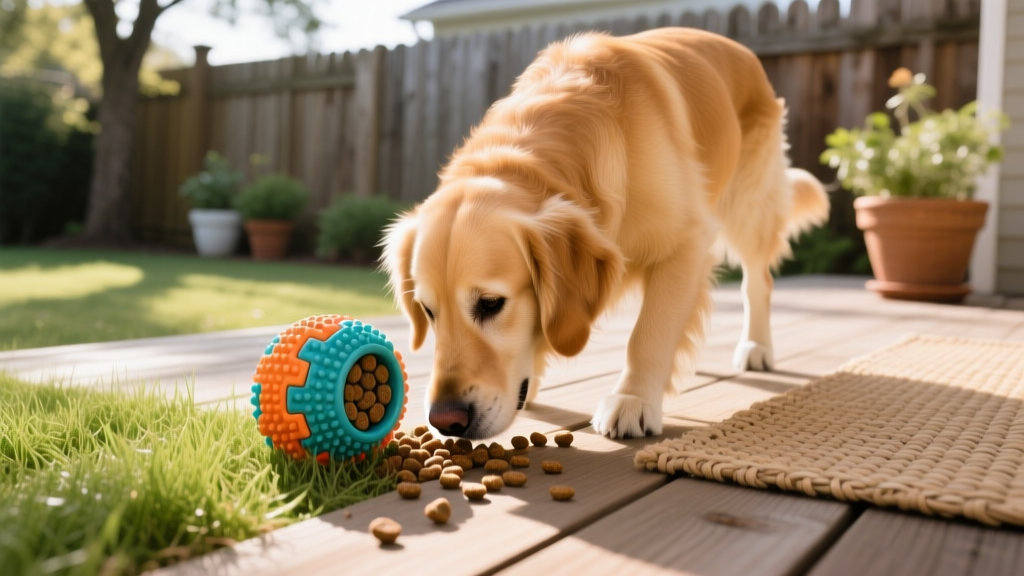
- Provide enrichment: Frozen Kongs, lick mats, and puzzle feeders given only during departures create a positive association with alone time.
Tools That Help (and Tools to Avoid)
| Tool | Purpose | Evidence/Notes | Typical Cost |
|---|---|---|---|
| Adaptil (DAP) diffuser/collar | Synthetic dog-appeasing pheromone for baseline calming | Multiple studies show modest benefit for mild anxiety; not sufficient alone for clinical cases. Best as adjunct. | $25–$50 |
| ThunderShirt / anxiety wrap | Gentle constant pressure for storm/travel anxiety | Mixed evidence — some dogs show reduced heart rate; others show no change. Low risk, worth trying. | $30–$60 |
| Calming supplements (L-theanine, Zesty Paws, Solliquin) | Nutraceutical support for mild anxiety | L-theanine (from green tea) has modest evidence for reducing stress behaviors. Look for products with NASC (National Animal Supplement Council) seal. | $20–$45/month |
| Puzzle feeders (Kong Classic, Outward Hound, Starmark) | Mental enrichment; reduces boredom-driven anxiety | Strong evidence that mental enrichment reduces anxiety-related behaviors. Use daily, not just during departures. | $10–$25 each |
| White noise machine / classical music (Through a Dog's Ear) | Masks environmental triggers for noise-sensitive dogs | Research from University of Glasgow shows classical music reduces stress markers in kennelled dogs. | $15–$40 |
| Snuffle mats / scatter feeding | Nose-work enrichment that naturally lowers arousal | Sniffing activates the parasympathetic nervous system. 10 minutes of sniffing ≈ 30 minutes of physical exercise for mental fatigue. | $15–$35 |
Tools to Avoid
Do NOT use these for anxiety-based behaviors:
- Shock collars (e-collars, remote trainers): Adding pain to a fearful dog increases fear and can escalate to aggression. A 2020 study in Frontiers in Veterinary Science confirmed that dogs trained with e-collars showed more stress behaviors than those trained with positive reinforcement alone.
- Prong/choke collars: Same principle — pain suppresses the outward behavior without addressing the underlying fear, often creating fallout (redirected aggression, increased reactivity).
- Alpha rolls / dominance-based corrections: Forcing a fearful dog into submission damages trust and increases anxiety. This approach is explicitly rejected by the AVSAB and the AVMA.
- Flooding (prolonged forced exposure to the trigger): Holding a noise-phobic dog still during fireworks or forcing a leash-reactive dog into close proximity with other dogs without choice causes learned helplessness, not confidence.
How Long Will It Take to Fix My Dog's Anxiety?
There are no guaranteed timelines — anxiety modification depends on the severity, duration of the problem, the dog's individual neurochemistry, and consistency of implementation. That said, here are realistic benchmarks based on clinical experience and published behavior modification outcomes:
| Phase | Timeframe | What to Expect |
|---|---|---|
| Medication onset | 4–8 weeks (SSRIs/TCAs) | Gradual reduction in baseline anxiety. You may notice your dog "bounces back" faster from triggers before you notice the triggers stop provoking a response. Situational meds (trazodone, SILEO) work within 1–2 hours. |
| Early behavior modification | Weeks 1–4 | You'll see improvement in controlled settings (at home, with planned exposures). Real-world situations may still trigger full responses. This is normal. |
| Noticeable change in daily life | Weeks 6–12 | Most owners report meaningful improvement in this window when medication and training are combined. Recovery time between anxiety episodes shortens. |
| Significant progress | Months 3–6 | Many dogs can handle previously triggering situations with mild or no reaction. Medication dose may be adjusted by your vet based on progress. |
| Maintenance / long-term | 6–12+ months | Some dogs can be slowly tapered off medication under veterinary guidance. Others need lifelong support — this is not failure. Chronic anxiety is a neurobiological condition, not a training deficiency. |
Important: Progress is not linear. Expect setbacks — a single bad experience (a loose dog charging your reactive dog, an unexpected fireworks night) can temporarily undo weeks of progress. This is an extinction burst, not a failure. Return to your last successful step and rebuild from there.
When to Hire a Professional: Trainer vs. Veterinary Behaviorist
Hire a certified professional if:
- Your dog has bitten someone or another animal out of fear
- You've been working consistently for 4+ weeks with no improvement
- Your dog's anxiety is worsening despite your efforts
- You're considering rehoming due to the behavior
- Medication alone hasn't made a meaningful difference
- You're unsure whether what you're seeing is anxiety, aggression, or a medical issue
Who to Hire — and What It Costs
| Professional | Credentials | Best For | Typical Cost |
|---|---|---|---|
| Veterinary Behaviorist | DACVB (Diplomate of the American College of Veterinary Behaviorists) | Complex cases, medication management, aggression cases, dogs already on medication that isn't working. One of ~100 board-certified veterinary behaviorists in the US. | $300–$600 initial consult; $150–$300 follow-ups |
| Certified Applied Animal Behaviorist | CAAB or ACAAB (through the Animal Behavior Society) | Behavior modification plans, multi-dog household conflict, severe separation anxiety. Cannot prescribe medication. | $200–$400 initial consult |
| Certified Professional Dog Trainer (CPDT-KA or CPDT-KSA) | CPDT through CCPDT; IAABC certified consultants also qualify | Mild-moderate anxiety, leash reactivity, basic desensitization protocols, ongoing training support. | $80–$175 per session; $500–$1,500 for multi-session packages |
| Fear Free Certified Professional | Fear Free CertifiedVeterinary visit anxiety, handling fear, cooperative care training. | Varies; often offered through veterinary clinics |
Red flags to avoid: Anyone who guarantees a timeline, uses the word "dominance" as an explanation, recommends physical corrections for fear-based behavior, or tells you medication is unnecessary without reviewing your dog's medical history. The AVSAB's guide to choosing a trainer is an excellent reference.
Is Anxiety in Dogs Normal? Should I Use Punishment?
Is anxiety normal? Yes — in mild, situational forms. Every dog will experience stress at some point. What's not normal is chronic, daily anxiety that prevents your dog from relaxing, eating, sleeping, or enjoying life. If your dog's anxiety is impacting their quality of life or yours, it deserves professional attention.
Should I use punishment? No. Punishing anxiety-driven behavior is counterproductive and potentially dangerous. When a dog lunges at another dog out of fear and is then corrected with a leash jerk or shock, they learn: "Other dogs predict pain." This deepens the fear association and typically escalates the behavior — the dog learns to attack first to prevent the scary thing from getting close enough to cause pain. The AVSAB's position statement on punishment explicitly recommends against using aversive methods for fear-based behaviors.
Instead, manage the environment to prevent rehearsal of the unwanted behavior (close blinds if your dog barks at the window, use white noise to mask hallway sounds) while you work through the desensitization protocol.
Prevention: Setting Puppies and Newly Adopted Dogs Up for Success
Not all anxiety is preventable — genetics play a significant role. But early intervention dramatically reduces severity:
- Puppy socialization (8–14 weeks): Expose puppies to a wide variety of people, surfaces, sounds, environments, and handling in a positive, choice-based way. The critical socialization window closes around 14–16 weeks. The AKC's socialization checklist provides a structured approach.
- Alone-time training from day one: Even if you work from home, practice short departures daily. Start with 30 seconds in a separate room with a food puzzle, building to 30+ minutes over the first month.
- Adopted dogs — the 3-3-3 rule: Expect 3 days of decompression (dog may seem shut down or overly clingy), 3 weeks to start showing their true personality, and 3 months to feel fully settled. Don't assess behavior or start intensive training until the dog has decompressed.
- Noise exposure: Play storm/firework recordings at low volume during meals and play from puppyhood onward. This creates a neutral-to-positive association before a real storm creates a negative one.
- Choose your breeder carefully: Anxiety has a strong genetic component. Puppies from fearful parents are statistically more likely to develop anxiety. Ask breeders about temperament testing of parent dogs. The same applies when adopting — ask the rescue about the dog's known history and observed behavior in foster care.
Frequently Asked Questions
Can I give my dog human anxiety medication like Xanax or Prozac?
Some human medications (fluoxetine, alprazolam, trazodone) are the same drugs used in veterinary behavioral medicine — but the dosing, formulation, and safety profile are different for dogs. Human formulations may contain inactive ingredients (like xylitol in liquid formulations) that are toxic to dogs. Never dose your dog with your own medication without explicit veterinary instruction. A 20 mg fluoxetine capsule that's appropriate for a human could cause serotonin syndrome in a 15-pound dog.
Will anxiety medication change my dog's personality?
Properly dosed anxiety medication should not sedate or "flatline" your dog. The goal is to lower the anxiety threshold so they can think and learn — not to eliminate their personality. If your dog seems overly sedated, lethargic, or "not themselves," the dose is likely too high and your vet should adjust it. Many owners report their dog seems "more like themselves" on medication because the constant anxiety that was masking their true personality is reduced.
Are there natural alternatives to prescription anxiety pills?
For mild anxiety, several options show promise: L-theanine supplements (200–400 mg for medium dogs), Zesty Paws Calming Bites, Solliquin (a veterinary nutraceutical combining L-theanine, hydrolyzed milk protein, and magnolia extract), and CBD products from reputable sources (look for third-party lab testing and NASC certification). However, for moderate to severe clinical anxiety, supplements alone are rarely sufficient and should be used alongside — not instead of — a comprehensive behavior plan.
How much does a full anxiety treatment plan cost?
Budget realistically: initial veterinary behavioral consult ($300–$600), bloodwork/medical rule-out ($150–$400), monthly medication ($15–$70), follow-up visits ($100–$250 every 4–8 weeks initially), and professional trainer/behaviorist sessions ($500–$2,000 for a multi-session package). First-year total for a comprehensive approach: approximately $1,500–$4,000. Ongoing annual cost after stabilization: $400–$1,200 (medication + 1–2 follow-up visits).
My dog is fine at home but anxious at the vet — is that normal?
Very common. Veterinary visit anxiety affects an estimated 78% of dogs. This is where situational medication shines: a single dose of trazodone (given 2 hours before the appointment) combined with gabapentin (given the night before and 2 hours before) can transform a terrifying experience into a manageable one. Many veterinary clinics now offer Fear Free protocols — ask if yours participates.
Can anxiety pills for dogs be used long-term?
Yes. Many dogs remain on SSRIs or TCAs for years with regular veterinary monitoring (bloodwork every 6–12 months to check liver and kidney function). Long-term use is not inherently harmful when managed properly. Some dogs can eventually be tapered off under veterinary guidance after 12–18 months of successful behavior modification, while others benefit from lifelong medication support. This is a decision to make with your veterinarian based on your dog's individual progress.
ASPCA Animal Poison Control: If your dog accidentally ingests human medication or an unknown substance, call (888) 426-4435 immediately (24/7, consultation fee applies).
Tom Renshaw
All our authors care for dogs every day — read more of their work on the authors page.