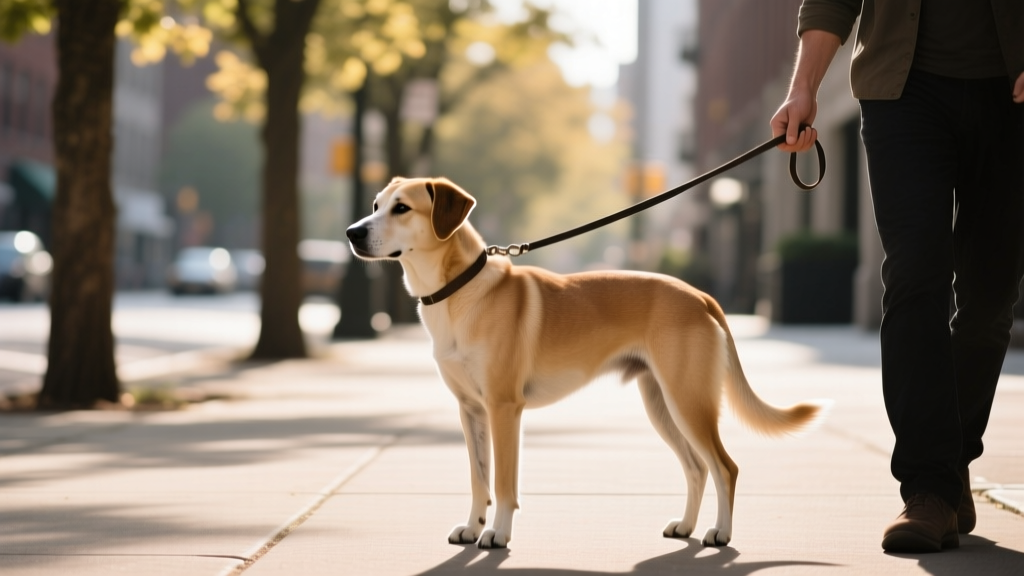
Aggressive Dog Training: A Force-Free Protocol for Real Results
Evidence-based aggressive dog training guide covering root causes, medical rule-outs, step-by-step desensitization protocols, and when to hire a certified behaviorist.

Dog aggression is one of the most stressful behaviors an owner can face — and one of the most misunderstood. If your dog has growled, snapped, lunged, or bitten, you are not alone. According to the AVMA, approximately 4.5 million dog bites occur in the United States each year, and the majority of aggression cases are rooted in fear, anxiety, or inadequate socialization rather than dominance or spite.
Effective aggressive dog training does not rely on punishment, intimidation, or force. Modern veterinary behaviorists and certified trainers use positive reinforcement, desensitization, and counter-conditioning to change the emotional response driving the behavior. This guide walks you through the full process — from medical rule-out to structured rehabilitation — with realistic timelines and specific protocols you can start today.
What Qualifies as Dog Aggression? Defining the Thresholds
Aggression in dogs is any behavior intended to increase distance from a perceived threat or to control a resource. It exists on a continuum and is classified by intensity:
- Level 1 (Pre-aggressive signaling): Stiffening, hard stare, lip licking, whale eye, low growl — the dog is communicating discomfort
- Level 2 (Threat display): Snapping without contact, air snapping, barking with forward posture — escalation without physical harm
- Level 3 (Inhibited bite): Tooth contact on skin without puncture — the dog made contact but controlled bite force
- Level 4 (Uninhibited bite): Single bite with puncture wound (1–4 punctures from a single bite)
- Level 5 (Multiple bites): Multiple bite incidents or a sustained attack
- Level 6: Victim killed
Classification based on the Dr. Ian Dunbar Bite Scale, widely referenced in veterinary behavioral medicine. Any dog displaying Level 3 or above requires professional behaviorist involvement.
Not all growling is aggression. Growling during play, for example, is normal canine communication. The key differentiator is context and body language. A play growl is accompanied by loose, wiggly body movement and self-handicapping. An aggressive growl comes with a stiff body, fixed stare, and raised hackles.
Root Causes: Why Does My Dog Show Aggression?
Aggression is a symptom, not a diagnosis. Before you can change the behavior, you need to understand what drives it. The Merck Veterinary Manual categorizes canine aggression by motivation, and most cases involve one or more of the following underlying causes:
| Root Cause | Typical Triggers | Behavioral Signs | Prevalence |
|---|---|---|---|
| Fear-Based | Strangers, unfamiliar dogs, loud noises, new environments | Cowering, tail tuck, lip licking before escalation; bites when cornered | Most common — estimated 60–70% of aggression cases |
| Territorial/Protective | Doorbell, mail carrier, visitors, dogs passing the fence line | Barking at boundaries, lunging at doorways, calmer once visitor is seated | Common in livestock guardian breeds and intact males |
| Resource Guarding | Food bowls, bones, toys, sleeping spots, owners | Freezing over item, growling when approached, snapping if hand reaches toward resource | Affects an estimated 15–20% of pet dogs |
| Leash Reactivity/Frustration | Seeing other dogs while on leash, being restrained | Barking and lunging on leash but friendly off leash; barrier frustration | Extremely common in urban environments |
| Pain-Induced/Medical | Being touched in painful area, handled for grooming, picked up | Sudden onset in previously tolerant dog; snapping when specific body part is touched | Underdiagnosed — present in up to 30% of sudden-onset cases |
A critical insight many owners miss: fear-based aggression and leash reactivity often look identical but require different protocols. A leash-reactive dog who plays beautifully at the dog park is frustrated, not fearful. A leash-aggressive dog who is also tense off leash is afraid. The treatment path diverges significantly based on this distinction.
Medical Rule-Out: See Your Vet Before Training
Before investing in behavior modification, you must rule out medical causes. A dog in pain will bite to protect themselves, and no amount of training will fix a hip dysplasia flare-up or an ear infection. The AKC and veterinary behaviorists consistently recommend a full medical workup for any dog showing sudden-onset aggression or escalation.
- Complete physical examination — palpation of joints, spine, abdomen; ear and dental check ($50–$120 depending on clinic)
- Full blood panel (CBC + chemistry) — screens for hypothyroidism, liver dysfunction, and metabolic disorders ($80–$200)
- Thyroid panel (total T4, free T4, T3, T4 autoantibodies) — hypothyroidism is linked to aggression in multiple studies; a basic T4 screen can miss subclinical cases ($120–$250 for full panel)
- Orthopedic assessment — if aggression occurs during handling, request hip/elbow scoring and spinal evaluation; X-rays if indicated ($200–$500 with imaging)
- Neurological screening — for dogs with sudden behavioral changes, seizure-like episodes, or disorientation; may include MRI referral ($500–$2,000+ at specialty center)
- Pain assessment — chronic pain from arthritis, dental disease, or GI issues lowers bite threshold significantly
Always consult your veterinarian before beginning any behavior modification program, especially if aggression onset was sudden or unexplained.
If your vet identifies a medical condition, treat it first. Many owners report significant behavioral improvement within 4–8 weeks of starting thyroid supplementation or pain management alone. Behavior modification can then address any residual learned patterns.
Immediate Management: Prevent Rehearsal While You Train
Every time your dog rehearses an aggressive behavior — every lunge, every bark-and-snap at the fence, every growl over a bone — the neural pathway gets stronger. Management is not a substitute for training, but it is the essential foundation. You cannot modify a behavior your dog practices 15 times a day.
Environmental management strategies to implement immediately:
- Leash-reactive dogs: Walk during low-traffic hours (before 7 AM or after 8 PM in most neighborhoods). Use visual barriers — parked cars, hedges, building corners — to avoid surprise encounters. Carry high-value treats (freeze-dried liver, boiled chicken, cheese) at all times.
- Territorial dogs: Block visual access to trigger zones. Apply frosted window film ($15–$25 per roll on Amazon) to front windows. Close blinds in rooms facing the street. Use white noise machines ($25–$40) to mask outdoor sounds that trigger alert barking.
- Resource guarders: Feed in a closed room or crate. Pick up all bones, bully sticks, and high-value chews when not actively training. Never reach into a dog's food bowl — this is an outdated "dominance test" that creates guarding, not prevents it.
- Fear-based aggression toward strangers: Use baby gates ($30–$60) to separate your dog from guests. Provide a safe retreat space (crate with cover, quiet back room) stocked with a long-lasting chew (Kong Classic stuffed with peanut butter and frozen, $15–$18). Do not force interactions.
- Muzzle conditioning: A basket muzzle (Baskerville Ultra, $18–$25; or BRIT Care, $15–$20) is a safety tool, not a punishment. Condition it over 2–3 weeks using a gradual desensitization protocol — show muzzle, treat; touch nose with muzzle, treat; insert nose for 1 second, treat; gradually increase duration. A muzzle-trained dog is safer and less stressed during outings.
Step-by-Step Aggressive Dog Training Protocol
The following protocol is based on desensitization and counter-conditioning (DS/CC), the gold standard approach endorsed by the American College of Veterinary Behaviorists. It works by gradually changing your dog's emotional response to the trigger — from "that thing is dangerous" to "that thing predicts good things."
Phase 1: Establish Baseline (Weeks 1–2)
- Identify the trigger and threshold distance. This is the distance at which your dog notices the trigger but does not react. For a leash-reactive dog, this might be 80 feet. For a fear-aggressive dog, it might be the other side of the room. Record this number.
- Identify your dog's highest-value reinforcer. Test 5–8 foods in a distraction-free environment. Rank them. Common top-tier options: boiled chicken breast, freeze-dried lamb lung, string cheese, hot dog slices. The reinforcer must be worth more than the trigger's emotional pull.
- Teach an incompatible behavior. Train a solid "watch me" (eye contact on cue) and "let's go" (U-turn on leash) using positive reinforcement in a zero-distraction environment first. Your dog should offer the behavior reliably for 10 consecutive trials before moving to Phase 2.
Phase 2: Desensitization & Counter-Conditioning (Weeks 3–10+)
- Present the trigger at sub-threshold distance. Your dog sees the trigger but remains under threshold — ears relaxed, body loose, able to take treats. If your dog won't eat, you are too close. Increase distance.
- Pair trigger appearance with high-value reward. Trigger appears → immediately mark ("yes!" or click) → deliver treat. Repeat 10–15 times per session. Keep sessions to 5–10 minutes maximum.
- Gradually decrease distance. Once your dog shows a conditioned emotional response (CER) — looking at the trigger and then voluntarily looking back at you expecting a treat — move 5–10 feet closer. If reactivity returns, increase distance again.
- Add duration and movement. Once your dog can remain calm at a closer distance with a stationary trigger, introduce trigger movement (a person walking, a dog passing) at the same distance. Then add duration of exposure.
Phase 3: Generalization (Weeks 10–20+)
- Practice in new environments. A dog who is calm around strangers in your living room may still react at the vet's office. Generalize the protocol to 5–10 different locations.
- Introduce controlled real-life scenarios. Have a trusted friend approach your property. Practice the protocol with a calm, leashed dog at a park. Gradually increase complexity.
- Maintain management during setbacks. Progress is not linear. If your dog has a bad day — and they will — return to the last successful step without frustration.
Session structure tip: Aim for 3–5 short sessions per day rather than one long session. Dogs learn more effectively in brief, positive bursts. Track every session in a notebook or app — record distance, trigger type, dog's response level (1–5 scale), and number of successful trials.
Tools That Help vs. Tools That Harm
The tools you use during aggressive dog training can either accelerate progress or deepen the problem. The following comparison reflects current consensus among veterinary behaviorists and certified force-free trainers.
| Tool | Type | Why | Cost Range |
|---|---|---|---|
| Front-clip harness (Ruffwear Front Range, Kurgo Tru-Fit) | ✅ Recommended | Reduces pulling leverage without pain; front clip redirects momentum | $25–$50 |
| Basket muzzle (Baskerville Ultra, Jafco) | ✅ Recommended | Safety during training; allows panting and treat-taking; prevents bites | $15–$30 |
| Double-clip leash (6-foot, with traffic handle) | ✅ Recommended | Two attachment points for security; traffic handle for close control | $18–$35 |
| Puzzle feeders (Kong Classic, Outward Hound Nina Ottosson) | ✅ Recommended | Reduces boredom-driven aggression; provides mental enrichment | $10–$35 |
| Calming aids (Adaptil pheromone diffuser, ThunderShirt) | ✅ Supportive | May lower baseline anxiety; not a standalone treatment but useful adjunct | $20–$65 |
| Clicker (i-Click, Box Clicker) | ✅ Recommended | Precise marker for counter-conditioning; clear communication | $3–$12 |
| Shock/e-collars | ❌ Avoid | Punishes the warning signal (growl) without addressing fear; increases bite risk by suppressing communication; dogs punished for growling often skip to biting without warning | N/A |
| Prong/choke collars | ❌ Avoid | Pain on leash can create negative association with trigger (other dogs = neck pain); risk of tracheal damage | N/A |
| Alpha rolls / physical corrections | ❌ Avoid | Based on debunked dominance theory; dramatically increases bite risk to handler; destroys trust | N/A |
Why punishment backfires with aggression: When you punish a growl, you punish the dog's warning system. The dog learns that growling gets them hurt, so next time they feel threatened, they skip the growl and go straight to the bite. This is why dogs who have been trained with aversive methods are statistically more likely to bite without warning. A study published in the Journal of Veterinary Behavior found that dogs trained with aversive methods were significantly more likely to display aggression toward family members and strangers compared to dogs trained with positive reinforcement alone.
Realistic Timeline: How Long Will Aggressive Dog Training Take?
There is no quick fix for aggression, and anyone promising one is selling something. Behavior modification timelines depend on the severity, duration, underlying cause, and consistency of training. Here are evidence-based expectations based on typical cases seen in clinical behavioral practice:
| Timeframe | Mild Cases (Level 1–2) | Moderate Cases (Level 2–3) | Severe Cases (Level 3–4) |
|---|---|---|---|
| Weeks 1–4 | Management in place; baseline threshold established; dog learning incompatible behaviors | Medical workup complete; muzzle conditioning started; strict management protocols active | Professional behaviorist engaged; safety protocols (muzzle, gates, separation) fully implemented; possible veterinary medication consultation |
| Weeks 4–12 | Noticeable CER (conditioned emotional response); dog looks to handler when trigger appears; threshold distance decreasing | Reduced intensity of reactions; dog can take treats at closer distances; fewer rehearsal incidents | Medication (if prescribed) at therapeutic dose; initial DS/CC sessions showing early CER; management still primary safety net |
| Months 3–6 | Reliable calm behavior at previously triggering distances; management can be gradually relaxed in controlled settings | Significant improvement in most scenarios; some management still needed for high-arousal situations | Measurable progress in structured settings; management remains essential in unpredictable environments |
| Months 6–12+ | Near-normal function in most environments; occasional maintenance sessions needed | Functional improvement; dog may always need management in specific high-trigger situations | Ongoing management likely permanent; dog may never be fully reliable off leash or with novel triggers; quality of life improved with structured protocols |
Note: Severe cases (Level 4+) may require lifelong management and may never achieve full reliability. This is not a failure — it is responsible ownership. Some dogs can be safe and happy with permanent protocols in place.
When to Hire a Professional: Trainer vs. Behaviorist
Not all aggression cases should be handled at home. Knowing when to bring in a professional — and which professional to choose — can be the difference between progress and a worsening problem.
- Your dog has bitten someone and broken skin (Level 3+)
- Aggression is directed toward children in the household
- Multiple dogs in the household are fighting (interdog aggression with injury)
- Aggression onset was sudden with no identifiable trigger
- You feel unsafe managing your dog during daily routines
- Your dog's aggression is escalating despite consistent management
Understanding the credential landscape:
| Professional | Credentials | What They Do | Cost Range | Best For |
|---|---|---|---|---|
| Veterinary Behaviorist | DVM, DACVB (board-certified) | Diagnoses behavioral disorders, prescribes medication, creates treatment plans; only ~100 in the US | $250–$500 initial consultation; $100–$200 follow-ups | Severe aggression, medication needs, complex cases with medical comorbidities |
| Certified Applied Animal Behaviorist (CAAB) | PhD or DVM + certification | Behavior modification plans, functional assessments; cannot prescribe medication | $150–$350 per session | Moderate to severe aggression, detailed behavior analysis |
| IAABC Certified Behavior Consultant (CBCC-KA) | Certification through IAABC or CCPDT | Hands-on behavior modification coaching; implements plans designed by behaviorists | $80–$175 per session | Mild to moderate cases; ongoing coaching and support |
| General Dog Trainer | CPDT-KA or equivalent (varies widely) | Basic obedience, leash reactivity classes; may not have aggression-specific training | $50–$120 per session | Mild leash reactivity, basic manners; not severe aggression |
How to verify credentials: Check the American College of Veterinary Behaviorists (DACVB) directory for board-certified veterinary behaviorists. For CAABs, consult the Animal Behavior Society. For trainers, verify through the Certification Council for Professional Dog Trainers (CCPDT) or the International Association of Animal Behavior Consultants (IAABC). Ask any professional about their methods — if they mention "dominance," "pack leader," or use aversive tools, look elsewhere.
Prevention: Building Resilience in Puppies and Newly Adopted Dogs
Most aggression is preventable. The ASPCA emphasizes early socialization and positive exposure as the primary prevention strategy. Here is a framework for reducing aggression risk in puppies and newly adopted adult dogs:
For puppies (8–16 weeks — critical socialization window):
- Expose your puppy to 100+ novel stimuli (people of different ages/ethnicities, surfaces, sounds, objects, other animals) before 16 weeks — use a socialization checklist like the one provided by Dr. Sophia Yin
- Every novel experience should be paired with treats and play — the goal is positive emotional associations, not just exposure
- Enroll in a force-free puppy class (AVSAB recommends starting classes at 7–8 weeks, after first DHPP vaccine)
- Handle paws, ears, mouth, and tail daily while feeding treats — this prevents handling sensitivity that leads to grooming and vet-visit aggression
- Practice resource exchange games: offer a higher-value treat in exchange for whatever the puppy has, rather than taking items away by force
For newly adopted adult dogs (the "decompression" protocol):
- Weeks 1–2 (The 3-3-3 Rule): Expect shutdown behavior for 3 days, emerging personality at 3 weeks, and true behavioral baseline at approximately 3 months. Do not test the dog's limits during this period.
- Limit exposure to known triggers during decompression. Walk in quiet areas. Introduce household members gradually.
- Implement a "nothing in life is free" protocol using positive reinforcement — dog sits before meals, sits before door opens — to build communication without confrontation.
- Schedule a veterinary exam within the first week to rule out pain or illness contributing to irritability.
- If the rescue or shelter noted aggression history, engage a behaviorist before problems escalate at home.
Frequently Asked Questions About Aggressive Dog Training
Is aggression in dogs normal?
Aggressive communication — growling, stiffening, air snapping — is a normal part of canine behavior. Dogs use these signals to avoid physical conflict. However, frequent or escalating aggression in a pet dog living in a home environment is not something to accept or ignore. It indicates an underlying problem (fear, pain, anxiety, frustration) that needs to be addressed. Normalizing aggression delays treatment and increases risk.
Should I use punishment to correct my dog's aggression?
No. Punishment suppresses the warning signals (growling, lip curling) without resolving the underlying emotional cause. A dog who is punished for growling learns to skip the warning and bite directly. This makes the dog more dangerous, not less. Force-free methods — desensitization, counter-conditioning, and positive reinforcement — change the emotional root of the behavior and produce safer, longer-lasting results. The American Veterinary Society of Animal Behavior (AVSAB) has issued a formal position statement recommending against the use of punishment-based training for aggression.
How long will it take to fix my dog's aggression?
Most mild to moderate cases show measurable improvement within 4–8 weeks of consistent daily practice, with significant progress over 3–6 months. Severe cases (bite history, multi-dog household aggression, deep-seated fear) typically require 6–12+ months of structured work and may involve permanent management protocols. Aggression is rarely "fixed" in the sense of being permanently cured — it is managed and improved. Expect ongoing maintenance rather than a finish line.
Can aggressive dogs be rehomed safely?
Rehoming an aggressive dog carries significant ethical and legal liability. If you must rehome, work with an experienced rescue organization that will fully disclose the dog's behavioral history, conduct thorough adopter screening, and provide post-adoption support. Never rehome an aggressive dog through casual channels (Craigslist, social media) without full transparency. In many jurisdictions, you can be held legally liable if a dog you rehomed bites someone and the new owner was not fully informed.
My dog is fine with our family but aggressive toward strangers. Is that protective instinct?
What looks like "protectiveness" is usually fear-based aggression or inadequate socialization. Truly confident protection dogs are calm and neutral until given a specific cue. A dog who barks, lunges, and cannot settle around strangers is not protecting you — they are afraid and trying to increase distance from the perceived threat. Treatment follows the same DS/CC protocol outlined above, with stranger-specific triggers.
Will medication help my aggressive dog?
In many cases, yes. Veterinary behaviorists commonly prescribe SSRIs (fluoxetine, sertraline), tricyclic antidepressants (clomipramine), or situational anxiolytics (trazodone, gabapentin) to lower a dog's baseline anxiety and make behavior modification more effective. Medication does not replace training — it creates the neurochemical conditions for training to work. A behavioral medication consultation with your veterinarian or a veterinary behaviorist typically costs $100–$300, with monthly medication costs of $30–$150 depending on the drug and your dog's weight.
Aggressive dog training is a marathon, not a sprint. The dogs who improve most are the ones whose owners commit to consistent, force-free protocols, manage the environment to prevent rehearsal, and seek professional help when the situation exceeds their skill level. Your dog is not being spiteful or dominant — they are communicating the only way they know how. With the right approach, that communication can change.
Jonas Cole
All our authors care for dogs every day — read more of their work on the authors page.