Training Tips for Puppy Biting: How to Stop Mouthing & Nipping Fast
Discover proven training tips for puppy biting. Learn why puppies bite, step-by-step techniques to stop nipping, common mistakes to avoid, and expert FAQs.

Bringing a new puppy home is one of life's greatest joys — until those tiny, needle-sharp teeth sink into your fingers, ankles, or favorite pair of shoes. If you're reading this, chances are you've already experienced the sharp end of puppy biting and are desperately searching for answers. You're not alone. Puppy biting, also known as mouthing or nipping, is one of the most common challenges new dog owners face, and it can be frustrating, painful, and even a little discouraging.
The good news? Puppy biting is completely normal behavior, and with the right approach, it's entirely manageable. In this comprehensive guide, we'll walk you through exactly why puppies bite, the proven training techniques that actually work, the mistakes that might be making the problem worse, and answers to the questions every puppy parent asks. Whether you're dealing with a Golden Retriever puppy who mouths everything in sight or a German Shepherd pup with a powerful jaw, these strategies will help you raise a well-mannered companion.
Why Do Puppies Bite? Understanding the Behavior
Before diving into solutions, it's essential to understand why your puppy is biting in the first place. Puppies don't bite out of malice or aggression — they bite for a variety of natural, developmental reasons. Understanding these motivations will help you respond appropriately and with patience.
Teething & Oral Discomfort
Just like human babies, puppies go through a teething phase. Between the ages of three and six weeks, their baby teeth begin to emerge, and around twelve to sixteen weeks, those baby teeth start falling out to make room for adult teeth. During this period, your puppy's gums may feel sore, itchy, and uncomfortable. Chewing and biting provide relief, which is why your pup seems determined to gnaw on everything within reach — including your hands.
Exploration & Play
Puppies explore the world primarily through their mouths. Without hands to pick things up and examine them, puppies use their mouths to investigate textures, tastes, and objects. Biting and mouthing are natural ways for them to learn about their environment. Additionally, in a litter of puppies, siblings play by wrestling and mouthing each other. When your puppy bites you, they're often simply trying to initiate play the only way they know how.
Learning Bite Inhibition
Bite inhibition is the ability of a dog to control the force of their mouthing. In a litter, puppies learn bite inhibition from their siblings — when one puppy bites too hard, the other yelps and stops playing. This teaches the biter that hard bites end fun interactions. When puppies leave their littermates (ideally not before eight weeks), they need to continue learning this lesson with their human family. Your training plays a critical role in teaching your puppy that human skin is entirely off-limits.
Breed-Specific Tendencies
Some breeds are more prone to mouthing and nipping than others. Herding breeds like Border Collies and Australian Shepherds have strong instincts to nip at moving objects, including heels and ankles. Retriever breeds, such as Labrador Retrievers, are naturally mouthy because they were bred to carry game. Understanding your puppy's breed tendencies can help you anticipate and address biting behavior more effectively.
Step-by-Step Training Techniques to Stop Puppy Biting
Now that you understand the "why," let's focus on the "how." The following training techniques are proven, humane, and effective. Consistency is the key — every member of your household must follow the same rules and responses for these methods to work.
Step 1: Redirect to an Appropriate Chew Toy
Redirection is the single most powerful tool in your puppy biting toolkit. Here's how to do it effectively:
- Always have chew toys nearby. Keep a variety of puppy-safe chew toys within arm's reach at all times — in the living room, kitchen, bedroom, and anywhere your puppy spends time.
- When your puppy bites your skin, immediately stop moving. Movement excites puppies and encourages more biting. Freeze and become uninteresting.
- Present a chew toy. The moment your puppy releases your skin, offer an appropriate chew toy. Wiggle it to make it exciting and engaging.
- Praise enthusiastically when they bite the toy. Use a happy voice and gentle petting to reinforce that chewing toys earns attention and rewards.
- Rotate toys regularly. Puppies get bored with the same toys. Rotate them every few days to keep things interesting and novel.
Good chew toy options include rubber teething toys that can be frozen for added soothing relief, rope toys for tugging and gnawing, and puzzle toys that dispense treats. Avoid anything that resembles items you don't want your puppy to chew, such as old shoes or socks, as this creates confusion about what's acceptable.
Step 2: Use the "Yelp & Withdraw" Method
This technique mimics how puppies learn bite inhibition from their littermates and is one of the most natural and effective approaches:
- When your puppy bites your hand or skin, let out a high-pitched yelp — similar to the sound a puppy would make. Keep it brief: a quick "Ouch!" or "Eek!" works well.
- Immediately withdraw your hand and stop all interaction. Stand up, turn away, or step behind a baby gate for 15 to 30 seconds.
- Return calmly and offer a chew toy or resume gentle play. If your puppy bites again, repeat the yelp and withdrawal.
- Gradually raise your standard. Initially, yelp only for hard bites. As your puppy learns, begin yelping for softer and softer bites until any tooth-to-skin contact triggers the response.
This method teaches your puppy that biting leads to the end of play and attention — two things they value enormously. Over time, they learn that gentle behavior keeps the fun going while biting makes it stop. For more foundational training strategies, check out our puppy training basics guide.
Step 3: Implement Timeouts Effectively
When redirection and yelping aren't enough — especially during high-energy moments — structured timeouts can be incredibly effective:
- Designate a timeout area. Choose a small, safe, boring space such as a playpen or a quiet bathroom. This is not punishment — it's a chance for your puppy to calm down.
- When biting persists after two redirection attempts, calmly pick up your puppy and place them in the timeout area for 30 to 60 seconds. Do not yell, scold, or show anger.
- Release your puppy once they're calm, and immediately offer an appropriate activity or chew toy.
- Keep timeouts brief. Puppies have short attention spans. Timeouts longer than two minutes are ineffective and may cause anxiety or confusion.
The goal of a timeout is to teach your puppy that biting leads to isolation and boredom, not to frighten or intimidate them. Used consistently and calmly, timeouts are one of the fastest ways to reduce puppy biting.
Step 4: Teach the "Leave It" Command
The "leave it" command is one of the most versatile tools in dog training and is particularly useful for managing biting. Here's a step-by-step approach to teaching it:
- Hold a treat in your closed fist. Let your puppy sniff and paw at your hand. Do not open your hand.
- The moment your puppy stops trying and pulls their nose away, say "Yes!" and reward them with a different treat from your other hand.
- Repeat until your puppy consistently backs away from your closed fist within a few seconds.
- Add the verbal cue "Leave it" just before presenting your closed fist.
- Progress to an open palm, then to treats on the floor, and eventually to real-life situations like your hands, clothing, or furniture.
Once your puppy reliably responds to "leave it," you can use it proactively when you see them about to bite and reactively when they've already started. Pair this with our basic commands every dog should know for a well-rounded training foundation.
Step 5: Reward Gentle Play & Behavior
It's easy to focus on correcting unwanted behavior, but reinforcing the behavior you want is equally important — and often more effective:
- Carry treats with you throughout the day so you can immediately reward gentle interactions.
- When your puppy licks you instead of biting, praise them warmly and offer a treat.
- When your puppy plays with a toy instead of your hands, acknowledge and reward that choice.
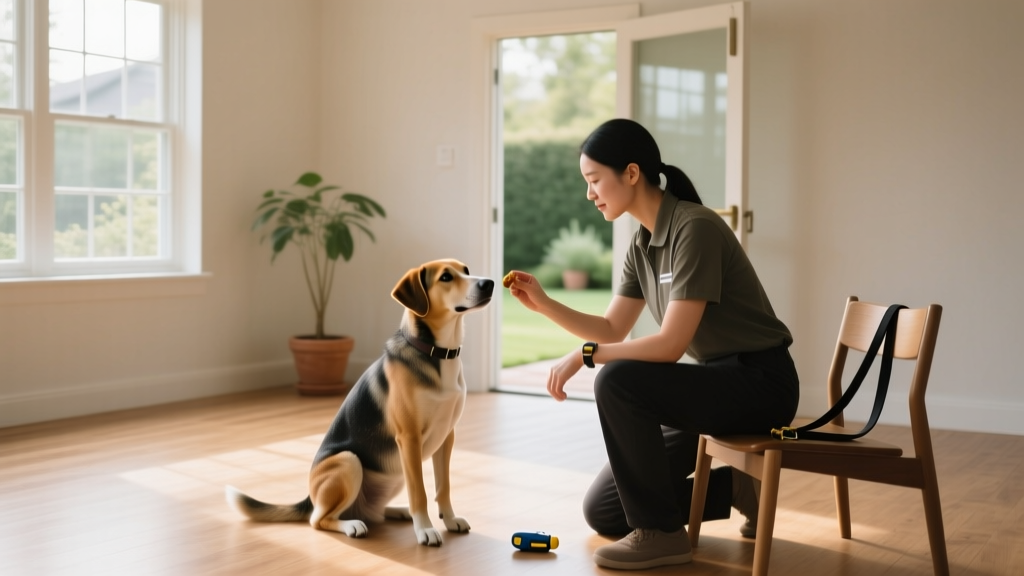
- Use a marker word like "Yes!" or a clicker to precisely mark the moment your puppy makes a good choice, followed by a reward.
Over time, your puppy learns that gentle behavior is far more rewarding than biting. This positive reinforcement approach builds trust and strengthens your bond while effectively shaping behavior.
Managing Your Puppy's Environment for Success
Training doesn't happen in a vacuum — your puppy's environment plays a massive role in their behavior. Setting up your home and daily routine for success will dramatically reduce biting incidents and accelerate your training progress.
Provide Adequate Physical Exercise
A tired puppy is a well-behaved puppy. Pent-up energy is one of the leading causes of excessive biting and hyperactive mouthing. Ensure your puppy gets appropriate exercise for their age and breed:
- Young puppies (8 to 16 weeks): Short, frequent play sessions of 5 to 10 minutes, several times a day. Avoid long walks or strenuous activity that could damage developing joints.
- Older puppies (4 to 12 months): Gradually increase walk duration and play intensity. Herding and sporting breeds like Border Collies and Labrador Retrievers will need more exercise than smaller or less active breeds.
- Mental exercise counts too: Training sessions, puzzle toys, snuffle mats, and scent games tire your puppy's brain and reduce the need to seek stimulation through biting.
Establish a Consistent Nap Schedule
This is one of the most overlooked factors in puppy biting. Puppies need an extraordinary amount of sleep — typically 18 to 20 hours per day. When puppies become overtired, they become cranky, overstimulated, and significantly more likely to bite. Think of it like an overtired toddler having a meltdown.
Enforce nap times by placing your puppy in their crate or a quiet area every 1 to 2 hours during the day. Many puppy owners report a dramatic decrease in biting simply by ensuring their puppy gets enough rest. If your puppy suddenly becomes a land shark after a period of play, they likely need a nap, not more training.
Puppy-Proof Your Spaces
Reduce temptation and set your puppy up for success by managing their environment:
- Use baby gates to limit access to high-traffic areas where excited play might trigger biting.
- Keep chew toys in every room your puppy accesses so redirection is always an option.
- Remove or secure items you don't want chewed, such as shoes, remote controls, and children's toys.
- Create a designated "puppy zone" with a playpen, bed, water, and toys where your puppy can safely decompress.
For more on setting up your home for a new puppy, visit our new puppy preparation guide.
Common Mistakes That Make Puppy Biting Worse
Even with the best intentions, many puppy owners inadvertently make biting worse. Avoiding these common mistakes is just as important as implementing the right techniques.
Mistake 1: Using Your Hands as Toys
It's tempting to wrestle and play with your puppy using your hands — after all, it's adorable and fun. However, this sends a confusing message. If your hands are sometimes toys and sometimes off-limits, your puppy can't understand the difference. Always use toys as intermediaries during play. Your hands should be associated with gentle petting, feeding, and grooming — never roughhousing.
Mistake 2: Punishing or Yelling at Your Puppy
Physical punishment, yelling, holding your puppy's mouth shut, or alpha-rolling are not only ineffective but can damage your relationship with your puppy and potentially create fear-based aggression. Puppies don't understand punishment the way humans do. Instead of learning "biting is wrong," they may learn "my owner is scary and unpredictable." Positive reinforcement and consistent redirection are far more effective and build a foundation of trust. If you're interested in learning more about humane training methods, our positive reinforcement training guide is an excellent resource.
Mistake 3: Inconsistency Between Household Members
If one person allows mouthing while another scolds for it, your puppy receives mixed signals and the behavior persists. Every member of your household — including children and visitors — must follow the same rules and use the same techniques. Hold a brief family meeting to ensure everyone understands the plan and agrees to be consistent. Post a simple reminder on the fridge if needed.
Mistake 4: Not Providing Enough Appropriate Outlets
If your puppy doesn't have enough acceptable things to chew, they'll find their own — and you won't like their choices. Ensure a variety of textures and types of chew toys are always available. Frozen carrots, ice cubes, and frozen washcloths (supervised) can also provide soothing relief for teething puppies.
Mistake 5: Expecting Results Too Quickly
Puppy biting doesn't disappear overnight. It's a developmental phase that requires weeks or even months of consistent training. Some puppies show improvement within a few days, while others take several weeks. Progress is rarely linear — you may see improvement followed by setbacks, especially during teething peaks or growth spurts. Stay patient, stay consistent, and trust the process. Most puppies show a significant reduction in biting by the time their adult teeth are fully in, typically around six to seven months of age.
When to Seek Professional Help
While most puppy biting is normal and manageable with the techniques described above, there are situations where professional guidance is warranted:
- Aggressive biting: If your puppy bites with intense force, growls, snarls, or shows signs of genuine aggression (as opposed to playful mouthing), consult a certified professional dog trainer or veterinary behaviorist immediately.
- Biting that worsens despite consistent training: If you've been implementing these techniques diligently for several weeks with no improvement, a professional can assess the situation and provide tailored strategies.
- Fear-based biting: If your puppy bites when scared, cornered, or handled in specific ways, a professional can help you address the underlying fear and build confidence.
- Resource guarding: If your puppy bites when you approach their food, toys, or bed, this is resource guarding — a specific behavior issue that benefits greatly from professional intervention.
Seeking help early is always better than waiting for the problem to escalate. A qualified professional can make a tremendous difference in your puppy's development and your peace of mind.
Frequently Asked Questions About Puppy Biting
At what age do puppies stop biting?
Most puppies significantly reduce their biting behavior by the time they are six to eight months old, once their adult teeth have fully erupted and the teething discomfort has passed. However, some puppies may continue to mouth during play until they are about one year old. Consistent training accelerates this timeline, while inconsistent responses can prolong the behavior. Remember that every puppy is an individual — breed, temperament, environment, and training all influence how quickly biting diminishes. If your puppy is older than one year and still biting frequently, consult a professional trainer for personalized guidance.
Is puppy biting a sign of aggression?
In the vast majority of cases, puppy biting is not a sign of aggression. It's a normal developmental behavior driven by teething, exploration, play, and the natural learning process of bite inhibition. Playful mouthing is typically accompanied by a relaxed body, wagging tail, play bows, and a bouncy demeanor. True aggression in puppies is rare and looks very different — it involves stiff body posture, hard staring, deep growling, snapping with intent to harm, and biting that breaks skin consistently. If you're unsure whether your puppy's biting is playful or aggressive, err on the side of caution and consult a certified professional dog trainer or your veterinarian for an assessment.
Should I use bitter spray to stop my puppy from biting?
Bitter sprays can be a helpful supplementary tool but should not be relied upon as your primary training method. These sprays work by applying an unpleasant taste to your skin, clothing, or furniture, which can deter some puppies from mouthing those items. However, they don't teach your puppy what they should do instead — they only discourage one specific behavior. For best results, use bitter spray in combination with active redirection to appropriate chew toys and positive reinforcement for gentle behavior. Also, be aware that some puppies are not bothered by the taste and will continue biting regardless. Always choose pet-safe, non-toxic products and test a small area first.
How do I stop my puppy from biting my children?
Puppies often bite children because kids are exciting, move quickly, make high-pitched sounds, and are at the puppy's eye level — all of which trigger playful mouthing. To protect both your children and your puppy, always supervise their interactions closely. Teach your children to freeze and become "a tree" (standing still with arms folded) when the puppy bites, rather than running or screaming, which can intensify the behavior. Redirect the puppy to a toy whenever they mouth a child, and enforce nap times to prevent overtired, bitey episodes. Additionally, teach your children to engage in calm activities with the puppy, such as gentle petting or tossing treats, rather than rough play. For families with young children and a new puppy, our puppy training basics guide offers additional strategies for harmonious coexistence.
My puppy bites my ankles and clothes when I walk — what should I do?
Ankle biting and clothing grabbing are extremely common, especially in herding breeds like Australian Shepherds, Border Collies, and Corgis. The movement of your feet triggers their instinct to chase and nip. Here's what works:
- Stop moving immediately when your puppy grabs your ankle or clothing. Movement reinforces the behavior because it turns into a fun game of chase.
- Redirect to a toy that you carry with you during high-risk times, such as when walking through the house or going outside.
- Teach an incompatible behavior. Train your puppy to sit or fetch a toy whenever you start walking. A puppy sitting calmly cannot simultaneously bite your ankles.
- Provide an outlet for herding instincts. Activities like flirt pole play, treibball, or agility give herding breeds an appropriate way to express their natural drives.
With consistency, most puppies learn that walking calmly beside you is far more rewarding than chasing and nipping. Pair this approach with the techniques covered in our essential commands guide for the best results.
Final Thoughts on Training Your Puppy to Stop Biting
Puppy biting is a phase, not a permanent problem. With patience, consistency, and the right techniques, you will see improvement. Remember the core principles: redirect to appropriate outlets, withdraw attention when biting occurs, reward gentle behavior generously, manage your puppy's environment for success, and ensure your puppy gets enough sleep and exercise.
Every interaction with your puppy is a training opportunity. By responding consistently and compassionately, you're not just stopping unwanted biting — you're building a foundation of trust, communication, and mutual respect that will last a lifetime. The effort you put in during these early months will pay dividends for years to come in the form of a well-mannered, happy, and confident adult dog.
If you found this guide helpful, explore our complete library of dog training resources for more expert advice on raising a well-behaved companion. From house training to leash manners, we're here to support you through every stage of your puppy's journey.
Anouk Beaumont
All our authors care for dogs every day — read more of their work on the authors page.