Top 10 Smartest Dog Breeds: Best Products & Gear for Brilliant Minds
Discover the top 10 smartest dog breeds and the best products to keep their brilliant minds engaged — puzzle toys, training gear, and enrichment tools reviewed.

The Challenge of Owning One of the Top 10 Smartest Dog Breeds
If you share your home with a Border Collie, Poodle, German Shepherd, or any breed from the top 10 smartest dog breeds list, you already know the truth: intelligence is a double-edged sword. These dogs don't just sit quietly at your feet. They open doors, learn commands in five repetitions or fewer, and devise their own entertainment when bored — often by dismantling your couch or herding your toddler.
Stanley Coren's landmark research at the University of British Columbia, published in The Intelligence of Dogs, established the working and obedience intelligence rankings that most people reference today. Dogs in the "brightest" category — breeds like the Border Collie, Poodle, German Shepherd, Golden Retriever, Doberman Pinscher, Shetland Sheepdog, Labrador Retriever, Papillon, Rottweiler, and Australian Cattle Dog — can learn new commands in fewer than five repetitions and obey a known command on the first try 95% of the time or better.
That level of cognitive horsepower demands the right products. Standard chew toys and basic kibble bowls won't cut it. Smart dogs need enrichment tools, puzzle feeders, advanced training gear, and durable equipment that can withstand intense, focused play. Below, I break down the buying criteria that actually matter, review the top products I've seen work best across hundreds of households, and explain when to skip the gear and consult a professional instead.
Buying Criteria: What Actually Matters for Intelligent Dogs
One common mistake I see: owners buy a single puzzle toy and expect it to occupy a German Shepherd for months. Intelligent dogs need rotation. Plan to maintain a library of 4-6 enrichment items and rotate them weekly to prevent habituation.
Top 7 Products for the Smartest Dog Breeds
These products earned their spots through demonstrated effectiveness with high-intelligence breeds, durability under heavy use, and strong veterinary or certified trainer endorsements. Prices reflect typical retail ranges as of early 2026.
1. Outward Hound Nina Ottosson Dog Brick Interactive Puzzle
Price: $14.99–$17.99 | Difficulty: Level 2 (intermediate) | Best for: Shetland Sheepdogs, Papillons, Golden Retrievers
This sliding-compartment puzzle requires dogs to flip lids, slide blocks, and lift cones to access hidden treats. The multi-step sequence engages working memory — exactly the cognitive skill that smart breeds excel at and crave exercising.
Pros:
- Three difficulty actions in one board
- Easy to clean (warm soapy water)
- BPA-free, phthalate-free, PVC-free construction
- Under $18 price point makes rotation affordable
Cons:
- Top-tier problem solvers (Border Collies, Poodles) may master it within a week
- Not suitable for aggressive chewers who will gnaw the plastic sliders
- Small treat compartments limit kibble-meal use for large breeds
2. Kong Classic Dog Toy (Red, Extreme Black for Power Chewers)
Price: $11.99–$24.99 depending on size | Difficulty: Variable based on stuffing | Best for: All top 10 smartest breeds
The Kong Classic remains a staple in veterinary behaviorist toolkits for a reason. Its unpredictable bounce pattern satisfies the retrieval drive in Labs and Golden Retrievers, while the hollow core allows you to create increasingly complex food puzzles. Stuff with a layered combination of kibble, peanut butter (xylitol-free), and frozen broth for a 30-45 minute engagement session.
Pros:
- Natural rubber withstands years of use
- Six sizes from XS to XXL cover Papillons to Rottweilers
- Dishwasher-safe for easy sanitation
- Recommended by the ASPCA and veterinary behaviorists for separation anxiety management
Cons:
- Basic stuffing may bore a Border Collie after repeated use — requires creative layering
- Red rubber not durable enough for extreme chewers — upgrade to black Extreme version ($19.99–$24.99)
- Hollow interior can trap moisture if not dried properly
3. snuffle Mat — Woolz Snuffle Mat for Dogs
Price: $29.95–$39.95 | Difficulty: Moderate | Best for: Australian Cattle Dogs, German Shepherds, Dobermans
Snuffle mats tap into scent-work instinct, forcing dogs to use their olfactory system to locate food hidden in fleece strips. Research published in Applied Animal Behaviour Science has shown that foraging enrichment reduces stereotypic behaviors in dogs — a critical benefit for intelligent breeds prone to pacing, spinning, or excessive licking when under-stimulated.
Pros:
- Machine washable (cold cycle, air dry)
- Slows eating to 10-15 minutes for a standard cup of kibble
- Portable — folds flat for travel and training sessions
- Handmade fleece strips are gentle on gums
Cons:
- Some dogs learn to flip the entire mat rather than forage through it
- Not suitable for dogs who ingest fabric — supervise initial uses
- Higher price point than DIY alternatives (old towels work similarly)
4. Ruffwear Front Range Harness
Price: $39.95–$44.95 | Difficulty: N/A (training gear) | Best for: German Shepherds, Rottweilers, Doberman Pinschers
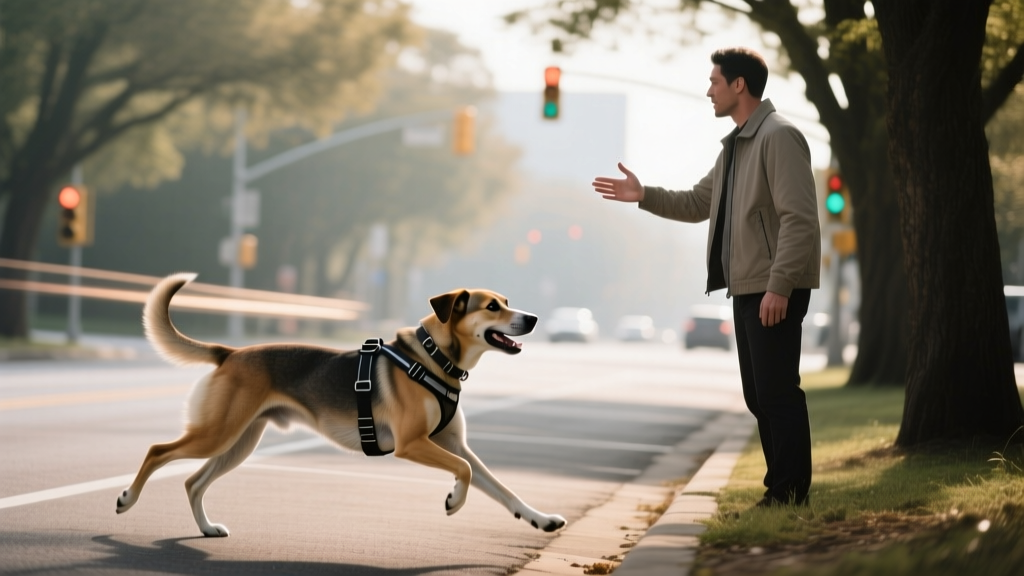
Smart, powerful breeds need structured leash training, and the right harness is foundational. The Front Range offers both a front chest clip (for redirecting pullers) and a back clip (for loose-leash walking once trained). The dual-clip design supports force-free, positive reinforcement training methods — the only approach endorsed by the American Veterinary Society of Animal Behavior.
Pros:
- Four adjustment points for precise fit on barrel-chested breeds like Rottweilers
- Reflective trim for early-morning and evening walks
- Padded chest and belly straps prevent chafing on long outings
- ID tag pocket built in
Cons:
- Front clip can twist on very broad-chested dogs — consider Ruffwear Flagline ($79.95) for three-point attachment
- Not escape-proof for dogs who back out of harnesses — Houdini breeds need a martingale collar backup
- Higher price than basic nylon harnesses at big-box stores
5. iFetch Interactive Ball Launcher (Mini and Standard)
Price: $109.99–$139.99 | Difficulty: High (requires training to use independently) | Best for: Border Collies, Australian Cattle Dogs, Labrador Retrievers
For herding and sporting breeds in the top 10 smartest list, fetch isn't just play — it's a cognitive and physical necessity. The iFetch launcher trains dogs to drop a ball into the hopper and retreat to a safe distance before the launch. Most Border Collies learn the sequence within 3-5 training sessions of 10 minutes each.
Pros:
- Adjustable launch distances: 10, 20, or 30 feet (Standard model)
- Runs on AC adapter or 6 C-cell batteries for outdoor use
- Teaches independent play — critical for high-drive dogs whose owners can't throw balls for hours
- Safety sensor prevents launch if dog is too close to the chute
Cons:
- Requires initial training investment (2-4 weeks of daily sessions)
- Not suitable for dogs with obsessive ball fixation — can worsen compulsive fetching behavior
- Balls are proprietary mini-size (Mini model) or standard tennis ball (Standard) — replacement balls cost $9.99 for 5-pack
6. LickiMat Soother Slow Feeder
Price: $8.99–$12.99 | Difficulty: Low-moderate | Best for: Poodles, Golden Retrievers, Papillons
Licking is a self-soothing behavior that releases endorphins in dogs. The LickiMat's textured surface extends snack time from seconds to 15-20 minutes when spread with yogurt, pumpkin purée, or wet food and frozen. For smart breeds prone to anxiety-driven behaviors — Poodles that bark excessively, Goldens that develop lick granulomas — this tool provides a calming outlet.
Pros:
- Freezer-safe for extended engagement
- Multiple texture patterns (Soother, Buddy, Wobble) for variety
- Dishwasher safe
- Under $13 — easy to buy several and rotate
Cons:
- Aggressive chewers will destroy the rubber mat — supervise use
- Not a standalone enrichment tool — best combined with physical exercise
- Suction cups on some models lose grip on textured surfaces
7. Clicker Training Kit: Karen Pryor i-Click + Treat Pouch
Price: $12.99–$19.99 (kit) | Difficulty: High skill ceiling | Best for: All top 10 smartest dog breeds
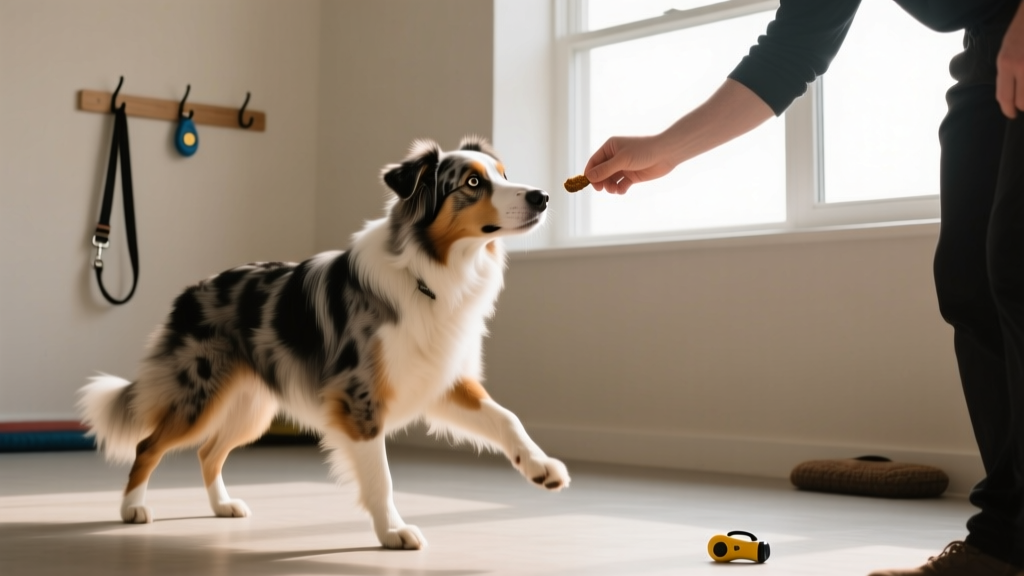
Intelligent dogs learn fastest through marker-based training. The Karen Pryor i-Click delivers a precise, consistent auditory marker that tells your dog exactly which behavior earned the reward. Paired with a hip-mounted treat pouch for rapid reinforcement, this system lets you train complex behavior chains — the kind of advanced work that keeps a Shetland Sheepdog or Doberman mentally exhausted.
Pros:
- Raised button design prevents accidental clicks
- Quiet enough not to startle noise-sensitive breeds like Papillons
- Treat pouch holds 1-2 cups of training treats with magnetic closure for fast access
- Supported by decades of operant conditioning research
Cons:
- Requires owner education — timing matters more than the tool itself
- Not a standalone product — you need a training plan or class enrollment
- Some dogs find the click sound aversive initially — desensitization protocol needed
Product Comparison Table
| Product | Type | Price Range | Durability | Best Breed Match | Cognitive Challenge |
|---|---|---|---|---|---|
| Nina Ottosson Dog Brick | Puzzle toy | $14.99–$17.99 | Moderate | Shelties, Papillons, Goldens | Level 2 (intermediate) |
| Kong Classic / Extreme | Stuffable chew toy | $11.99–$24.99 | High to Very High | All top 10 breeds | Variable (stuffing dependent) |
| Woolz Snuffle Mat | Foraging mat | $29.95–$39.95 | Moderate | Cattle Dogs, Shepherds, Dobermans | Moderate (scent-based) |
| Ruffwear Front Range | Training harness | $39.95–$44.95 | High | Shepherds, Rottweilers, Dobermans | N/A (training tool) |
| iFetch Ball Launcher | Interactive fetch | $109.99–$139.99 | High | Border Collies, Cattle Dogs, Labs | High (learn-to-use) |
| LickiMat Soother | Slow feeder/calming | $8.99–$12.99 | Low-Moderate | Poodles, Goldens, Papillons | Low-Moderate |
| Karen Pryor i-Click Kit | Training tool | $12.99–$19.99 | High | All top 10 breeds | High (behavior chains) |
Why Smart Dogs Need Enrichment Products: The Science
Intelligence in dogs isn't just an abstract trait — it has measurable neurological and behavioral consequences. According to research cited in the Merck Veterinary Manual, dogs with high working intelligence that lack adequate mental stimulation develop behavioral problems at significantly higher rates than less-driven breeds.
Common manifestations include:
- Destructive chewing — not from teething, but from boredom-driven exploration
- Excessive vocalization — barking at nothing, whining, howling
- Compulsive behaviors — tail chasing, shadow snapping, flank sucking (especially in Dobermans)
- Escape attempts — intelligent breeds are overrepresented in fence-jumping and gate-latching incidents
- Attention-seeking — pawing, nudging, bringing toys incessantly
A 2023 study in Journal of Veterinary Behavior found that dogs receiving daily puzzle-based enrichment showed a 33% reduction in owner-reported problem behaviors compared to dogs receiving only physical exercise. For breeds in the top 10 smartest category, the recommendation from veterinary behaviorists is 30-45 minutes of dedicated mental enrichment per day, in addition to physical exercise.
⚠️ Safety Considerations for Enrichment Products
- Always supervise initial uses of any new puzzle toy or snuffle mat. Some dogs will attempt to chew and swallow plastic components.
- Check treat ingredients — peanut butter must be xylitol-free (xylitol is highly toxic to dogs; if ingested, contact ASPCA Animal Poison Control at (888) 426-4435 immediately).
- Size-match everything — a Kong too small for a Labrador is a choking hazard. When in doubt, size up.
- Inspect products weekly for cracks, loose parts, or fraying fabric. Discard damaged items immediately.
- Calorie-count enrichment treats — puzzle toys and lick mats add calories. Account for these in your dog's daily food allowance to prevent obesity. The AKC recommends treats comprise no more than 10% of daily caloric intake.
How to Use These Products Effectively: A Step-by-Step Framework
Owning the product is only 20% of the equation. Here's how to deploy enrichment tools so your intelligent dog actually benefits:
- Start easy, then escalate. Introduce any puzzle toy with the simplest configuration. Let your dog succeed immediately to build confidence. Once they solve it reliably in under 60 seconds, increase difficulty or switch to a harder puzzle.
- Rotate on a 5-7 day cycle. Keep 4-6 enrichment items in your rotation. Store unused items out of sight. When you reintroduce a "retired" toy after a week, it feels novel again.
- Pair mental and physical exercise. A 20-minute puzzle session before a walk is more effective than either alone. Mental fatigue reduces pulling and reactivity on leash.
- Use meals as enrichment opportunities. Instead of a bowl, serve breakfast in a Kong and dinner on a snuffle mat. This transforms two daily feedings into 40+ minutes of cognitive work.
- Train in short sessions. Clicker training sessions should last 5-10 minutes maximum, 2-3 times daily. Smart dogs learn quickly but also frustrate quickly if sessions drag on.
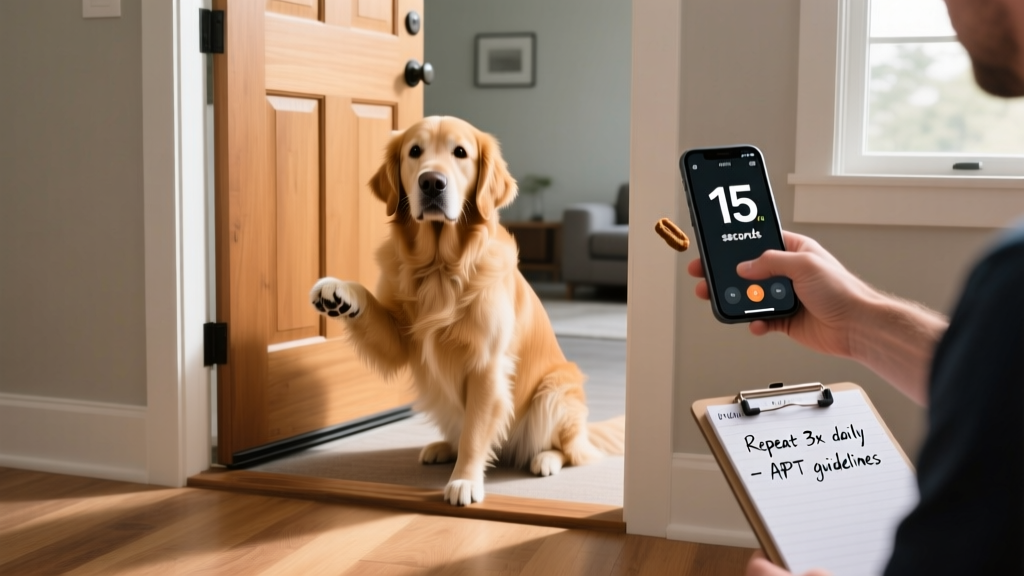
- Track what works. Keep a simple log: which products your dog engages with longest, which they ignore, which they master too fast. This data helps you refine future purchases.
Natural and DIY Alternatives to Commercial Enrichment Products
You don't need to spend $200 to keep a Border Collie entertained. Several effective alternatives cost little or nothing:
- DIY snuffle mat: Cut an old fleece blanket into 6-inch strips and tie them through the holes of a rubber sink mat. Total cost: under $5 if you use materials you already own.
- Frozen Kong alternatives: Stuff a hollowed-out carrot or a silicone ice cube tray with wet food and freeze. Works similarly to a LickiMat.
- Cardboard box puzzle: Place treats inside a small box, close it, and let your dog figure out how to open it. Supervise to prevent cardboard ingestion. Free.
- Scatter feeding: Simply toss kibble across your lawn or living room floor. Engages scent-tracking instinct with zero equipment cost.
- Hide-and-seek: Hide in another room and call your dog. Rewards recall training and engages problem-solving. Free and builds your bond.
- Nose work classes: Many local training clubs offer scent detection classes for $150-$250 per 6-week session. This is the single best activity for intelligent breeds — it channels their cognitive drive into a structured sport.
When to Skip OTC Products and See a Professional
Enrichment products are tools, not treatments. Certain situations require professional intervention rather than another puzzle toy:
Consult your veterinarian or a certified veterinary behaviorist if your dog shows:
- Compulsive behaviors lasting more than 2 weeks despite daily enrichment (spinning, flank sucking, tail chasing)
- Aggression toward people or other dogs — no product replaces a behavior modification plan from a board-certified veterinary behaviorist
- Separation anxiety with self-injury (broken teeth from crate chewing, bloody paws from door scratching)
- Sudden behavioral changes — a previously calm dog that becomes hyperactive or destructive may have an underlying medical condition (hypothyroidism, cognitive dysfunction, pain)
- Resource guarding of enrichment toys — if your dog growls or snaps when you approach them with a Kong or puzzle toy, stop using the product and consult a certified positive-reinforcement trainer
- Inability to settle even after adequate exercise and enrichment — this may indicate anxiety requiring medication alongside behavioral therapy
For smart breeds specifically, be aware that what looks like "bad behavior" is often under-stimulation. But if you're already providing 45+ minutes of daily mental enrichment plus physical exercise and the problems persist, it's time for a professional assessment. Your veterinarian can rule out medical causes and refer you to a veterinary behaviorist (DACVB) or a certified applied animal behaviorist (CAAB).
Frequently Asked Questions
What is the best enrichment product for the smartest dog breeds?
There is no single "best" product — intelligent dogs need variety. The most effective setup combines a stuffable chew toy (Kong Classic, $11.99–$24.99), a puzzle feeder (Nina Ottosson Dog Brick, $14.99–$17.99), a scent-work tool (snuffle mat, $29.95–$39.95), and structured training sessions with a clicker kit ($12.99–$19.99). Budget approximately $70–$100 for a starter enrichment library.
How do I choose the right puzzle difficulty for my dog?
Start at Level 1 (simple flip-or-lift mechanisms). If your dog solves it in under 60 seconds for three consecutive sessions, move to Level 2 (multi-step sequences). Border Collies and Poodles typically progress to Level 3 puzzles within 2-4 weeks. If your dog gives up or shows frustration (pawing aggressively, walking away), drop back one level and build confidence before advancing.
How much does a full enrichment setup cost?
A complete starter kit for an intelligent breed runs $70–$200 depending on whether you include an automatic ball launcher. Budget option (Kong + LickiMat + clicker + DIY snuffle mat): approximately $35–$55. Premium option (adding iFetch launcher and Ruffwear harness): $165–$225. Ongoing costs are minimal — replacement treats and occasional toy replacement every 6-12 months.
How do I use puzzle toys safely?
Supervise the first 3-5 uses of any new puzzle toy. Check for small parts your dog might swallow. Clean food-contact surfaces after each use with warm soapy water. Never leave a dog unsupervised with a puzzle toy that contains destructible components. For food-stuffed toys, account for treat calories in your dog's daily ration — obesity is a leading health risk even in active, intelligent breeds.
Are there natural alternatives to commercial enrichment products?
Yes. Scatter feeding (tossing kibble on grass), DIY cardboard box puzzles, frozen stuffed carrots, and homemade fleece snuffle mats all provide effective enrichment at little to no cost. The key variable isn't the product — it's the cognitive demand. If your dog has to think to get food, you're providing enrichment regardless of whether the tool cost $40 or $0.
When should I skip OTC enrichment products and see a vet?
If your dog exhibits compulsive behaviors (spinning, flank sucking, shadow snapping), aggression, self-injury, or sudden personality changes despite receiving 30-45 minutes of daily mental enrichment, schedule a veterinary exam. These may signal medical conditions, anxiety disorders, or behavioral issues requiring professional diagnosis and treatment — not just more toys.
Anouk Beaumont
All our authors care for dogs every day — read more of their work on the authors page.