Stop Your Dog Jumping on Guests—Fast & Kindly
Science-backed, stress-free methods to stop dog jumping on guests—no yelling, no punishment, just clear communication and consistency.

Why Does Your Dog Jump on Guests—and Why It’s Not ‘Just Excitement’
Jumping on guests is one of the most common—and frustrating—behaviors dog owners face. While it’s often dismissed as "just excitement," jumping is actually a complex mix of greeting behavior, attention-seeking, social uncertainty, and sometimes even mild anxiety. In 2026, modern canine behavior science confirms: dogs don’t jump to be dominant (a long-debunked myth), but to make contact, seek reassurance, or bridge a social gap they don’t know how to navigate calmly.
The Real Risks You Might Be Overlooking
Beyond awkward greetings, jumping poses real concerns: senior guests may lose balance; toddlers can be knocked over; and repeated reinforcement—even unintentional (like saying “No!” while making eye contact or pushing the dog away)—teaches your dog that *any* human interaction equals engagement. Worse, inconsistent responses confuse dogs, delaying progress.
Step-by-Step: A Humane, Evidence-Based Plan
Effective training isn’t about suppression—it’s about teaching an alternative, rewarding calm behavior, and managing the environment. Here’s what works, backed by veterinary behaviorists and certified trainers (IAABC, CCPDT) in 2026:
1. Start With Management—Before Training Begins
You can’t train focus during chaos. For the first 7–10 days, prevent rehearsal of the unwanted behavior:
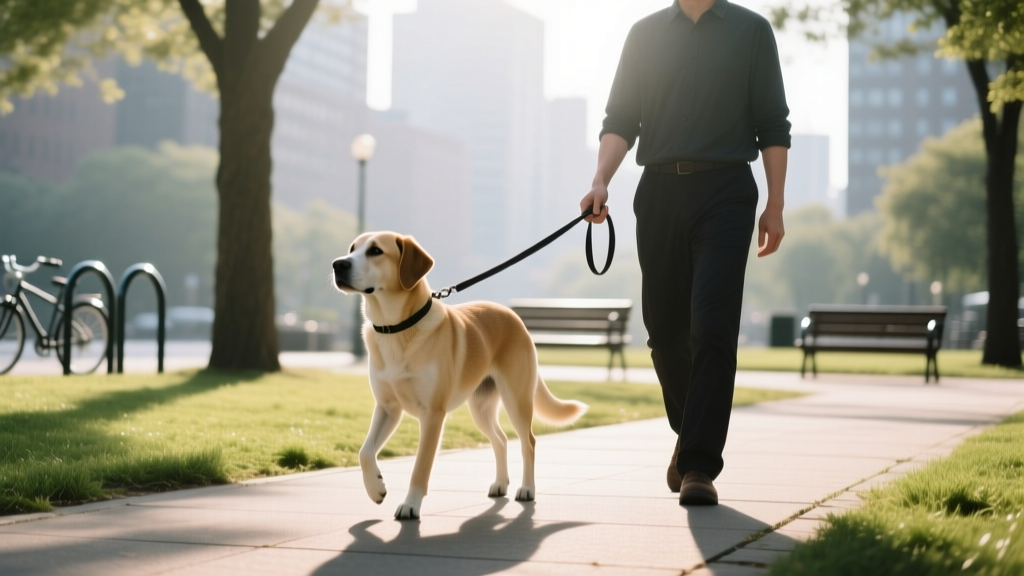
- Use a leash indoors: Keep your dog on a 6-foot flat leash when guests arrive—giving you gentle control without tension.
- Create a ‘calm zone’: Designate a cozy mat or bed near the entryway with a stuffed Kong or lick mat. Practice sending your dog there *before* the doorbell rings—not after.
- Delay greetings: Ask guests to wait outside or in the car for 30 seconds after arrival. This lowers arousal and gives your dog time to settle before interaction begins.
2. Teach the ‘Four on the Floor’ Cue (Not Just ‘Off!’)
“Off!” is vague and reactive. Instead, teach a clear, positive replacement behavior:
- Choose a cue: Use “paws down,” “floor,” or “settle”—something distinct from everyday words.
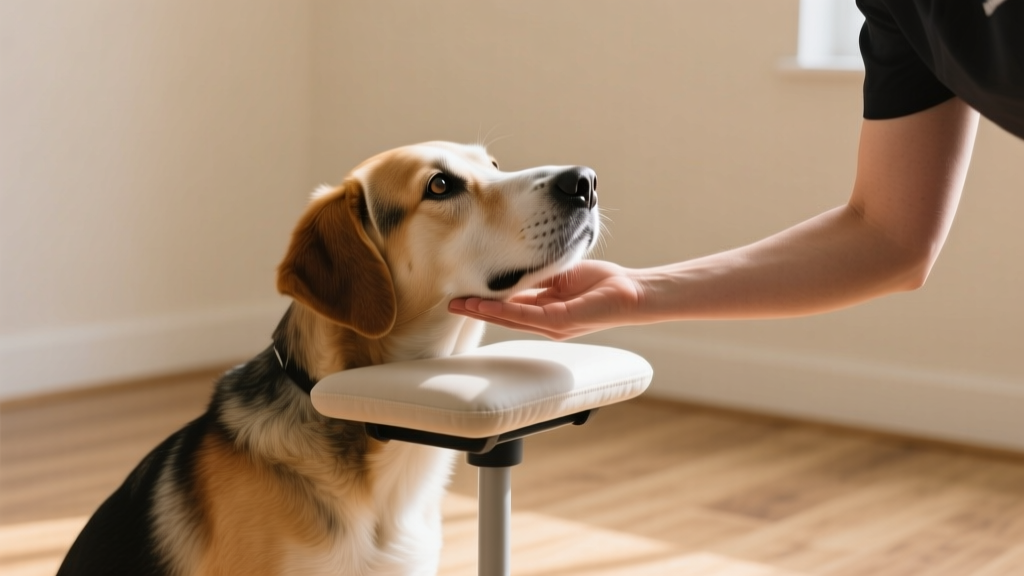
- Shape the behavior at home first: With treats in hand, reward your dog for any moment all four paws are on the ground—even for half a second. Gradually increase duration (1 sec → 3 sec → 5 sec) before rewarding.
- Add the cue at the right moment: Say “paws down” *as* your dog’s hind feet land—not after they’ve jumped. Timing matters: reward the behavior you want, not the one you’re trying to stop.
Pro tip: Pair this with a relaxed body posture—kneel slightly, avoid looming, and speak softly. Dogs mirror our energy.
3. Train the ‘Greeting Protocol’—With Real-Life Rehearsals
Once your dog reliably holds “paws down” for 5+ seconds with low distractions, add controlled guest practice:
- Have a friend ring the doorbell. Before opening, ask your dog to go to their mat and hold “paws down.” Reward generously.
- Open the door—but keep your dog leashed and on their mat. Ask the guest to ignore your dog completely (no eye contact, no talking, no reaching).
- After 5 quiet seconds, cue “paws down” again, then release your dog with a calm “say hello.” Let them approach *only if still four-on-the-floor*. If they jump, gently block with your leg (not hands) and re-cue.
- Repeat 2–3x per session. Keep sessions under 90 seconds to avoid frustration.
Consistency across all household members and frequent visitors is non-negotiable. One person allowing jumps undoes five days of training.
4. Involve Your Guests—Kindly and Clearly
Most people want to help—they just don’t know how. Prepare a friendly, printed note (or text ahead) like this:
“Hi [Name]! So excited to see you! To help [Dog’s Name] practice calm greetings, could you please: (1) Wait just 20 seconds after arriving, (2) Ignore [Dog] until I say ‘okay,’ and (3) Greet only when all four paws are on the floor? Treats provided—and huge thanks!”
This sets expectations with warmth—not blame—and makes guests active allies.
What NOT to Do (And Why They Backfire)
Some well-intentioned tactics worsen the problem:
- Kneeing, pushing, or holding paws: Triggers fear or defensive reactions—and often increases arousal. In 2026, the AVSAB (American Veterinary Society of Animal Behavior) reaffirms that aversive methods increase anxiety-related behaviors long-term.
- Saying “No!” while looking at or touching the dog: You’re delivering attention—the very thing your dog seeks. Even negative attention reinforces jumping.
- Using citronella collars or spray bottles: These suppress behavior without teaching an alternative, damaging trust and increasing unpredictability around new people.
- Leaving your dog alone to ‘figure it out’: Dogs don’t generalize well. Without guidance, they’ll default to whatever worked before—even if it was jumping.
When to Seek Professional Help
Most dogs improve within 2–4 weeks with consistent practice. But consult a certified professional dog trainer (CPDT-KA or IAABC-CDBC) or veterinary behaviorist if:
- Your dog jumps *and* growls, stiffens, or air-snaps when guests approach;
- Jumping is paired with pacing, panting, or refusal to settle—even without guests;
- Your dog is fearful of strangers overall (hiding, tail-tucking, avoiding eye contact);
- You’ve practiced consistently for 5+ weeks with zero improvement.
These may signal underlying anxiety or incomplete socialization—not just a greeting habit.
Final Thought: Patience Is Part of the Bond
Teaching calm greetings isn’t just about etiquette—it’s about deepening mutual understanding. Every time you reward stillness instead of reacting to motion, you tell your dog: “I see you. I hear you. And together, we’ll find a better way.” That message builds confidence, safety, and joy—not just for your guests, but for your dog.
Start small. Celebrate micro-wins (that first 2-second pause at the door). And remember: in 2026, kindness isn’t soft training—it’s the most effective strategy science has.
Marcus Reeves
All our authors care for dogs every day — read more of their work on the authors page.