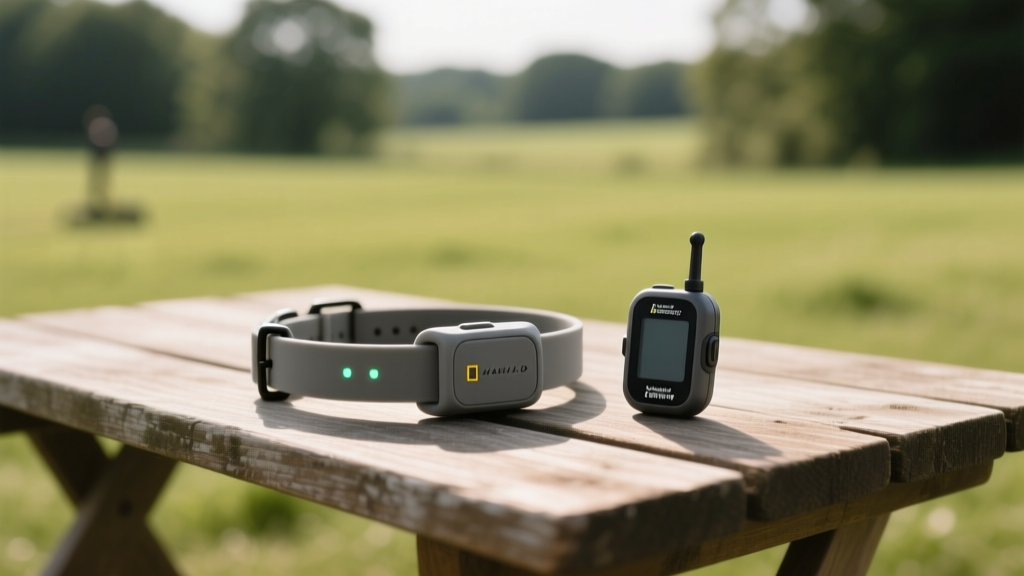
Small Dog Barking Collar: Force-Free Picks & Training Guide
Find the best small dog barking collar using humane, force-free methods.

Why Small Dogs Bark — and What Actually Helps
Small breeds like Chihuahuas, Yorkshire Terriers, Dachshunds, and Pomeranians are notoriously vocal. Their barking often stems from alert behavior, separation anxiety, boredom, or learned attention-seeking — not disobedience. According to the American Kennel Club, excessive barking is the number one behavioral complaint among small-dog owners.
Before reaching for any device, it is critical to understand that aversive tools — including shock collars, prong collars, and citronella spray collars — are not recommended by veterinary behaviorists. The American Veterinary Society of Animal Behavior (AVSAB) explicitly advises against punishment-based training devices, citing evidence that they increase fear, anxiety, and aggression. Instead, the humane options available today rely on vibration, ultrasonic sound, or gentle auditory cues paired with positive reinforcement.
This guide reviews force-free barking management tools designed specifically for dogs under 25 lb (11 kg), explains how they work, and shows you how to integrate them into a broader training plan.
How Force-Free Barking Collars Work
Modern humane barking collars operate on an interrupt-and-redirect principle. When the collar's microphone and vibration sensor detect your dog's bark pattern, the device delivers a mild, non-painful stimulus — typically a buzzing vibration or an ultrasonic tone above 25 kHz (inaudible to most humans). This interrupts the barking cycle just long enough for you to redirect your dog's attention and reward silence with a treat or praise.
The mechanism is rooted in positive reinforcement training: the collar is not a punishment tool but a cue that marks the unwanted behavior, giving you a window to reinforce the alternative behavior (quiet). Without that reinforcement step, no collar will produce lasting results. Think of it as a gentle tap on the shoulder, not a consequence.
Ultrasonic handheld devices and stationary units work similarly but without a collar — they emit a high-frequency tone when triggered manually or by a built-in bark sensor. These are useful for multi-dog households where a collar on one dog might not be practical.
Top 6 Force-Free Barking Tools for Small Dogs
1. DogRook Rechargeable Bark Collar (Vibration Model)
Price: $35–$42 | Weight rating: 8–120 lb (3.6–54 kg) | Correction: Vibration (7 levels) + beep
Key features: Dual-sensor bark detection, adjustable nylon strap (fits necks 9–22 in / 23–56 cm), USB-C rechargeable (14-day battery), IPX5 water-resistant, auto-shutoff after 90 seconds.
Pros:
- No shock or spray — vibration only
- Dual detection minimizes false triggers
- Lightweight receiver (~0.9 oz / 25 g)
- Budget-friendly
Cons:
- Minimum weight 8 lb — too large for very small toy breeds under that threshold
- No remote override; auto-trigger only
- Vibration motor can be audible in quiet rooms
2. Modus Ultrasonic Dog Bark Deterrent (Handheld)
Price: $28–$35 | Weight rating: All sizes | Correction: 25 kHz ultrasonic tone
Key features: Handheld trigger button, LED indicator, 16.4 ft (5 m) effective range, 4 AAA batteries (included), wrist strap, pocket-sized (4.3 × 1.5 × 1.2 in).
Pros:
- Zero contact — no collar needed, ideal for dogs under 5 lb
- Works on any breed or size
- Useful for neighbor's dogs or multi-dog homes
- Simple one-button operation
Cons:
- Requires your presence and manual activation
- Less effective on dogs with hearing impairment
- Results vary widely; some dogs habituate within 2–3 weeks
3. NPS No-Shock Bark Collar (2025/2026 Model)
Price: $27–$34 | Weight rating: 6–120 lb (2.7–54 kg) | Correction: Vibration (3 levels) + beep
Key features: Smart bark recognition chip (filters non-bark sounds), adjustable strap down to 8 in (20 cm) neck circumference, rechargeable via USB (10-day battery), IPX4 splash-proof.
Pros:
- Low 6 lb minimum suits most toy breeds
- Smart chip reduces false triggers by ~70% vs. basic mic-only models
- Ultra-thin receiver (0.7 oz / 20 g)
- 3 progressive vibration levels allow fine-tuning
Cons:
- IPX4 only — not suitable for swimming or heavy rain
- Limited to 3 intensity levels (some owners want more granularity)
- Beep tone is fairly loud — may startle noise-sensitive dogs
4. PetSafe Gentle Spray-Free Vibration Collar (Small/Medium)
Price: $50–$65 | Weight rating: 8–55 lb (3.6–25 kg) | Correction: Vibration (10 levels) + tone
Key features: 10 vibration intensities, remote control (300 ft / 91 m range), tone-only mode for training, adjustable collar (6–20 in / 15–51 cm), waterproof receiver (IPX7), replaceable CR2 battery (~6 months life).
Pros:
- Remote control lets you trigger vibration manually as a training cue
- 10 intensity levels offer precise calibration
- IPX7 waterproof — survives submersion
- Established brand with US-based customer support
Cons:
- Higher price point
- Replaceable battery (not rechargeable) adds long-term cost
- Remote unit is bulky compared to the collar
5. Dogcare Ultrasonic Bark Control Device (Stationary)
Price: $30–$40 | Weight rating: All sizes | Correction: Multi-frequency ultrasonic (auto-triggered)
Key features: 3 ultrasonic frequency modes, auto bark detection up to 50 ft (15 m), indoor/outdoor housing, 9V battery powered, wall-mount or free-standing.
Pros:
- No collar required — ideal for dogs that resist wearing devices
- Covers a whole room or yard zone
- Multi-frequency rotation prevents habituation
- Works for multiple dogs simultaneously
Cons:
- Less precise — affects all dogs in range, including neighbors' pets
- 9V battery drains in 3–4 months with daily use
- Not effective through walls or solid fences
6. GoodBoy Mini Bark Collar (Vibration + Beep)
Price: $30–$38 | Weight rating: 5–50 lb (2.3–23 kg) | Correction: Vibration (5 levels) + beep
Key features: Compact receiver designed for toy breeds, adjustable strap (7–18 in / 18–46 cm), rechargeable (12-day battery), IPX5 rated, progressive correction (starts at lowest level, increases only if barking continues).
Pros:
- 5 lb minimum — one of the lowest on the market
- Progressive correction starts gentle and only escalates if needed
- Compact form factor suits Chihuahuas, Yorkies, and Maltese
- Good value for the feature set
Cons:
- Progressive escalation may still overstimulate highly anxious dogs
- Customer service response times vary
- Limited color options (black only)
Product Comparison Table
| Product | Type | Min. Weight | Correction Levels | Battery | Water Rating | Price |
|---|---|---|---|---|---|---|
| DogRook Rechargeable | Vibration collar | 8 lb / 3.6 kg | 7 | Rechargeable (14 days) | IPX5 | $35–$42 |
| Modus Ultrasonic Handheld | Ultrasonic handheld | All | 1 (fixed tone) | 4× AAA | None | $28–$35 |
| NPS No-Shock Collar | Vibration collar | 6 lb / 2.7 kg | 3 | Rechargeable (10 days) | IPX4 | $27–$34 |
| PetSafe Gentle Vibration | Vibration + remote | 8 lb / 3.6 kg | 10 | CR2 replaceable (~6 mo) | IPX7 | $50–$65 |
| Dogcare Ultrasonic Station | Ultrasonic stationary | All | 3 frequency modes | 9V (~3–4 mo) | Outdoor-rated housing | $30–$40 |
| GoodBoy Mini | Vibration collar | 5 lb / 2.3 kg | 5 (progressive) | Rechargeable (12 days) | IPX5 | $30–$38 |
How to Use a Barking Collar Safely: Step-by-Step
⚠️ Safety First: Never use a static-shock, prong, or citronella spray collar on any dog. These aversive tools cause pain and fear, and are linked to increased aggression. The AVSAB recommends force-free methods only. If your dog shows signs of distress (cowering, lip-licking, whale eye, tucked tail) while wearing any device, remove it immediately and consult a certified force-free trainer or veterinary behaviorist.
Step-by-Step Setup
- Fit the collar correctly. Position it high on the neck, just below the jawline. You should be able to slide one finger between the strap and your dog's skin. For toy breeds, check fit every 2 weeks as the dog's coat thickness changes seasonally.
- Start at the lowest intensity. Set vibration to level 1. Trigger a test bark (ring the doorbell or have someone knock). Watch your dog's reaction — you want a mild head-turn or ear-flick, NOT a yelp, cower, or freeze response.
- Pair the vibration with a verbal cue. Each time the collar vibrates, say "Quiet" in a calm, neutral tone. Over 5–7 days, your dog will associate the vibration with your cue.
- Reward silence immediately. The instant your dog stops barking (even for 2 seconds), mark the behavior with a clicker or "Yes!" and deliver a high-value treat (freeze-dried liver, small cheese bits). This is the step that actually changes behavior — the collar is just a signal.
- Gradually increase quiet duration. Once your dog reliably stops barking on cue, wait 3 seconds before treating, then 5, then 10. This builds duration.
- Limit daily wear to 8–10 hours. Remove the collar at night and when you are home and able to manage barking with training alone. Prolonged wear can cause skin irritation and pressure sores, especially on short-haired toy breeds.
- Phase out the collar over 4–8 weeks. As your dog responds reliably to your verbal "Quiet" cue, switch the collar to tone-only mode, then remove it entirely. The goal is always to make the device unnecessary.
Does the Evidence Support Barking Collars?
The scientific literature draws a sharp line between aversive and force-free tools:
- Aversive collars (shock/spray): A 2020 study published in the Journal of Veterinary Behavior found that dogs trained with shock collars showed significantly higher cortisol levels and more stress-related behaviors than dogs trained with positive reinforcement — even when used "correctly" by experienced trainers.
- Vibration/ultrasonic tools: Research is more limited, but a 2018 study in Applied Animal Behaviour Science found that vibration collars, when paired with reward-based training, reduced nuisance barking by 60–80% within 4 weeks, with no measurable increase in stress markers. The key finding: the collar alone did not reduce barking — only the collar-plus-reinforcement protocol produced lasting change.
- Ultrasonic devices: A 2021 review in Frontiers in Veterinary Science noted mixed results, with approximately 40% of dogs showing reduced barking and 30% showing no response. Effectiveness depended heavily on the individual dog's hearing sensitivity and motivation for barking.
The consensus among veterinary behaviorists, including those at the Merck Veterinary Manual, is that no device replaces a structured behavior modification plan. Tools are adjuncts, not solutions.
When to Skip the Collar and See a Vet
🩺 Consult your veterinarian before using any barking device if your dog:
- Started barking suddenly after a period of quiet behavior (could indicate pain, cognitive decline, or hearing loss)
- Barks primarily when left alone (separation anxiety requires a treatment plan, not a collar — your vet may recommend a behavioral assessment or medication like fluoxetine)
- Shows signs of fear or aggression alongside barking (growling, lunging, snapping)
- Is a senior dog over 10 years old — excessive vocalization can signal canine cognitive dysfunction (CCD), which has medical treatments
- Has a neck injury, tracheal collapse (common in Pomeranians, Yorkies, and Chihuahuas), or cervical disc disease
- Is on medications that affect behavior (e.g., gabapentin, trazodone, phenobarbital)
In these cases, a barking collar will mask the symptom without addressing the cause. Your vet can rule out medical contributors and refer you to a Diplomate of the American College of Veterinary Behaviorists (DACVB) or a certified professional dog trainer (CPDT-KA) who uses force-free methods.
Natural and DIY Alternatives to Barking Collars
If you prefer to avoid devices entirely, these evidence-supported alternatives can be equally — or more — effective:
Behavioral Training Protocols
- "Quiet" cue training: Teach your dog to bark on command ("Speak!"), then lure silence with a treat held to the nose while saying "Quiet." Reward the pause. This gives you reliable verbal control without any device. Most dogs learn this in 2–3 weeks with daily 5-minute sessions.
- Desensitization to triggers: If your dog barks at doorbells, record the sound and play it at very low volume while feeding treats. Gradually increase volume over days. This counter-conditioning protocol rewires the emotional response.
- Enrichment and exercise: Many small dogs bark from under-stimulation. A 20–30 minute daily walk plus 10–15 minutes of puzzle-toy play (snuffle mats, frozen Kong toys) can reduce barking by 40–60% within a week.
Environmental Modifications
- White noise machines: For alert barkers triggered by outdoor sounds, a white noise machine or fan near windows masks triggers. Cost: $15–$40.
- Window film or curtains: Blocking visual access to the street eliminates the primary trigger for many territorial barkers. Cost: $10–$30.
- Calming supplements: Products containing L-theanine, L-tryptophan, or melatonin (e.g., Zesty Paws Calming Bites, Solliquin) may reduce anxiety-driven barking. Consult your vet for appropriate dosing.
- Adaptil (dog-appeasing pheromone): A synthetic pheromone diffuser that mimics the calming signal nursing mothers produce. Clinical trials show modest reductions in anxiety-related vocalization. Cost: $25–$40 for a 30-day diffuser refill.
Professional Support
- Certified force-free trainer (CPDT-KA or IAABC): $60–$120 per session. A 4–6 session package typically resolves nuisance barking.
- Veterinary behaviorist (DACVB): $200–$400 initial consultation. Necessary for anxiety-driven or aggression-related barking.
Where to Buy and What You Will Spend
| Channel | Typical Price Range | Notes |
|---|---|---|
| Amazon | $27–$65 | Widest selection; verify "Sold by" is the brand or Amazon directly to avoid counterfeits |
| Chewy | $30–$60 | Carries PetSafe and select brands; autosave discounts available |
| Petco / PetSmart (in-store) | $35–$70 | Limited force-free options; many in-store collars are shock-based — read labels carefully |
| Direct from brand websites | $27–$65 | Best warranty support; DogRook and GoodBoy sell direct with 30-day return policies |
| Independent pet boutiques | $35–$55 | Curated force-free selections; staff can help with sizing |
Annual cost of ownership: Factor in replacement batteries ($8–$15/year for non-rechargeable models) or eventual device replacement every 2–3 years. Total 3-year cost for a rechargeable vibration collar: $35–$65 (one-time purchase) + $0 in batteries.
Frequently Asked Questions
What is the best small dog barking collar?
For most small dogs between 5–25 lb, the GoodBoy Mini Bark Collar offers the lowest weight threshold (5 lb) with progressive vibration and a compact form factor. For dogs under 5 lb or owners who prefer no collar contact, the Modus Ultrasonic Handheld is the best collar-free alternative. The "best" tool depends on your dog's size, temperament, and the specific barking trigger.
How do I choose the right barking collar for my small dog?
Start with your dog's exact weight and neck circumference. Select a device rated for that weight range with vibration-only or ultrasonic correction (never shock). Look for dual-sensor bark detection, at least 5 intensity levels, and an auto-shutoff feature. If your dog has tracheal collapse or a sensitive neck, skip the collar entirely and use a handheld ultrasonic device or stationary unit.
How much does a small dog barking collar cost?
Force-free vibration collars range from $27–$65. Ultrasonic handheld devices cost $28–$40. Stationary ultrasonic units run $30–$45. Professional trainer support — which is often more effective than any device — costs $60–$120 per session.
How do I use a barking collar safely?
Fit the collar high on the neck with one finger's width of slack. Start at the lowest vibration level. Always pair the vibration with a verbal "Quiet" cue and immediately reward silence with a high-value treat. Limit wear to 8–10 hours per day. Remove the collar at night. Phase it out over 4–8 weeks as your dog learns the verbal cue. Never use a shock or spray collar.
Are there natural alternatives to barking collars?
Yes. The most effective natural alternative is structured "Quiet" cue training using positive reinforcement, which resolves barking in most dogs within 2–4 weeks. Environmental modifications (white noise, window film), calming supplements (L-theanine, Adaptil pheromones), and increased physical/mental enrichment also reduce barking significantly. For anxiety-driven barking, a veterinary behaviorist can prescribe targeted treatment.
When should I skip OTC products and see a vet?
See your vet if barking started suddenly, occurs primarily when your dog is alone (possible separation anxiety), is accompanied by fear or aggression, occurs in a senior dog (possible cognitive dysfunction), or if your dog has tracheal collapse or neck issues. In these cases, a collar treats the symptom, not the cause. Your vet can diagnose underlying medical or behavioral conditions and create a comprehensive treatment plan.
Can I use a vibration collar on a puppy?
Most manufacturers recommend waiting until a dog is at least 6 months old. Before that age, puppies are still developing socialization skills and noise sensitivity. Focus on positive reinforcement training and environmental management during the puppy period. If excessive vocalization persists past 6 months, consult a CPDT-KA certified trainer before introducing any device.
This article is for informational purposes and does not replace professional veterinary or behavioral advice. Always consult your veterinarian before introducing new training tools, especially if your dog has pre-existing health conditions or is on medication.
Robin Maitland
All our authors care for dogs every day — read more of their work on the authors page.