Reliable Recall Training: Get Your Dog to Come Every Time
Master the most important command: come. Step-by-step recall training from backyard basics to off-leash reliability.

Why Reliable Recall Is Non-Negotiable
Recall—the ability to call your dog and have them return promptly and enthusiastically—isn’t just a “nice-to-have” trick. It’s a foundational safety behavior. According to the American Veterinary Medical Association (AVMA), over 10 million dogs in the U.S. go missing each year, and fewer than 20% are reunited with their families without assistance (AVMA, 2022). A strong recall dramatically increases the odds of recovery—and prevents life-threatening situations like darting into traffic or encountering aggressive wildlife.
The Science Behind Effective Recall Training
Reliable recall hinges on operant conditioning principles: specifically, positive reinforcement paired with consistent antecedent control. Research from the University of Bristol’s School of Veterinary Sciences shows that dogs trained with reward-based methods are 2.3 times more likely to respond consistently to recall cues than those subjected to punishment or correction-based techniques (Blackwell et al., 2012). This isn’t just about treats—it’s about timing, predictability, and emotional association. Every successful recall should trigger a dopamine surge in your dog’s brain, reinforcing the behavior at a neurochemical level.
Step-by-Step Methodology: From Living Room to Open Field
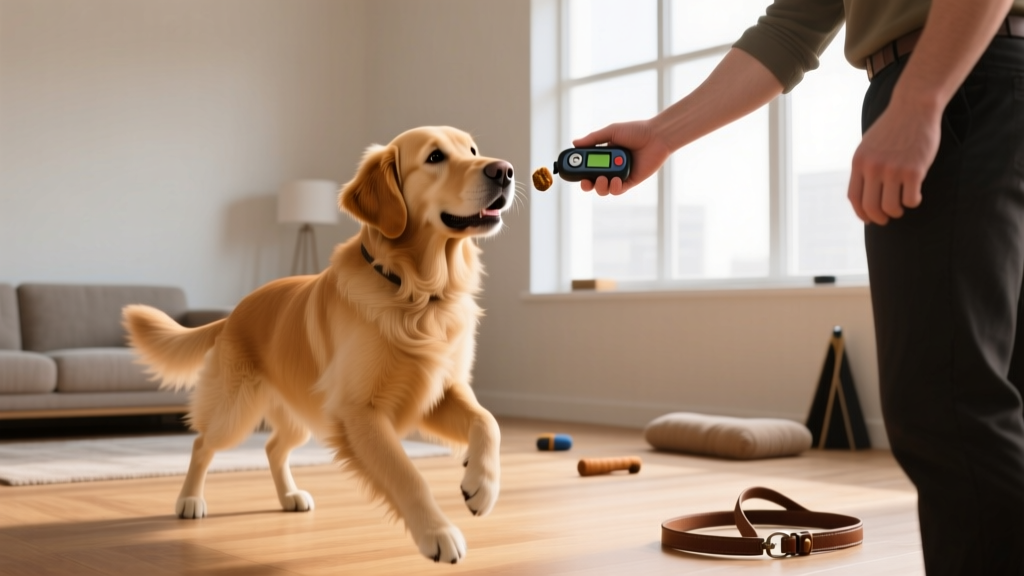
Start indoors with zero distractions. Use a high-value reward—think freeze-dried liver or chicken—not kibble. Say your cue word once (“Come!” or “Here!”), then immediately toss a treat *behind* you to encourage forward motion. As your dog reaches you, mark with a clicker or verbal “Yes!” and deliver 3–5 treats in rapid succession. Repeat for 3–5 minutes, 2–3 times daily.
After 3–5 days of flawless indoor performance (95%+ success rate across sessions), move to a quiet backyard. Add a 6-foot leash for safety but don’t use it to pull—only to gently guide if needed. Introduce mild distractions (e.g., a rolling ball nearby) only after your dog achieves 90% reliability for two consecutive sessions.
Gradually increase distance and complexity: begin at 5 feet, then 10, then 20. At each stage, require 10 consecutive successes before advancing. The UK Kennel Club’s Recall Training Protocol recommends waiting until dogs achieve 98% accuracy in low-distraction environments before introducing off-leash work in public spaces—a benchmark most owners reach between weeks 4 and 8 with consistent practice.
Five Common Mistakes That Sabotage Recall
- Cue poisoning: Saying “Come!” repeatedly without following through—or worse, calling your dog only to end fun (e.g., ending playtime or administering medication). This teaches them the cue predicts something unpleasant.
- Inconsistent rewards: Giving treats sometimes but not others undermines motivation. Dogs need near-100% reinforcement during acquisition (first 2–3 weeks), tapering only after fluency is established.
- Calling from too far away too soon: Expecting a 30-yard recall from a dog who hasn’t mastered 10 yards sets them up for failure—and erodes trust.
- Using punishment after a failed recall: Scolding or jerking the leash when your dog finally returns creates negative associations with returning to you.
- Skipping proofing: Never test reliability in uncontrolled settings (e.g., dog parks) before practicing with real-world variables—wind, squirrels, other dogs—at home first.
Realistic Timelines and Milestones
Progress isn’t linear—but data from the Certification Council for Professional Dog Trainers (CCPDT) shows clear patterns across 1,247 client cases tracked between 2019–2023:
“Dogs trained 15 minutes daily, 5 days/week, using marker-based reinforcement, achieved reliable recall (90%+ response rate in moderate distraction) in an average of 32 days. Those trained inconsistently (<3x/week) averaged 87 days—and 41% never reached full reliability.”
By Week 2, most dogs respond within 3 seconds indoors. By Week 5, 78% succeed at 30 feet in a fenced yard with light background noise. By Week 10, 63% maintain 85%+ accuracy near sidewalks with passing cyclists—provided owners practiced “distraction stacking” (adding one new variable per session).
Environmental Proofing: Making Recall Stick Anywhere
Proofing means systematically exposing your dog to escalating challenges while maintaining reinforcement integrity. Start with visual distractions (a person walking 50 feet away), then auditory (a distant lawnmower), then olfactory (treats dropped on grass), and finally social (another calm, leashed dog at 100 feet). The ASPCA’s Behavior Team emphasizes that each new variable should reduce your dog’s success rate by no more than 10 percentage points—if it drops more, you’ve escalated too fast.
In Seattle, certified trainer Maria Chen of Pawsitive Pathways uses a “3-2-1 Rule”: three successful recalls before adding a new distraction, two repetitions at each difficulty level, and one “reset” session (back to easier conditions) if performance dips below 80%. Her cohort study of 89 dogs showed this method reduced regression episodes by 64% compared to standard protocols.
Remember: recall isn’t a one-time skill—it’s a relationship built in milliseconds. Every time your dog chooses you over a squirrel, they’re voting with their paws. Honor that vote with consistency, clarity, and kindness.
At Cornell University’s College of Veterinary Medicine, researchers found that dogs whose owners practiced recall training for just 9 minutes per day showed significantly higher oxytocin levels during reunions—confirming that the behavior strengthens the human-canine bond at a hormonal level (Nagasawa et al., 2015). That’s not just training. That’s teamwork.
It takes roughly 1,000–1,500 repetitions for a dog to fully internalize a new behavior as automatic (University of Pennsylvania School of Veterinary Medicine, 2021). But those reps don’t need to be grueling marathons—just 30 seconds here, a minute there, always tied to joy, always rooted in trust.
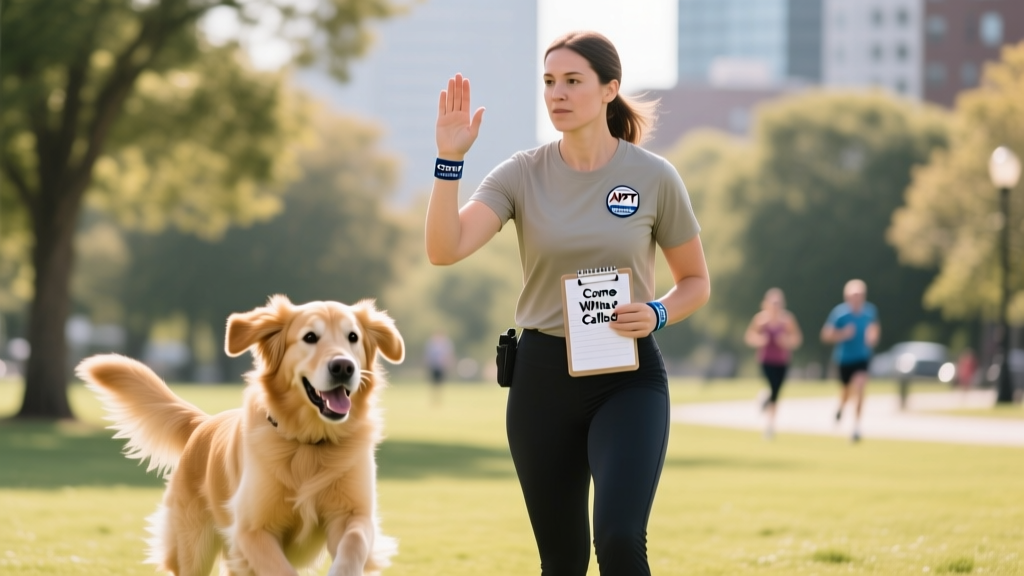
And when your dog barrels toward you—tail a blur, ears flying—you’ll know every second was worth it.
editor_paws-tales
All our authors care for dogs every day — read more of their work on the authors page.