Mastering Reactive Dog Walk Training: A Step-by-Step...
Transform stressful outings into peaceful strolls with our comprehensive reactive dog walk training guide. Learn practical steps, tips, and expert advice.

For many dog owners, the simple act of taking a walk has devolved into a daily source of anxiety, embarrassment, and physical exhaustion. If your dog barks, lunges, or freezes at the sight of other dogs, strangers, or even moving vehicles, you are not alone. Reactive dog walk training is one of the most common challenges modern pet parents face, but it is entirely manageable with patience, the right methodology, and a deep understanding of canine behavior.
Reactivity is not a character flaw, nor is it simply 'bad behavior.' It is an intense emotional response to a stimulus that your dog finds overwhelming. Whether rooted in fear, frustration, or over-arousal, the goal of this guide is to help you change your dog's underlying emotional state. By the end of this article, you will have a comprehensive toolkit to transform those stressful neighborhood patrols into peaceful, bonding experiences.
Understanding Canine Reactivity and Breed Triggers
Before we can change a behavior, we must understand the emotion driving it. Reactivity on walks typically stems from one of three places: fear, frustration, or over-excitement. A fearful dog lunges to make the scary thing go away. A frustrated dog barks because they desperately want to greet the other dog but are held back by the leash. An over-excited dog simply lacks the impulse control to handle the stimulation of the environment.
Every dog has a 'threshold.' Think of this as an invisible bubble surrounding your dog. When a trigger (like another dog) is outside this bubble, your dog can think, learn, and take treats. When the trigger crosses into the bubble, your dog's amygdala hijacks their brain, triggering a fight-or-flight response. At this point, learning is biologically impossible. The core of reactive dog walk training is identifying this threshold and working strictly outside of it.
It is also vital to recognize how breed genetics influence reactivity. Herding breeds, such as the Border Collie or the Australian Shepherd, are genetically wired to control movement. They may react intensely to running children, bicycles, or cars because their instinct is to 'herd' these fast-moving stimuli. Conversely, guarding breeds like the German Shepherd may exhibit reactivity rooted in a desire to protect their handler from perceived environmental threats. Understanding your dog's genetic blueprint helps you approach their training with empathy rather than frustration.
Furthermore, owners must be aware of 'trigger stacking.' When a dog reacts to a stimulus, their body releases cortisol and adrenaline. While adrenaline dissipates quickly, cortisol can remain in the bloodstream for days. If your dog has a scary encounter on Monday, their baseline stress level is elevated on Tuesday, making them much more likely to react to a minor trigger, like a blowing plastic bag. Managing your dog's environment to prevent trigger stacking is just as important as the active training itself.
Essential Gear for Reactive Dog Walk Training
Attempting to train a reactive dog with the wrong equipment is like trying to drive a car with faulty brakes. The right gear ensures safety, provides you with better control, and prevents your dog from experiencing pain that could exacerbate their negative associations.
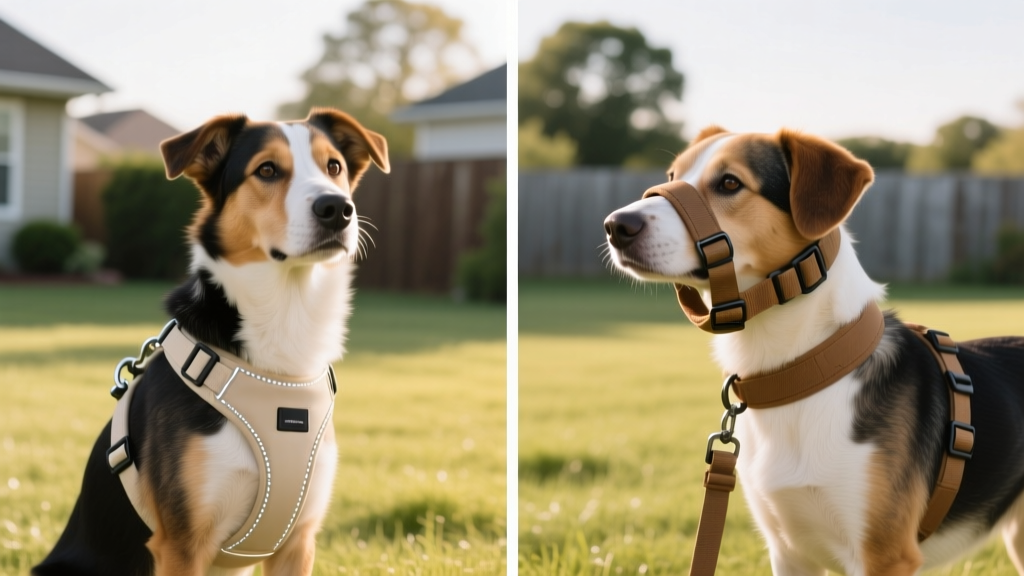
1. A Front-Clip Harness
Avoid choke chains, prong collars, and slip leads. Pain and discomfort only increase a dog's anxiety and can cause them to associate the pain with the trigger they are looking at, worsening the reactivity. A well-fitted harness with a front chest clip gently redirects your dog's momentum back toward you when they pull, giving you mechanical leverage without causing harm. If your dog also struggles with general leash manners, check out our guide on how to stop leash pulling for more harness tips.
2. A Sturdy, Fixed-Length Leash
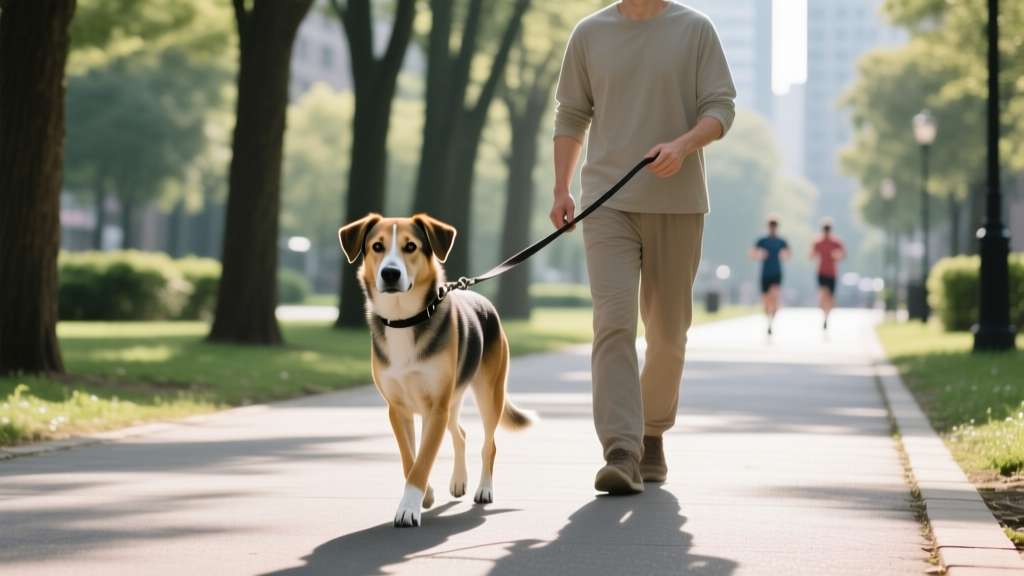
Retractable leashes are highly detrimental to reactive dog walk training. They teach dogs that pulling yields more freedom, they offer virtually no emergency control, and the thin cords can snap under the sudden force of a lunging dog. Use a sturdy, six-foot leather or biothane leash. This length gives your dog enough room to sniff and decompress while keeping them close enough for you to manage their environment.
3. A High-Value Treat Pouch
Dry kibble will not cut it when your dog is distracted by a squirrel or another dog. You need high-value, easily consumable treats like boiled chicken, hot dogs, or freeze-dried liver. Keep them in an easily accessible treat pouch attached to your waist so you can deliver rewards with split-second timing.
4. A Basket Muzzle (Optional but Recommended)
If your dog's reactivity includes a history of biting or if you are working in unpredictable environments, a basket muzzle is a fantastic safety tool. It allows the dog to pant, drink, and take treats while ensuring everyone's safety. Muzzle conditioning should be done slowly and positively long before you attempt to use it on a walk.
Step-by-Step Reactive Dog Walk Training
Now that you understand the psychology and have the proper gear, it is time to hit the pavement. This step-by-step protocol relies on classical and operant conditioning to change how your dog feels about their triggers. For a deeper dive into the science of reward-based methods, read our article on positive reinforcement basics.
Step 1: Map the Threshold
Before you begin training, you must find your dog's threshold distance. Take your dog to a park or a quiet street where triggers are present but distant. Observe your dog's body language. Are their ears relaxed? Is their mouth slightly open? Can they take a treat gently from your hand? If yes, you are under threshold. If your dog stiffens, stares intensely, closes their mouth, or refuses food, you are over threshold. Note the distance at which your dog can notice a trigger but still remain engaged with you. This is your training zone.
Step 2: The Engage-Disengage Game
Also known as the 'Look At That' game, this is the gold standard for reactive dog walk training.
- Engage: Stand with your dog at a sub-threshold distance from a trigger. The moment your dog looks at the trigger, use a marker word like 'Yes!' or a clicker.
- Disengage: The marker word tells the dog a treat is coming. Your dog will naturally turn away from the trigger and look at you to get the reward. Deliver the treat immediately.
- Repeat: Practice this until your dog begins to voluntarily look at the trigger and then immediately look back at you without needing the marker word. This voluntary disengagement proves that your dog is learning to use you as a safety cue rather than reacting to the trigger.
Step 3: The Emergency U-Turn
Sometimes, the environment is unpredictable. A dog might suddenly appear from behind a parked car, putting you instantly over threshold. You need an escape route. Teach the Emergency U-Turn in a low-distraction environment first. Say a cheerful cue like 'Let's Go!', pivot 180 degrees, and run a few steps in the opposite direction, tossing a handful of high-value treats on the ground for your dog to chase and eat. Once your dog associates the cue with a fun, rewarding game, you can use it on walks to quickly create distance from an unexpected trigger before a reaction occurs.
Step 4: Advocate and Manage the Environment
Training is not just about what you do with your dog; it is about how you manage the world around them. Cross the street when you see an off-leash dog. Walk behind parked cars to block your dog's line of sight. Learn to politely but firmly tell strangers, 'My dog is in training and needs space, please do not approach.' If you are interested in eventually allowing your dog more freedom to explore safely, our guide on recall training is an excellent next step for off-leash decompression in secure areas.
Pro Tips for Success and Common Mistakes to Avoid
Reactive dog walk training is a marathon, not a sprint. Keeping your own emotions in check and avoiding common pitfalls will drastically accelerate your progress.
Pro Tips for Success
- Advocate for Sniffing: Sniffing is a naturally calming behavior for dogs that lowers their heart rate. Allow your dog to engage in 'sniffaris' in quiet areas. This mental stimulation is often more tiring and satisfying than physical exercise.
- Feed the Floor: If your dog is too stressed to take food from your hand, scatter treats in the grass. Foraging engages their nose and helps ground them in the present moment.
- Keep Sessions Short: Ten minutes of focused, successful training is vastly superior to an hour of stressful, trigger-stacked walking. End the walk on a positive note before your dog becomes exhausted.
- Monitor Your Own Body Language: Dogs are incredibly perceptive. If you tense up, hold your breath, and tighten the leash when you see another dog, your dog will assume there is something to be afraid of. Breathe deeply, keep the leash loose, and project calm energy.
Common Mistakes to Avoid
- Flooding: Forcing your dog to sit next to another dog in an attempt to 'show them it's fine' is called flooding. This does not cure fear; it suppresses the outward reaction until the dog eventually explodes. Always respect your dog's threshold.
- Punishing the Reaction: Yelling, jerking the leash, or using shock collars to stop barking only adds pain and fear to an already terrifying situation. Your dog may stop barking out of fear of you, but their internal anxiety will skyrocket, often leading to redirected aggression.
- Inconsistent Cues: If you let your dog greet some dogs on leash but not others, you are creating a recipe for leash frustration. For a reactive dog, it is often best to implement a strict 'no on-leash greetings' rule to eliminate the frustration of denied access.
- Ignoring Early Warning Signs: Barking and lunging are late-stage reactions. Learn to read early signs of stress like lip licking, yawning, whale eye, and stiffening. Intervene with an Emergency U-Turn before the dog reaches their boiling point.
For owners who adopted older dogs or rescue dogs with unknown histories, understanding early socialization windows can help explain current behaviors. Our article on puppy socialization offers great insights into how early experiences shape adult reactivity, alongside tips for socializing adult dogs safely.
Frequently Asked Questions
How long does reactive dog walk training take?
There is no universal timeline for reactive dog walk training, as it depends heavily on the dog's history, genetics, and the consistency of the handler. Some dogs show significant improvement in a few weeks, while others require months or even years of ongoing management. Reactivity is rarely 'cured' in the traditional sense; rather, it is managed and improved. The goal is to change the dog's emotional response so that walks become enjoyable, even if they always require a bit of environmental management.
Should I use a muzzle for my reactive dog?
If your dog has a history of biting, or if their reactivity makes you fearful of losing control, a basket muzzle is a highly responsible tool. It protects the public, protects your dog from the legal and emotional consequences of a bite incident, and allows you to relax, which in turn helps your dog relax. The key is proper muzzle conditioning. Never simply strap a muzzle on a panicked dog. Spend weeks feeding them high-value treats through the front of the muzzle until they willingly push their nose inside, viewing it as a predictor of wonderful things.
Can an older dog be trained to stop reacting on walks?
Absolutely. While it is true that older dogs have years of rehearsed neural pathways making their reactive habits deeply ingrained, canine neuroplasticity allows dogs to learn and change at any age. Training an older dog may require more patience and stricter environmental management initially, but the Engage-Disengage game and counter-conditioning are just as effective for senior dogs as they are for puppies. Always rule out underlying medical conditions first, as pain from arthritis or vision loss can drastically increase a senior dog's irritability and reactivity.
What if my dog reacts to everything, not just other dogs?
If your dog reacts to leaves blowing, trash cans, strangers, and noises, they are likely suffering from generalized anxiety or severe trigger stacking. In these cases, you need to drastically reduce their environmental exposure. Consider taking 'decompression walks' in isolated, quiet areas where triggers are virtually non-existent, allowing your dog's nervous system to reset. You may also want to consult a certified veterinary behaviorist to discuss whether anti-anxiety medication could help lower your dog's baseline stress enough for training to take hold.
Is it okay to skip walks if my dog is too reactive?
Yes. If your dog is severely over threshold, a traditional neighborhood walk is doing more harm than good. Physical exercise can be achieved through indoor fetch, treadmill training, or playing in a secure, private yard. Mental stimulation, which is often more exhausting than physical exercise, can be provided through puzzle toys, scent work, and trick training indoors. Skipping a stressful walk to focus on indoor enrichment and decompression is a vital part of a holistic reactive dog management plan.
Marcus Aldridge
All our authors care for dogs every day — read more of their work on the authors page.