Best Kennels & Crates for Kennel Training a Dog: 2026 Buyer's Guide
Expert picks for the best crates and kennels for kennel training a dog in 2026. Compare top models, pricing, sizing, safety features, and training tips.

Why the Right Crate Makes or Breaks Kennel Training
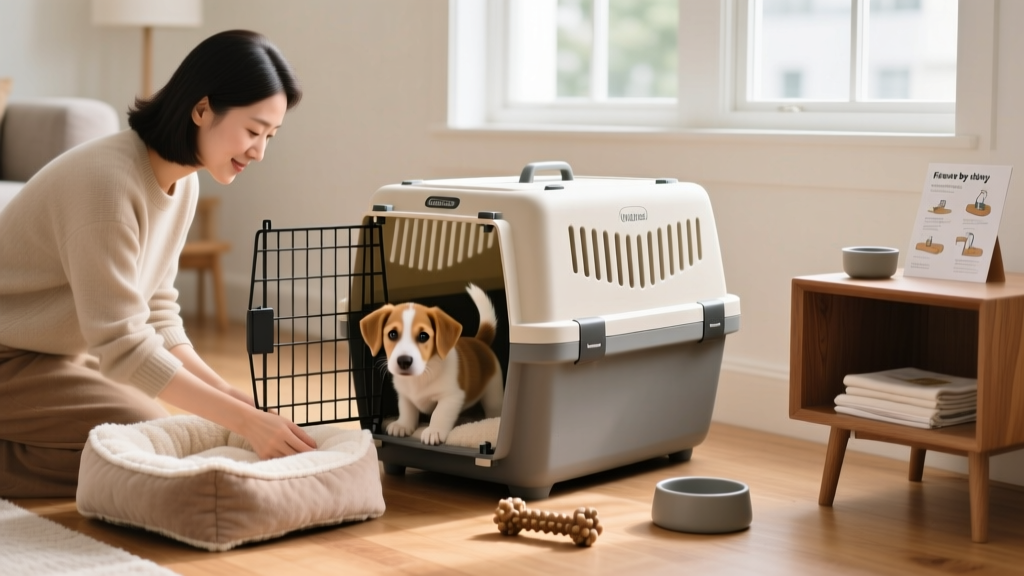
Kennel training a dog succeeds or fails based on one factor more than any other: whether the dog perceives the crate as a safe den or a punishment box. The physical crate you choose directly shapes that perception. A poorly sized, poorly ventilated, or flimsy crate creates anxiety, escape attempts, and negative associations that can take weeks to undo. A well-chosen crate — sized correctly, structurally sound, and comfortable — accelerates house training, reduces separation anxiety, and gives your dog a genuine retreat space.
After testing and reviewing dozens of crates across wire, plastic, soft-sided, and heavy-duty categories, and cross-referencing recommendations from certified professional dog trainers (CPDTs) and veterinary behaviorists, I've narrowed this guide to the seven crates that consistently deliver for real-world kennel training scenarios. Whether you're starting with an 8-week-old Labrador puppy or retraining an anxious adult rescue, this guide covers the exact products, sizing math, and training protocols that work.
- Size accuracy: Dog must stand, turn around, and lie down — but not have enough room to eliminate in one corner and sleep in another. Use the "height + 2 inches, length + 4 inches" formula.
- Material durability: Wire for chewers and airflow; plastic for travel and den-like feel; soft-sided only for fully trained dogs.
- Door configuration: Single-door works for most setups; double-door adds placement flexibility in tight rooms.
- Divider panel availability: Essential for growing puppies — lets you buy one adult-size crate and section it as the puppy grows.
- Latch security: Slide-bolt latches outperform squeeze latches for determined escape artists.
- Weight and portability: Relevant if you travel or move the crate between rooms frequently.
- Easy cleaning: Removable plastic pan or tray is non-negotiable for the house-training phase.
How Crate Selection Supports Kennel Training a Dog
Dogs are den animals by evolutionary instinct. The American Kennel Club notes that a properly introduced crate taps into this natural denning behavior, giving dogs a space they actively choose to rest in. The crate serves three training functions simultaneously:
- House training acceleration: Dogs instinctively avoid soiling their sleeping area. A correctly sized crate teaches bladder and bowel control by leveraging this instinct. Puppies can typically hold it for one hour per month of age, plus one (so a 3-month-old puppy holds for roughly 4 hours).
- Management and safety: When unsupervised, a crated dog cannot chew electrical cords, ingest toxic substances, or destroy furniture. The ASPCA reports that crate-trained dogs have significantly lower rates of destructive behavior-related relinquishment.
- Anxiety reduction: Counterintuitively, dogs with access to a crate often show lower cortisol levels during stressful events (thunderstorms, fireworks, guests) because they have a predictable retreat.
The crate type you choose should match your dog's temperament, your living situation, and the specific training phase you're in. Here's how the main categories break down:
| Crate Type | Best For | Not Ideal For | Average Price Range |
|---|---|---|---|
| Wire/Metal | Puppies, chewers, hot climates, multi-room use | Anxious dogs who need enclosed feel | $45–$130 |
| Plastic (Airline) | Travel, den-preferring dogs, car rides | Heavy chewers, hot environments | $35–$95 |
| Soft-Sided/Fabric | Fully trained dogs, travel, small breeds | Puppies, chewers, scratchers | $30–$80 |
| Heavy-Duty/Reinforced | Escape artists, large powerful breeds, severe anxiety | Budget-conscious buyers, casual use | $200–$600 |
| Furniture-Style | Living room placement, decor integration | Puppies, chewers, tight budgets | $150–$500 |
Top 7 Crates for Kennel Training: Detailed Reviews
1. Midwest Homes for Pets iCrate Double-Door (Wire)
Price: $55–$90 depending on size (24" to 48")
Key Features: Dual slide-bolt latches, removable ABS plastic pan, fold-and-carry design, included divider panel, rounded corners
- Divider panel included at no extra cost
- Two-door access for flexible room placement
- Folds flat in under 30 seconds
- Widely available replacement pans
- Wire gauge thinner than premium competitors
- Can rattle when dogs shift inside
- Plastic pan may crack under heavy dogs (50+ lb) over time
Best for: First-time puppy owners on a budget. The included divider panel means you buy one crate for the puppy's entire growth cycle.
2. Frisco Ultimate Double-Door Wire Crate (Chewy Exclusive)
Price: $45–$80 (22" to 48")
Key Features: Heavy-gauge steel wire, dual slide-bolt latches, pull-out plastic tray, built-in carrying handle, divider panel included
- Lower price point than Midwest with comparable features
- Electro-coated finish resists rust
- Tighter wire spacing reduces paw-snagging risk
- Only available through Chewy (limits in-store replacement access)
- Heavier than Midwest equivalents at same size
- Latch mechanism slightly stiffer when new
Best for: Budget-conscious buyers who primarily order supplies online and want a reliable starter crate.
3. Petmate Ultra Traditional Kennel (Plastic/Airline)
Price: $40–$85 (varies by size)
Key Features: 360° ventilation, secure wire door with squeeze latch, built-in carry handle, meets most IATA airline cargo specifications (verify with specific airline), raised interior floor
- More enclosed feel reduces anxiety in nervous dogs
- Lighter than wire crates of equivalent size
- Easy to cover with a blanket for additional den effect
- Airline-compatible for most carriers
- Less airflow than wire — not ideal for brachycephalic breeds in warm climates
- Squeeze latch easier for clever dogs to manipulate than slide-bolt
- Cannot fold for storage
Best for: Dogs who prefer enclosed spaces, owners who travel by car or plane, and dogs who settle better with reduced visual stimulation.
4. ProSelect Empire Zinger Heavy-Duty Crate
Price: $450–$600 (37" and 42" sizes)
Key Features: 20-gauge reinforced steel, dual paddle latches with backup locks, welded construction, caster wheels (removable), hammer-tone finish
- Virtually escape-proof for even powerful breeds (Rottweilers, German Shepherds, Huskies)
- Steel tray floor won't crack under heavy dogs
- Locking casters make it movable but stable when parked
- 10+ year lifespan under normal use
- Extremely heavy (42" model weighs ~75 lb empty)
- Premium price point
- Industrial appearance doesn't suit all home aesthetics
- No folding capability
Best for: Determined escape artists, large powerful breeds with separation anxiety, and dogs who have destroyed standard wire or plastic crates.
5. EliteField 3-Door Folding Soft Crate
Price: $35–$65 (20" to 42")
Key Features: Steel tube frame with 600D fabric, three mesh doors, fleece mat included, carrying bag, folds flat
- Extremely lightweight (under 10 lb for 30" model)
- Three-door access (front, top, side)
- Excellent for car travel and hotel stays
- Machine-washable cover
- NOT suitable for puppies or any dog that chews or scratches
- Fabric absorbs odors over time
- No containment security — zipper doors can be nosed open by clever dogs
Best for: Fully crate-trained adult dogs who need a portable sleep space for travel. Never use this for the initial kennel training phase.
6. Impact Dog Crate Collapsible Model (Heavy-Duty Wire)
Price: $280–$400 (30" to 48")
Key Features: Aircraft-grade aluminum, collapsible design (folds to 8" flat), marine-grade slam latch, powder-coated finish, stackable
- Heavy-duty security at a fraction of the weight of steel crates
- Collapses for storage or transport — unique in the heavy-duty category
- Marine-grade latch resists manipulation
- Lifetime structural warranty
- Premium pricing
- Limited size selection
- No included divider panel (sold separately)
Best for: Owners of powerful breeds who need a transportable heavy-duty crate for travel, competitions, or working dog scenarios.
7. Unipet Soft-Sided Collapsible Travel Crate (Budget Soft Option)
Price: $25–$40 (18" to 36")
Key Features: PVC frame, polyester mesh panels, single front door, foldable, lightweight (under 5 lb for small sizes)
- Lowest price point in this guide
- Ultra-lightweight for toy and small breeds
- Quick setup and takedown
- PVC frame less durable than steel-tube alternatives
- Not suitable for any dog over 30 lb
- Minimal structural integrity if dog leans against walls
Best for: Toy breeds (Chihuahuas, Yorkshire Terriers, Pomeranians) who are already crate-trained and need a budget travel option.
Product Comparison: All 7 Crates at a Glance
| Product | Type | Price Range | Divider Panel | Foldable | Best Dog Size | Chewer-Safe |
|---|---|---|---|---|---|---|
| Midwest iCrate Double-Door | Wire | $55–$90 | Included | Yes | All sizes | Moderate |
| Frisco Ultimate Double-Door | Wire | $45–$80 | Included | Yes | All sizes | Moderate |
| Petmate Ultra Traditional | Plastic | $40–$85 | N/A | No | All sizes | Low |
| ProSelect Empire Zinger | Heavy-Duty Steel | $450–$600 | Sold separately | No | Medium–Large | High |
| EliteField 3-Door Soft | Soft-Sided | $35–$65 | N/A | Yes | Small–Medium | None |
| Impact Collapsible | Heavy-Duty Aluminum | $280–$400 | Sold separately | Yes | Medium–Large | High |
| Unipet Soft Collapsible | Soft-Sided | $25–$40 | N/A | Yes | Toy–Small | None |
How to Size a Crate Correctly for Kennel Training
Getting the size wrong is the single most common mistake that undermines kennel training. Too small causes physical discomfort and joint stress. Too large defeats the house-training mechanism because the dog can designate one area for elimination and another for sleeping.
The sizing formula: Measure your dog from the tip of the nose to the base of the tail (not the tail tip), then add 4 inches. Measure from the top of the head (or ear tips if erect) to the floor, then add 2 inches. The crate interior must meet or exceed both measurements.
| Dog Weight Range | Recommended Crate Length | Example Breeds |
|---|---|---|
| 1–10 lb / 0.5–4.5 kg | 18"–22" (46–56 cm) | Chihuahua, Pomeranian, Toy Poodle |
| 11–25 lb / 5–11 kg | 24" (61 cm) | French Bulldog, Pug, Miniature Schnauzer |
| 26–40 lb / 12–18 kg | 30" (76 cm) | Beagle, Cocker Spaniel, Welsh Corgi |
| 41–70 lb / 19–32 kg | 36" (91 cm) | Border Collie, Australian Shepherd, Bulldog |
| 71–90 lb / 32–41 kg | 42" (107 cm) | Labrador Retriever, Golden Retriever, Boxer |
| 91–110+ lb / 41–50+ kg | 48" (122 cm) | German Shepherd, Rottweiler, Great Dane |
For growing puppies: Buy the adult-size crate and use the divider panel to restrict space to the puppy's current measurements. Move the divider forward every 2–4 weeks as the puppy grows. This avoids buying multiple crates and maintains consistent training environment.
Step-by-Step: How to Use a Crate for Kennel Training
The ASPCA recommends a gradual, positive-reinforcement-based approach to crate introduction. Never force a dog into a crate or use it as punishment. Here's the protocol I recommend based on working with hundreds of dog owners:
- Days 1–3: Open-door exploration. Place the crate in a high-traffic family area with the door secured open. Put high-value treats (small pieces of chicken, cheese, or commercial training treats) inside. Let the dog enter and exit freely. Feed meals near the crate, then inside the crate with the door open.
- Days 4–7: Brief closed-door sessions. Once the dog enters willingly for treats or meals, close the door during mealtime. Open it immediately when the dog finishes. Gradually extend closed-door time after meals by 1–2 minutes per session.
- Week 2: Short absences. Give a cue word ("kennel" or "crate"), lure the dog in with a treat, close the door, and sit nearby for 5–10 minutes. Gradually move to another room for 1–2 minutes, then return and reward calm behavior.
- Weeks 3–4: Extended durations. Work up to 30-minute crated sessions while you're home. Then begin crating for short departures (5–15 minutes). Vary departure lengths so the dog doesn't predict your return.
- Ongoing: Age-appropriate durations. Puppies under 6 months should not be crated longer than their age in months plus one hour (a 4-month-old puppy = max 5 hours). Adult dogs can typically handle 6–8 hours during the day, but should have exercise and social interaction before and after.
- Remove collars before crating. Buckle collars, martingale collars, and especially choke chains can snag on wire crate bars and cause strangulation. Use a breakaway collar if a collar must remain, or remove it entirely.
- Never crate a dog in a vehicle without securing the crate. An unsecured crate becomes a projectile in a collision. Use seatbelt straps or tie-down anchors.
- Temperature monitoring. Wire crates in direct sunlight and plastic crates in warm cars can cause heatstroke within minutes. Brachycephalic breeds (Bulldogs, Pugs, Boston Terriers) are especially vulnerable. Never leave a crated dog in a vehicle above 70°F (21°C).
- Inspect latches weekly. Metal fatigue and plastic wear can cause latch failure. Replace any crate showing bent bars, cracked welds, or compromised latches immediately.
- No punishment association. Never send a dog to the crate as a consequence for misbehavior. The crate must remain a positive space for training to succeed.
Alternatives to Crate-Based Kennel Training
Some dogs — particularly those with severe confinement distress, prior crate trauma, or certain medical conditions — may not tolerate traditional crate training. Here are legitimate alternatives:
- Exercise pen (x-pen) setup: A wire exercise pen creates a larger confined area. Suitable for puppies during early house training when paired with a pee pad zone at one end and a sleeping area at the other. Midwest and Precision Pet make reliable 24"–36" height x-pens ($40–$80).
- Baby gate room restriction: Confine the dog to a single dog-proofed room (kitchen, laundry room) using hardware-mounted baby gates. Regalo and Summer Infant make gates rated for dogs up to 75 lb ($30–$60).
- Tether training: A short leash attached to a secure anchor point near you. This works for supervision training but should never be used for unsupervised confinement due to entanglement risk.
- Professional behaviorist intervention: For dogs with genuine confinement phobia (panic, self-injury, excessive vocalization that doesn't improve over 2–3 weeks), consult a veterinary behaviorist. Medication combined with desensitization protocols may be necessary. The American College of Veterinary Behaviorists maintains a directory of board-certified specialists.
When to Skip DIY Training and See a Vet or Behaviorist
Kennel training a dog is straightforward for most puppies and well-adjusted adult dogs. However, certain signs indicate the problem is beyond product selection or basic training techniques:
- Bloody paws, broken teeth, or facial injuries from crate escape attempts
- Continuous vocalization (howling, barking) exceeding 30 minutes without settling
- Elimination in the crate despite correct sizing and appropriate duration limits
- Panting, drooling, or trembling that persists beyond the first week of training
- Aggression when approached near or inside the crate
- Refusal to eat or drink after crating sessions
These behaviors may indicate separation anxiety, confinement phobia, or underlying medical conditions (urinary tract infection, gastrointestinal issues, pain). Consult your veterinarian to rule out medical causes before pursuing behavioral intervention. A vet may refer you to a certified applied animal behaviorist (CAAB) or veterinary behaviorist (DACVB).
Frequently Asked Questions About Kennel Training Products
What is the best crate type for kennel training a puppy?
A wire crate with an included divider panel is the most practical choice for puppies. It provides ventilation, visibility for monitoring, and the divider lets you adjust interior space as the puppy grows without buying multiple crates. The Midwest iCrate and Frisco Ultimate Double-Door both include dividers at under $90.
How much should I spend on a crate for kennel training?
For most dogs, $45–$90 covers a quality wire crate that will last through the training period and beyond. Heavy-duty crates for escape artists run $280–$600. Avoid crates under $30 for dogs over 20 lb — the wire gauge and latch quality at that price point are typically insufficient.
Can I kennel train an older dog who has never been crated?
Yes, but expect a longer acclimation period — typically 3–6 weeks versus 1–2 weeks for a young puppy. Use the same gradual positive-reinforcement protocol. Older dogs with arthritis may benefit from a low-entry plastic crate or an exercise pen rather than a high-lip wire crate.
Are there natural alternatives to crate training?
Exercise pens, baby gate room confinement, and tether training are non-crate alternatives. For anxiety management during confinement, Adaptil (a synthetic dog-appeasing pheromone) diffusers or sprays can reduce stress. Calming supplements containing L-theanine or melatonin may help, but consult your veterinarian before administering any supplement.
How long is too long to crate a dog?
Healthy adult dogs should not be crated for more than 8 hours during the day. Puppies under 6 months follow the "months + 1" rule (a 3-month-old puppy = maximum 4 hours). Overnight crating is generally acceptable for 7–8 hours if the dog has exercised and eliminated before bedtime. Dogs crated for work-day durations need a midday break for exercise and elimination if possible.
Where is the best place to buy dog crates?
Chewy, Amazon, Petco, and PetSmart all carry the major brands reviewed here. Chewy and Amazon typically offer the lowest prices and widest selection. For heavy-duty crates (ProSelect, Impact), buying direct from the manufacturer's website often includes warranty coverage that third-party retailers don't honor. Local farm supply stores (Tractor Supply, Rural King) often stock basic wire crates at competitive prices.
Dr. Hannah Wickes
All our authors care for dogs every day — read more of their work on the authors page.