How to Train Dog Not to Pull on Leash: Best No-Pull Gear for 2026
Learn how to train dog not to pull on leash with the best no-pull harnesses, head halters, and training tools.

If your daily walks feel more like a tug-of-war competition than a relaxing stroll, you're not alone. Leash pulling is one of the most common behavioral challenges dog owners face, and solving it requires two things working together: consistent positive-reinforcement training and the right walking equipment. The gear you clip that leash to matters enormously — the wrong tool can worsen pulling, cause injury, or create new behavioral problems. The right tool gives you safe physical control while your dog learns that loose leash equals forward movement.
This guide covers the best no-pull harnesses, head halters, and training accessories available in 2026, plus the force-free training methodology that makes them effective. We'll walk through exactly what to look for, what to avoid, and how to use each product safely.
Why Dogs Pull and How the Right Equipment Helps
Dogs pull on leash for reasons rooted in basic canine behavior. Dogs walk at roughly 4 mph naturally, while humans average 3 mph — your dog is literally built to go faster than you. Add in the stimulation of outdoor smells, sights, and sounds, and pulling becomes self-reinforcing: the dog pulls, you move forward, the dog gets closer to the interesting thing. That's an operant conditioning loop working against you.
Traditional flat collars and back-clip harnesses actually facilitate pulling. A flat collar puts pressure on the trachea when a dog pulls (risking tracheal collapse, especially in small breeds), while a back-clip harness engages the opposition reflex — the instinct to push against pressure, which is the same instinct sled dogs use to pull sleds.
No-pull equipment works by interrupting this mechanical advantage:
- Front-clip harnesses redirect forward momentum sideways, making pulling physically ineffective without causing pain.
- Head halters gently steer the dog's head (where the head goes, the body follows), similar to a horse halter.
- Dual-clip harnesses offer both front and back attachment points for transitional training phases.
According to the American Kennel Club's training guidance, combining proper equipment with consistent loose-leash training produces reliable results within 4-8 weeks for most dogs.
Top No-Pull Harnesses and Training Tools for 2026
We evaluated dozens of products based on veterinary recommendations, certified trainer feedback, durability testing, and real-world owner reports. Here are the top picks across categories and price points.
1. Ruffwear Front Range Harness
Price: $44.95 | Best for: Everyday walkers, mild-to-moderate pullers
The Front Range has been a trainer staple for years, and the current generation continues to earn its spot. It features a front chest clip and a back clip, giving you flexibility as your dog's training progresses. The foam-padded chest and belly straps distribute pressure evenly, and the 4-point adjustment system fits a wide range of body types from 22 to 100+ lb (10–45 kg).
- Dual clip points for training progression
- Excellent build quality, lasts 3-5+ years
- Reflective trim for low-light visibility
- Wide size range (XXS to XL)
- Front clip can rotate on very strong pullers
- Not ideal for escape artists (wide neck opening)
- Higher price point than basic harnesses
2. 2 Hounds Design Freedom No-Pull Harness
Price: $35.99 (harness) + $12.99 (double-clip leash) | Best for: Strong pullers, training-focused owners
Widely recommended by certified professional dog trainers (CPDTs), this harness uses a patented front-clip design with a Swiss velvet-lined chest strap that prevents chafing. The included double-clip training leash connects to both the front and back rings simultaneously, giving you steering control and a backup attachment. The martingale-style back loop tightens slightly (without choking) if the dog tries to back out.
- Swiss velvet lining eliminates chafing
- Martingale loop prevents escape
- Training leash included (a $13 value)
- 30+ color/pattern options
- Sizing can be tricky — measure carefully
- Martingale loop confuses some owners initially
- Webbing shows wear faster than Ruffwear
3. PetSafe Easy Walk No-Pull Harness
Price: $24.95 | Best for: Budget-conscious owners, first-time harness users
One of the original front-clip harnesses, the Easy Walk remains a solid entry-level option. The chest strap sits across the sternum rather than the throat, and the front ring pivots to redirect pulling dogs. It's simpler than premium options — just one belly strap and one chest strap — which makes it quick to put on but less adjustable for oddly-proportioned dogs.
- Affordable entry point
- Simple on/off design
- Widely available at pet stores
- Color-coded straps aid fitting
- Limited adjustability — may ride up on deep-chested breeds
- No padding on straps
- Not escape-proof for determined dogs
- Durability lower than premium options
4. Halti OptiFit Head Halter
Price: $29.99 | Best for: Very strong pullers, large/giant breeds, dogs unresponsive to harnesses
When front-clip harnesses aren't enough, a head halter provides maximum steering control with minimal force. The Halti OptiFit improves on the classic Gentle Leader design with a padded noseband, adjustable cheek straps, and a safety clip that attaches to your dog's regular collar as a backup. This is the tool many veterinary behaviorists recommend for dogs over 60 lb (27 kg) that pull with enough force to cause owner injury.
- Maximum control for powerful dogs
- Padded noseband prevents rubbing
- Safety tether to regular collar
- Effective for reactive dogs needing distance management
- Requires desensitization period (1-2 weeks)
- Some dogs paw at it persistently
- NOT for use with retractable leashes or long lines
- Brachycephalic breeds may have poor fit
5. Kurgo Tru Fit Smart Harness
Price: $34.99 | Best for: Active dogs, hiking, car travel
The Kurgo Tru Fit combines a no-pull front clip with crash-tested car safety functionality. The steel nesting buckles (the same type used in climbing gear) won't snap under sudden force, and the broad chest plate distributes impact. If you need one harness for walking and car rides, this dual-purpose design saves money and closet space.
- Crash-tested for car safety (up to 75 lb / 34 kg)
- Steel buckles, rugged construction
- Lifetime warranty against defects
- Front and back clip points
- Heavier than dedicated walking harnesses
- Limited padding compared to Ruffwear
- Size runs small — size up if between sizes
6. Blue-9 Balance Harness
Price: $59.95 | Best for: Professional trainers, multi-dog households, behavior modification programs
The Balance Harness is the gold standard among certified trainers and veterinary behaviorists. With 6 adjustment points, it achieves a truly custom fit on virtually any body type — from Dachshunds to Great Danes. The Y-shaped chest design avoids shoulder restriction (a concern with some T-shaped harnesses), and the dual-clip system works with any leash configuration.
- 6-point adjustment — best fit on the market
- Y-shape preserves full shoulder range of motion
- Front and back clips, both independently functional
- Trusted by veterinary behaviorists
- Premium price point
- More adjustment points mean longer initial fitting
- Limited retail availability (mostly online)
Product Comparison: At a Glance
| Product | Price | Clip Points | Adjustment Points | Escape-Resistant | Weight Range |
|---|---|---|---|---|---|
| Ruffwear Front Range | $44.95 | Front + Back | 4 | Moderate | 22-100+ lb |
| 2 Hounds Freedom | $35.99 | Front + Back | 4 | High (martingale) | 14-250 lb |
| PetSafe Easy Walk | $24.95 | Front only | 2 | Low | 6-110 lb |
| Halti OptiFit | $29.99 | Head halter | 3 | High (safety tether) | 15-130+ lb |
| Kurgo Tru Fit | $34.99 | Front + Back | 5 | Moderate | 5-110 lb |
| Blue-9 Balance | $59.95 | Front + Back | 6 | High | 8-200+ lb |
How to Use No-Pull Gear Safely and Effectively
Even the best equipment can cause problems if used incorrectly. Here's a step-by-step protocol for introducing and using no-pull gear as part of a comprehensive loose-leash training plan.
Step-by-Step: Fitting and Training Protocol
- Measure before you buy. Use a soft tape measure around your dog's girth (widest part of ribcage, just behind the front legs) and neck (base, not throat). Compare to the manufacturer's size chart — never guess based on breed weight averages.
- Fit check: two-finger rule. You should be able to slide two flat fingers under every strap. Tighter restricts breathing and movement; looser allows escape and chafing from shifting.
- Introduce indoors first. Let your dog wear the harness or head halter inside for 10-15 minute sessions over 3-5 days before going outside. Pair with high-value treats (small pieces of chicken, cheese, or commercial training treats under 3 calories each).
- Head halter desensitization (if applicable). Hold the noseband open with a treat visible through it. Let your dog push their nose in voluntarily. Reward. Gradually increase duration from 1 second to 30 seconds before clipping. Never force a head halter onto a resisting dog.
- Start in low-distraction environments. Your backyard or a quiet parking lot. Practice 5-10 minute sessions, not hour-long walks. The goal is building the habit, not covering distance.
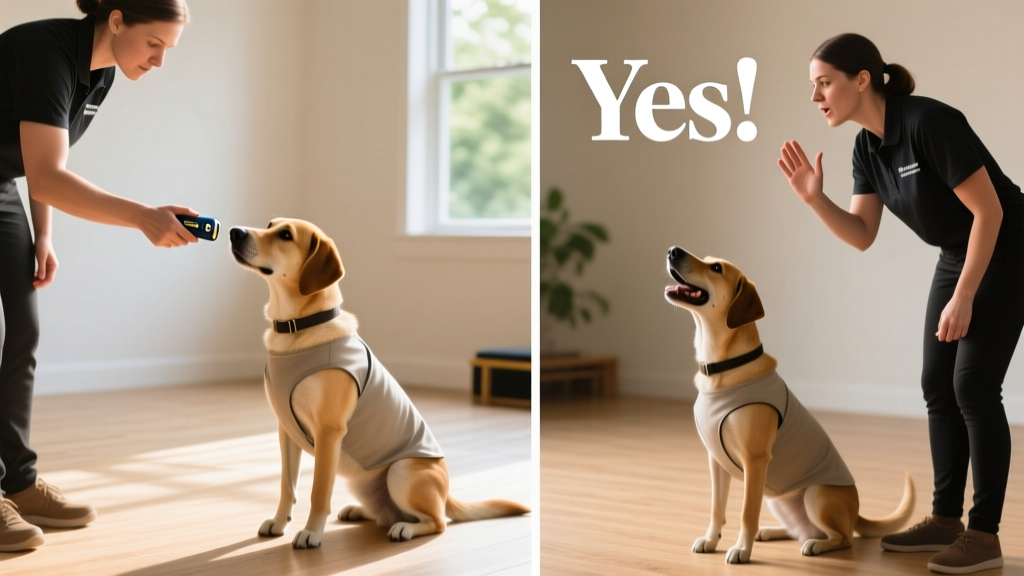
- Apply the "be a tree" method. When your dog pulls and the leash goes taut, stop walking immediately. Stand still. Do not yank, jerk, or pull back. Wait for your dog to look at you or for the leash to slacken (even slightly), then mark that moment with "yes!" and resume walking.
- Reward position, not just slack. Drop treats at your left thigh seam (or wherever you want your dog to walk). This builds a reinforcement history for being in the correct position rather than 6 feet ahead.
- Transition gradually. Once your dog walks reliably on a front clip for 2-3 weeks, try clipping to the back ring for short segments. If pulling returns, switch back to front clip. Most dogs need 6-8 weeks of consistent front-clip use before transitioning.
⚠️ Safety Warnings
- Never attach a leash to a head halter and a long line or retractable leash. A sudden jerk at speed can cause neck injury. Use only a standard 4-6 foot leash with head halters.
- Never leave a harness or head halter on an unsupervised dog. Straps can catch on crate wire, furniture legs, or other dogs' teeth during play.
- Check for chafing after every walk for the first two weeks. Lift the harness and inspect armpits, chest, and girth areas. Red or raw skin means the fit needs adjustment or the harness isn't right for your dog's body type.
- Head halters are not muzzles. Dogs can still bite while wearing one. They are steering tools, not bite-prevention devices.
- Inspect hardware monthly. Check leash rings, buckles, and stitching for wear. Replace any harness with frayed webbing, cracked plastic buckles, or bent metal rings.
What the Evidence Says: Effectiveness of No-Pull Equipment
The shift away from aversive tools (choke chains, prong collars, shock collars) toward force-free equipment is backed by a growing body of veterinary behavior research. A 2020 study published in the Journal of Veterinary Behavior found that dogs trained with positive reinforcement methods showed significantly lower stress indicators (cortisol levels, stress-related behaviors) compared to dogs trained with aversive methods, and demonstrated equivalent or better obedience outcomes.
The AVSAB's position statement on humane training explicitly states that equipment causing pain or fear (including electronic collars and prong collars) should not be used, as they can increase aggression and anxiety while suppressing warning behaviors. Front-clip harnesses and head halters are the recommended tools within this framework because they provide mechanical control without relying on pain or intimidation.
Certified Professional Dog Trainers (CPDT-KA) and veterinary behaviorists (DACVB) consistently rank front-clip harnesses as their first-line recommendation for leash pulling, with head halters as a second-line option for dogs where harnesses prove insufficient. A 2019 survey of IAABC (International Association of Animal Behavior Consultants) members found that 89% recommended front-clip harnesses for pulling dogs, compared to just 3% who still recommended correction-based collars.
Alternatives to No-Pull Walking Gear
Equipment is only one part of the solution. Here are complementary and alternative approaches to consider:
Training-Only Approaches (No Special Equipment)
- Loose-leash walking with flat harness: Using a standard back-clip harness with consistent "be a tree" and direction-change training. Takes longer (8-12 weeks vs. 4-6 weeks) but works for mild pullers.
- Engagement-based walking: Building focus on the handler through frequent treat delivery, play breaks, and environmental permission cues ("go sniff" as a reward for loose leash).
- Decompression walks on long lines: Using a 15-30 foot (5-10 m) biothane long line in open areas to allow sniffing and exploration without the pressure of heel-position walking. This reduces overall leash frustration.
Natural and DIY Alternatives
- DIY front-clip modification: Some owners add a carabiner to the chest D-ring of an existing harness to create a makeshift front-clip point. Only works if the harness has a sturdy chest ring — don't clip to decorative loops.
- Waist belt leash systems: Hands-free waist leashes (like the Ruffwear Roamer or Stunt Puppy Stunt Runner) absorb some pulling force through bungee sections, but they don't train the dog not to pull — they just make pulling more comfortable for you. Best for joggers with partially-trained dogs.
- Increased exercise before walks: A 15-minute fetch or flirt pole session before a walk can reduce pulling intensity by burning off initial energy. Not a replacement for training, but a useful management strategy.
When to See a Professional Instead of Using OTC Products
Some situations require professional intervention beyond what equipment and basic training can address:
- Leash reactivity combined with pulling: If your dog pulls specifically to get to other dogs/people and reacts with barking, lunging, or growling, you're dealing with reactivity — not just pulling. A certified behavior consultant (IAABC or CPDT-KA) can develop a counter-conditioning and desensitization protocol.
- Injury to the owner: If your dog's pulling has caused you shoulder, back, or wrist injuries, consult your physician and a professional trainer simultaneously. You may need a head halter as a temporary management tool while a behavior modification plan takes effect.
- No improvement after 4-6 weeks: If you've used proper equipment and consistent training for over a month with zero progress, there may be underlying anxiety, hyperarousal, or a medical issue (such as pain causing the dog to rush forward). Consult your veterinarian to rule out medical causes before continuing behavioral work.
- Dog over 80 lb (36 kg) with zero leash manners: Large, powerful dogs that have never had leash training may need professional guidance to ensure safe handling during the training process.
Frequently Asked Questions
What is the best no-pull harness for dogs?
There's no single best harness for every dog, but the 2 Hounds Design Freedom Harness offers the best combination of effectiveness, comfort, and value for most pullers. For dogs needing the most precise fit, the Blue-9 Balance Harness is the professional-grade choice. Budget buyers will find the PetSafe Easy Walk adequate for mild pullers.
How much does no-pull walking gear cost?
Front-clip harnesses range from $20-$60 depending on brand and features. Head halters run $20-$35. Professional-grade harnesses with maximum adjustability cost $50-$65. Expect to spend $35-$50 total when you include a quality 6-foot leash ($10-$20). For context, a single session with a certified trainer costs $80-$150, so investing in good equipment upfront is cost-effective.
Can I use a no-pull harness on a puppy?
Yes, but choose a lightweight, well-padded harness and expect to re-size every 4-8 weeks during growth phases. Puppies under 4 months benefit more from short, positive leash exposure sessions than from structured loose-leash training. Start formal loose-leash training around 16 weeks, once core vaccinations (DHPP series) are underway and your vet clears outdoor walks.
Are head halters cruel?
When properly fitted and introduced with positive reinforcement, head halters are not cruel. They apply gentle pressure to the back of the neck and bridge of the nose — similar to how a mother dog carries a puppy by the scruff. The key is the desensitization period: never put a head halter on a dog for the first time and immediately go for a walk. Most dogs accept them within 5-7 days of positive introduction.
Will my dog eventually stop pulling without special equipment?
Pulling is self-reinforcing, so without intervention, it typically persists or worsens. Dogs don't "outgrow" pulling — they learn that pulling works to get where they want to go. Consistent training with appropriate equipment is the reliable path to loose-leash walking. Some dogs with very low arousal levels may improve with training alone, but most benefit significantly from the mechanical assistance of a front-clip harness during the learning phase.
Should I avoid retractable leashes?
Yes, during loose-leash training. Retractable leashes teach dogs that pulling extends the leash — the exact opposite of what you're training. They also provide less control in emergencies, can cause rope burns, and their thin cords can snap under sudden force from large dogs. Use a standard 4-6 foot (1.2-1.8 m) nylon or leather leash for training. Once your dog has reliable loose-leash skills, you can introduce a long line for decompression walks in open areas.
Always consult your veterinarian if your dog's pulling behavior is sudden in onset, accompanied by signs of anxiety or fear, or if you suspect an underlying medical condition is contributing to the behavior. A veterinary exam can rule out pain, thyroid dysfunction, or neurological issues before you invest in a training program.
Dr. Hannah Wickes
All our authors care for dogs every day — read more of their work on the authors page.