Hand Signal Training for Deaf Dogs: A Comprehensive Guide
Master hand signal training for deaf dogs with our step-by-step guide. Learn visual commands, safety tips, and positive reinforcement techniques.
Hand Signal Training for Deaf Dogs: The Ultimate Visual Communication Guide
When we think of dog training, verbal commands like 'sit,' 'stay,' and 'come' usually come to mind. However, dogs are inherently visual creatures. In the wild and among their own kind, canines communicate primarily through body language, ear positioning, tail movement, and eye contact. For dogs born deaf or those who have lost their hearing later in life, this natural reliance on visual cues becomes an incredible asset. Hand signal training for deaf dogs is not just a workaround; it is a highly effective, deeply engaging way to build a profound bond between you and your pet.
Whether you have adopted a deaf puppy or are adapting to a senior dog's changing health needs, transitioning to visual communication opens up a world of possibilities. This comprehensive guide will walk you through the psychology of visual learning, step-by-step hand signals for essential commands, crucial safety protocols, and common mistakes to avoid. By the end of this guide, you will have all the tools necessary to master basic obedience and advanced communication with your deaf companion.
Understanding Deafness & Setting the Stage for Success
Before diving into specific hand signals, it is important to understand the nature of your dog's deafness and how to set up your environment for optimal learning. Deafness in dogs generally falls into two categories: congenital and acquired.
Congenital deafness is present from birth and is often linked to specific coat color patterns and genetics, particularly the piebald and merle genes. Breeds such as Dalmatians, Australian Shepherds, and Bull Terriers are statistically more prone to congenital hearing loss. Acquired deafness, on the other hand, develops over time due to chronic ear infections, trauma, or simply the aging process. If you are caring for an older pet, our guide on senior dog care offers additional insights into managing age-related changes.
Regardless of the cause, a deaf dog relies heavily on their remaining senses—primarily sight and smell. To set the stage for successful hand signal training, you must optimize your environment:
- Lighting is Crucial: Hand signals are useless if your dog cannot see them clearly. Always train in well-lit areas. Avoid standing with your back to a bright window, as the backlighting will turn you into a dark silhouette, obscuring your hand movements.
- Minimize Visual Clutter: Just as a noisy room distracts a hearing dog, a visually chaotic room distracts a deaf dog. Start training in a quiet, familiar room with minimal foot traffic before moving outdoors.
- Establish a 'Watch Me' Cue: Before you can give a command, you must have your dog's attention. We will cover this foundational step in the next section, but it is the absolute prerequisite for all future training.
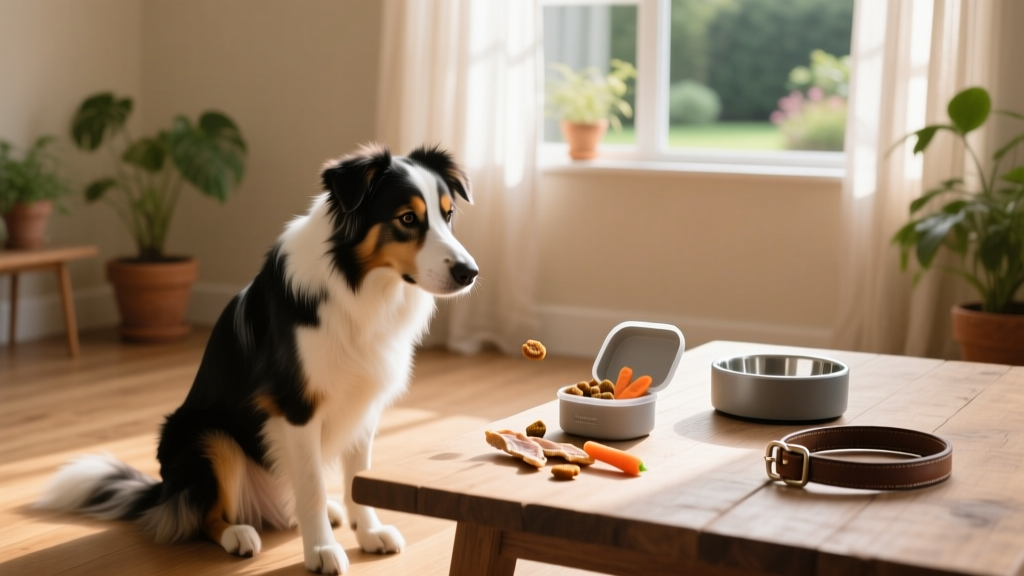
- Use High-Value Rewards: Because you cannot use your voice to offer enthusiastic praise, your rewards must do the heavy lifting. Use soft, smelly, high-value treats that your dog loves to keep their motivation high.
Building the Foundation: Visual Markers & Attention Cues
In traditional dog training, a 'marker' is used to tell the dog the exact moment they have performed the correct behavior. For hearing dogs, this is usually a clicker or a verbal 'Yes!' For deaf dogs, we must replace the auditory marker with a visual one.
Charging the Visual Marker
A visual marker should be a quick, distinct hand gesture that is easy for the dog to see from a distance. A common and highly effective visual marker is a 'thumbs up' or a quick 'flash' of an open palm. To 'charge' this marker, you simply need to create a positive association. Hold a treat in one hand. Flash your visual marker (e.g., give a thumbs up) with your other hand, and immediately give the dog the treat. Repeat this 20 to 30 times over a few short sessions. Soon, your dog will understand that the visual marker means a reward is coming, effectively replacing the clicker.
The 'Watch Me' Command
You cannot give a hand signal if your dog is looking the other way. Teaching a 'Watch Me' or 'Look' cue is the most important foundational skill for a deaf dog.
- Hold a high-value treat near your dog's nose to get their attention.
- Slowly move the treat up toward your own face, stopping right between your eyes.
- The moment your dog makes eye contact, flash your visual marker and give them the treat.
- Once the dog reliably follows the treat to your eyes, begin fading the lure. Simply point your index finger to your eyes. When they look, mark and reward.
This skill is especially vital when you begin puppy socialization in busy environments, as it allows you to quickly regain your dog's focus amidst heavy distractions.
Step-by-Step Hand Signals for Essential Commands
Once your dog understands the visual marker and the 'Watch Me' cue, you can begin teaching core obedience commands. The key to hand signal training is to start with a 'lure' (using food to guide the dog's body) and gradually fade the food until only the hand gesture remains.
1. Sit
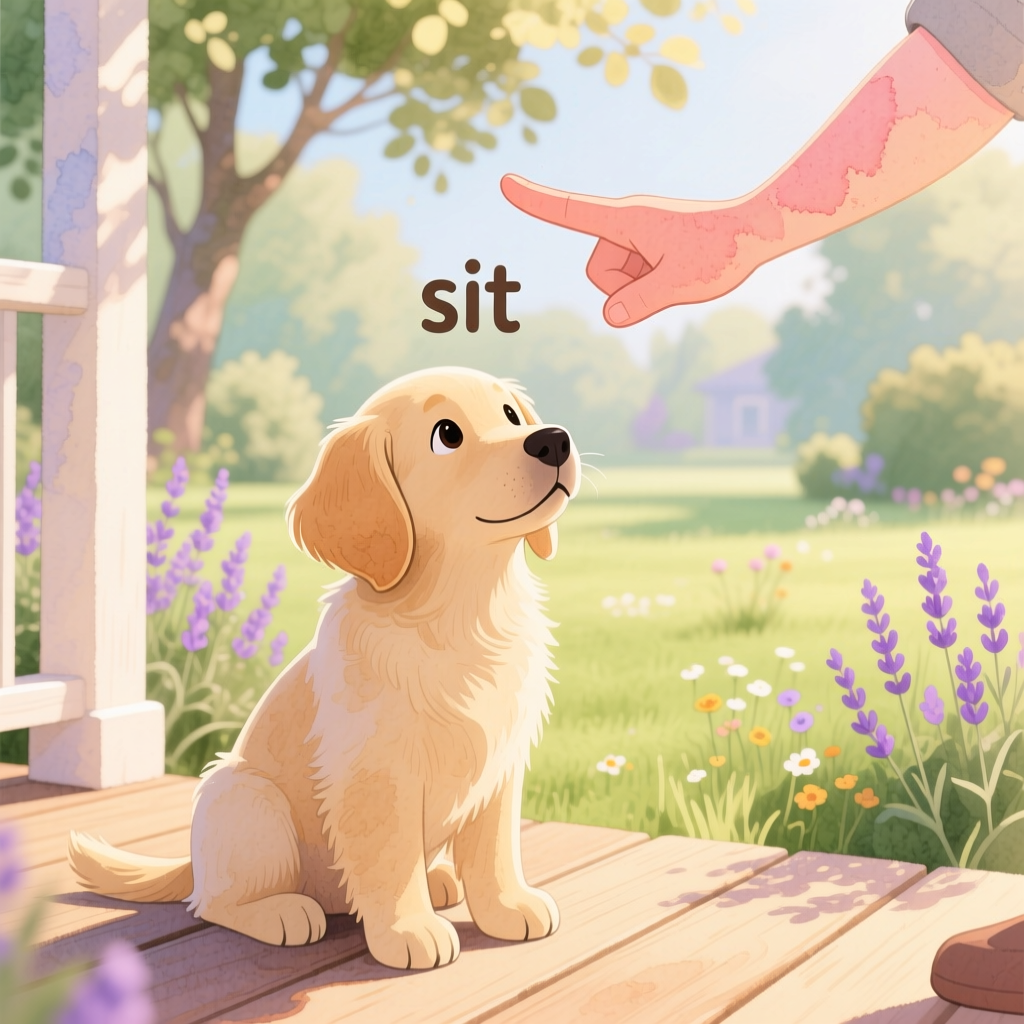
The Lure: Hold a treat at your dog's nose. Slowly move your hand up and slightly backward over their head. As their nose follows the treat up, their bottom will naturally lower to the ground. Mark and reward the moment they sit.
The Hand Signal: Once the dog understands the motion, remove the treat from your luring hand. Use an empty hand to sweep upward, palm facing up, or simply point your index finger toward the sky.
2. Down (Lie Down)
The Lure: With your dog in a sitting position, hold a treat at their nose. Move your hand straight down to the floor between their front paws, then slowly drag it outward along the ground away from them. Mark and reward when their elbows and chest touch the floor.
The Hand Signal: Use a flat, open palm and move it in a downward sweeping motion toward the ground, mimicking the path of the lure.
3. Stay
The Lure: Ask your dog to sit or lie down. Hold your hand out with your palm facing the dog (like a 'stop' sign). Take one small step back. If the dog remains in place, immediately step back in, flash your visual marker, and reward.
The Hand Signal: The open palm facing the dog is the universal hand signal for 'stay.' Gradually increase the distance and duration before marking and rewarding. Remember to always return to your dog to deliver the reward, rather than calling them to you, which can break the 'stay' concept.
4. Leave It
The Lure: Place a low-value treat on the floor and cover it with your shoe or hand. When your dog stops sniffing and pulling at it, mark and reward them with a different, higher-value treat from your other hand.
The Hand Signal: A common signal for 'leave it' is a flat hand waving side-to-side (like a 'no' gesture) or a closed fist held out toward the object. Consistency is key; pick one gesture and stick to it.
5. The Release Cue
Hearing dogs often hear words like 'Okay!' or 'Free!' to know a command is over. Deaf dogs need a visual release cue. A great release signal is opening both hands outward from your chest, palms up, accompanied by a slight upward motion. This tells the dog the exercise is complete and they are free to move.
Safety First: Recall Training & Vibration Collars
The most critical command for any dog is recall ('come'), but for a deaf dog, it is a literal lifesaver. A deaf dog cannot hear approaching cars, aggressive wildlife, or your frantic calls if they slip out the front door. Therefore, recall training and safe containment must be your top priorities.
Teaching the Visual Recall
Start indoors on a long training lead. For a deeper dive on managing long lines, check out our leash training guide. Get your dog's attention, then take a few steps backward. Use your chosen recall hand signal—many trainers use both arms waving inward toward their chest, or a sweeping motion patting their own thighs. When the dog moves toward you, mark enthusiastically and reward with a jackpot of treats. Practice this in increasingly distracting environments, always keeping the dog on a long line until their recall is 100% reliable in fenced areas.
Conditioning a Vibration Collar
Because you cannot call a deaf dog's name if they are looking away from you outdoors, a vibration collar is an invaluable tool. Note: A vibration collar is entirely different from a shock collar. It simply emits a gentle, buzzing vibration, acting as a 'tap on the shoulder' to get the dog's attention.
How to condition the collar positively:
- Put the collar on the dog (ensure it is on the vibrate-only setting).
- Press the vibration button for one second.
- The exact moment the dog feels the buzz, flash your visual marker and give them a high-value treat.
- Repeat this until the dog feels the vibration and immediately whips their head around looking for their treat.
Once conditioned, you can use the vibration collar to get your dog's attention when they are off-leash in a safe, fenced area. Vibrate to get them to look at you, then give the visual recall signal. Never use the vibration as a punishment; it must always predict a positive outcome.
Pro Tips & Common Mistakes to Avoid
Training a deaf dog requires patience, clarity, and a deep understanding of canine body language. Here are some essential tips and common pitfalls to keep in mind during your training journey.
Pro Tips for Success
- Use Contrast: Dogs have dichromatic vision, meaning they see the world primarily in shades of blue and yellow. If you are wearing a dark shirt in a dimly lit room, your hand signals might blend into the background. Wear contrasting clothing or use a small, brightly colored LED light in your hand for nighttime training.
- Exaggerate at First: When introducing a new hand signal, make the movement large and deliberate. As the dog learns, you can refine the signal into a smaller, more subtle gesture.
- Combine with Touch: Deaf dogs often become highly attuned to physical touch. Incorporate gentle shoulder taps or chest scratches as secondary rewards alongside food treats.
- Keep Sessions Short: Visual processing and intense focus can be mentally exhausting for a dog. Keep training sessions to 5–10 minutes to prevent frustration and burnout.
Common Mistakes to Avoid
- Inconsistent Signals: If you use a flat palm for 'down' on Tuesday, but a pointing finger on Wednesday, your dog will become confused. Everyone in the household must use the exact same hand signals.
- Moving Too Fast: Sweeping your hand too quickly can startle a deaf dog or make the signal blurry. Move your hands at a smooth, deliberate pace.
- Forgetting the 'Watch Me' Prerequisite: Giving a 'sit' signal while your dog is sniffing a bush is useless. Always ensure you have established eye contact before issuing a command.
- Showing Frustration: Dogs are masters at reading human facial expressions and body tension. If you become frustrated, your dog will read your stiff posture and angry expressions, which will shut down their willingness to learn. If you feel frustrated, end the session on a positive note and try again later.
Frequently Asked Questions
Can older dogs learn hand signals if they lose their hearing?
Absolutely. Dogs are incredibly adaptable, and older dogs often learn hand signals quite quickly. In fact, many dogs with age-related hearing loss naturally begin paying closer attention to their owner's body language long before the owner even realizes the dog is going deaf. Transitioning an older dog to visual cues relies heavily on patience and high-value rewards, but the cognitive ability to learn new visual associations remains intact throughout a dog's life.
How do I wake up a deaf dog without startling them?
Deaf dogs are prone to 'startle reflex' because they cannot hear you approaching. To wake a sleeping deaf dog safely, approach them slowly and let them sniff your hand. You can gently blow on their fur, as they can feel the air movement, or place your hand near their nose so your scent wakes them. If they are deeply asleep, gently touch their shoulder or the back of their neck—avoid touching them near the face or paws, which can trigger a defensive startle response. Always reward them with a treat immediately upon waking to create a positive association with being woken up.
Are vibration collars considered humane for deaf dogs?
Yes, when used correctly, vibration collars are considered highly humane and are widely recommended by professional dog trainers and veterinary behaviorists. The key distinction is that a vibration collar is used strictly as an attention-getting tool (a tactile cue), not as an aversive punishment. The sensation is similar to a cell phone buzzing in your pocket. As long as the collar is properly conditioned using positive reinforcement, the dog will view the vibration as a helpful signal that their owner is trying to communicate with them.
What breeds are most prone to congenital deafness?
Congenital deafness is strongly linked to the genes responsible for white pigmentation and merle coat patterns. Breeds with the highest statistical risk include Dalmatians (where up to 30% of the population may be deaf in one or both ears), Bull Terriers, English Setters, and Australian Shepherds. However, it is important to remember that deafness can occur in any breed or mixed-breed dog. Responsible breeders will perform BAER (Brainstem Auditory Evoked Response) testing on puppies to identify hearing loss before they go to their forever homes.
Training a deaf dog is a deeply rewarding journey that transcends spoken language. By embracing hand signal training, you are not just teaching commands; you are learning to speak your dog's native language of body and movement. With patience, consistency, and a pocket full of high-value treats, your deaf dog will thrive, proving that a lack of hearing is never a barrier to a happy, obedient, and deeply connected life together.
Priya Sutaria
All our authors care for dogs every day — read more of their work on the authors page.