The Ultimate Guide to Dog Training Tips from Reddit's Top Communities
Discover the best dog training tips from Reddit's top communities. Learn positive reinforcement, leash walking, and puppy socialization strategies.
When you bring a new dog or puppy into your home, the sheer volume of training advice available on the internet can be paralyzing. From outdated dominance theories to conflicting socialization strategies, figuring out what actually works is a monumental task. However, over the years, a consensus has emerged from some of the most dedicated online communities. If you have ever searched for 'dog training tips reddit', you likely stumbled upon goldmines of information from forums like r/dogtraining, r/puppy101, and r/reactivedogs.
These communities are largely moderated by certified behaviorists, experienced trainers, and dedicated owners who champion science-based, positive reinforcement methods. The core philosophy shared across these forums is LIMA: Least Intrusive, Minimally Aversive. This approach focuses on teaching dogs what we want them to do, rather than punishing them for what we don't.
In this comprehensive guide, we have curated, synthesized, and expanded upon the most highly upvoted, universally praised dog training tips from Reddit's top communities. Whether you are dealing with a chaotic puppy or an adult dog needing a refresher, these step-by-step methods will help you build a bond rooted in trust, communication, and mutual respect. For more foundational advice, be sure to explore our complete dog training library.
1. The 'Say Please' Protocol (Nothing in Life is Free)
One of the most frequently recommended strategies on r/dogtraining for building impulse control and respect is the 'Say Please' protocol, historically known as 'Nothing in Life is Free' (NILIF). The concept is incredibly simple but profoundly effective: your dog must perform a basic command, usually a 'sit', before they receive anything they value.
This is not about asserting dominance or being a 'pack leader.' Instead, it is an exercise in operant conditioning. It teaches your dog that calm, polite behavior is the key that unlocks the resources they desire. It shifts the dynamic from the dog demanding things through barking, jumping, or pawing, to the dog offering polite behaviors to earn rewards.
Step-by-Step Implementation
- Identify Your Dog's Currency: Figure out what your dog values most. This could be their meals, going outside, getting their leash attached, receiving a belly rub, or accessing a favorite toy.
- Ask for a Default Sit: Before providing any of these resources, ask your dog to sit. If they do not know how to sit yet, use a treat to lure their nose up and back until their bottom hits the floor.
- Deliver the Reward: The moment their bottom touches the floor, immediately provide the resource. Open the door, put down the food bowl, or clip on the leash.
- Handle the 'Extinction Burst': If your dog is used to jumping to get the leash on, they will likely jump harder when the jumping suddenly stops working. This is called an extinction burst. Ignore the jumping completely. Turn your back, cross your arms, and wait. The second they sit, reward them.
By consistently applying the Say Please protocol, you integrate training into your daily routine without needing to set aside extra 'training sessions.' It builds a foundation of impulse control that makes advanced training much easier.
2. Capturing Calmness and the 'Off-Switch'
If you browse r/puppy101, you will quickly notice a common theme: puppy owners are exhausted by the 'puppy zoomies' and the inability of their dogs to just relax. Modern dog training emphasizes that we must actively teach our dogs an 'off-switch.' This is done through a technique called 'Capturing Calmness,' popularized by positive reinforcement trainers and heavily endorsed by Reddit's behavior experts.
Most owners accidentally reward high-arousal behaviors. We pet the dog when they are excited, we play with them when they bring us a toy, and we give them attention when they are whining. Capturing calmness flips this script. You are going to reward your dog for doing absolutely nothing.
Step-by-Step Implementation
- Prepare Your Rewards: Keep a stash of low-to-medium value treats in a pocket or a nearby treat pouch while you go about your day at home.
- Wait for the 'Down': Go about your normal routine—washing dishes, watching TV, or working at your desk. Wait for your dog to voluntarily lie down and settle on their mat or the floor.
- Deliver the Treat Calmly: Without making eye contact, speaking in a high-pitched voice, or initiating play, calmly walk over and place a treat between their front paws. You want to keep their arousal level low.
- Build Duration: As your dog begins to realize that lying down makes treats appear, they will start offering the behavior more frequently. Gradually increase the time between treats, rewarding them for staying in a relaxed state for longer periods.
This method is especially crucial for high-energy breeds. If you are raising a working breed, check out our German Shepherd care guide for more tips on managing their intense drive and teaching them how to decompress.
3. Leash Walking: The 'Tree' Method and Engage-Disengage
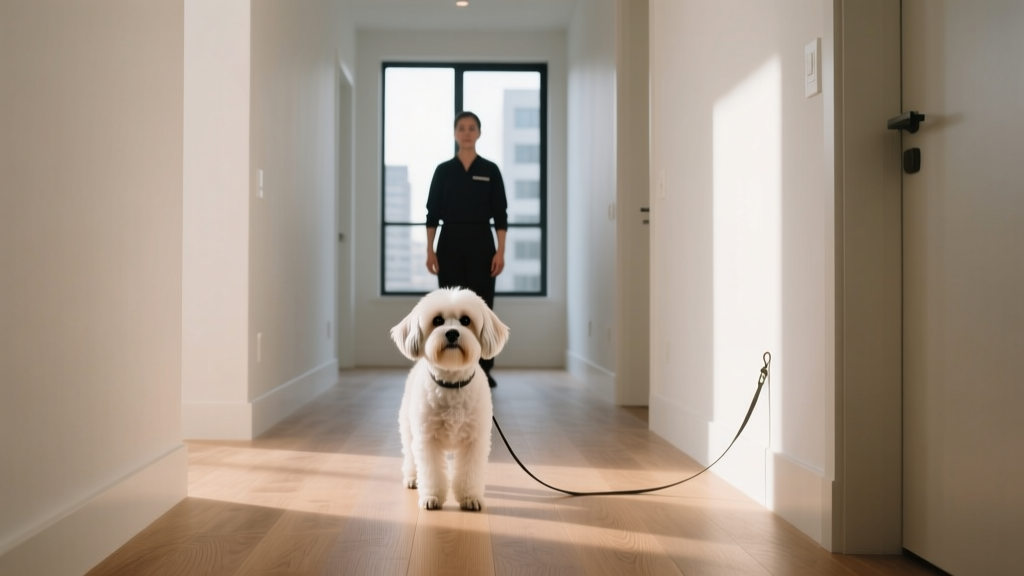
Leash pulling and reactivity are arguably the most discussed topics on r/reactivedogs and r/dogtraining. Redditors universally advise against jerking the leash, using prong collars, or walking at a rigid pace. Instead, they advocate for teaching the dog that a loose leash is the only way to move forward, and that the handler is more interesting than the environment.
For general pulling, the 'Be a Tree' method is the gold standard. For dogs that bark or lunge at triggers (like other dogs or skateboards), the 'Engage-Disengage' game (also known as 'Look at That') is the most highly recommended protocol.
Step-by-Step Implementation for Pulling (The Tree Method)
- Start Walking: Begin your walk with a loose leash.
- Stop Immediately: The exact millisecond the leash goes tight, stop walking. Become a tree. Do not yank the dog back; simply anchor yourself.
- Wait for the Give: Wait for your dog to turn their head, look back at you, or take a step backward, which creates slack in the leash.
- Mark and Move: The moment the leash is loose, say 'Yes!' or click your clicker, and immediately start walking forward again.
Step-by-Step Implementation for Reactivity (Engage-Disengage)
- Find the Threshold: Position yourself far enough away from a trigger (e.g., another dog) so that your dog notices it but does not bark or lunge. This is 'under threshold.'
- Mark the Look: When your dog looks at the trigger, use a marker word like 'Yes!'
- Disengage and Reward: Your dog should turn their head toward you to get the treat. If they don't, toss the treat on the ground to break their focus. Feed them.
- Repeat and Decrease Distance: Over multiple sessions, gradually decrease the distance to the trigger, always ensuring your dog remains under threshold.
For a deeper dive into loose-leash walking and handling severe reactivity, our comprehensive leash training guide covers these mechanics in extensive detail.
4. Puppy Socialization: Neutrality Over Friendliness
One of the most vital pieces of advice you will find on Reddit regarding puppy rearing is the redefinition of 'socialization.' Many new owners believe socialization means letting their puppy greet every dog, human, and child they see. Reddit's behaviorists strongly warn against this, noting that forced interactions often lead to leash reactivity and over-arousal later in life.
True socialization is about exposure and neutrality. The goal is to teach your puppy that the world is full of strange, loud, and moving things, and that none of them require a reaction. A well-socialized dog is not a dog that wants to play with everyone; it is a dog that can ignore everyone and focus on their handler.
Step-by-Step Implementation
- The 'Puppy Watch' Game: Take your puppy to a busy park bench or a pet store parking lot. Sit down and simply watch the world go by.
- Reward Neutrality: Every time your puppy looks at a strange person, a loud truck, or another dog, and then looks back at you without pulling or barking, give them a high-value treat.
- Advocate for Your Puppy: If a stranger approaches to pet your puppy, politely ask them to wait. Ask your puppy for a 'sit' first. If the puppy is overly excited or fearful, politely decline the petting. You are your puppy's advocate.
This neutrality training is exceptionally important for naturally aloof or protective breeds. For example, building confident neutrality is a cornerstone of raising a well-adjusted guardian breed, as outlined in our German Shepherd breed profile, as well as highly social breeds that need to learn boundaries, like those in our Golden Retriever breed profile.
5. Potty Training: Umbilical Cord Management
Potty training is the bane of every new puppy owner's existence. While many people rely solely on pee pads or rubbing their dog's nose in accidents (a practice universally condemned on Reddit), the most successful method championed by the community is 'Umbilical Cord Training' combined with a strict schedule.
Accidents happen because owners give puppies too much freedom before they have earned it. Umbilical training ensures that the puppy is never out of your sight, meaning you can catch the pre-potty signs (sniffing, circling, whining) before they happen.
Step-by-Step Implementation
- The Leash Tether: When you are home and the puppy is not in their crate, attach their leash to your belt or waist. They go where you go.
- Strict Scheduling: Take the puppy outside immediately after they wake up, after every meal, after a play session, and before bed. Puppies have tiny bladders and fast metabolisms.
- The 'Party' Reward: When the puppy eliminates outside, throw a massive reward party. Give them three high-value treats in a row and offer enthusiastic praise. They need to know that peeing outside is the best thing in the world.
- Interrupt, Don't Punish: If you catch them in the act inside, do not yell. Simply clap loudly to interrupt the flow, scoop them up, and carry them outside to finish. Reward them if they finish outside.
Management is the key to success here. Combining umbilical training with proper confinement when you cannot supervise is crucial. Read our puppy potty training basics and our crate training essentials to build a foolproof house-training system.
Pro Tips and Common Mistakes Redditors Warn Against
Beyond specific protocols, the collective wisdom of Reddit's dog training communities offers vital warnings about common pitfalls that can derail your progress. Avoiding these mistakes is just as important as implementing the right techniques.
Pro Tips for Success
- Use High-Value Treats: Dry kibble might work in your quiet living room, but it will not compete with a squirrel outside. Use boiled chicken, cheese, or hot dogs for outdoor training and high-distraction environments.
- Master the Timing: The marker word ('Yes!' or a click) must happen at the exact millisecond the desired behavior occurs. If you say 'Yes' when the dog sits, but deliver the treat when they stand back up, you are accidentally rewarding the standing up.
- Manage the Environment: If your dog counter-surfs, do not just try to train them to 'leave it.' Put the food away. Management prevents the rehearsal of bad habits while you work on training.
Common Mistakes to Avoid
- The Dominance Myth: Reddit behaviorists universally condemn 'alpha rolls,' scruffing, and eating before your dog to 'show dominance.' These outdated methods are based on debunked wolf studies and only serve to damage your dog's trust and increase fear-based aggression.
- Repeating the Cue: Saying 'Sit... sit... SIT... sit!' teaches your dog that the command is actually 'sitsitsit' and that they do not need to respond the first time. Say the cue once. If they do not respond, reset them, get their attention, and try again.
- Punishing After the Fact: If you come home to a chewed-up shoe and yell at your dog, they do not associate your anger with the shoe. They associate your anger with your arrival home. This leads to dogs that act 'guilty' or fearful when you walk through the door.
Frequently Asked Questions (FAQ)
Is dominance-based training recommended on Reddit?
No. The overwhelming consensus across r/dogtraining, r/puppy101, and r/reactivedogs is that dominance-based training (often referred to as 'alpha' or 'pack leader' training) is scientifically flawed and behaviorally damaging. Modern canine behavioral science shows that dogs do not view humans as other dogs, nor are they constantly plotting to overthrow the household hierarchy. Undesirable behaviors are almost always the result of a lack of training, unmet needs, fear, or anxiety, not a desire for dominance. Positive reinforcement and LIMA protocols are the only methods recommended by these communities.
How long does it take to see results with positive reinforcement?
The timeline varies wildly depending on the dog's age, breed, history, and the specific behavior you are addressing. For basic manners like 'sit' or 'touch,' you can see results in a single afternoon. However, for deep-seated behavioral issues like leash reactivity, separation anxiety, or resource guarding, it is a marathon, not a sprint. Redditors frequently remind new owners to expect months of consistent work for reactivity. The key is tracking small victories—like your dog barking for three seconds instead of ten—rather than expecting overnight perfection.
What are the best high-value treats for training?
High-value treats should be soft, smelly, and easily consumable so the dog does not spend ten seconds chewing. Top recommendations from the Reddit community include boiled chicken breast, string cheese, freeze-dried liver, plain hot dogs (used sparingly due to sodium), and commercial training treats like Zuke's Mini Naturals. The value of the treat is ultimately decided by the dog, so it is important to test a variety of options to see what makes your dog's eyes light up and keeps them focused on you in distracting environments.
How do I handle leash reactivity using Reddit methods?
Handling leash reactivity requires a combination of management and counter-conditioning. First, you must manage the environment to keep your dog 'under threshold'—meaning they are far enough away from the trigger that they can still think and take treats. If your dog is barking and lunging, they are over threshold and learning is impossible. Use the Engage-Disengage game to change their emotional response to the trigger from 'threat' to 'predictor of chicken.' Additionally, Reddit communities highly recommend 'decompression walks' in quiet, nature-rich areas using a long line to allow reactive dogs to sniff and lower their baseline stress levels.
Should I use a crate for training, and is it cruel?
When introduced correctly, a crate is not cruel; it is a safe den and an invaluable management tool. Reddit's training communities strongly advocate for crate training because it aids in potty training (dogs naturally avoid soiling their sleeping area), prevents destructive chewing when unsupervised, and gives the dog a designated place to decompress. The secret is to build a positive association slowly. Feed meals in the crate, provide long-lasting chews like frozen Kongs, and never use the crate as a punishment. For a complete guide to building a positive crate association, review our crate training essentials.
Dog training is a lifelong journey of communication and mutual understanding. By leveraging the collective, science-backed wisdom found in communities like Reddit's top dog forums, you can bypass outdated myths and focus on methods that truly work. Stay patient, keep your treat pouch full, and remember that every interaction is an opportunity to teach your dog how to navigate the world alongside you.
Aaron Whyte
All our authors care for dogs every day — read more of their work on the authors page.