Dog Training Tips for Hyperactive Dogs: A Complete Guide to Calm Behavior
Discover proven dog training tips for hyperactive dogs. Learn step-by-step techniques to calm your energetic pup, build focus, and create lasting good behavior.

Dog Training Tips for Hyperactive Dogs: A Complete Guide to Calm Behavior
Does your dog bounce off the walls, spin in circles the moment you pick up the leash, or seem incapable of settling down for even a single minute? If you're living with a hyperactive dog, you already know that love and patience alone aren't always enough. Hyperactivity in dogs is one of the most common — and most frustrating — behavioral challenges that pet parents face. The good news is that with the right approach, consistent routines, and proven training techniques, you can help your energetic companion learn to channel that boundless energy into calm, focused behavior.
Before diving into specific techniques, it's important to understand that hyperactivity is not a character flaw. Many dogs are simply wired with high energy levels, especially working breeds, herding dogs, and young canines who haven't yet learned how to self-regulate. Whether you're dealing with a Border Collie who needs a job every waking hour or a Jack Russell Terrier who treats your living room like an obstacle course, the strategies in this guide will help you build a calmer, more balanced relationship with your dog.
In this comprehensive guide, we'll walk you through everything from understanding the root causes of hyperactivity to implementing daily routines that promote relaxation. Let's get started.
Understanding Why Your Dog Is Hyperactive
Before you can effectively train a hyperactive dog, you need to understand why your dog is behaving this way. Hyperactivity is rarely random — it almost always stems from one or more underlying causes. Identifying the root of the problem is the first and most important step toward a solution.
Physical Energy That Isn't Being Met
The most common cause of hyperactive behavior is simply unmet physical needs. Dogs are athletes by nature, and many breeds were developed to run, herd, hunt, or work for hours on end. When a dog doesn't get enough physical exercise, that pent-up energy has to go somewhere — and it often manifests as bouncing, barking, chewing, digging, or frantic pacing around the house.
As a general guideline, most adult dogs need between 30 minutes and two hours of physical activity every day, depending on their breed, age, and health. High-energy breeds like Australian Shepherds, Siberian Huskies, and Vizslas often need significantly more.
Mental Understimulation
Physical exercise alone is not enough. Dogs also need mental stimulation to feel satisfied and calm. A dog who walks two miles every day but never has to think, problem-solve, or use their nose can still be hyperactive indoors. Mental enrichment tires a dog's brain in a way that physical exercise alone cannot, and a mentally tired dog is almost always a calmer dog.
Anxiety, Stress, or Overstimulation
Some dogs appear hyperactive when they are actually anxious or overstimulated. A dog who paces, pants, or can't settle when guests arrive may be experiencing stress rather than excitement. Similarly, dogs in chaotic or unpredictable environments often display hyperactive behavior as a coping mechanism. Understanding the difference between true excitement and anxiety-driven energy is crucial for choosing the right training approach. For more on managing anxious behaviors, check out our guide on separation anxiety training.
Learned Behavior and Accidental Reinforcement
Dogs are incredibly observant, and they quickly learn which behaviors get results. If your dog jumps on you and you respond by petting them, talking to them, or even pushing them away (which still counts as attention), you've just reinforced that hyperactive behavior. Over time, your dog learns that being wild and energetic is the fastest way to get your attention — and that becomes their default setting.
Building a Daily Routine That Promotes Calmness
One of the most powerful tools for managing a hyperactive dog is a predictable, structured daily routine. Dogs thrive on consistency, and when they know what to expect, their overall stress and anxiety levels drop significantly. A well-designed routine ensures that your dog's physical, mental, and emotional needs are met before hyperactive behavior even has a chance to surface.
Step 1: Start With Morning Exercise
Begin every day with a dedicated exercise session before your dog has the chance to become restless. A brisk 30-to-45-minute walk, a game of fetch in the yard, or a jog around the neighborhood can make a dramatic difference in your dog's behavior for the rest of the day. The key is to provide this exercise before the hyperactivity starts, not as a reaction to it.
For high-energy breeds, consider mixing up the type of exercise. Alternate between walking, running, swimming, and play sessions to keep things interesting and physically challenging.
Step 2: Add Mental Enrichment After Physical Exercise
Once your dog has burned off some physical energy, follow up with a mental workout. This combination is incredibly effective at producing a calm, satisfied dog. Here are some proven mental enrichment activities:
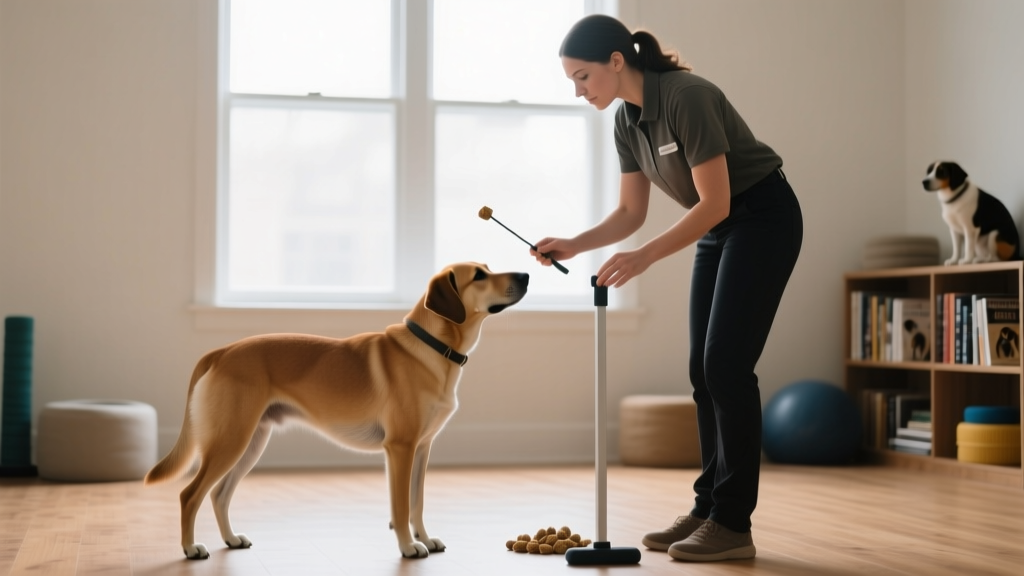
- Puzzle feeders and snuffle mats: Instead of feeding your dog from a bowl, use puzzle toys that require them to work for their food. This engages their natural foraging instincts and can keep them occupied for 15 to 30 minutes.
- Scent work games: Hide treats around the house or yard and encourage your dog to find them using their nose. Start easy and gradually increase the difficulty.
- Short training sessions: Five to ten minutes of focused obedience training counts as serious mental work for most dogs. Practice commands like sit, stay, down, leave it, and watch me.
- Interactive toys: Frozen Kongs, lick mats, and chew toys provide calming, repetitive activities that help dogs self-soothe.
Step 3: Schedule Mandatory Rest Periods
Many hyperactive dogs have actually forgotten how to rest. They become overtired, which paradoxically makes them more hyperactive — much like an overtired toddler. Build enforced rest periods into your dog's day by using a crate, a playpen, or a designated mat or bed.
During rest periods, your dog should have access to a chew toy or a long-lasting treat, but no interactive play or stimulation. Over time, your dog will learn that these quiet periods are a normal and enjoyable part of the day. For tips on crate training, visit our crate training guide.
Step 4: End the Day With a Wind-Down Session
In the evening, replace high-energy play with calm activities. A slow, sniff-heavy walk (sometimes called a "decompression walk") is ideal. Let your dog set the pace and stop to sniff as long as they like. Sniffing is naturally calming for dogs and lowers their heart rate. Follow the walk with a quiet chew session or gentle petting to ease your dog into sleep mode.
Core Training Techniques for Hyperactive Dogs
With a solid routine in place, you can layer in specific training techniques designed to teach your dog impulse control, focus, and calm behavior on cue. These techniques form the foundation of any successful hyperactivity management program.
Teach the "Settle" or "Place" Command
The "settle" command (also called "place" or "go to your mat") is arguably the single most valuable skill you can teach a hyperactive dog. It gives your dog a clear, specific behavior to perform when they're feeling energetic or overwhelmed.
Step-by-step:
- Choose a designated spot — a dog bed, mat, or specific area of the floor. Make sure it's comfortable and always in the same location.
- Lure your dog to the spot with a treat and say your chosen cue word ("settle," "place," or "mat").
- Reward your dog the moment all four paws are on the mat. Start with treats given frequently while they remain on the spot.
- Gradually increase duration. Wait two seconds before treating, then five, then ten. If your dog leaves the mat, calmly guide them back without scolding.
- Add distance. Once your dog reliably stays on the mat for 30 seconds, begin stepping away briefly before returning to reward.
- Practice in increasingly distracting environments. Start in a quiet room, then move to the living room with the TV on, then practice when guests are over.
The goal is for your dog to eventually go to their mat and lie down voluntarily whenever they feel overstimulated. This takes weeks or months of consistent practice, so patience is essential.
Impulse Control Exercises
Hyperactive dogs often struggle with impulse control — they act before they think. Teaching your dog to pause and wait builds the neurological "brakes" they're missing. Here are three foundational impulse control exercises:
The "Wait" at doors: Before every walk, ask your dog to sit and wait while you open the door. If they break position or rush forward, close the door calmly and try again. Only release them through the door when they are calm and seated. This simple exercise, practiced multiple times a day, teaches your dog that calmness — not excitement — is what opens doors.
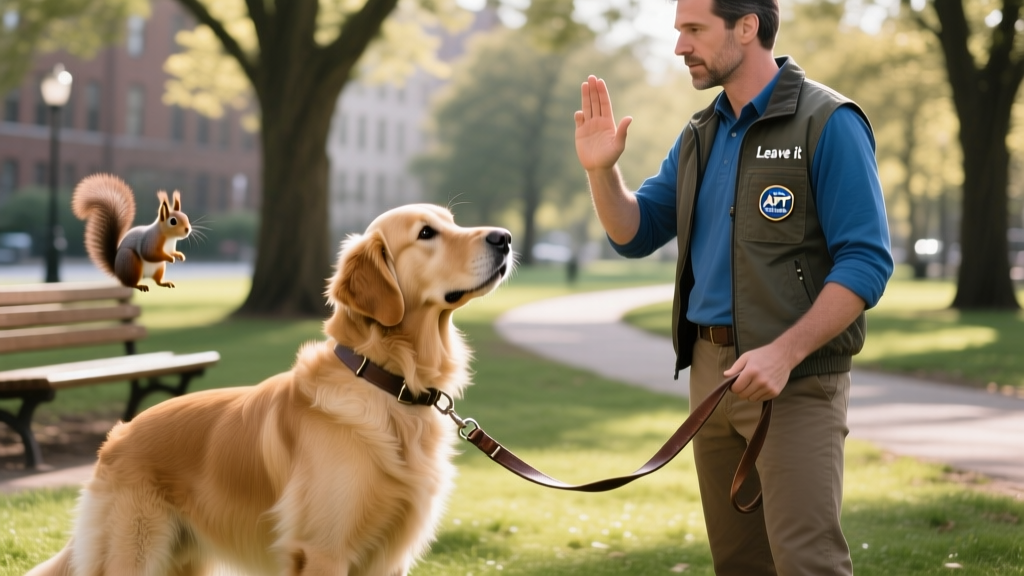
The "Leave It" command: Place a treat on the floor and cover it with your hand. Say "leave it." Wait for your dog to stop pawing, nosing, or licking at your hand. The moment they back off, mark the behavior with a "yes" and reward them with a different treat from your other hand. Gradually progress to uncovered treats, dropped treats, and real-world scenarios. For detailed instructions, see our leave it command guide.
The treat-holding exercise: Place a treat on your dog's paw or nose and ask them to hold it without eating it until you give a release word. This advanced exercise requires significant self-control and is excellent for building calm focus.
Reward Calmness Proactively
This technique, sometimes called "capturing calmness," is deceptively simple but profoundly effective. Throughout the day, whenever you notice your dog being calm — lying quietly on their bed, sitting peacefully by the window, or resting without being asked — calmly walk over and drop a treat near them. Don't say anything exciting, don't make a big deal of it. Just quietly reward the calm behavior.
Over time, your dog begins to understand that being calm is a behavior that gets rewarded. Many dogs never learn this because their humans only pay attention to them when they're being hyperactive. By flipping this dynamic, you reshape your dog's default behavior.
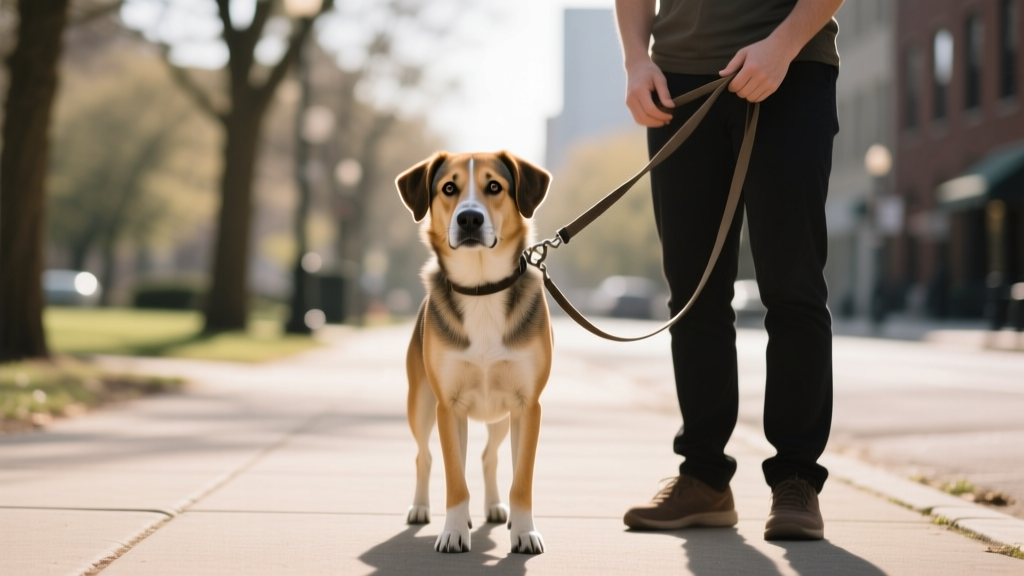
Leash Training for Overexcited Dogs
Walks can be a major trigger for hyperactive dogs. If your dog pulls, lunges, spins, or barks on the leash, the walk becomes a reinforcement cycle of overexcitement. To break this pattern:
- Practice leash manners indoors first. Walk around your house with your dog on leash, rewarding them for staying near your side.
- Use the "stop and wait" method. The moment your dog pulls, stop walking completely. Stand still and wait. Only resume walking when the leash is slack. This teaches your dog that pulling never gets them where they want to go.
- Change direction frequently. Randomly turn left, right, or do a 180-degree turn. This keeps your dog focused on you because they never know which way you'll go next.
- Reward check-ins. Whenever your dog looks at you voluntarily during a walk, immediately reward with a treat. This builds engagement and focus.
For a deeper dive into loose-leash walking, explore our leash training basics guide.
Advanced Strategies and Lifestyle Adjustments
Once you've established a routine and started core training, these advanced strategies can take your progress to the next level.
Incorporate Structured Play Sessions
Unstructured, chaotic play often makes hyperactive dogs more hyperactive. Instead, make play sessions structured and rule-based. For example, during a game of fetch, ask your dog to sit before every throw. During tug-of-war, incorporate "drop it" commands and brief pauses. This teaches your dog to toggle between excitement and calm control — a critical life skill.
Try Dog Sports and Structured Activities
For dogs with extremely high energy and drive, dog sports can be transformative. Activities like agility, rally obedience, nosework, flyball, and herding trials give dogs a legitimate "job" and channel their energy into productive, focused work. Even casual participation in these activities can dramatically reduce hyperactive behavior at home. Many local training clubs and community centers offer beginner classes.
Manage the Environment
Sometimes, the environment itself is fueling your dog's hyperactivity. Take a critical look at your dog's surroundings:
- Reduce visual triggers: If your dog spends hours barking at people and dogs through the window, close the blinds or apply frosted window film.
- Minimize auditory chaos: Constant loud TV, music, or household noise can keep a dog in a state of arousal. Try playing calming music or white noise during rest periods.
- Create a safe, quiet space: Every dog needs a retreat — a crate, a bedroom, or a corner with their bed — where they can decompress away from the activity of the household.
- Rotate toys: Instead of leaving all toys out all the time, rotate them weekly to keep novelty and interest high without overwhelming your dog.
Consider Diet and Nutrition
While diet is rarely the sole cause of hyperactivity, it can play a contributing role. Low-quality dog foods with high amounts of fillers, artificial colors, and excessive carbohydrates can cause blood sugar spikes and crashes that affect behavior. Consult with your veterinarian about whether your dog's diet is appropriate for their energy level and age. Some dogs benefit from diets with higher-quality protein sources and balanced fat content that supports sustained energy rather than rapid spikes.
Know When to Seek Professional Help
If your dog's hyperactivity is accompanied by destructive behavior, aggression, compulsive behaviors (like tail chasing or flank sucking), or an inability to sleep through the night, it may be time to consult a certified professional dog trainer or a veterinary behaviorist. In some cases, what appears to be hyperactivity may be a symptom of a medical condition such as thyroid dysfunction, cognitive dysfunction, or a neurological issue. A thorough veterinary exam is always a wise first step.
Common Mistakes to Avoid When Training Hyperactive Dogs
Even well-intentioned dog owners can accidentally make hyperactivity worse. Here are the most common mistakes and how to avoid them:
Mistake #1: Punishing Hyperactive Behavior
Yelling, scolding, or physically punishing a hyperactive dog almost always backfires. For many dogs, any attention — even negative attention — is reinforcing. For others, punishment increases anxiety, which in turn increases hyperactive behavior. Instead of punishing what you don't want, focus relentlessly on rewarding what you do want.
Mistake #2: Only Exercising the Body, Not the Mind
Running your dog for an hour every day without providing any mental stimulation is like sending a child to recess without any classes. They'll be physically tired but mentally restless. Always pair physical exercise with mental enrichment for the best results.
Mistake #3: Inconsistency Between Household Members
If one person rewards the dog for jumping and another person scolds them for it, the dog receives mixed messages that slow down training progress. Everyone in the household needs to follow the same rules and use the same commands. Hold a brief family meeting to agree on the training plan and make sure all members — including children — understand their role.
Mistake #4: Expecting Results Too Quickly
Hyperactive behavior didn't develop overnight, and it won't disappear overnight either. Most dogs need a minimum of four to eight weeks of consistent routine and training before you see significant changes. Some dogs, especially adolescents and high-drive breeds, may take several months. Celebrate small improvements and stay committed to the process.
Mistake #5: Using High-Value Treats at the Wrong Time
If you pull out the most exciting treats when your dog is already in a frenzy, you're adding fuel to the fire. High-value rewards should be used during calm, focused training sessions — not as a way to bribe an already overstimulated dog into compliance. Save the chicken and cheese for when your dog is in a learning state of mind.
Mistake #6: Skipping Training When the Dog Seems "Good Enough"
Consistency is the backbone of all dog training. Skipping a week of practice because your dog had a few calm days can undo progress quickly. Training is not a phase — it's an ongoing part of your relationship with your dog. Even after your dog has mastered calm behavior, continue to reinforce it regularly.
Frequently Asked Questions
How long does it take to see results when training a hyperactive dog?
Most dog owners begin to notice improvements within two to four weeks of implementing a consistent routine that includes daily physical exercise, mental enrichment, and structured training sessions. However, significant and lasting behavior change typically takes two to three months of daily practice. Factors that influence the timeline include the dog's age, breed, the duration of the hyperactive behavior, and how consistently the training plan is followed. Adolescent dogs (between six months and two years) often take longer because they are navigating developmental changes that naturally increase energy and impulsivity.
Are some breeds naturally more hyperactive than others?
Yes, certain breeds are genetically predisposed to higher energy levels and greater need for stimulation. Working breeds like Border Collies, Australian Shepherds, Belgian Malinois, and Siberian Huskies were developed to work for long hours and typically need more exercise and mental engagement than the average pet dog. Terrier breeds, including Jack Russell Terriers and Rat Terriers, are also known for their high energy and tenacity. However, individual temperament varies widely even within breeds, and any dog — regardless of breed — can develop hyperactive behavior if their needs aren't being met.
Should I consider medication for my hyperactive dog?
Medication is generally considered a last resort and should only be pursued under the guidance of a licensed veterinarian or veterinary behaviorist. In the vast majority of cases, hyperactive behavior can be managed through environmental adjustments, exercise, mental enrichment, and consistent training. However, if your dog has been diagnosed with a true hyperactivity disorder (which is actually quite rare in dogs), or if their behavior poses a safety risk and hasn't responded to months of dedicated training, medication may be a helpful component of a broader treatment plan. Never give your dog human medications or supplements without veterinary approval.
Can I train a hyperactive dog if I live in an apartment?
Absolutely. While apartment living presents unique challenges — limited yard space, close neighbors, and fewer opportunities for off-leash running — it is entirely possible to raise a calm, well-behaved dog in an apartment. The key is to be creative about meeting your dog's needs. Use nearby parks for exercise, invest in indoor enrichment tools like puzzle feeders and snuffle mats, practice training sessions in your living room, and consider doggy daycare or playdates with other dogs to supplement your efforts. Many apartment-dwelling dog owners find that structured leash walks and indoor training are actually more effective than having a large yard where the dog simply runs around without purpose.
Is my dog hyperactive or just excited?
There is an important distinction between a dog who is temporarily excited and a dog who is chronically hyperactive. An excited dog responds to a specific trigger — the doorbell ringing, the leash coming out, a guest arriving — and calms down within a reasonable time once the trigger passes. A truly hyperactive dog seems unable to settle regardless of the environment or circumstances, has difficulty sleeping, shows compulsive behaviors, and appears driven by an internal motor that won't shut off. If you suspect your dog falls into the latter category, a consultation with a veterinary behaviorist can help determine whether you're dealing with a behavioral pattern, a medical issue, or a combination of both.
Training a hyperactive dog is not a quick fix — it's a lifestyle commitment. But with patience, consistency, and the techniques outlined in this guide, you can transform your whirlwind of energy into a calm, focused, and happy companion. Remember, every training session is a conversation with your dog. The more clearly and consistently you communicate what you want, the faster your dog will learn to offer the calm behavior you're looking for. For more training resources, explore our full collection of dog training guides and find breed-specific tips on our breed information pages.
Marcus Aldridge
All our authors care for dogs every day — read more of their work on the authors page.