Dog Training Tips for Fearful Dogs: A Compassionate Guide to Building Confidence
Discover effective, compassionate dog training tips for fearful dogs. Learn step-by-step techniques to build confidence, reduce anxiety, and strengthen your bond.

Dog Training Tips for Fearful Dogs: A Compassionate Guide to Building Confidence
Welcoming a dog into your life is a joyous occasion, but when your new companion is plagued by fear and anxiety, the journey can feel overwhelming. Living with a fearful dog requires a unique blend of patience, empathy, and strategic training. Whether you have adopted a rescue dog with a mysterious past, or you are raising a puppy who seems overly sensitive to the world around them, understanding the root of their fear is the first step toward healing.
At Paws & Tales, we believe that every dog deserves to feel safe in their own skin. Training a fearful dog is not about forcing them to confront their terrors; it is about gently rewiring their emotional responses and building a foundation of trust. In this comprehensive guide, we will explore actionable dog training tips for fearful dogs, diving deep into desensitization, confidence-building exercises, and environmental management to help your canine companion thrive.
Understanding the Root of Canine Fear
Before we can implement effective training strategies, we must understand why dogs become fearful. Fear is a natural, evolutionary survival mechanism designed to keep animals safe from perceived threats. However, when a dog’s fear response is triggered by everyday stimuli—like the sound of a vacuum cleaner, a stranger in a hat, or even a plastic bag blowing in the wind—it becomes a maladaptive behavior that severely impacts their quality of life.
Canine fear typically stems from three main sources:
- Genetics: Some dogs are simply born with a more sensitive nervous system. Herding breeds, such as the German Shepherd or Border Collie, are often genetically wired to be hyper-aware of their environment, which can sometimes tip over into fearfulness if not properly channeled.
- Lack of Early Socialization: The critical socialization window for puppies closes around 16 weeks of age. If a dog is not exposed to a wide variety of sights, sounds, surfaces, and people during this time, the unknown becomes inherently terrifying. Our puppy socialization guide covers this crucial developmental stage in detail.
- Trauma and Negative Experiences: A single terrifying event, or prolonged exposure to a stressful environment, can leave lasting emotional scars. Rescue dogs often carry the weight of past neglect or abuse, making them naturally wary of human interaction.
Recognizing that your dog’s behavior is driven by genuine terror, rather than stubbornness or disobedience, is vital. This paradigm shift allows you to approach training with compassion rather than frustration.
Reading the Subtle Signs of Stress and Fear
One of the most common mistakes owners make is waiting for obvious signs of fear, such as cowering, trembling, or growling, before intervening. By the time a dog exhibits these overt behaviors, they are already over their fear threshold. To effectively train a fearful dog, you must learn to read the subtle, early warning signs of stress.
Dogs communicate primarily through body language. Watch for these micro-expressions and calming signals:
- Lip Licking and Yawning: When not related to food or sleep, these are classic signs of nervousness and an attempt to self-soothe.
- Whale Eye: When a dog turns their head away but keeps their eyes fixed on the trigger, exposing the whites of their eyes.
- Panting: Sudden, shallow panting when the environment is not hot indicates a spike in cortisol and adrenaline.
- Pinned Ears and Tucked Tail: Classic signs of submission and anxiety.
- Shaking Off: A dog will often “shake off” as if wet after a stressful encounter to release physical tension.
- Refusal of Treats: If your dog suddenly loses interest in high-value food, their digestive system has shut down due to the fight-or-flight response. They are over threshold.
By identifying these early signals, you can remove your dog from the stressful situation or increase the distance from the trigger before they panic. This proactive approach is the cornerstone of successful positive reinforcement training.
The Core Strategy: Desensitization and Counterconditioning
The gold standard for treating fear and anxiety in dogs is a two-part behavioral modification protocol known as Desensitization and Counterconditioning (DSCC). While traditional obedience training focuses on teaching commands, DSCC focuses on changing the dog’s underlying emotional response to a trigger.
Desensitization involves exposing the dog to their trigger at a very low intensity—far enough away or quiet enough that it does not provoke a fear response. Counterconditioning pairs that low-intensity trigger with something the dog absolutely loves, like roasted chicken or a favorite game of tug. Over time, the dog’s brain begins to associate the previously scary stimulus with positive outcomes.
It is important to note that DSCC is not a quick fix. It requires meticulous management, high-value rewards, and an unwavering commitment to keeping the dog under their fear threshold. If a dog is pushed over threshold, the amygdala (the brain’s fear center) hijacks their ability to learn, rendering the training session useless and potentially reinforcing the fear.
Step-by-Step Guide to Rewiring Fear
Let’s break down the DSCC process into actionable steps. For this example, we will use a dog who is fearful of strangers.
Step 1: Find the Threshold
Your dog’s threshold is the distance or intensity at which they notice the trigger but remain calm enough to take treats and respond to cues. If a stranger is 50 feet away and your dog is relaxed and eating treats, 50 feet is your starting threshold. If a stranger is 20 feet away and your dog is barking and refusing food, 20 feet is over threshold.
Step 2: The Engage-Disengage Game
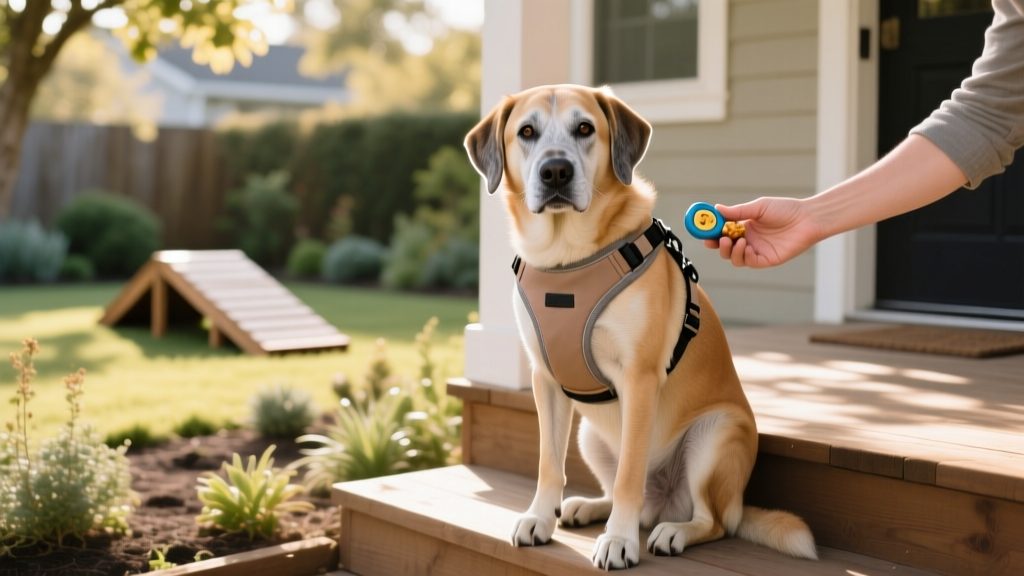
Stand with your dog at their safe threshold distance. When the dog looks at the trigger (engages), mark the behavior with a calm “yes” or a clicker. Then, encourage them to look back at you (disengage) and deliver a high-value reward. This teaches the dog that noticing a scary thing predicts a wonderful reward from you.
Step 3: Pair with High-Value Rewards
Food is the most efficient tool for counterconditioning because it directly impacts brain chemistry. Use something your dog only gets during these specific training sessions, such as boiled chicken, freeze-dried liver, or string cheese. The trigger must predict the food; do not show the food before the trigger appears.
Step 4: Gradually Decrease Distance
Only when your dog shows consistent, relaxed behavior and eager anticipation of treats at the current distance should you move one or two feet closer. If the dog shows any signs of stress, immediately increase the distance again. Progress is rarely linear; some days you will take three steps forward, and other days you will take two steps back.
Step 5: Generalize the Behavior
Once your dog is comfortable with one type of stranger at a close distance, you must generalize the training. Practice with people wearing hats, people carrying umbrellas, and people of different ages and heights. For dogs who struggle specifically on walks, integrating these techniques with our leash reactivity solutions can yield incredible results.
Creating a Safe Haven at Home
Training does not only happen during structured sessions; it happens 24/7 through environmental management. A fearful dog needs a sanctuary where they can decompress and feel entirely secure. Chronic stress keeps a dog’s nervous system in a constant state of high alert, leading to a phenomenon known as “trigger stacking.” Trigger stacking occurs when multiple minor stressors accumulate over a day, causing the dog to overreact to a seemingly insignificant event.
To prevent trigger stacking, create a designated safe space. This could be a crate covered with a breathable blanket, a quiet back bedroom, or a cozy corner with a white noise machine. Ensure that all family members and guests know that when the dog is in their safe space, they are not to be disturbed.
For small breeds, like the Chihuahua, the world can feel incredibly intimidating simply due to their size. Providing elevated, secure resting spots where they can observe their environment without feeling trapped by foot traffic can significantly reduce their baseline anxiety. Additionally, utilizing calming aids such as dog-appeasing pheromone (DAP) diffusers, pressure wraps, and classical music designed for canines can help lower their overall stress levels.
Essential Confidence-Building Exercises
While DSCC addresses specific triggers, confidence-building exercises improve your dog’s overall resilience and optimism. Think of these games as physical therapy for your dog’s nervous system.
1. Scent Work and “Find It” Games
Sniffing is a naturally calming behavior for dogs that lowers their heart rate and engages their parasympathetic nervous system. Toss high-value treats into the grass or hide them around the living room and encourage your dog to use their nose. This builds confidence because the dog is in control of the game and is rewarded for independent problem-solving.
2. Target Training
Teaching your dog to touch their nose to your hand or a target stick gives them a predictable, safe behavior to fall back on when they feel unsure. If a scary object appears, asking your dog to “touch” redirects their focus to a familiar, rewarding task, effectively bypassing the fear response.
3. Shaping and Capturing Calmness
Shaping involves rewarding successive approximations of a desired behavior. Using a clicker, you can shape your dog to interact with novel objects, like a wobble board or a tarp, entirely at their own pace. Never force a fearful dog onto a strange surface; instead, reward them for looking at it, stepping toward it, and eventually placing one paw on it. This builds immense bodily awareness and confidence.
4. The 3-3-3 Rule for Rescues
If you have recently adopted a fearful rescue, remember the 3-3-3 rule. It takes 3 days for a dog to decompress from the shelter, 3 weeks to learn your routine, and 3 months to truly feel at home and show their real personality. Giving them the gift of time and space is the most profound confidence-building exercise you can offer.
Pro Tips and Common Mistakes to Avoid
Navigating the world of fearful dog training is fraught with well-meaning but potentially harmful advice. Here are some essential tips and pitfalls to avoid on your journey.
Pro Tips for Success
- Keep Sessions Short: Fearful dogs expend a massive amount of mental energy during training. Keep DSCC sessions to 3–5 minutes to prevent cognitive fatigue.
- Advocate for Your Dog: Do not be afraid to tell strangers, “Please do not pet my dog, they are in training.” Protecting your dog from unwanted interactions is crucial for their progress.
- Manage the Environment: If your dog is terrified of the doorbell, disconnect it or put a sign on the door asking guests to text when they arrive. Management prevents the rehearsal of fearful behaviors.
- Celebrate Small Victories: Did your dog look at a garbage truck without barking? That is a massive win. Celebrate the micro-progress.
Common Mistakes to Avoid
- Flooding: This is the dangerous practice of forcing a dog to face their fear at full intensity until they stop reacting (learned helplessness). Flooding does not cure fear; it suppresses the outward signs of panic while the dog remains internally terrified, often leading to sudden, severe aggression.
- Punishing the Growl: A growl is a dog’s way of saying, “I am uncomfortable, please give me space.” If you punish the growl, the dog will learn to skip the warning and go straight to a bite. Always reward the communication and remove the trigger.
- Inconsistency: Allowing your dog to sleep on the bed one night but scolding them for jumping up the next creates unpredictability. Fearful dogs thrive on routine, predictability, and clear boundaries.
- Rushing the Process: Healing trauma takes time. Expecting a fearful dog to become a confident, social butterfly in a few weeks is setting both of you up for failure.
Frequently Asked Questions (FAQ)
How long does it take to train a fearful dog?
There is no set timeline for rehabilitating a fearful dog. The process depends heavily on the dog’s genetics, the severity of the trauma, and the consistency of the training. For some dogs, significant improvements can be seen in a few months. For others, managing fear is a lifelong commitment. It is best to view fear rehabilitation not as a destination, but as an ongoing lifestyle of advocacy, management, and positive reinforcement.
Should I comfort my dog when they are scared?
Yes, you should absolutely comfort your dog. A common myth in the dog training world is that petting a scared dog “reinforces” the fear. Fear is an emotion, not a behavior, and you cannot reinforce an emotion with affection. Speaking in a calm, soothing voice and providing gentle physical contact can help lower your dog’s heart rate. However, avoid frantic, panicked coddling, as your own anxious energy can validate their belief that there is indeed something to be terrified of.
Can medication help with dog training for fear?
In many cases, yes. If a dog’s fear is so severe that they are constantly over threshold, their brain is physically incapable of learning new associations. Veterinary behaviorists often prescribe anti-anxiety medications, such as SSRIs or beta-blockers, to lower the dog’s baseline arousal. Medication does not change the dog’s personality; rather, it creates a neurological window of opportunity where desensitization and counterconditioning can actually take effect. Always consult with a licensed veterinarian or a board-certified veterinary behaviorist to explore these options.
Is it ever too late to socialize an older fearful dog?
While the critical socialization window closes in puppyhood, it is never too late to help an older dog feel more comfortable in their environment. However, the goal for an adult fearful dog is rarely “socialization” in the traditional sense of making them love everyone and everything. Instead, the goal is “habituation”—teaching the dog to remain neutral and calm in the presence of triggers. An older dog may never want to be petted by strangers, and that is perfectly okay. Teaching them that they can safely ignore the world is a massive victory.
Conclusion: A Journey of Trust and Patience
Training a fearful dog is one of the most challenging, yet profoundly rewarding, experiences a dog owner can undertake. It requires you to slow down, observe the world through your dog’s eyes, and become their fiercest advocate. By utilizing desensitization, prioritizing environmental management, and engaging in confidence-building games, you can help your dog navigate a world that often feels too loud and too big.
Remember that progress is measured in inches, not miles. There will be setbacks and difficult days, but every time you respect your dog’s boundaries and choose patience over frustration, you are laying another brick in the foundation of trust. For more guidance on nurturing a well-adjusted canine companion, explore our extensive library of positive reinforcement training guides and breed-specific care tips. Your dog may have started their journey in fear, but with your unwavering support, their tale can become one of courage, resilience, and deep, unbreakable love.
Beth Carrasco
All our authors care for dogs every day — read more of their work on the authors page.