Best Dog Crate for House Training: 2026 Buyer's Guide & Top Picks
Find the best dog crate for house training with our 2026 expert guide. Compare top picks, sizing charts, prices, and step-by-step crate training methods.

Why the Right Dog Crate for House Training Matters
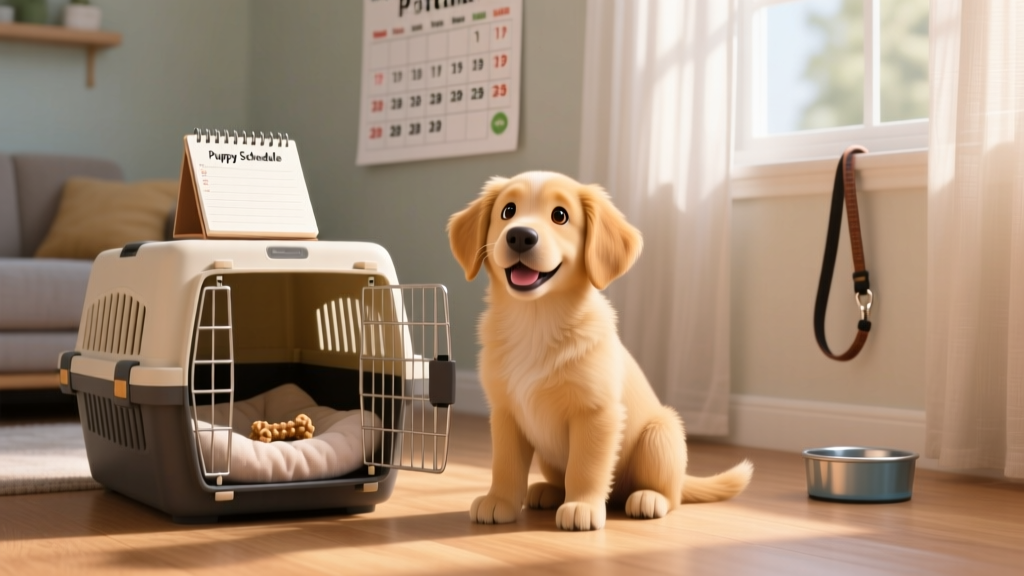
Dogs are den animals by instinct. A properly sized crate taps into their natural reluctance to soil their sleeping space, making a dog crate for house training one of the most effective tools in any puppy parent's arsenal. According to the American Kennel Club, crate training leverages a dog's innate denning instinct to accelerate bladder and bowel control — most puppies show measurable progress within 2-4 weeks of consistent crate use.
But here's where many owners go wrong: they buy a crate that's too large, turning the back half into a bathroom and the front half into a bedroom. Or they choose a style that doesn't match their dog's temperament — a soft-sided crate for a teething Lab puppy, for instance, is a destroyed crate waiting to happen. After years of helping dog owners work through house training setbacks, I've seen that the crate itself is rarely the problem — it's the wrong crate, wrong size, or wrong approach.
This guide breaks down exactly what to look for, compares the top-performing crates on the market in 2026, and gives you a step-by-step protocol for using a crate humanely and effectively.
Buying Criteria: What to Look for in a House Training Crate
Material matters too. Wire crates offer maximum visibility and ventilation, making them the top choice for house training in most home environments. Plastic (airline-style) crates create a more enclosed den feel, which some anxious dogs prefer. Soft-sided crates are unsuitable for unsupervised house training — they can't contain accidents and are easily chewed through.
How Crate Sizing Works: The Exact Measurement Method
Most sizing guides tell you to match crate length to your dog's body length. That's a starting point, but for house training specifically, you need tighter tolerances. Here's the measurement protocol I recommend:
- Measure length: From the tip of your dog's nose to the base of the tail (not the tip of the tail). Add 2-4 inches. This is your minimum interior crate length.
- Measure height: From the floor to the top of the head (or to the tip of the ears if erect). Add 1-2 inches. This is your minimum interior crate height.
- Check the turn-around test: The crate width should allow your dog to pivot in a full circle without their shoulders touching both sides simultaneously — but not so wide that they can stretch out lengthwise in one half and eliminate in the other.
| Dog Weight | Crate Size | Interior Dimensions (L × W × H) | Common Breeds in This Range |
|---|---|---|---|
| 1-10 lb / 0.5-4.5 kg | Extra Small (18-22") | 18" × 12" × 14" to 22" × 13" × 16" | Chihuahua, Yorkshire Terrier, Pomeranian |
| 11-25 lb / 5-11 kg | Small (24") | 24" × 18" × 19" | French Bulldog, Dachshund, Miniature Schnauzer |
| 26-40 lb / 12-18 kg | Medium (30") | 30" × 19" × 21" | Beagle, Cocker Spaniel, Border Terrier |
| 41-70 lb / 19-32 kg | Large (36") | 36" × 23" × 25" | Labrador Retriever, Boxer, Australian Shepherd |
| 71-90 lb / 32-41 kg | Extra Large (42") | 42" × 28" × 30" | German Shepherd, Golden Retriever, Rottweiler |
| 91-150 lb / 41-68 kg | XXL (48") | 48" × 30" × 33" | Great Dane, Saint Bernard, Mastiff |
For puppies: Buy the crate size your puppy's adult weight will require, then use the included divider panel to restrict the usable space. Move the divider back every 2-3 weeks as your puppy grows. This is far more cost-effective than buying three progressively larger crates.
Top 7 Dog Crates for House Training in 2026
These selections are based on durability testing, latch security, ease of cleaning, divider panel quality, and real-world feedback from hundreds of dog owners navigating house training. I've organized them by use case rather than ranking them 1-7, because the "best" crate depends on your specific dog and home setup.
1. Midwest Homes for Pets iCrate Double Door — Best Overall Value
Price: $40-$75 depending on size | Best for: Most puppies and adult dogs in standard home environments
Key features: Dual-slide bolt latches, rounded corners, removable ABS plastic pan, fold-and-carry design, included divider panel, two doors (front and side).
- Divider panel included at no extra cost
- Side door allows placement against walls or in corners
- ABS pan is leakproof and easy to sanitize with enzymatic cleaner
- Widely available replacement pans if one cracks
- Folds flat for storage or travel
- Wire gauge is thinner than premium competitors — not ideal for aggressive chewers
- Slide-bolt latches can be figured out by highly persistent dogs
- Plastic pan may warp if left in direct sunlight
2. Frisco Ultimate Double Door Crate — Best Budget Pick
Price: $30-$60 | Best for: First-time puppy owners on a tight budget
Key features: Dual slide-bolt latches, electro-coated finish, removable plastic pan, divider panel, carrying handle.
- Typically $10-15 less than comparable Midwest models
- Electro-coat finish resists rust better than basic powder coat
- Available at most big-box pet stores for same-day pickup
- Plastic pan is thinner — may crack under heavier dogs (50+ lb)
- Welds at wire intersections are rougher; check for burrs
- Lacks the side-door option on some sizes
3. Impact Dog Crate Stationary — Best for Escape Artists and Heavy Chewers
Price: $650-$900 | Best for: Dogs who destroy standard wire crates or suffer severe confinement anxiety
Key features: 14-gauge welded aluminum construction, three-point slam latch, rubber gasket noise dampening, powder-coated finish, military-grade durability.
- Virtually indestructible — no dog has reliably escaped one
- Slam latch is unpickable by canine paws
- Reduces crate noise significantly (important for noise-sensitive dogs)
- Lifetime investment — you'll never buy another crate
- Extremely expensive — over 10x the cost of a standard wire crate
- Heavy (40-70 lb depending on size) — not portable
- No divider panel available; must buy correct adult size from the start
- Limited ventilation compared to wire crates
4. Petmate Ultra Vari Kennel — Best Plastic/Airline-Style Crate
Price: $45-$120 | Best for: Anxious dogs who prefer a more enclosed den, travel use
Key features: Heavy-duty recycled plastic shell, wire side vents, front wire door with squeeze latch, raised interior floor to keep dog dry, meets most airline cargo specifications (verify with your carrier).
- Enclosed design reduces visual stimulation — calmer for reactive dogs
- Raised floor means accidents drain away from where the dog lies
- Easier to cover with a blanket for additional den effect
- Double-duty as a travel crate
- No divider panel system — must size correctly from the start
- Harder to clean than wire crates (must disassemble to fully sanitize)
- Heavier than wire crates of comparable size
- Limited visibility can increase barking in some dogs who want to monitor their environment
5. MidWest Ultima Pro Double Door Crate — Best Heavy-Duty Wire Crate
Price: $70-$130 | Best for: Medium-to-large dogs who need more durability than a standard iCrate but don't need an Impact-level crate
Key features: 9-gauge steel wire (significantly thicker than the iCrate's 12-gauge), dual slide-bolt latches, three-door design (front, side, top), divider panel, drop-front pan for easy cleaning.
- 9-gauge wire resists bending from dogs who lean or push against walls
- Top door is excellent for loading reluctant or injured dogs
- Drop-front pan slides out without opening the crate door
- Still folds flat despite heavier construction
- Heavier than standard wire crates — 36" model weighs about 35 lb
- Price premium over basic wire crates
- Top door latch can be stiff initially
6. Revol Collapsible Dog Crate — Best Design-Forward / Space-Saving Crate
Price: $175-$250 | Best for: Apartments, modern homes where aesthetics matter, frequent travelers
Key features: Single-hand collapsible mechanism (folds in 3 seconds), diamond-shaped wire mesh (prevents paw-snagging), built-in divider, ceiling hatch for top access, wheeled base option.
- Diamond mesh eliminates the toe-catching gaps of standard wire grids
- Collapses faster and more compactly than any folding wire crate
- Built-in divider adjusts with a single hand — no separate panel to store
- Modern aesthetic doesn't look like a cage in a living room
- Significantly more expensive than traditional wire crates
- Limited size range (currently 4 sizes, max 42" equivalent)
- Replacement parts must be ordered from manufacturer
- Collapsible joints may develop play over years of heavy use
7. Zinger Winger DX5000 — Best for Working/Sport Dogs and Truck Travel
Price: $450-$700 | Best for: Hunting dogs, sport dogs, owners who transport crates in trucks or SUVs regularly
Key features: Welded aluminum frame, composite panels, slam-latch door, forklift-rated base, tie-down points, ventilated on all sides.
- Lightweight for its strength (aluminum frame, not steel)
- Slam latches secure automatically when door closes
- Tie-down points integrate with truck bed and SUV cargo anchors
- Stackable in multi-dog configurations
- Not designed as an in-home house training crate — this is a transport crate
- No divider panel
- Premium price for a specialized use case
- Industrial appearance may not suit home decor
Side-by-Side Comparison Table
| Product | Type | Price Range | Divider Panel | Latch Type | Best For |
|---|---|---|---|---|---|
| Midwest iCrate Double Door | Wire | $40-$75 | Included | Dual slide-bolt | Most puppies, budget-conscious owners |
| Frisco Ultimate Double Door | Wire | $30-$60 | Included | Dual slide-bolt | Tightest budgets, first-time puppy owners |
| Impact Stationary | Heavy-duty aluminum | $650-$900 | Not available | Three-point slam | Escape artists, destructive chewers |
| Petmate Ultra Vari Kennel | Plastic airline | $45-$120 | Not available | Squeeze latch | Anxious dogs, travel |
| MidWest Ultima Pro | Heavy-duty wire | $70-$130 | Included | Dual slide-bolt | Strong dogs who bend standard wire |
| Revol Collapsible | Wire (diamond mesh) | $175-$250 | Built-in | Paddle latch | Apartments, design-conscious homes |
| Zinger Winger DX5000 | Aluminum transport | $450-$700 | Not available | Slam latch | Working/sport dogs, vehicle transport |
The Science Behind Crate Training: Why It Works
Crate training for house breaking isn't folklore — it's rooted in well-documented canine physiology and behavior. Dogs develop bladder and bowel control through a combination of physical maturation and environmental conditioning. Here's what the evidence shows:
Bladder capacity development: Puppies can typically hold their bladder for approximately one hour per month of age, up to a maximum of about 8 hours for a healthy adult dog (per the Merck Veterinary Manual). A 3-month-old puppy has roughly 3 hours of bladder control. The crate creates a structured window that prevents the puppy from having the opportunity to eliminate indoors during these intervals.
Den instinct and elimination avoidance: Research in canine behavioral science consistently shows that dogs avoid soiling their immediate resting area when the space is appropriately sized. This instinct is the core mechanism that makes a dog crate for house training effective — the dog learns to "hold it" because the confined space triggers their natural cleanliness drive.
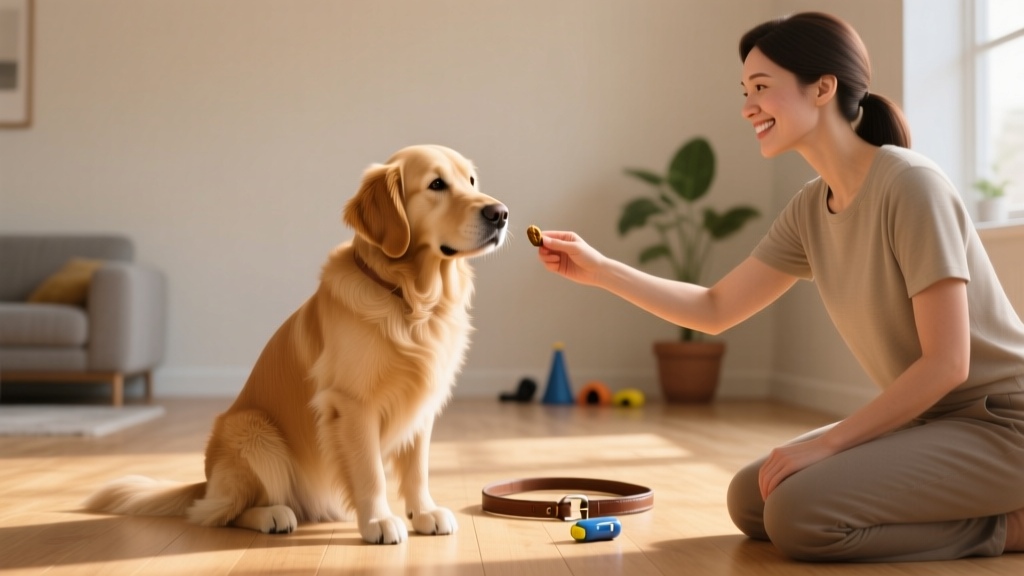
Conditioned routine formation: Crate training establishes a predictable eat → crate → outside → reward cycle. Dogs thrive on routine, and within 2-4 weeks of consistent scheduling, most puppies begin signaling their need to go outside rather than having accidents. The ASPCA recommends combining crate training with a fixed feeding schedule and immediate outdoor trips after waking, eating, and playing for fastest results.
How to Use a Dog Crate for House Training: Step-by-Step Protocol
Step 1: Introduce the crate as a positive space (Days 1-3)
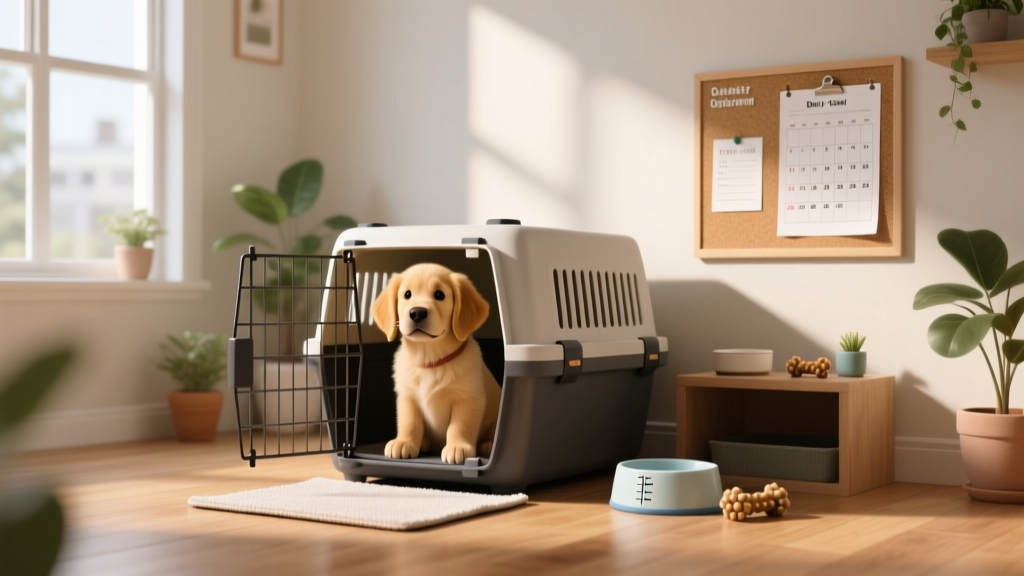
Place the crate in a high-traffic area of your home (living room, kitchen). Leave the door open. Toss high-value treats (small pieces of chicken, cheese, or training treats) inside. Feed meals near the crate, then inside the crate with the door open. Never force your dog inside — let them enter voluntarily. Place a soft blanket and a safe chew toy (like a Kong stuffed with peanut butter) inside.
Step 2: Begin closing the door for short intervals (Days 3-5)
Once your dog enters willingly, close the door while they eat a meal, then open it immediately after. Gradually extend closed-door time while you sit nearby — start with 2 minutes, then 5, then 10. If your dog whines, wait for a brief pause in vocalization before opening the door. Opening during whining teaches them that noise = freedom.
Step 3: Start the house training schedule (Day 5 onward)
Use this timing framework based on your puppy's age:
- 8-10 weeks: Crate intervals of 30-60 minutes, then immediately carry or leash-walk outside to the designated potty spot. Reward with a treat and verbal praise within 3 seconds of elimination.
- 10-14 weeks: Crate intervals of 1-2 hours between outdoor trips.
- 14-20 weeks: Crate intervals of 2-3 hours.
- 5-6 months: Crate intervals of 3-4 hours.
- 6+ months: Most dogs can hold for 4-6 hours during the day and 7-8 hours overnight.
Step 4: Nighttime crating
Place the crate in your bedroom for the first few weeks. Puppies often need one overnight potty break until about 12-14 weeks of age. Set an alarm for 3-4 hours after bedtime. Carry or leash the puppy outside with minimal stimulation (no play, dim lights), then return directly to the crate. As bladder capacity increases, gradually eliminate the overnight trip.
Step 5: Transition to freedom (typically 8-14 months of age)
Once your dog has gone 4+ weeks without any accidents, begin testing short periods of unsupervised freedom in a puppy-proofed room. Start with 10 minutes, then 30, then an hour. If accidents resume, return to crating for 2 more weeks before testing again. Most dogs are reliably house trained between 6-12 months, but larger breeds and males may take longer.
Safety Considerations and Warnings
Critical Safety Rules for Crate Use:
- Never use the crate as punishment. If your dog associates the crate with negative experiences, they'll resist entering, which undermines the entire house training system. The crate must always be a safe, positive space.
- Remove collars before crating. Buckle collars, martingale collars, and especially chain collars can catch on wire crate bars and cause strangulation. Use a breakaway collar if your dog must wear identification in the crate, or remove the collar entirely.
- Never exceed maximum crate time. Adult dogs should not be crated for more than 6-8 hours total in a 24-hour period (including overnight). Puppies under 6 months should not exceed the age-based intervals listed above. Extended crating causes physical discomfort, psychological distress, and can paradoxically lead to crate soiling — which undermines house training.
- Monitor temperature. Wire crates in direct sunlight or near heating vents can become dangerously warm. Brachycephalic breeds (French Bulldogs, Pugs, Boston Terriers) are especially vulnerable to overheating. Keep crate ambient temperature below 78°F (26°C).
- Inspect latches weekly. Slide-bolt latches can loosen over time. A partially engaged latch may allow your dog to push the door open when unsupervised, leading to both house training setbacks and household destruction.
- Provide water carefully. For house training puppies, remove the water bowl 2 hours before bedtime to reduce overnight accidents. During the day, offer water on a schedule (after waking, after play, with meals) rather than free-access in the crate, which can accelerate bladder filling.
When House Training Isn't Working: Medical Red Flags
If you've followed a consistent crate training protocol for 3+ weeks and your dog continues to have frequent accidents in the crate or immediately upon release, it's time to consult your veterinarian rather than continuing to troubleshoot on your own. Some underlying conditions mimic house training failure:
- Urinary tract infections (UTIs): Cause urgency and frequency. Your vet will run a urinalysis ($45-$80) and may prescribe antibiotics. UTIs are common in female puppies.
- Gastrointestinal parasites: Roundworms, hookworms, and giardia cause loose stools that puppies cannot control. A fecal float test ($35-$60) will identify parasites. Deworming typically resolves the issue within 1-2 weeks.
- Congenital incontinence: Ectopic ureters (ureters that bypass the bladder sphincter) cause continuous dribbling, especially in female dogs. This requires surgical correction and is not a training problem.
- Anxiety-based elimination: If your dog panics in the crate — excessive drooling, bloody paws from scratching, bent bars, defecation within minutes of confinement — this may be separation anxiety or confinement distress, not a house training issue. A veterinary behaviorist or certified force-free trainer can develop a desensitization and counter-conditioning protocol.
In any of these cases, more crate time won't solve the problem. A veterinary exam with a urinalysis and fecal test is the appropriate next step. Your vet may also recommend a referral to a veterinary behaviorist (DACVB) if behavioral anxiety is suspected.
Alternatives to Crate Training
Some dogs don't tolerate crates well, and some owners prefer alternative confinement methods. Here are the most effective options, with honest assessments of their house training effectiveness:
Exercise pen (X-pen) confinement: Set up a wire exercise pen (typically 8 connected panels, 24-36" tall, $40-$80) in a room with easy-to-clean flooring. Place the dog's bed on one end and a potty pad or litter box on the other. This works for owners who need longer confinement periods than a crate allows (e.g., long work shifts). However, it's less effective for house training because it teaches the dog that eliminating indoors is acceptable — just in a designated spot. Transitioning from pen to full house freedom takes longer.
Single-room confinement: Use baby gates to restrict your dog to a puppy-proofed room (bathroom, laundry room, kitchen) with tile or vinyl flooring. Less secure than a crate (dogs can jump or push through some gates), but provides more space. Best combined with a crate inside the room for sleeping.
Tether training: Attach your dog's leash to your belt or a nearby piece of furniture while you're home. This prevents the dog from wandering off to eliminate and teaches them to signal when they need to go. Not suitable for unsupervised periods.
Bell training: Hang a bell (jingle bell or potty bell, $8-$15) on the door handle at your dog's nose height. Each time you take the dog outside, guide their paw or nose to ring the bell before opening the door. Many dogs learn to ring the bell independently within 2-4 weeks. This is a supplement to, not a replacement for, structured confinement.
Frequently Asked Questions
What is the best dog crate for house training?
For most puppies and adult dogs, the Midwest Homes for Pets iCrate Double Door offers the best combination of price ($40-$75), included divider panel, dual-door flexibility, and easy-clean pan. For dogs who destroy standard wire crates, the Impact Stationary crate ($650-$900) is the most durable option available. The "best" crate is ultimately one that's correctly sized for your dog's current body measurements and matches their chewing/destruction level.
How do I choose the right crate size for house training?
Measure your dog from nose tip to tail base (add 2-4 inches for length) and from floor to top of head (add 1-2 inches for height). The crate should allow standing, turning, and lying down — but not much more. For puppies, buy the adult-size crate and use the divider panel to restrict space, expanding it every 2-3 weeks as the puppy grows. If your dog is consistently soiling one end of the crate, the crate is too large.
How much does a good dog crate cost?
Standard wire crates with divider panels range from $30-$130 depending on size and build quality. Plastic airline-style crates cost $45-$120. Premium heavy-duty crates (Impact, Zinger Winger) range from $450-$900. Design-forward collapsible crates like the Revol run $175-$250. For house training purposes, a $40-$75 Midwest iCrate is sufficient for the vast majority of dogs — the expensive options are for durability, not training effectiveness.
How long can I leave my puppy in the crate?
Use the "one hour per month of age" guideline as a maximum: an 8-week-old puppy can hold for roughly 2 hours, a 3-month-old for about 3 hours, and a 4-month-old for about 4 hours. Adult dogs can typically hold for 6-8 hours. Overnight, most puppies need one potty break until about 12-14 weeks. Never exceed these limits — doing so forces the dog to eliminate in the crate, which destroys the den instinct that makes crate training work.
Should I cover the crate during house training?
Covering the top and sides of a wire crate with a light blanket or purpose-made crate cover ($15-$30) can help reduce visual stimulation and encourage settling, particularly at night and for easily distracted puppies. Leave the front door uncovered for ventilation. Some dogs prefer an uncovered crate where they can monitor their environment — observe your dog's behavior and adjust. If covering increases barking or whining, remove the cover.
Are there natural alternatives to crate training?
Yes, though they're generally less efficient. Exercise pens, single-room confinement with baby gates, tether training, and bell training can all achieve house training without a crate. The trade-off is time: crate-trained puppies typically achieve reliability in 4-8 weeks, while alternative methods often take 8-16 weeks. For owners whose dogs show genuine confinement distress (panic, self-injury in the crate), working with a certified force-free trainer on a desensitization protocol or switching to pen confinement is the humane choice.
When should I skip OTC products and see a vet?
Consult your veterinarian if your dog has frequent accidents despite 3+ weeks of consistent crate training, shows signs of distress in the crate (bloody paws, bent bars, excessive drooling), has accidents that seem involuntary (dribbling while walking or sleeping), or has sudden changes in elimination frequency or stool consistency. These may indicate UTIs, parasites, congenital defects, or anxiety disorders that require medical or behavioral intervention — not more crate time.
Aaron Whyte
All our authors care for dogs every day — read more of their work on the authors page.